





Regency Scroll Arm Couch
A regency scroll arm couch brings sculptural presence and deep comfort to a room, offering elegance through sweeping woodwork and rich upholstery.
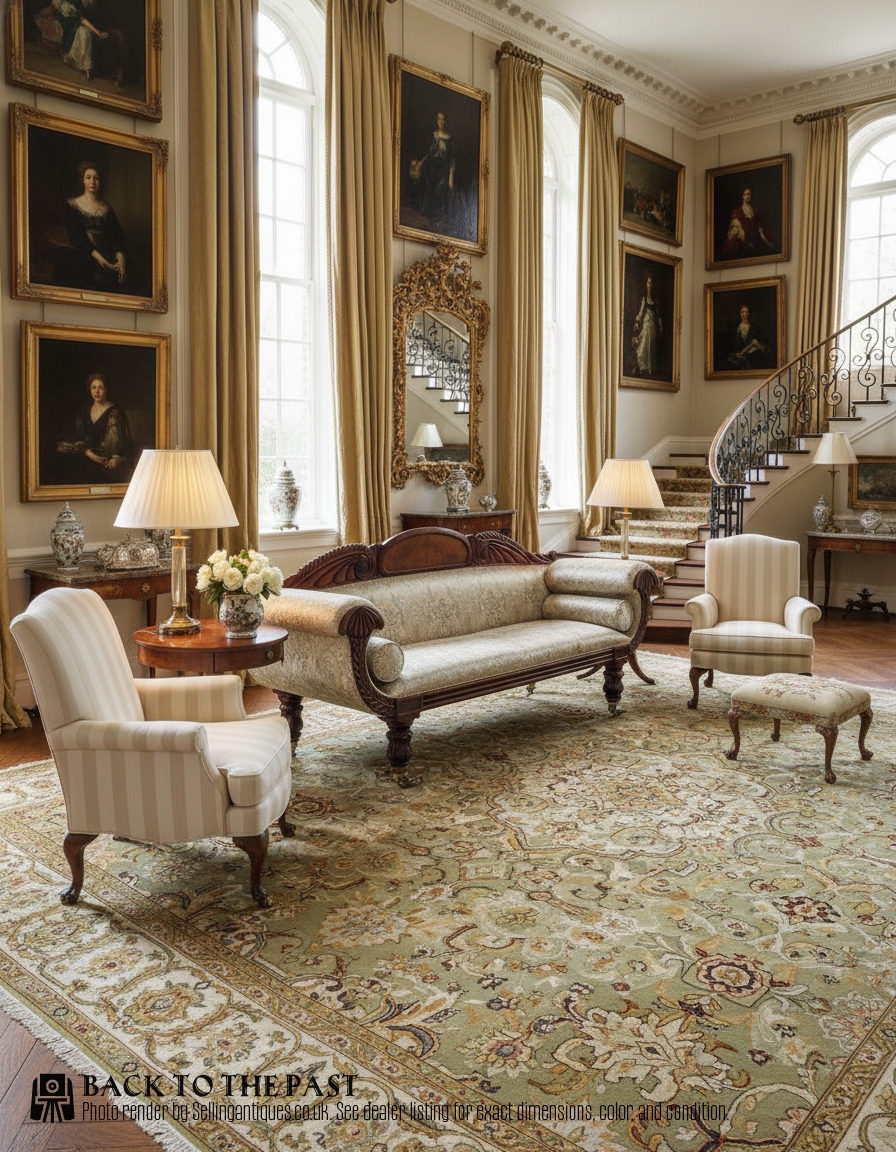
Regency Scroll Arm Couch
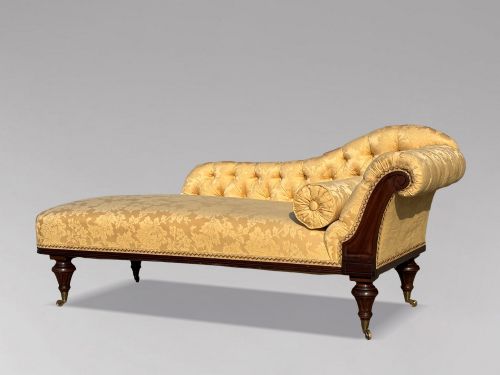
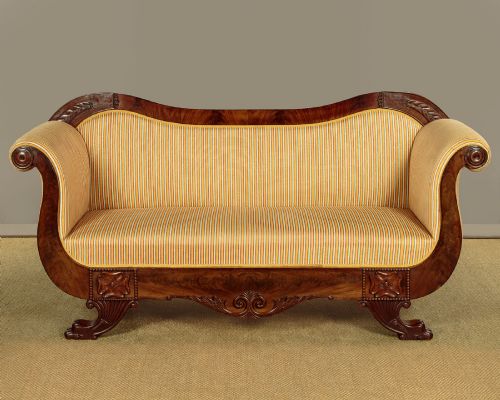
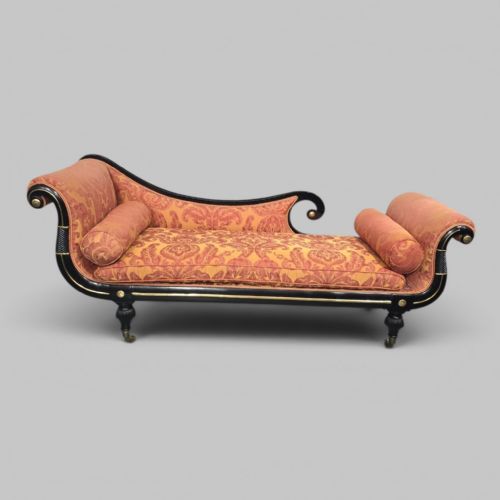
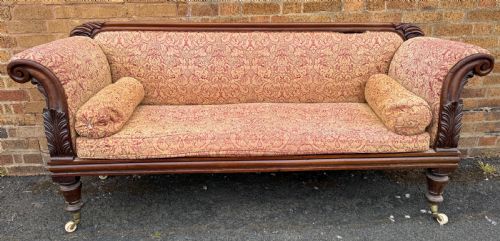
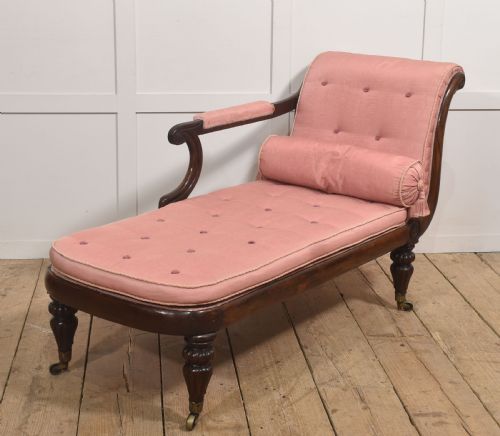
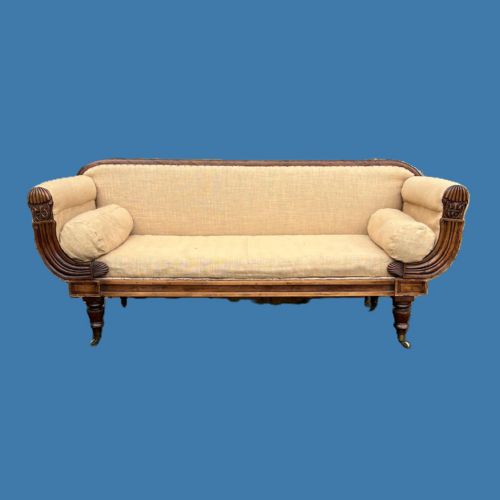
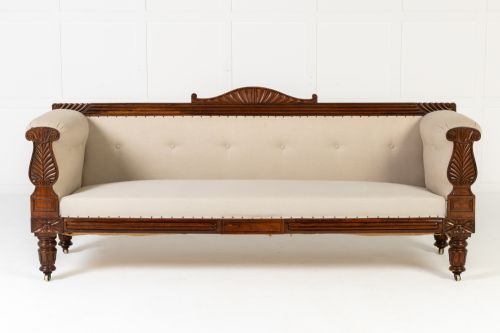
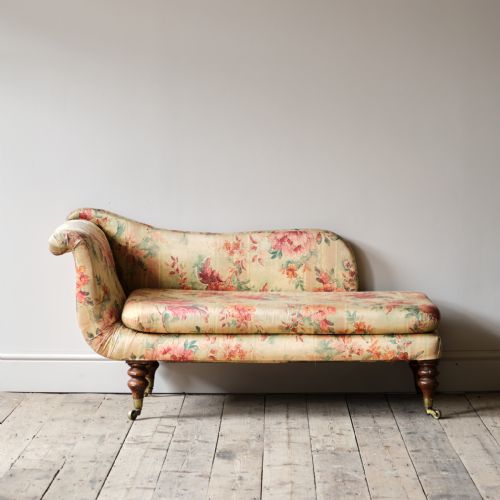
A regency scroll arm couch is a seating form defined by its distinctive curved ends, drawing on classical influence and early nineteenth-century design. When you examine a regency scroll arm couch on this page, you encounter pieces that span periods from the actual Regency era into William IV and early Victorian times.
The forms vary from single-ended chaise longues and Récamier styles to large country house sofas and double-ended settees. These items appear in library, drawing room, and salon contexts, reflecting the domestic spaces for which they were originally built.
Makers and workshops of the period produced variations that include lyre-shaped supports, show frames in carved timber, and campaign styles. The listings demonstrate that these couches serve both as day beds and formal seating.
Materials and construction
Makers built the frames of a regency scroll arm couch primarily from solid timbers like mahogany, rosewood, and ebonised wood, sometimes employing simulated rosewood finishes. These woods provided the structural integrity required for heavy scrolling ends and carved show frames.
Upholstery played a central role, utilising fabrics, leather, and hessian over supportive internal structures. Brass details frequently appeared as castors or decorative mounts, complementing the dark grain of the timber frames.
Some nineteenth-century makers disguised humble woods as exotic species simply by picking up a paintbrush and simulating rosewood grain.
Assessing quality and execution
The distinction between a standard piece and a superior example lies in the crispness of the timber carving and the sophistication of the scroll ends. Finer pieces display deeply figured mahogany or rich rosewood veneers, alongside balanced proportions that integrate the arms harmoniously with the seat.
The joinery and framing dictate the durability and elegance of the silhouette. Pieces that retain their original show frames and sophisticated turnings command greater appreciation from collectors seeking authenticity of period manufacture.
Willian Trotter·Gillows
The Regency Scroll Arm Couch Glossary
- Scroll End
- A furniture termination shaped like an unfurled scroll, characteristic of Regency and William IV seating. This profile provides both visual movement and arm support.
- Chaise Longue
- An upholstered long chair or day bed designed for reclining. It combines the backrest of a sofa with the extended seat of a couch.
- Show Frame
- A wooden structural framework left exposed around the upholstered portions of a sofa or settee. It showcases the carved timber and finish.
- Récamier
- A type of day bed or sofa with two raised ends, typically unequal in height, named after Madame Récamier. It is associated with neoclassical French and English seating design.
- Simulated Rosewood
- Painted or stained timber, often maple or beech, treated to imitate the grain and colour of genuine rosewood. This technique offered a decorative finish at a different cost.
Regency Scroll Arm Couch: Frequently Asked Questions
How do I use a scroll arm couch today?
A regency scroll arm couch functions well as a day bed in a study or as a principal sofa in a drawing room. Its generous length allows for comfortable reclining during the day.
Position the piece away from direct sunlight to protect the timber finish and the upholstery fabrics. Ensure the floor is level so the heavy wooden frame and brass castors bear weight evenly.
How can I tell a Regency piece from a Victorian one?
Regency pieces dating from the early nineteenth century tend to exhibit clean neoclassical lines, restrained carving, and lighter proportions. Rosewood and mahogany are finished with subtle attention to grain figure.
Victorian and William IV pieces from subsequent decades often display heavier proportions, bolder carved mahogany frames, and denser upholstery structures. The scroll ends on later pieces can be more exaggerated in scale.
Are these couches suitable for everyday sitting?
These couches were built for domestic living rooms and libraries, constructed from solid mahogany and rosewood. Their robust timber frames provide a sturdy foundation for daily use.
When purchasing a piece requiring upholstery or restoration, ensure the internal webbing and springs are reinforced to handle regular sitting. Restored show frames offer both durability and historical integrity.