
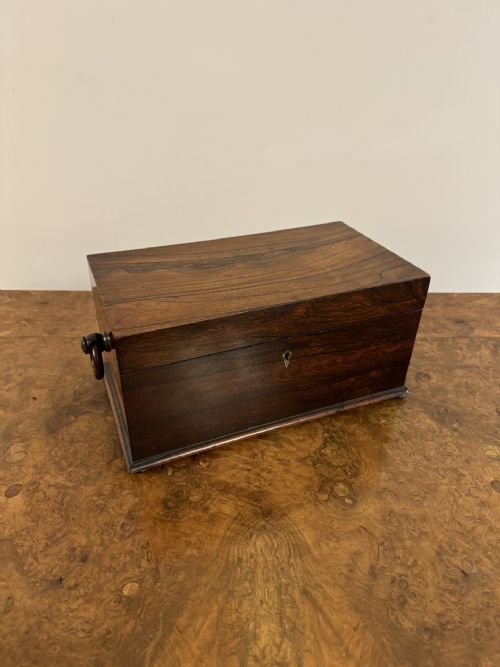


Regency Sarcophagus Tea Chest
A regency sarcophagus tea chest brings architectural proportion and figured timber to the drawing room, offering a tactile piece of domestic history for storage.
Regency Sarcophagus Tea Chest
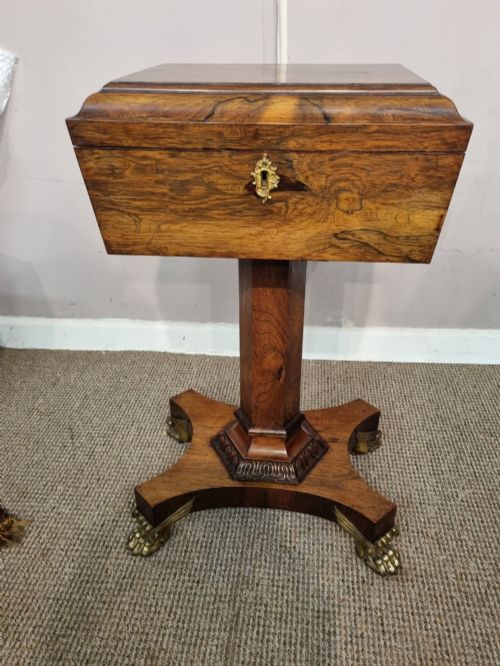
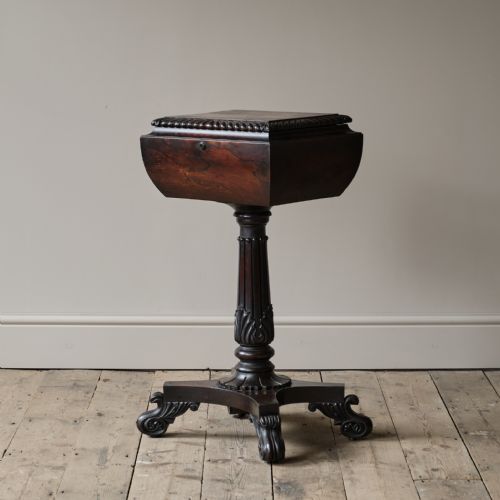
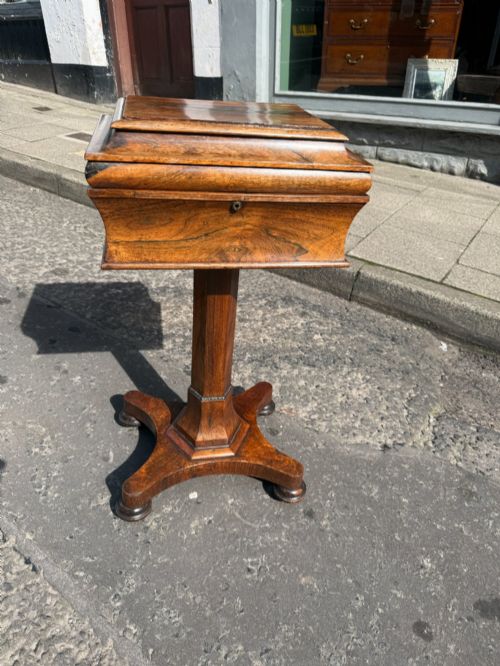
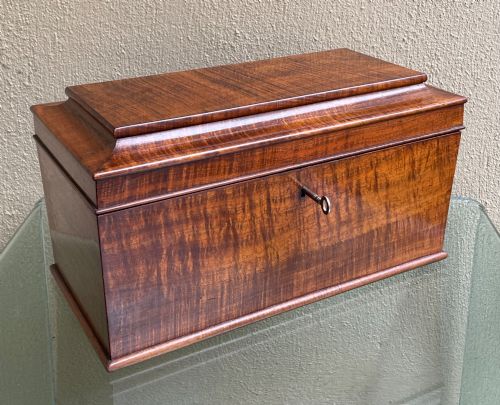
A regency sarcophagus tea chest typically presents a distinctive tapered, lidded form reminiscent of classical monumental architecture, sitting upon compressed feet or plinth bases.
The selections found here span the Georgian, Regency, William IV, and Victorian eras, with rosewood and mahogany serving as the predominant timbers.
Makers shaped these vessels as tea caddies and teapoys to safeguard expensive dry leaves under lock and key, often incorporating internal lidded compartments and glass mixing bowls.
Materials and Technique
Cabinetmakers selected dense tropical hardwoods like rosewood, mahogany, and coromandel, choosing stock with strong grain patterns such as flame figures and burr growths.
Surface enrichment relied on precision inlays of brass, boxwood, ebony, and satinwood, alongside marquetry work and penwork detailing.
Interiors frequently combined fitted wooden containers with bone pulls, glass bowls, and velvet or silk linings.
The listings span the Georgian, Regency, William IV, and Victorian periods, utilising rosewood, mahogany, coromandel, and tortoiseshell.
Judging Quality
Superior examples demonstrate careful timber selection where the grain matches across the lid and sides to form a continuous pattern.
The crispness of brass inlay and the tightness of mitre joints distinguish superior cabinetmaking from more routine workshop production.
Original interior fittings, functioning locks with keys, and untouched patination elevate the standing of a piece.
The Regency Sarcophagus Tea Chest Glossary
- Sarcophagus
- A heavy, domed or tapered box form resting on a plinth, popular during the Regency period for tea caddies and keepsake boxes. This shape borrows its lines from ancient stone tombs.
- Teapoy
- A freestanding tea caddy mounted on a central pillar with tripod or platform feet. These taller pieces stood beside tea tables in the drawing room.
- Parquetry
- Geometric wood-mosaic work used to create repeating patterns on box lids and panels. Cabinetmakers used contrasting timbers to achieve a three-dimensional optical effect.
- Penwork
- An artistic technique involving detailed ink drawings on a prepared wood surface, sometimes tinted with washes. This decorative method appears on specialised Regency pieces.
- Gonçalo Alves
- A dense exotic hardwood with striking dark brown and amber figuring. Makers valued this timber for luxury boxes during the George IV era.
Regency Sarcophagus Tea Chest: Frequently Asked Questions
What was a regency sarcophagus tea chest used for?
These boxes held precious loose tea leaves in separate compartments behind a locked lid, protecting the expensive contents from dampness and theft.
Servants prepared the brew in the drawing room using the internal mixing bowl and caddies, keeping the valuable commodity securely under the master's control.
How do I date a tea caddy?
Dating relies on timber choices, construction methods, and decorative styles such as brass inlay or penwork. Regency pieces often display classical architectural proportions and rosewood veneers.
Later Victorian examples tend to feature heavier proportions and simpler internal arrangements compared to their Georgian predecessors.
What is the difference between a tea caddy and a teapoy?
A tea caddy is a tabletop storage box designed to sit on a sideboard or table, while a teapoy is a larger vessel supported by its own pillar and base.
Both items served the same fundamental purpose of storing dry tea leaves and sugar for daily household use.
Can I use these chests to store modern items?
These lidded boxes adapt well to storing modern jewellery, trinkets, stationery, or keepsakes within their original partitioned compartments.
The soft interior linings and secure locks make them practical for organising small personal valuables on a dressing table.
Are original keys commonly found with these boxes?
Original working keys remain uncommon because locks often jammed or keys were misplaced over two centuries of domestic use.
Many pieces retain their escutcheons and lock mechanisms even when the original key has long since been lost to time.