
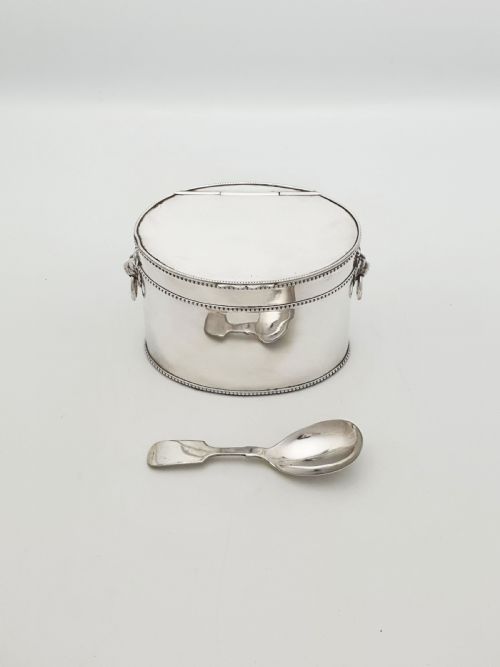


Antique Tea Caddy Handles
Antique tea caddy handles complete the profile of Georgian, Regency, and Victorian tea chests, providing both a functional grip and a period decorative accent.
Antique Tea Caddy Handles
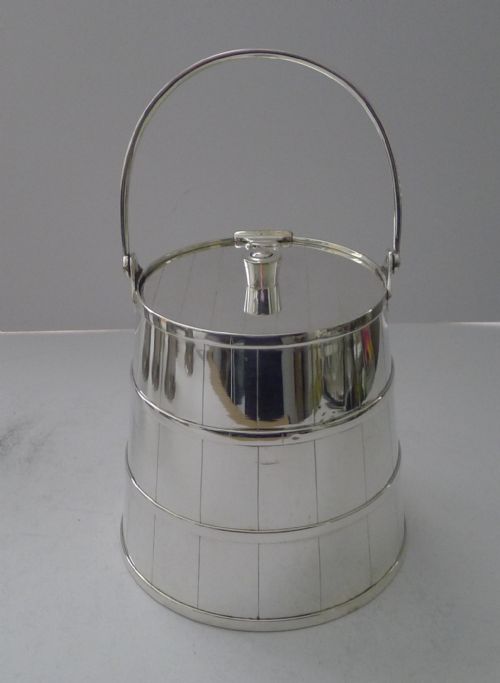
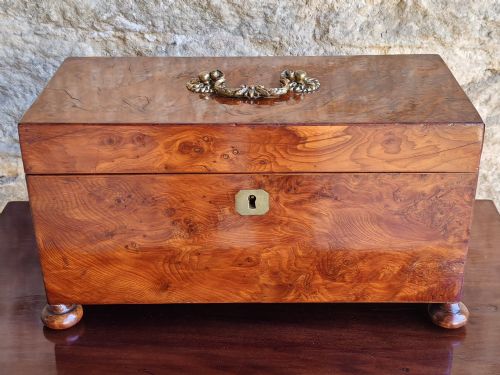
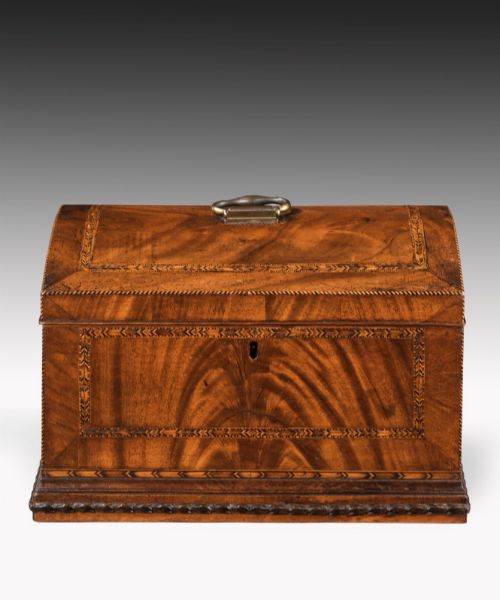
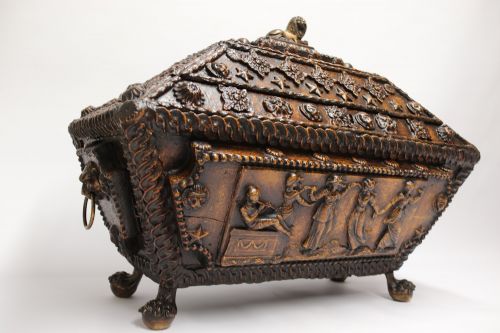
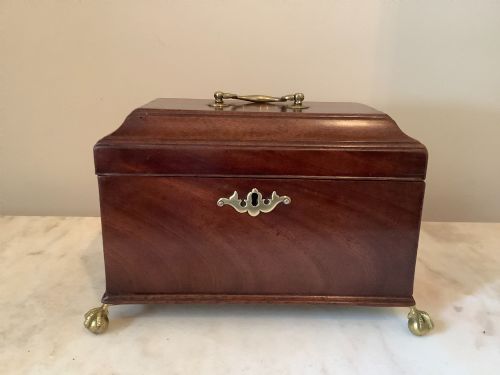
When searching for antique tea caddy handles, collectors encounter hardware fitted to wooden and metal tea chests, caddies, and biscuit barrels spanning the Georgian, Regency, and Victorian periods. The pieces appearing on this page most commonly take the form of cast brass drop rings, fixed bails, or sculptural lion masks found on mahogany, rosewood, and burr walnut containers.
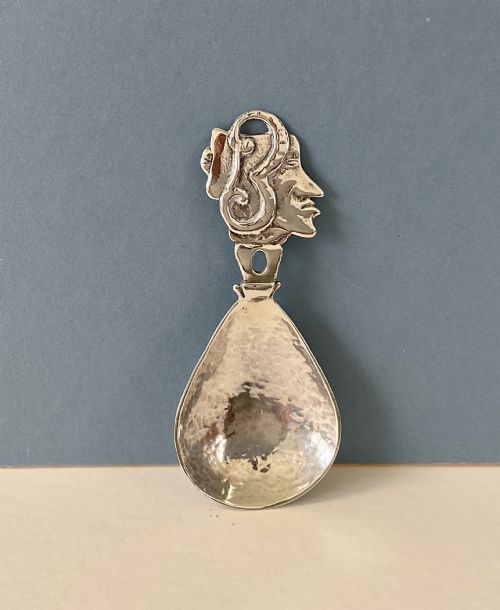
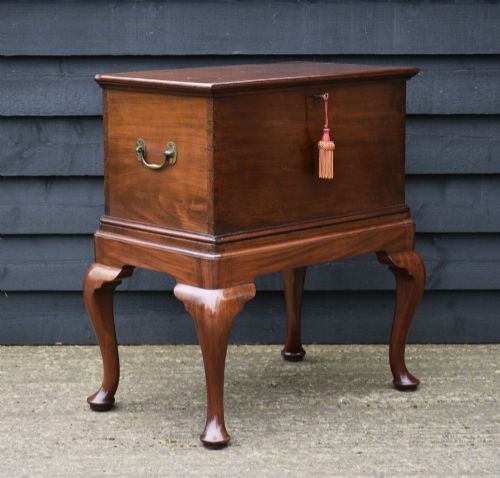
The objects housing these handles range from simple domestic boxes with secret drawers to elaborate sarcophagus-shaped caddies and inlaid chests. While some listings present individual spoons with decorative handles, the primary hardware category centres on the side mounts designed for lifting and carrying these valuable beverage containers.
Materials and construction methods
Makers utilised cast brass for the dominant share of metal mounts, often employing finishing techniques that produced crisp relief work for lion masks and backplates. Wood caddies themselves show cabinetry work in mahogany, boxwood, and laburnum, constructed with tight joinery to house dry tea leaves safely.
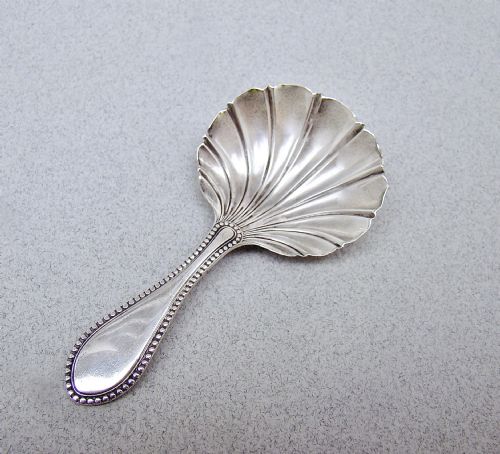
Silver and silver plate appear frequently on spoons and specific decorative mounts, shaped through repoussé work, chasing, and engraving. These metals were worked into delicate shell forms and geometric patterns during the Georgian and Victorian eras.
Some Victorian caddy spoons feature handles shaped precisely like tiny human hands.
Distinctions in craftsmanship and preservation
Quality in these items rests upon the crispness of the casting in metal mounts and the structural integrity of the surrounding woodwork. Superior examples retain their original backplates, screws, and rings without modern replacement parts altering the piece.
Cabinetry execution further divides the range, where fine secondary timbers, precise stringing, and well-fitted internal compartments signal higher workshops. The harmony between the hardware and the wood body dictates the overall standard of the object.
Martin Hall & Co
The Antique Tea Caddy Handles Glossary
- Lion mask handle
- A decorative mount shaped like a lion's head holding a ring in its mouth. These are typically cast in brass and secured to the sides of Regency and Victorian sarcophagus caddies.
- Sarcophagus caddy
- A tea chest shaped like a tomb or coffin with a domed or sloping lid. This form became popular during the Regency period and regularly incorporates heavy side handles.
- Caddy spoon
- A short-handled spoon specifically designed to measure loose tea from the caddy into the pot. They appear in sterling silver and silver plate with engraved or cast handles.
- Repoussé
- A metalworking technique where the artisan hammers the design from the reverse side to create raised relief on the front. This finish is commonly observed on late Victorian silver pieces.
- Stringing
- Thin inlaid lines of contrasting wood used to decorate the edges and panels of tea chests. This decorative banding distinguishes finer Georgian cabinetry.
Antique Tea Caddy Handles: Frequently Asked Questions
How do I identify a Regency tea caddy?
Regency tea caddies frequently feature distinct architectural forms such as the sarcophagus shape, resting on bun feet or a plinth base. They often incorporate brass lion mask handles and rich veneers like rosewood or mahogany.
Interior arrangements typically include mixing bowls and lidded canisters rather than simple open compartments.
Are caddy spoons considered part of the hardware?
Caddy spoons are separate functional items rather than fixed hardware, though they share stylistic traits with caddy handles. They were kept inside the tea chest alongside the dry leaves.
Collectors often group them together because both categories utilise precious metals and decorative casting techniques from the same eras.
How should I clean antique brass handles?
Historic brass mounts generally retain value when left with their natural aged patina rather than polished to a bright shine. Gentle dusting with a dry cloth is usually sufficient for routine maintenance.
Harsh chemical cleaners should be avoided as they can strip the surface and damage the surrounding wood veneers of the caddy.