
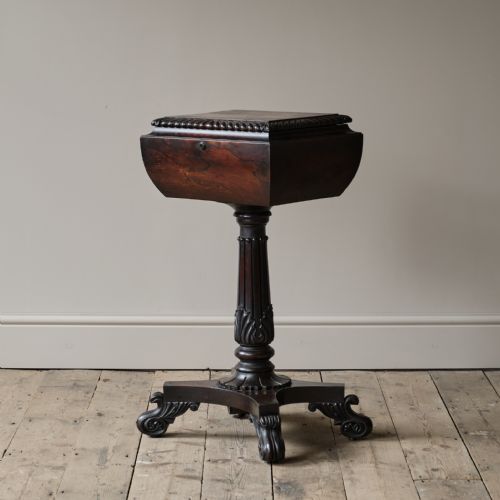
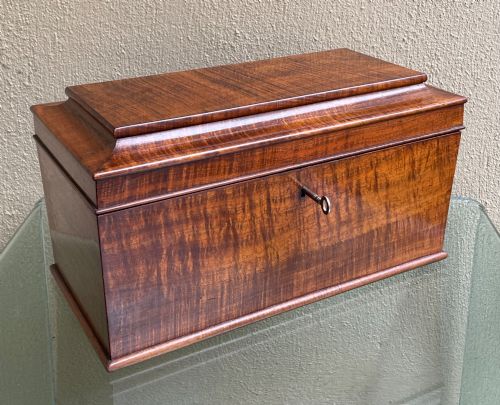
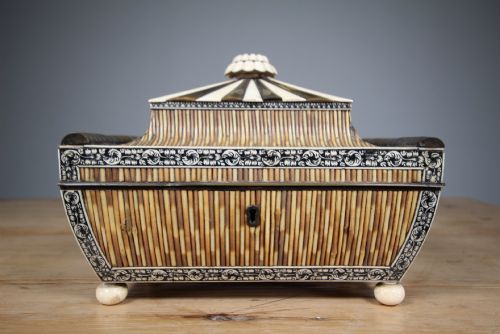
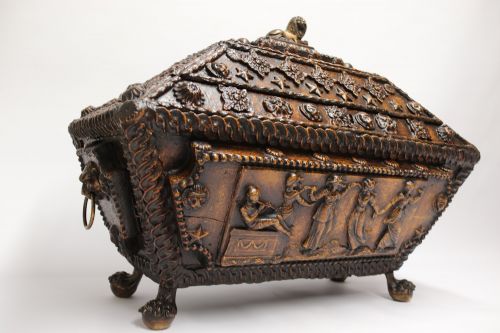
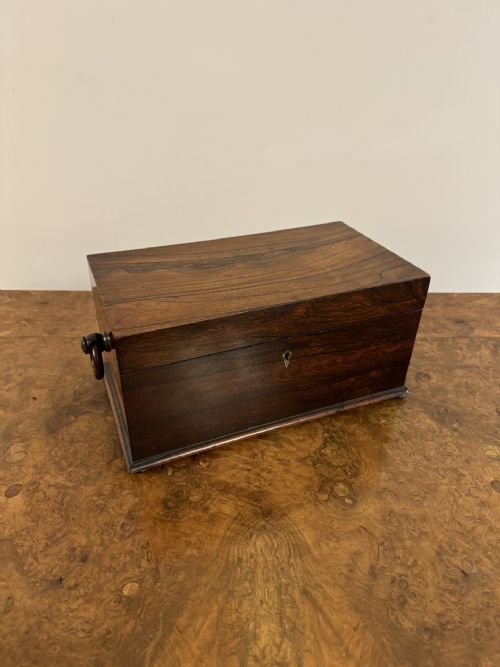


Regency Sarcophagus Tea Box
A regency sarcophagus tea box is a sturdy, architecturally styled container built for storing precious tea leaves during the early nineteenth century.
Regency Sarcophagus Tea Box
When buyers search for a regency sarcophagus tea box, they encounter sophisticated wooden caddies shaped like miniature classical tombs with sloping lids and pedestal bases. These containers reflect the neoclassical tastes of the Regency period, often appearing in rich timbers such as rosewood and mahogany.
The versions most commonly met on this page date from the early nineteenth century, specifically spanning the Georgian through William IV eras. While many served as tea caddies with internal compartments for loose leaves and a central glass bowl, others functioned as jewellery boxes, quill boxes, or keepsake cases.
Makers designed these objects to sit prominently on drawing room tables, combining domestic utility with formal architectural dignity. The sarcophagus silhouette remains a defining characteristic of the category, often accented with brass feet, ring handles, and intricate stringing.
Materials and construction
Cabinetmakers constructed these boxes using dense hardwoods like mahogany and rosewood, frequently selecting exotic veneers such as coromandel, satinwood, amboyna, and gonçalo alves. These timbers provided stable surfaces for elaborate marquetry, parquetry, and contrasting string lines in ebony and boxwood.
Listings feature rosewood, mahogany, coromandel, and amboyna alongside brass inlay and mother of pearl.
Distinctions in craftsmanship
The finest examples demonstrate superior timber selection, with highly figured burr yew-wood, flame mahogany, or book-matched rosewood grain wrapping seamlessly around the sarcophagus form. Lesser pieces utilise simpler straight-grained woods with minimal decorative embellishment.
Quality reveals itself in the execution of brass inlay and the precision of internal joinery, where lidded tea canisters fit flush within their compartments. Well-preserved original hardware, working locks with keys, and intact glass mixing bowls elevate an object above standard utility boxes.
The Regency Sarcophagus Tea Box Glossary
- Sarcophagus form
- A container shape featuring a sloped lid and a flared body reminiscent of a classical stone coffin, popular in furniture and decorative arts during the Regency era.
- Teapoy
- A pedestal table or large caddy designed to hold tea canisters and a mixing bowl, standing either on a central pillar or four legs.
- Escutcheon
- A protective plate surrounding a keyhole, frequently fashioned from brass, ivory, or mother of pearl to ornament the front of the box.
- Stringing
- Thin lines of contrasting wood inlay used to outline panels, drawers, and lids on fine cabinetry.
- Marquetry
- Decorative veneer work forming pictorial or geometric patterns using various woods, shells, and metals.
Regency Sarcophagus Tea Box: Frequently Asked Questions
What is inside a regency sarcophagus tea box?
Inside, these boxes typically contain two or more lidded compartments designed to keep different varieties of loose tea leaves separate and fresh.
Many examples also feature a central circular recess that once held a cut glass bowl used for rinsing spoons or blending tea strengths.
How do I care for rosewood tea caddies?
Keep wooden tea boxes away from direct sunlight and sudden temperature changes to prevent the delicate rosewood veneers from drying out or splitting.
Apply a microcrystalline wax occasionally to nourish the timber and maintain the natural lustre of the polished surface.
Were these boxes used only for tea?
While originally manufactured for storing expensive tea leaves, many containers were adapted during the nineteenth century for other domestic purposes.
It is common to find surviving interiors fitted out for holding stationery, sewing implements, legal documents, or jewellery.
How can I distinguish Regency from William IV pieces?
Regency pieces dating from around 1810 to 1820 tend to feature refined neoclassical proportions, delicate brass inlay, and restrained classical mounts.
Boxes from the subsequent William IV era often display heavier proportions, bolder scrollwork, and more robust architectural feet.