

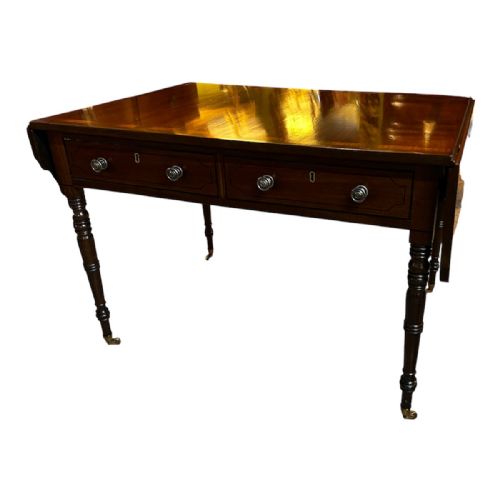


Regency Rosewood Drop Leaf
Regency rosewood drop leaf tables are versatile tables with folding flaps, prized for their figured timber and adaptability in reception rooms.
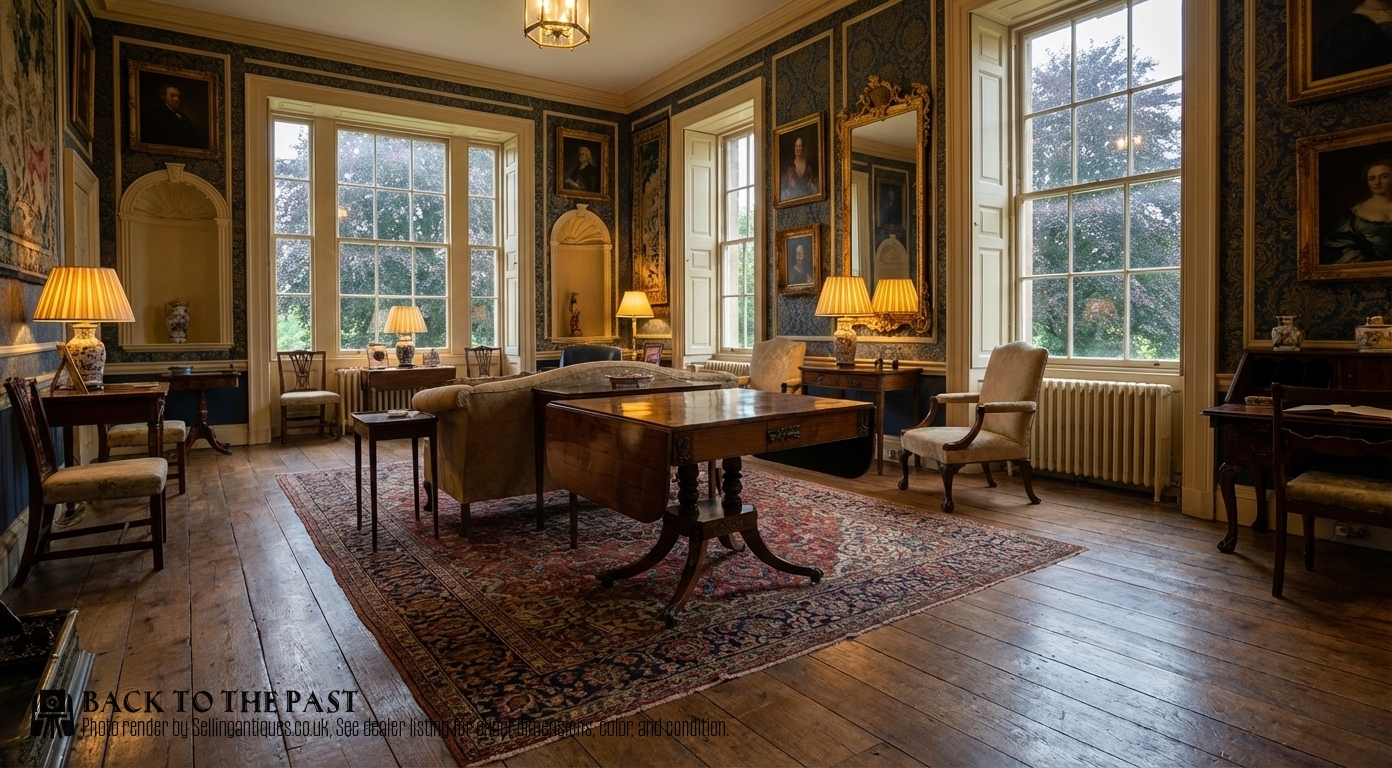
Regency Rosewood Drop Leaf
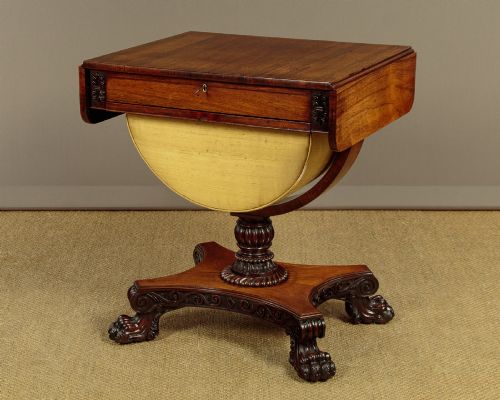
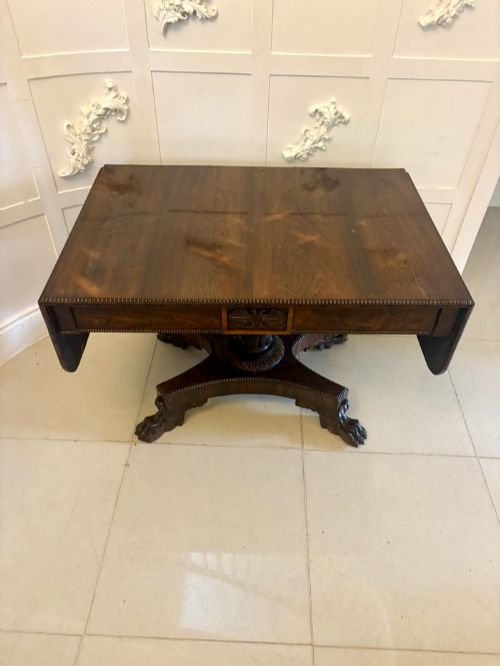
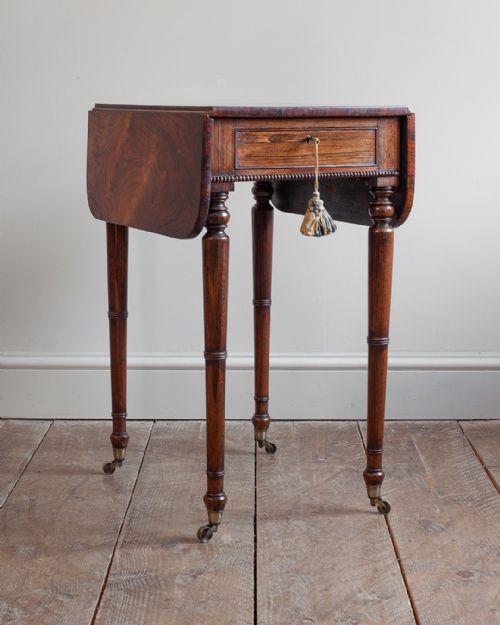
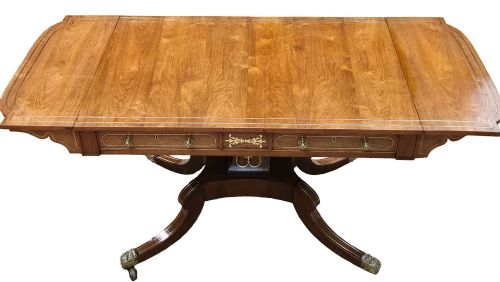
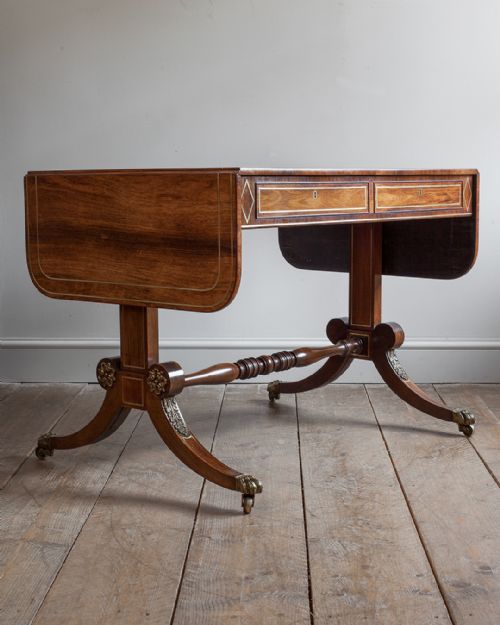
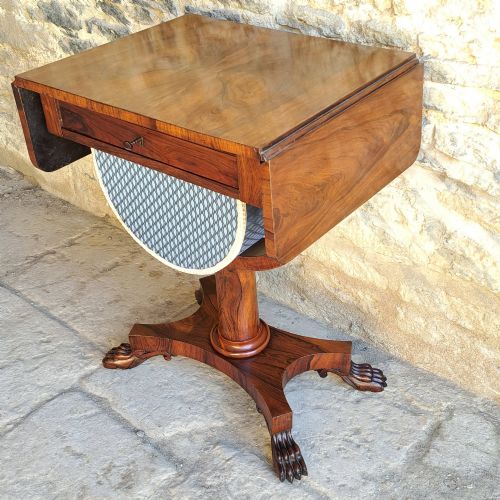
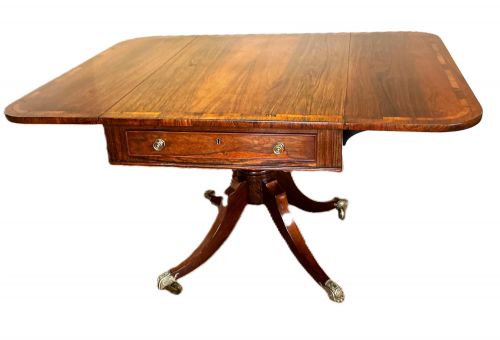
A regency rosewood drop leaf search brings up sophisticated multi-functional pieces, most frequently taking the form of sofa tables, work tables, and occasional tables dating from the Regency and early 19th Century periods. These tables typically feature drop leaves supported by folding brackets or fly flaps, allowing the surface area to expand and contract according to need.
The inventory on this page shows variations spanning from Pembroke and library tables to specialised games and writing tables. Alongside the predominant Regency period examples, related pieces emerge from the Georgian, William IV, and Victorian eras, reflecting sustained popularity across the 19th century.
How They Were Made
Cabinet makers utilised dense rosewood veneers over firmer secondary timbers, frequently enhancing the dark grain with contrasting crossbanding in mahogany or boxwood. Brass inlay, cut brass mounts, and parcel gilding appear regularly on finer examples to accentuate the structural lines.
Structural integrity relied on sturdy pillar and claw supports or trestle bases, often fitted with brass castors to ease movement. Drop leaves required precise hinge work and stable pivoting drop flaps to ensure the extended surface remained level.
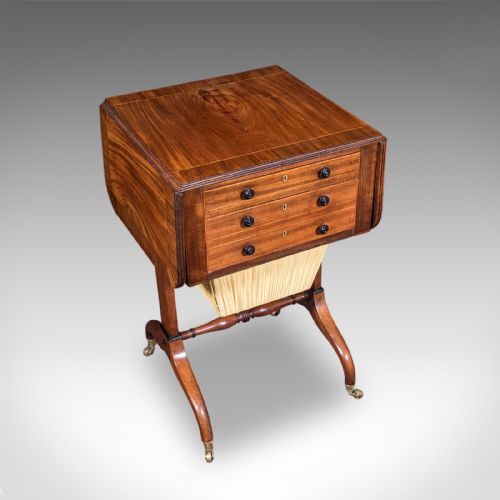
Several tables manage to conceal chess boards, writing slopes, and sewing bags beneath their modest drop leaves.
What Varies in Quality
The richness of the rosewood grain and the ambition of the brass inlay distinguish standard items from the finest productions. Selection of timber and symmetry in the figuring across the drop leaves demonstrate the maker's skill.
Refinement in the turned or carved supports and the incorporation of working drawers with fitted interiors for writing or sewing separate utilitarian items from grander reception room tables.
James Mein Kelso·Gillows·Druce And Co London
The Regency Rosewood Drop Leaf Glossary
- Drop leaf
- A table with hinged flaps on either side that fold down to save space or lift up to enlarge the surface. These leaves are supported by hinged wooden brackets or pivoting legs.
- Sofa table
- A long, narrow table designed to stand in front of or behind a sofa, typically equipped with two drop leaves and small drawers. They emerged during the Regency period as freestanding centre room pieces.
- Work table
- A compact table fitted with compartments, drawers, or fabric bags for sewing and needlework. These versatile pieces often double as writing or occasional tables.
- Crossbanding
- A strip of veneer applied around the border of a table top, with the grain running perpendicular to the central panel. This technique frames the primary timber and adds visual contrast.
- Parcel gilt
- Partially gilded or covered in gold leaf applied to specific carved or raised details. This highlights architectural elements against the dark rosewood background.
Regency Rosewood Drop Leaf: Frequently Asked Questions
Where should I place a sofa table?
These tables sit naturally behind a sofa or freestanding in the centre of a room. Their finished backs make them suitable for central placement where all sides remain visible.
Dropping the leaves allows the table to hug a wall compactly when space is tight.
How do I use the drop leaves?
Lift the hinged flaps until they are horizontal and swing out the wooden rule joints or brackets underneath to lock them into place. Ensure the support is fully engaged before placing items on the extension.
Lowering the leaves simply requires releasing the support and gently guiding the flap downward.
What is the difference between a work table and a sofa table?
Work tables are smaller and traditionally housed sewing equipment, wool, and writing materials inside integrated compartments or fabric wells. Sofa tables are longer and wider, proportioned to match the scale of a sofa.
Both types utilise drop leaves to adjust their footprint.
How do I date a rosewood table?
Examine the secondary timbers, construction methods, and hardware style alongside the overarching design period. Regency pieces from the early 19th century often display crisp brass inlay and distinct pillar supports.
Later Victorian interpretations tend toward heavier proportions and different leg turnings.