

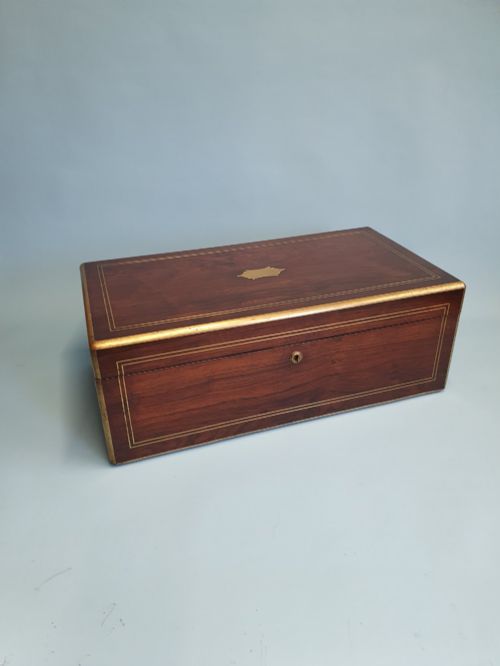


Brass Inlaid Rosewood Desk
A brass inlaid rosewood desk brings together rich dark timber and precise metalwork for serious correspondence.
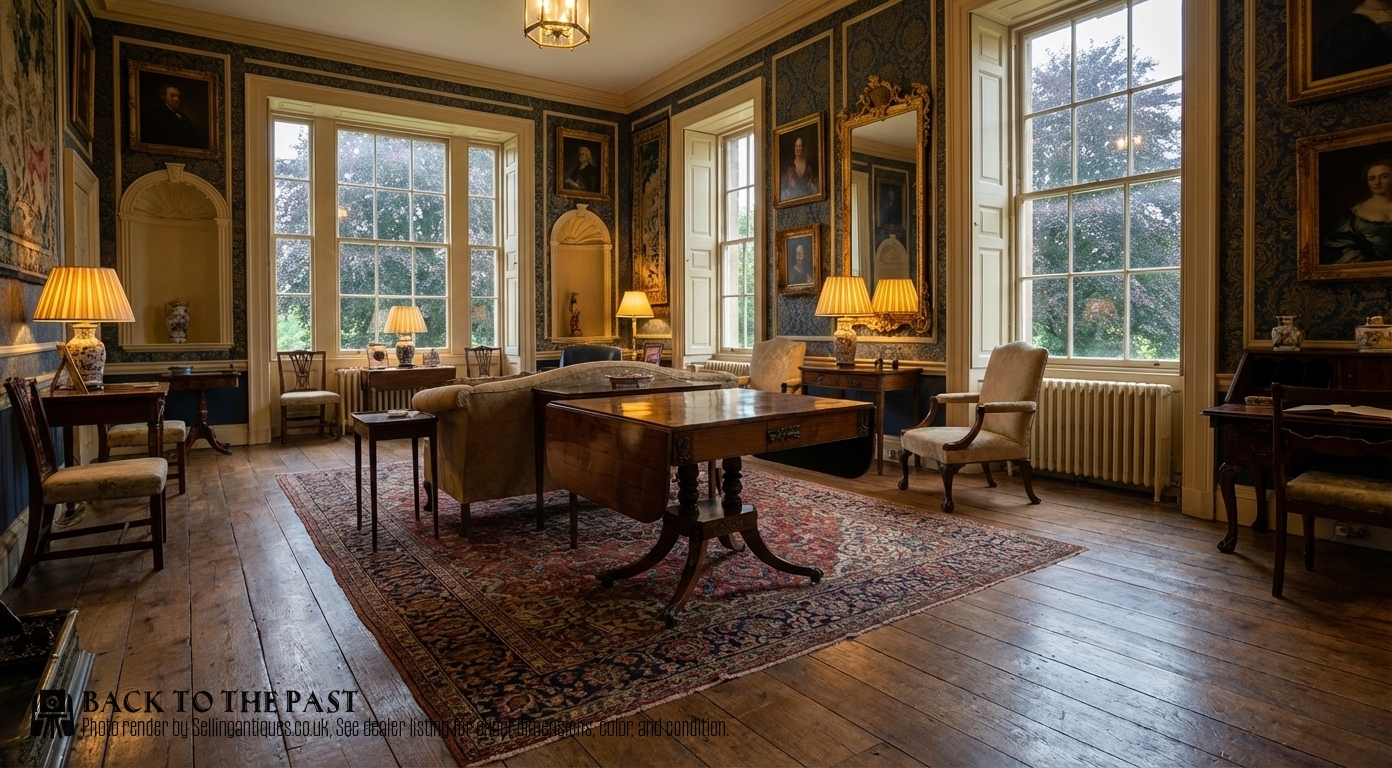
Brass Inlaid Rosewood Desk
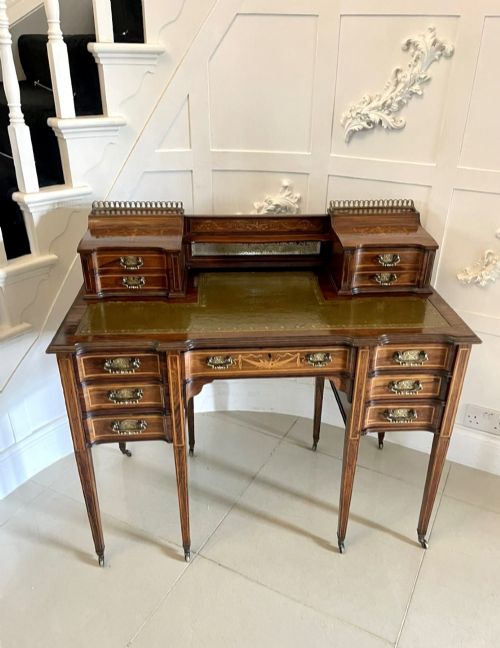
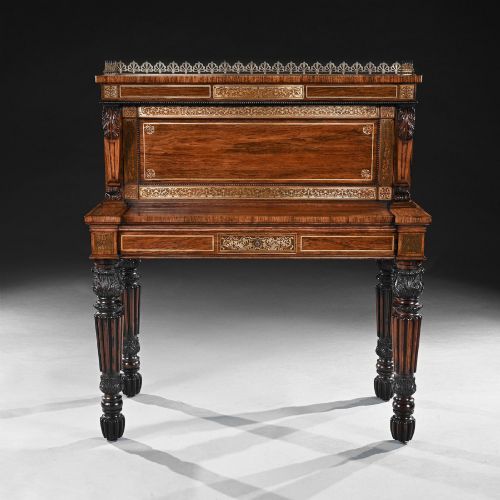
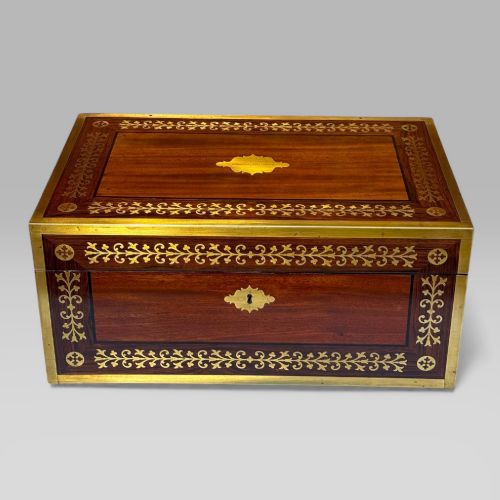
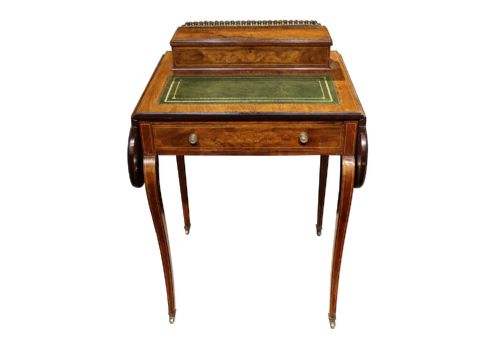
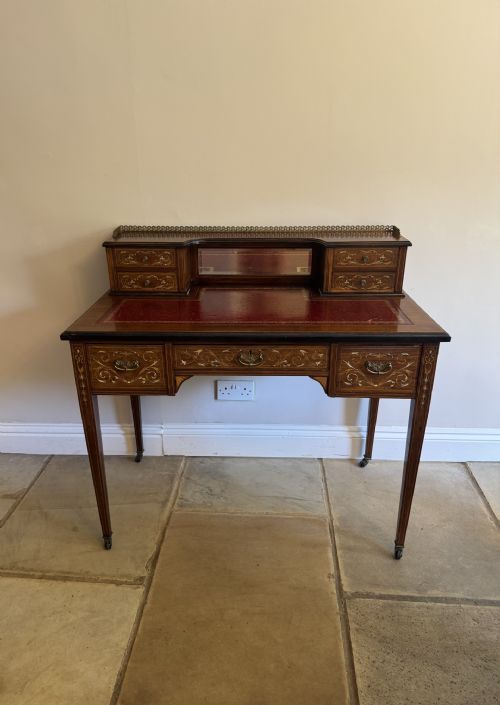
A brass inlaid rosewood desk groups together sophisticated writing furniture designed for domestic studies and libraries. When browsing this selection, buyers frequently encounter compact portable writing slopes alongside larger freestanding tables originating from the Regency and Victorian periods.
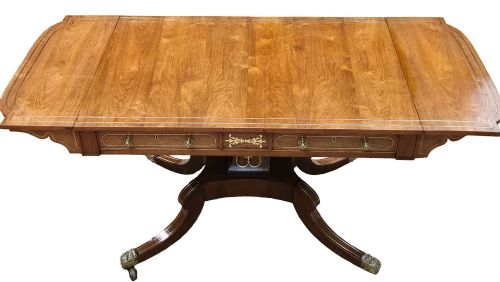
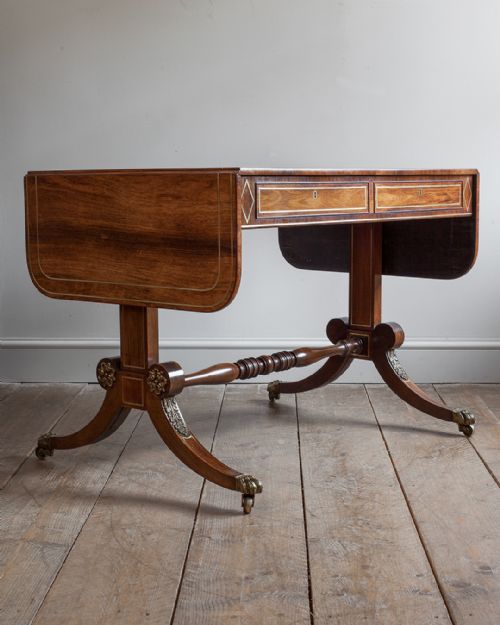
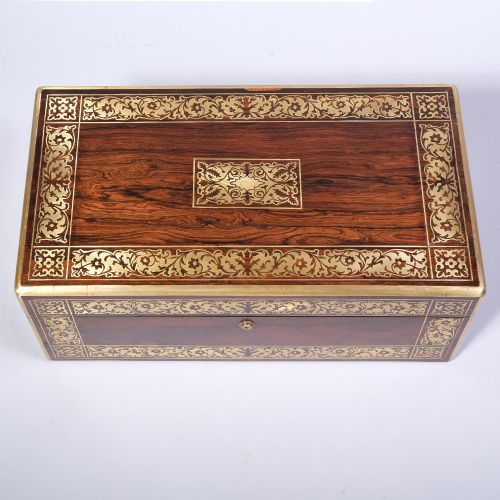
The assortment spans diverse forms built for stationary use or travel, including document boxes, sofa tables, and secretary cabinets. Georgian and 19th-century makers utilised dense tropical timber to create substantial pieces intended for prominent display.
Makers adapted these writing surfaces to suit changing domestic habits, incorporating fitted interiors with secret drawers and compartments for inkwells. The combination of dark wood grain and gleaming metal creates a distinct visual character particular to these eras.
Judging execution and finish
Quality rests on the precision of the metal inlay and the selection of the rosewood timber figures. Superior examples show tight, flush brass work where the metal sits level with the surrounding wood without gaps or lifted corners.
Fitted interiors also distinguish finer pieces, showing secondary woods of high grade and secret compartments that operate smoothly. The crispness of chased brass details and the integrity of original hinges indicate the standing of the workshop.
Listings feature items spanning the Georgian, Regency, and Victorian periods, constructed from rosewood, brass, and leather.
Maple & Co·Gillows Oxford Street Workshop·Collinson & Lock·Donald Ross·John McClean
The Brass Inlaid Rosewood Desk Glossary
- Rosewood
- A dense, heavily figured tropical timber prized for its dark brown colour and distinct grain patterns. Cabinetmakers relied on it for high-status furniture throughout the nineteenth century.
- Writing slope
- A portable box with a slanted lid that folds down to form a writing surface. These pieces contain internal compartments for paper, pens, and inkwells.
- Ormolu
- Gilded bronze cast and chased into decorative mounts or feet. French furniture makers utilised this technique to accent rosewood surfaces.
- Satinwood
- A pale, yellowish timber native to India and Ceylon used for contrasting inlay work. Artisans often combined it with darker woods to create geometric borders.
- Campaign box
- A sturdy portable writing case built for travel with reinforced corners and flush-fitting hardware. These items allowed officers and gentlemen to maintain correspondence on the move.
Brass Inlaid Rosewood Desk: Frequently Asked Questions
How do I maintain the brass inlay?
Keep the timber and metal clean using a dry, soft cloth to remove dust from the recessed channels. Avoid harsh metal polishes that can stain the surrounding rosewood.
Feed the wood periodically with appropriate wax to prevent the timber from shrinking away from the metal strips.
What is the difference between a slope and a desk?
A writing slope is a portable box designed to sit on top of another table, featuring a hinged sloping lid that opens to reveal storage compartments.
A desk is a freestanding architectural piece with its own legs or pedestal supports built for permanent placement in a room.
How do I date these pieces accurately?
Examine the construction methods of the interior drawers, the style of the brass inlay work, and the secondary woods used underneath. Regency pieces often feature bold brass banding, while Victorian examples introduce varied revival styles.
Hardware such as lock mechanisms and hinges also provides reliable clues to the manufacturing decade.
Can I use these for daily writing?
Most of these pieces function well for modern correspondence, provided the internal writing surface remains level and stable. Portable slopes offer a compact writing platform that can be moved around the home.
Ensure that fragile leather inserts or historic velvet surfaces are protected during regular use.