

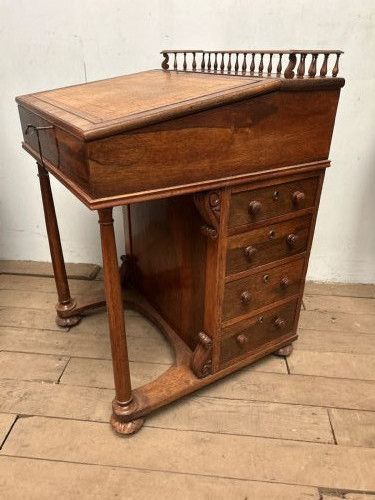


Regency Rosewood Cabinet Desk
These regency rosewood cabinet desk pieces combine compact writing spaces with rich tropical timbers, offering practical elegance for period interiors.
Regency Rosewood Cabinet Desk
A regency rosewood cabinet desk brings together compact writing surfaces and enclosed storage, reflecting the refined craftsmanship of the early nineteenth century. Buyers encountering this selection will frequently find Davenport desks alongside secretaire chiffoniers and writing cabinets.
The objects span the Regency, George IV, and William IV periods, showcasing distinct styles from around eighteen hundred to the eighteen thirties. Alongside traditional desks, related forms such as sewing tables and library clocks occasionally appear within the inventory.
Makers and workshops of the era favoured richly figured woods, resulting in pieces that function as both practical writing furniture and decorative focal points. The selection on this page demonstrates the variety of forms produced during this design-conscious epoch.
What Varies in Quality
The distinction between standard examples and exceptional pieces rests upon the precision of the brass inlay, the intricacy of the internal fittings, and the preservation of the original rosewood surfaces. Superior items display meticulous attention to detail in the boxwood stringing and the integration of sliding writing surfaces.
Proportion and structural integrity also define the upper tier of these pieces, where secondary timbers and interior drawer construction remain unaltered. The sophistication of the mechanism, whether in a Davenport or a secretaire chiffonier, separates workshop production from master cabinet making.
Regency Rosewood Cabinet Desk Retail Price Guide 2026
Typical asking prices for regency rosewood cabinet desk among the pieces listed under this phrase on Sellingantiques today, from the lower quarter to the upper quarter. They describe what is for sale here now, not the wider market.
Listings feature rosewood, brass, boxwood, and leather across pieces dated from the Regency period and the nineteenth century.
John McClean·Gillows
The Regency Rosewood Cabinet Desk Glossary
- Davenport
- A compact writing desk featuring a sloped, hinged writing surface above a pedestal of drawers. This form became popular during the Regency period for domestic study spaces.
- Secretaire Chiffonier
- A low cabinet combining enclosed lower shelving with a pull-out writing drawer or drop-front desk compartment. It serves a dual purpose in period interiors.
- Palisander
- A dense tropical timber related to rosewood, valued for its striking dark grain and heavy weight. Cabinet makers utilised it extensively for high-status furniture during the nineteenth century.
- Boxwood
- A pale, fine-grained wood employed for contrasting inlay work and stringing. Craftsmen used it to create geometric borders against dark rosewood surfaces.
Regency Rosewood Cabinet Desk: Frequently Asked Questions
What is a Davenport desk?
A Davenport desk is a compact writing furniture form featuring a slanted, leather-lined writing surface that typically slides forward. Beneath this top sits a pedestal of side drawers.
First appearing around the early nineteenth century, these pieces were designed for efficient use of space in domestic interiors and boudoirs.
How do I identify a Regency piece?
Regency furniture is identified by classical proportions, symmetry, and the use of dark exotic timbers such as rosewood and palisander. Details often include brass inlay and fine boxwood stringing.
Parks of this era date roughly from eighteen hundred to the eighteen thirties, encompassing the George IV and William IV reigns.
Where were these cabinets used?
These cabinet desks and secretaire chiffoniers were primarily placed in withdrawing rooms, libraries, and private bedchambers. They provided a discreet place for correspondence and record keeping.
Their finished backs and compact footprints allowed them to sit away from walls within fashionable interiors.
How should I care for rosewood furniture?
Rosewood surfaces benefit from stable room temperatures and protection from direct sunlight to prevent the timber from fading. Regular dusting with a soft, dry cloth preserves the polished finish.
Avoid placing these items near direct heat sources which can dry out the historic veneers and cause splitting.