


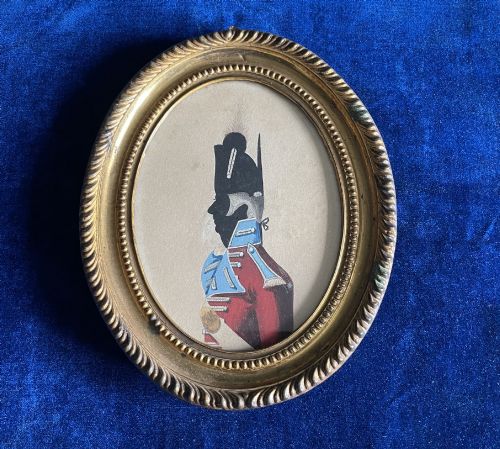
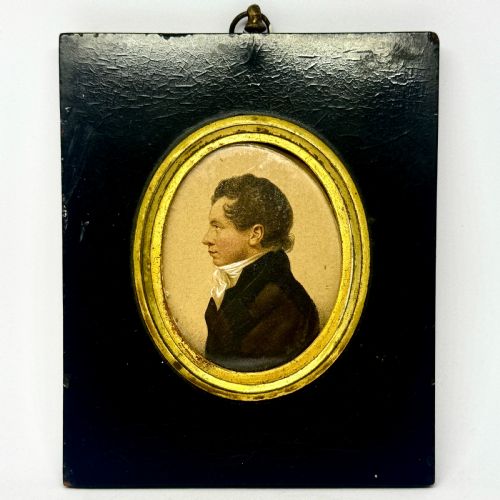
Regency Profile Miniature
A regency profile miniature captures the likeness of an ancestor in delicate silhouette, watercolour, wax, or ivory.
Regency Profile Miniature
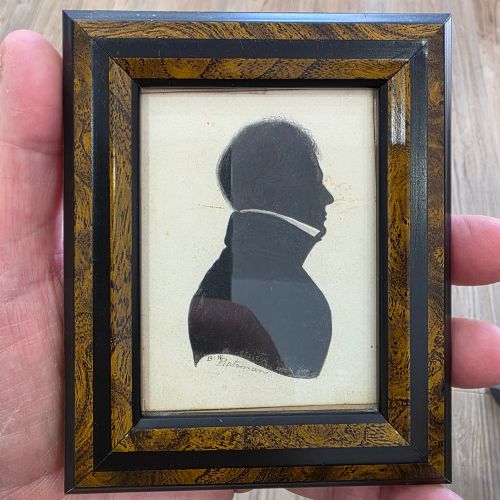
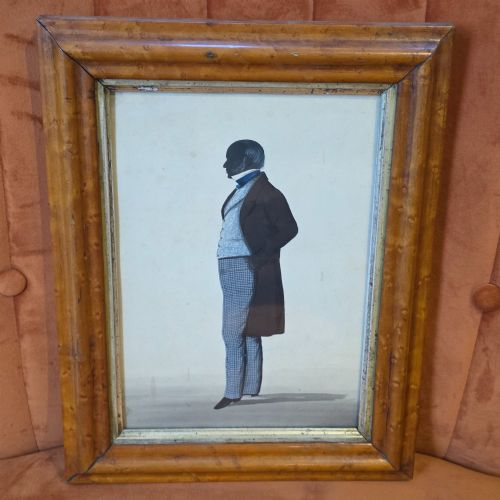
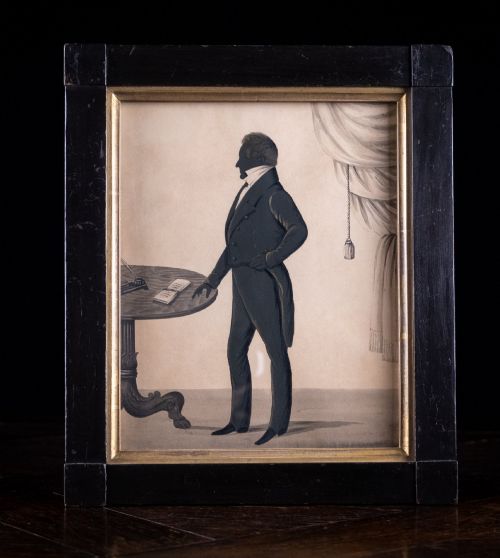
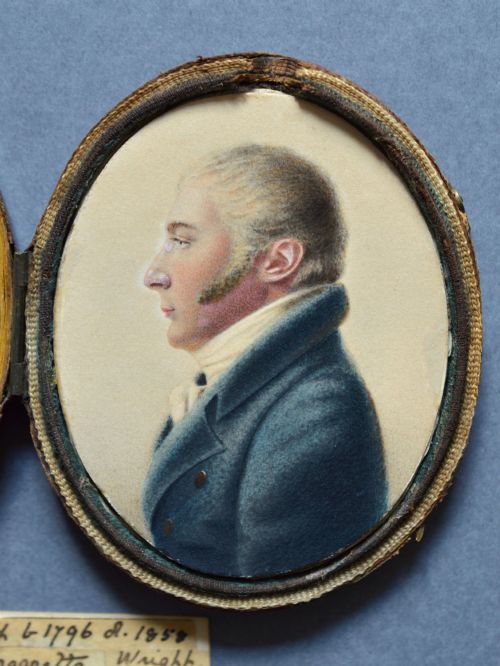
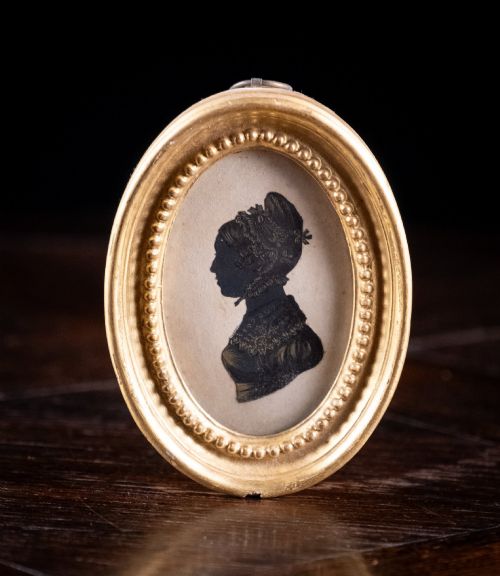
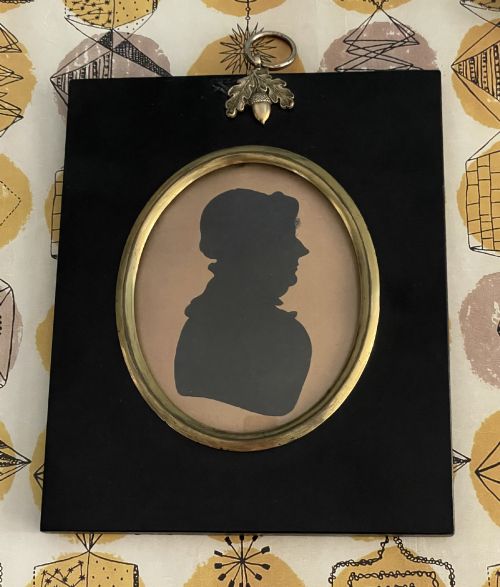
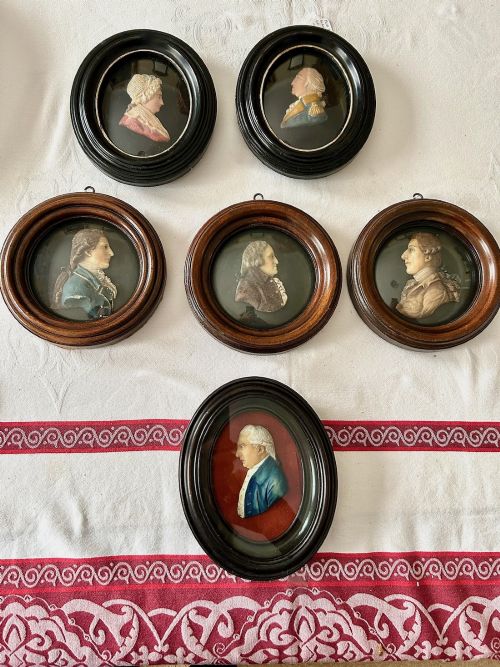
A regency profile miniature represents a small-scale portrait showing a sitter in side profile, created during the Georgian, Regency, and early Victorian eras. These works capture individual likenesses through cut paper, ink, watercolour, or carved relief materials designed for intimate display. The listings here comprise portrait miniatures, silhouette portraits, and framed wall art from the nineteenth and eighteenth centuries.
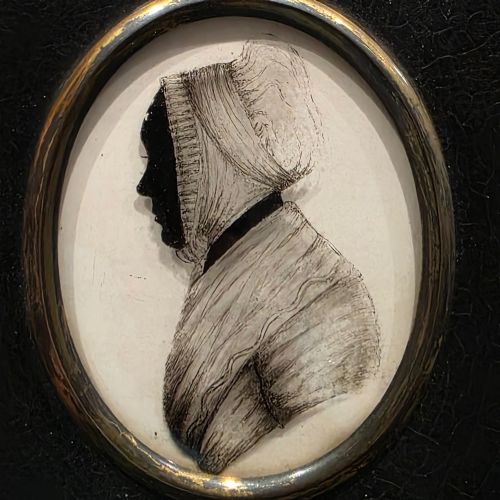
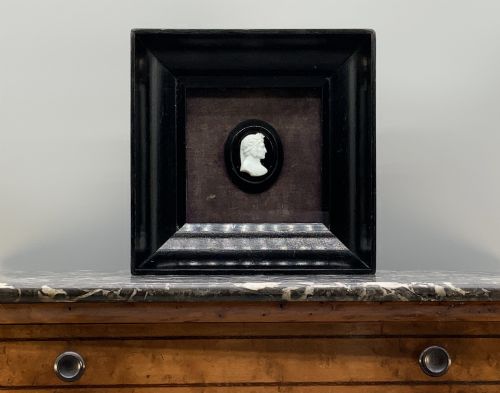
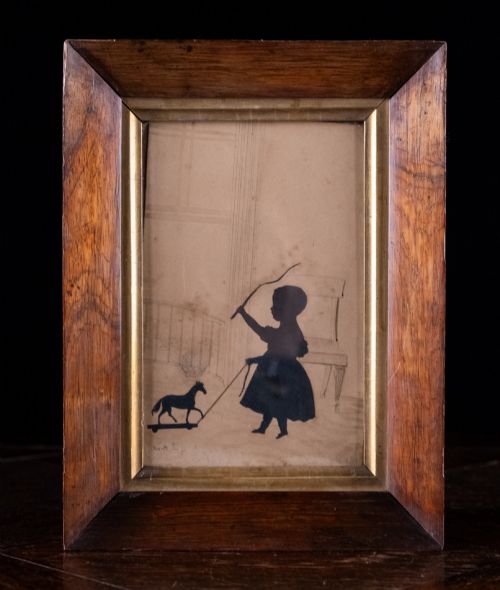
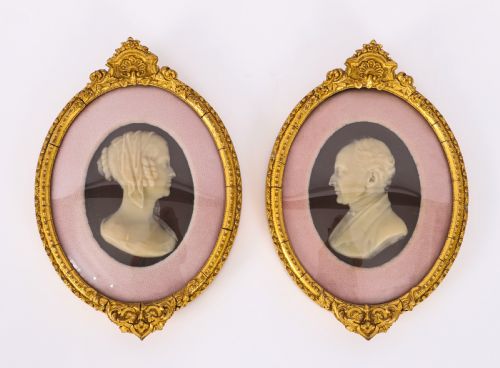
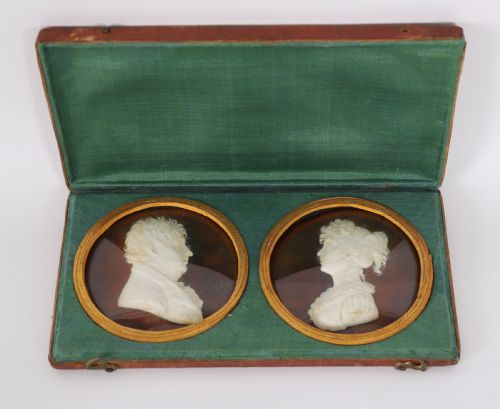
The version most commonly encountered on this page is the silhouette portrait, often executed in ink and paper, cut from black card, or painted on glass. Alongside these silhouettes appear watercolour portraits on card or ivory, carved ivory plaques, and wax portrait reliefs. These pieces frequently retain their original ebonised wood, gilt wood, or rosewood frames, preserving the domestic character of the period.
Materials and construction
Makers constructed these works using paper, glass, card, and ivory as grounds for ink, watercolour, and wax. Silhouettes were hand-cut from paper or painted directly onto glass with reverse painting techniques, sometimes enhanced with gilt highlights. Portrait miniatures utilised watercolour applied to ivory or card, while other pieces involved carved ivory plaques and wax relief profiles.
Framing materials primarily consist of ebonised wood, gilt wood, and rosewood, protecting the delicate internal components behind glass. Brass fittings and hanging loops frequently secure the small frames, maintaining the structural integrity of these portable artworks over centuries.
Materials found across the listings include glass, paper, brass, wood, ink, watercolour, ebonised wood, and gilt wood.
Distinctions in quality
Quality rests upon the precision of the cutting, the subtlety of the painted brushwork, and the clarity of the sitter's profile. Finer examples display meticulous hand-cut silhouette work or detailed watercolour rendering on ivory, capturing distinct facial expressions and period attire with accuracy.
The preservation of the original framing, whether ebonised wood, gilt wood, or rosewood, influences the integrity of the piece. Works bearing the documented signatures of known profile artists or complete provenance separate standard decorative items from works of historical significance.
Bateman·Frith·James Sharples·George Atkinson·Thomas John Horsley·James Gillespie·Augustin Edouart·Hubard Gallery·John Miers·Archibald Skirving·John Smith of Edinburgh·Jeremiah Steele
The Regency Profile Miniature Glossary
- Silhouette
- A solid black profile likeness, usually cut from paper or painted on card, glass, or plaster.
- Reverse painting
- A technique where an image is painted on the underside of a glass panel so it is viewed through the clean glass front.
- Ebonised wood
- Timber treated with a finish to imitate the dark, dense appearance of ebony wood.
- Grand Tour
- A traditional trip through Europe undertaken by upper-class young men to collect art and antiquities.
- Miniature portrait
- A small-scale painting executed with fine detail, frequently created on ivory, card, or vellum.
Regency Profile Miniature: Frequently Asked Questions
How were these miniature portraits displayed?
Owners typically hung these small framed works in intimate domestic spaces such as private chambers, dressing rooms, or hallways alongside other family likenesses.
Their compact scale allowed multiple portraits to be arranged closely together in tight groupings on a wall.
What materials are common in silhouettes?
Makers relied heavily on paper, card, ink, and glass to create these profile images, frequently adding gilt highlights to accent clothing and jewellery.
Some examples utilised wax relief or carved ivory mounted against dark backgrounds inside protective wooden frames.
How do I care for antique miniatures?
These works require protection from direct sunlight to prevent the fading of watercolour pigments, inks, and paper grounds.
Keeping them in stable indoor humidity conditions preserves the delicate wooden frames and prevents moisture damage to the internal paper or ivory.