


Profile Shade Miniature
Profile shade miniature works are delicate likenesses that capture a sitter's likeness in miniature, prized for their intimate scale and striking contrast.
Profile Shade Miniature
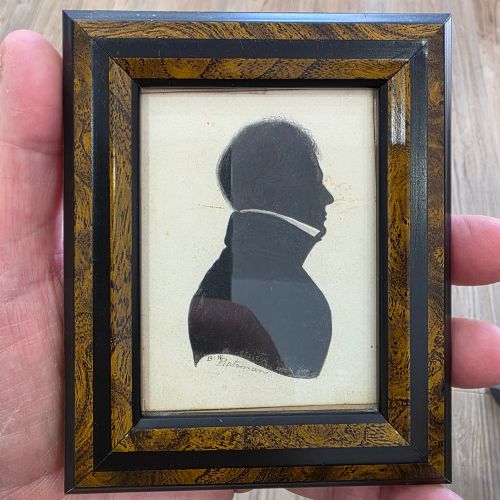
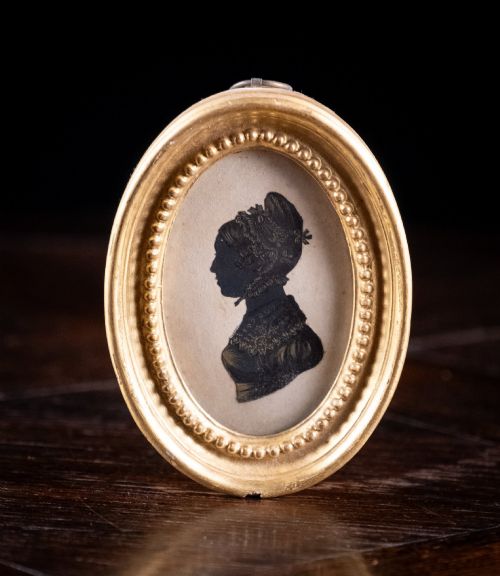
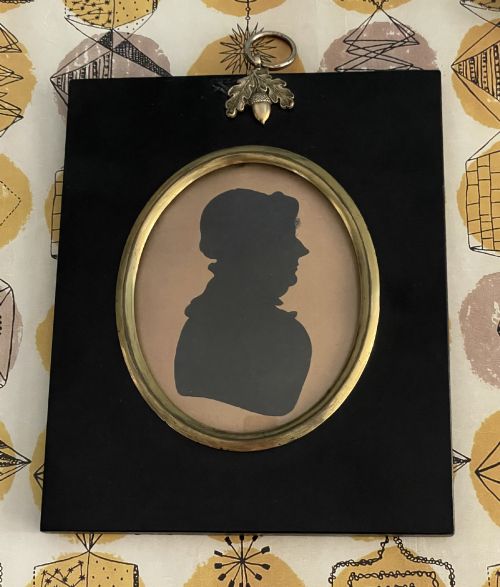
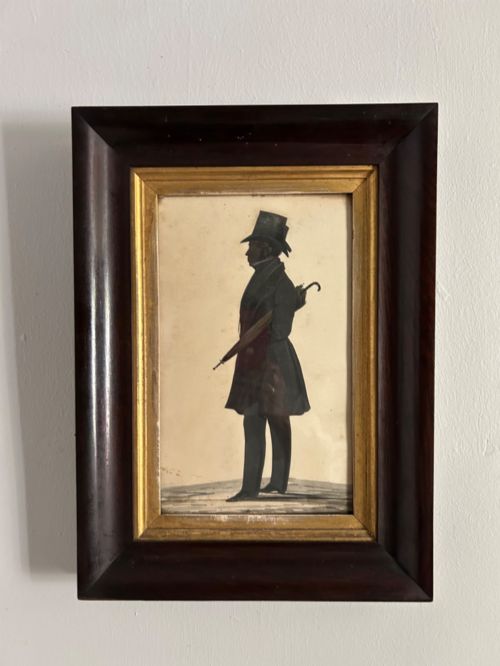
Visitors browsing this selection will most frequently encounter nineteenth century and Regency examples. These pieces typically appear in ebonised wood or gilt frames, ranging from bust-length portraits to full-length studies.
How they were made
Makers fashioned these works using paper, ink and glass, frequently mounting cut or painted silhouettes against a pale background. Artists enhanced finer details using gold leafing and delicate brushwork directly onto the paper or the reverse of the glass.
Frames of ebonised wood and brass housed these delicate portraits, protecting the paper and ink from moisture and handling. Artisans applied gilt highlights to accentuate collars, bonnets and lapels within the composition.
Dogs occasionally sat for their portraits too, as shown by a unique cut silhouette of a canine companion from the nineteenth century.
What varies in quality
Quality rests upon the precision of the cutting or the sureness of the painted line, distinguishing skilled handiwork from routine production. The finesse with which an artist captured a sitter's likeness using only a dark outline dictates the desirability of the piece.
The sophistication of the framing and the presence of contemporary gilding or signature details elevate certain works above others. Pieces retaining documented connections to known galleries or artists display a higher degree of artistic accomplishment.
Bateman·James Gillespie·Hubard Gallery·Augustin Edouart·George Atkinson·John Smith of Edinburgh·Miers
The Profile Shade Miniature Glossary
- Silhouette
- A portrait representation showing the profile of a subject, filled in with a solid dark colour. This form relies entirely on outline and contour rather than internal facial details.
- Ebonised wood
- Timber treated to resemble ebony, frequently utilised for nineteenth century picture frames. This dark finish provides a stark contrast that makes the pale background and dark profile stand out.
- Reverse painting on glass
- A technique where the artist applies pigment to the back of a glass sheet, viewed from the front. This method imparts a glossy, reflective depth to the miniature portrait.
- Gilt
- A thin layer of gold or gold-like material applied to surfaces such as frame mouldings or highlights on the portrait. It brings warmth and catches the light around the dark central image.
Profile Shade Miniature: Frequently Asked Questions
What is a profile shade miniature?
A profile shade miniature is a small framed portrait depicting a sitter in silhouette, created through painting or paper cutting during the Georgian, Regency and Victorian eras.
These compact artworks were frequently hung in small groupings on parlour walls or kept as personal tokens of remembrance.
How do I date these silhouettes?
Dating relies upon the framing materials, the cut of the sitter's clothing, and any inscribed signatures or gallery labels on the reverse. Regency and nineteenth century examples often feature distinctive ebonised frames with brass hanger rings.
Costume details such as high collars, bonnets and cravats provide reliable clues for narrowing down the decade of creation.
How were these portraits displayed?
Original owners typically hung these lightweight pieces in tight clusters upon drawing room walls, often arranged around larger oil paintings or mirrors. Their small scale allowed domestic interiors to display numerous family likenesses without cluttering the room.
They are best displayed away from direct sunlight to protect the fragile paper, ink and watercolour pigments from fading.
Are all silhouettes cut from paper?
Not all examples are cut paper; many are meticulously painted with ink or watercolour on paper or glass. Painted profiles allowed artists to incorporate fine hair strokes and gold leaf highlights that scissor work could not achieve.
Both painted and cut versions were widely produced by professional artists working from portrait studios.