

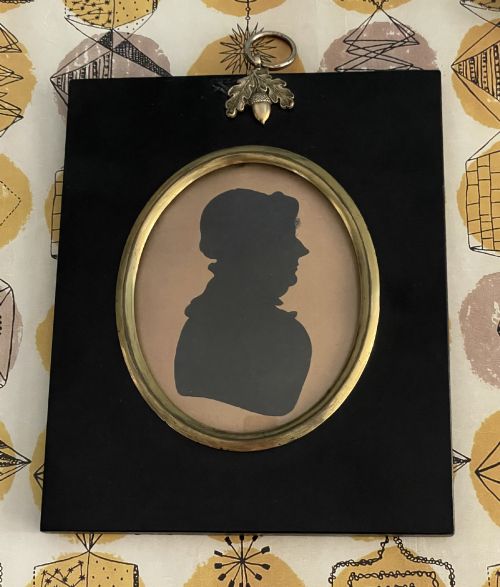
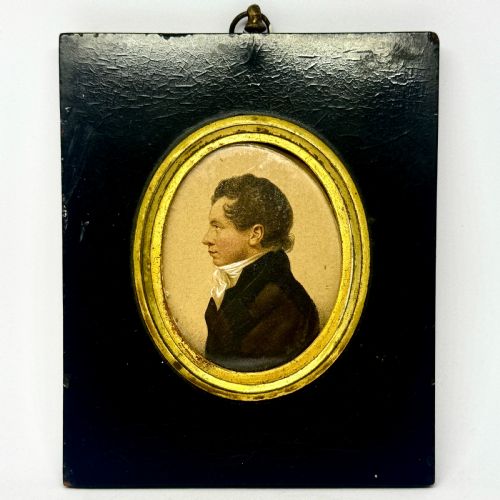


Brass Framed Silhouette Miniature
These brass framed silhouette miniature pieces are small likenesses captured in profile, offering an intimate glimpse into Georgian and Regency lives.
Brass Framed Silhouette Miniature
A brass framed silhouette miniature represents a compact profile portrait, typically housed within a slender metal surround and protected by glass. These small works capture sitters from the Georgian, Regency, and nineteenth century periods in sharp detail.
The pieces on this page appear in various forms, including cut paper, painted silhouettes on glass, and works on plaster. Ebonised wood frames often complement the polished brass bezels, creating a distinct contrast that defines the look of these miniatures.
Makers recorded in these listings include notable names such as John Miers, J. Deacon, George Atkinson, James Gillespie, and Thomas London. Their works range from simple profile cuts to elaborate painted portraits with fine gilded embellishments.
Materials and methods
Makers created these portraits using paper, plaster, and glass as the primary surfaces for the profile image. Cut paper works relied on precise scissor work, while painted examples utilised delicate watercolours and black pigment.
The distinctive enclosures combined brass frames with wood, frequently employing ebonised timber to darken the border and focus attention on the light profile within. Convex glass often protected the delicate surface from dust and damage.
Gilding added fine details such as jewellery, hair combings, and costume edges directly onto the glass or paper surface. This technique required steady hands and miniature brushes to achieve the necessary precision.
Listings feature works from the eighteenth and nineteenth centuries, utilising brass, glass, paper, and ebonised wood.
Judging quality
Quality in a brass framed silhouette miniature rests upon the precision of the profile cut or the delicacy of the brushwork. Master practitioners captured likeness and character with minimal lines, whereas lesser examples lack anatomical accuracy.
The refinement of the brass frame and the presence of original convex glass elevate the status of a piece. Finer works also retain written inscriptions on the reverse, identifying the sitter and occasionally the artist.
George Atkinson·James Gillespie·Thomas London·J. Deacon·John Miers
The Brass Framed Silhouette Miniature Glossary
- Silhouette
- A portrait profile filled in with a solid dark colour, usually black, against a pale background. The form derives its name from Étienne de Silhouette, a French finance minister.
- Ebonised wood
- Timber treated to resemble ebony, providing a deep black finish. Makers utilised this material for frames to contrast with bright brass bezels.
- Convex glass
- Curved glass used to cover portrait miniatures, adding depth and protecting the delicate painted or cut surface beneath. This glazing method was standard during the Georgian and Regency eras.
- Gilded silhouette
- A profile portrait enhanced with gold leaf or metallic paint to highlight costume details and accessories. Artists applied this method to glass or paper.
Brass Framed Silhouette Miniature: Frequently Asked Questions
What is a brass framed silhouette miniature?
A brass framed silhouette miniature is a small profile portrait encased in metal and glass, produced mainly during the Georgian and Regency periods to record personal likenesses.
These pieces served as portable mementoes, allowing individuals to carry images of family members or notable figures before photography became widespread.
How do I date a silhouette?
Dating relies on costume details, hair styles, and framing materials, with Regency examples often featuring distinct turbans, high collars, and convex glass.
Inscriptions on the reverse or paper watermarks can provide further chronological clues regarding the creation date.
Where were silhouettes displayed?
Owners typically hung these small framed portraits in intimate rooms such as bedchambers, boudoirs, or small parlours where guests could view them closely.
Some examples were designed to stand on mantelpieces or sit within travel cases for personal use during journeys.
Are all silhouettes cut from paper?
Not all profiles were cut from paper, as many artists painted directly onto glass, card, or plaster using dark pigments and fine brushes.
Painted versions often incorporated delicate gilding to render clothing textures and jewellery.