


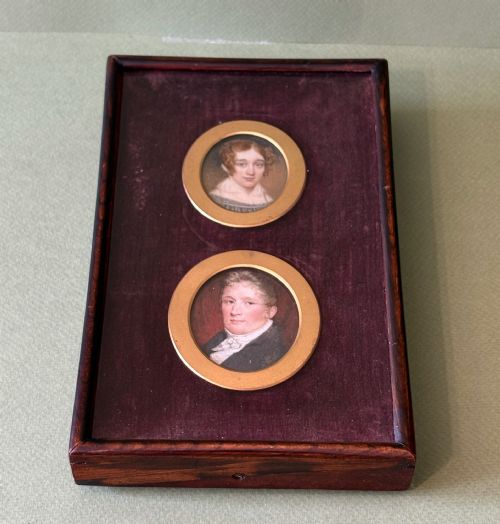
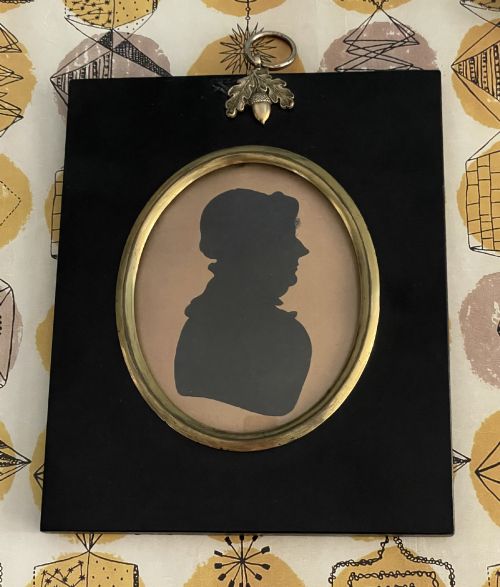
Regency Portrait Miniature Frame
These pieces of regency portrait miniature frame history are intimate works holding small-scale likenesses designed for personal devotion.
Regency Portrait Miniature Frame
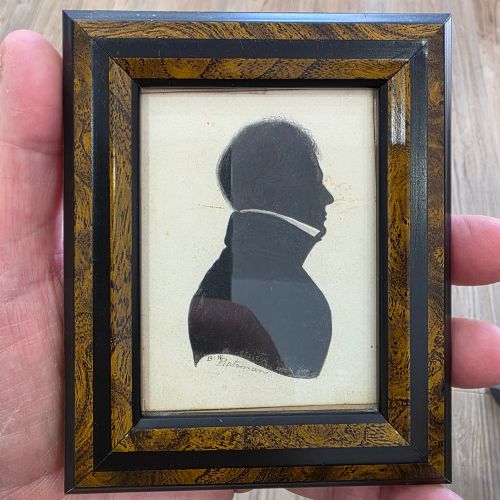
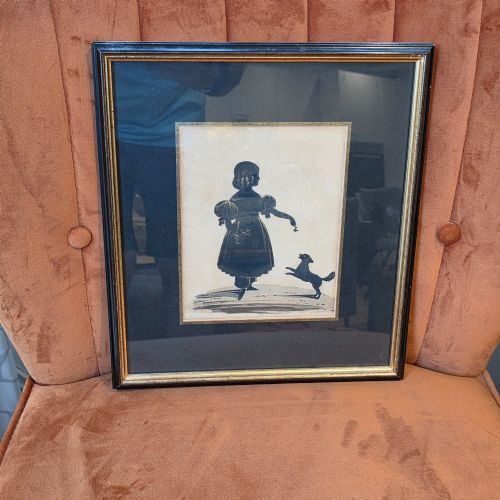
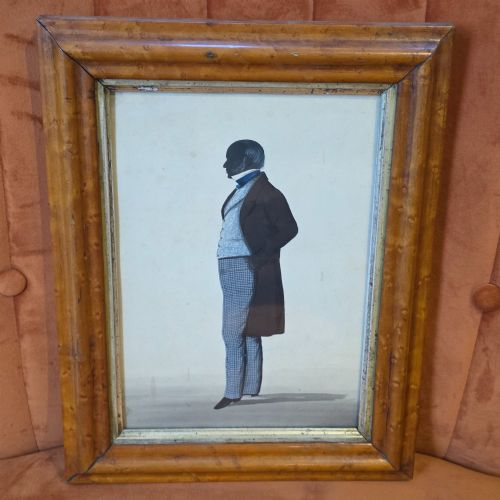
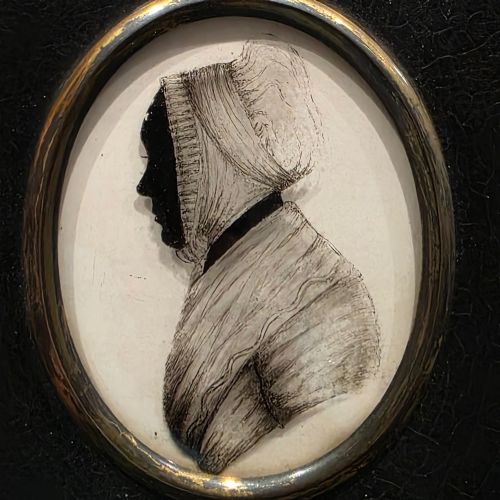
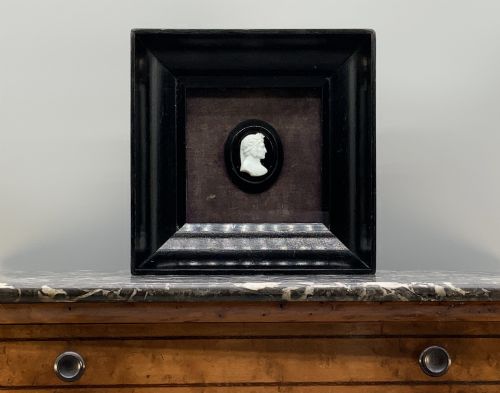
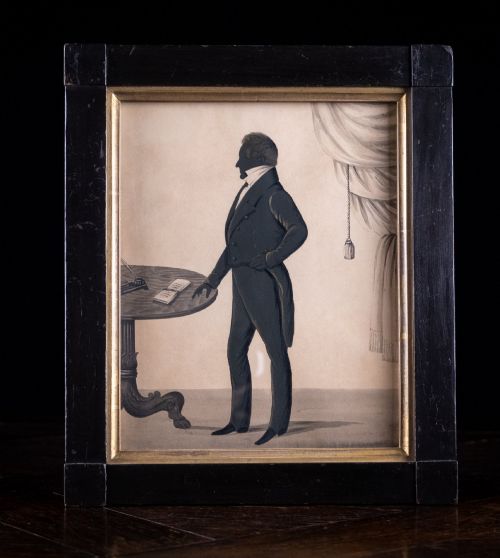
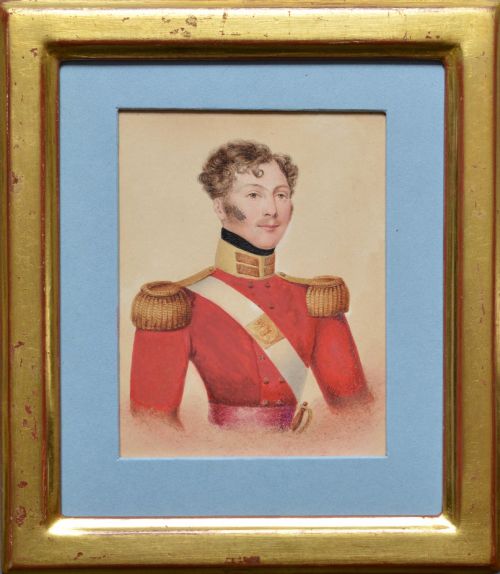
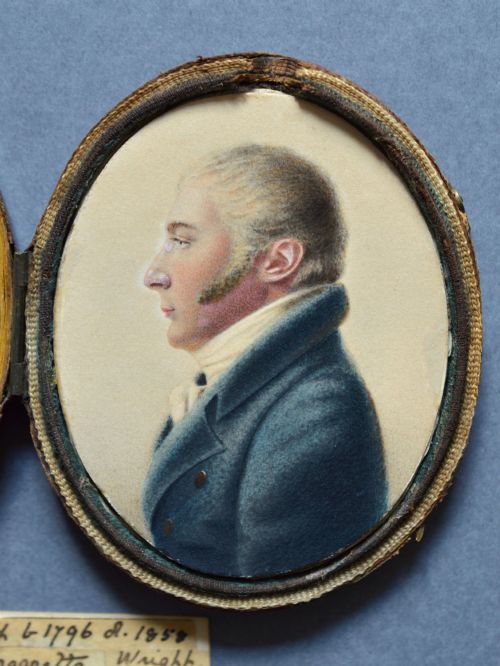
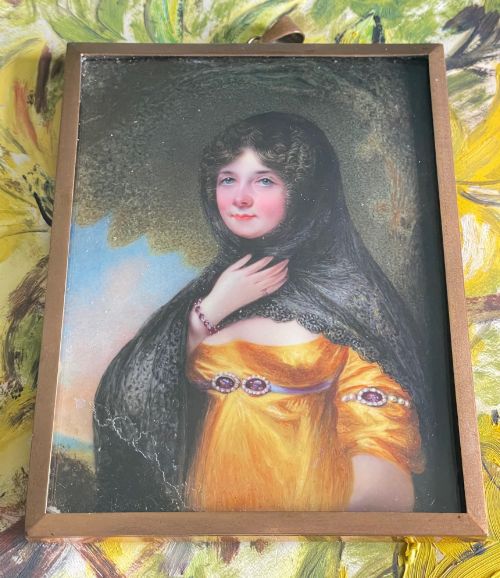
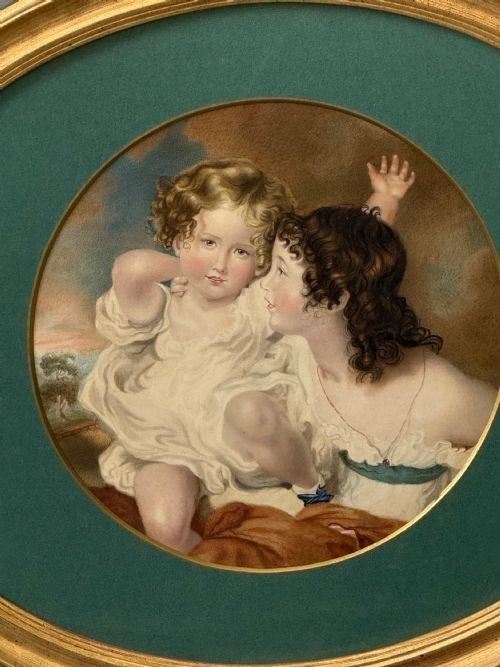
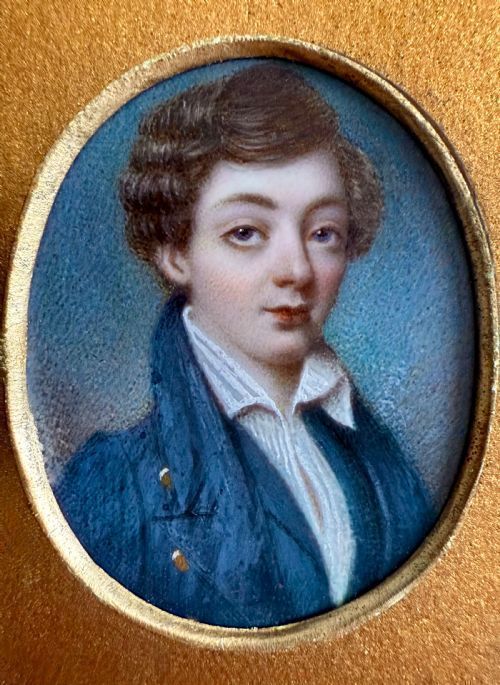
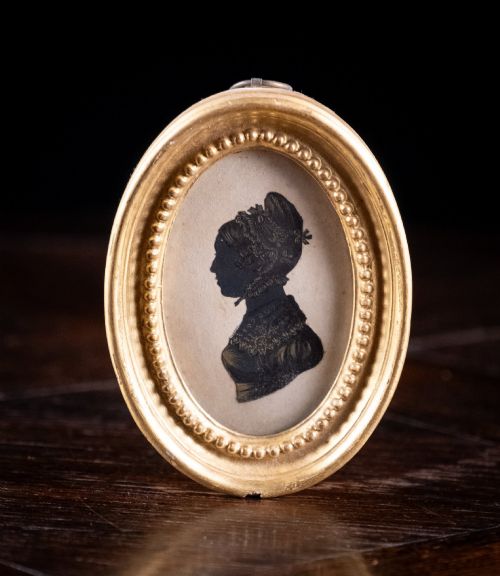
A regency portrait miniature frame houses delicate likenesses executed in watercolour, enamel, wax, pencil, or cut paper, capturing sitters from the Georgian, Regency, and early Victorian eras. Most examples encountered here combine small painted or silhouette portraits with period surrounds of wood, gilt metal, or brass.
The objects span individual portraits of gentlemen, officers, and children, alongside pairs and relief plaques originating from Grand Tour travels. These small works reflect the domestic portraiture tastes of the nineteenth century.
Framed artworks range from simple turned wooden surrounds to gilt metal stands and figural profiles created by notable practitioners of silhouette and miniature painting.
Materials and Techniques
Makers utilised watercolour on paper, enamel, and gouache, often pairing these painted surfaces with glass protection and backing papers. Carved ivory, wax relief, and cut paper silhouettes supplemented the painted works.
Encasing materials included brass, gilt metal, giltwood, and figured walnut, creating compact architectural housings for the artwork within. These mounts incorporated glass fronts and delicate stands or suspension loops for wall display.
Materials recorded across the selection include brass, giltwood, glass, ink, and figured walnut.
Factors of Quality
The refinement of the facial likeness and the delicacy of the brushwork or cutting distinguish superior examples from ordinary production. Skilled handling of light and detail in the portrait sets the finest works apart.
The integrity and original matching of the frame to the artwork contribute significantly to the standing of the piece. Period mountings featuring quality brass, gilt metal, or figured wood enhance the overall character.
William James Hubard·Henry Bone·Thomas John Horsley·Horace Hone·Richard Cosway·Augustin Edouart·John Miers
The Regency Portrait Miniature Frame Glossary
- Silhouette
- A profile portrait cut from paper or painted in solid black ink, often enhanced with gilt highlights.
- Enamel
- A durable vitreous composition fused to a metal backing plate, providing a glossy and permanent surface for miniature portraits.
- Grand Tour
- A cultural journey undertaken by wealthy young Europeans, yielding souvenir plaques and portraits collected along the route.
- Giltwood
- Timber carved and coated with a layer of gold leaf or metallic powder to simulate solid gold enrichment.
- Watercolour
- Pigment ground in water-soluble binders, applied in translucent washes on paper for fine portraiture.
Regency Portrait Miniature Frame: Frequently Asked Questions
How were these miniature portraits displayed?
Original owners placed these small works on tables using built-in metal stands, or hung them closely grouped on drawing-room walls. They were intended for intimate viewing rather than grand public display.
Many examples feature suspension loops or backing designs suited for placement in private studies and bedrooms.
How do I identify a Regency period frame?
Regency frames often display neoclassical motifs, specific wood grains like figured walnut, or bright gilt metal finishes characteristic of the early nineteenth century. Proportions remain small and refined to match the scale of the enclosed portrait.
Construction methods, backing papers, and glass types also offer clues to the period of manufacture when examining the whole object.
What media are found inside these frames?
The enclosures hold watercolour paintings on paper or ivory, enamel plaques, cut paper silhouettes, pencil sketches, and wax relief portraits. Each medium required specialised skill to execute within a very small format.
Artists sometimes applied subtle gouache or gilt touches to enhance the primary medium of the portrait.