



Ebonised Frame Silhouette Miniature
An ebonised frame silhouette miniature offers an intimate glimpse into Georgian and Regency life, prized for delicate painted or cut likenesses.
Ebonised Frame Silhouette Miniature
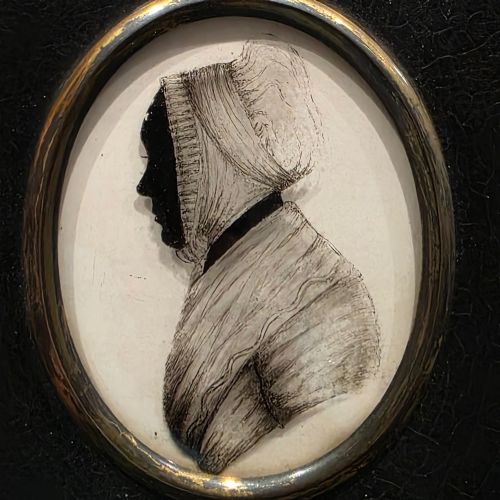
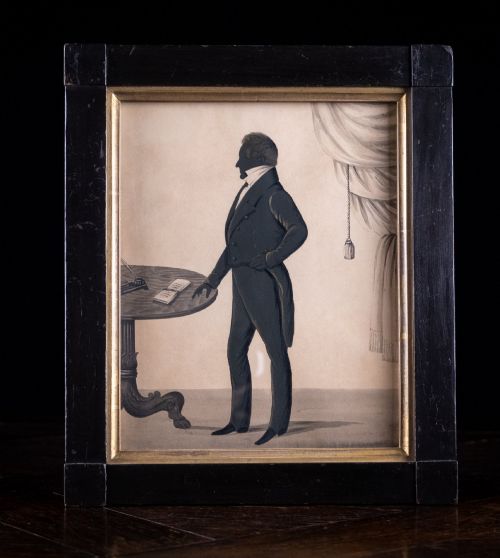
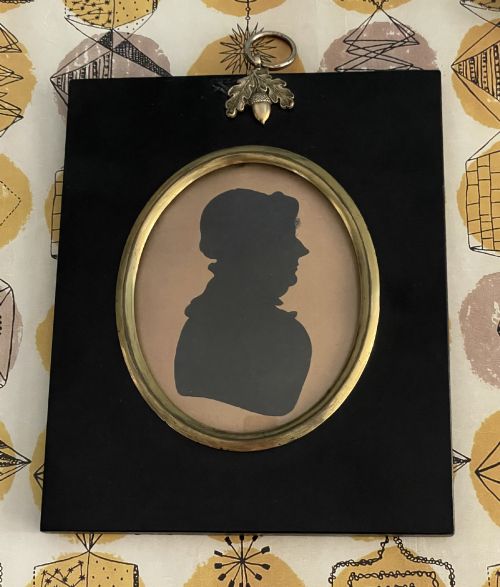
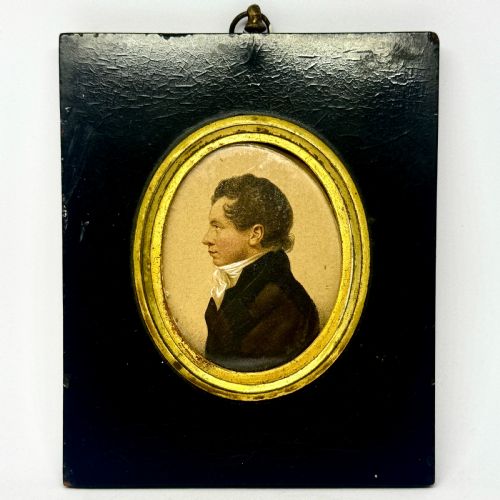
An ebonised frame silhouette miniature is a small portrait capturing the profile of a sitter through cutting, painting, or reverse painting on glass. These objects date across the 18th, 19th, Regency, and Georgian periods, reflecting the height of personal portraiture before the widespread use of photography. You are most likely to meet framed silhouettes executed on paper, glass, or wood, housed within dark timber surrounds often accented with brass elements.
The subjects range from named gentlemen and ladies to children and unidentified sitters, occasionally accompanied by mottos or notable provenance. Formats vary from wall art to dedicated portrait miniatures intended for close inspection and intimate display. Each piece preserves a distinct human likeness using minimal materials, relying entirely on contour, shadow, and occasional touches of gold leaf.
How they were made
Maker skill relied on precise hand-cutting from dark paper or direct application of ink and paint onto glass or paper supports. Reverse painting on glass required executing the portrait in reverse order on the rear surface, creating a deep gloss finish when viewed from the front.
Frames utilised ebonised wood to provide a stark, contrasting border that enhanced the dark profile within. Brass hangers, bezels, and highlights in gold leaf were frequently added to frame apertures, introducing subtle metallic illumination to the composition.
Listings feature works spanning the 18th century, Georgian, Regency, and 19th century periods, incorporating glass, brass, and gold leaf.
What varies in quality
Quality rests in the precision of the silhouette cutting and the fineness of the brushwork used for hair, dress, and facial details. Pieces enhanced with delicate gold leaf highlights or detailed reverse painting on glass sit at the higher end of the range.
The integrity of the original ebonised wood frame and convex glass significantly impacts the character of the piece. Superior examples maintain crisp paper edges and clear, unfaded ink work without distracting discoloration across the background.
George Atkinson·James Gillespie·Thomas London·John Miers
The Ebonised Frame Silhouette Miniature Glossary
- Ebonised wood
- Timber stained or treated to imitate ebony, providing a deep black finish common in miniature frames.
- Reverse painting on glass
- A technique where the artwork is applied directly to the back of a glass panel so it is viewed through the front.
- Silhouette
- A portrait represented as a solid shape of a single colour, usually black, showing the profile of the subject.
- Portrait miniature
- A small-scale painting or likeness designed for personal contemplation and portable display.
- Gilded silhouette
- A profile enhanced with fine gold leaf details applied by hand to render costume or adornments.
Ebonised Frame Silhouette Miniature: Frequently Asked Questions
How were silhouettes displayed?
These miniature portraits were typically hung in small groupings upon walls or kept inside private chambers for personal reflection.
Their compact scale allowed owners to arrange multiple family members or associates closely together within domestic spaces.
What materials make up the frame?
Frames are primarily constructed from ebonised wood, often complemented by brass bezels, hangers, or corner ornaments.
Interior elements frequently incorporate convex glass to protect the delicate paper or painted surface beneath.
How do I date a silhouette?
Dating relies heavily on the clothing styles, hairstyles, and hats worn by the sitters, alongside framing conventions.
Georgian and Regency examples often display distinct profile cuts and specific lettering styles associated with known artists of the era.
Are profiles painted or cut?
Makers utilised both methods, sometimes combining paper cutouts with painted highlights or executing the entire likeness directly in ink.
Reverse painting on glass represents a separate specialised technique where the image is drawn onto the rear of the pane.