



Shadow Portrait Miniatures
These shadow portrait miniatures capture faces in stark outline, offering intimate glimpses of Georgian and Victorian life that collectors prize.
Shadow Portrait Miniatures
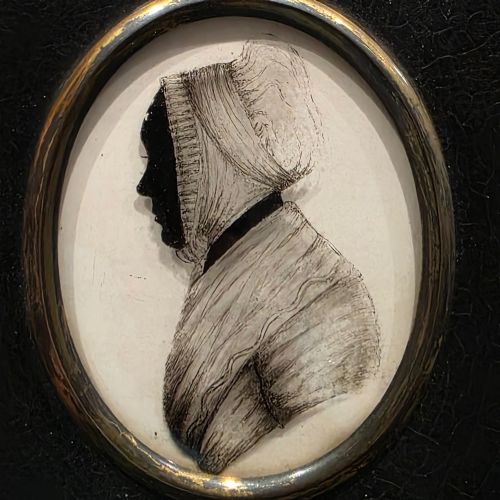
When you search for shadow portrait miniatures, you encounter profile likenesses preserved through cutting, painting, or reverse painting on glass. These small artworks capture the likeness of sitters from the Georgian, Regency, and Victorian periods.
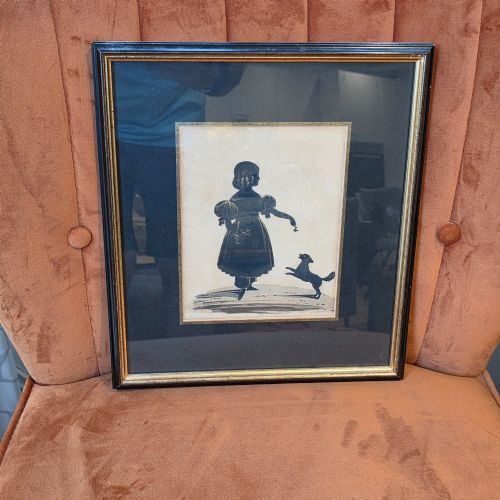
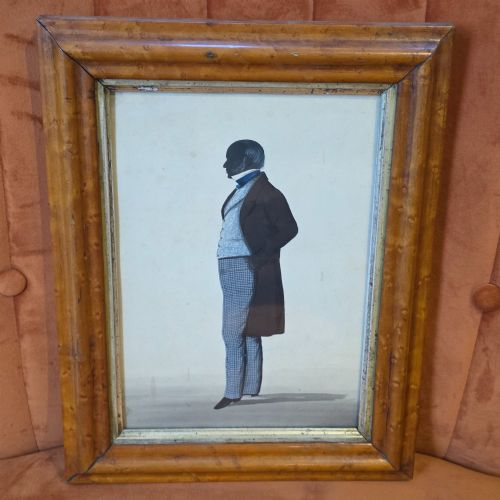
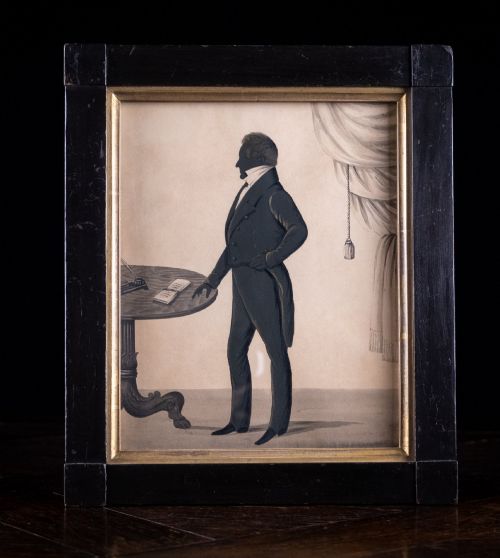
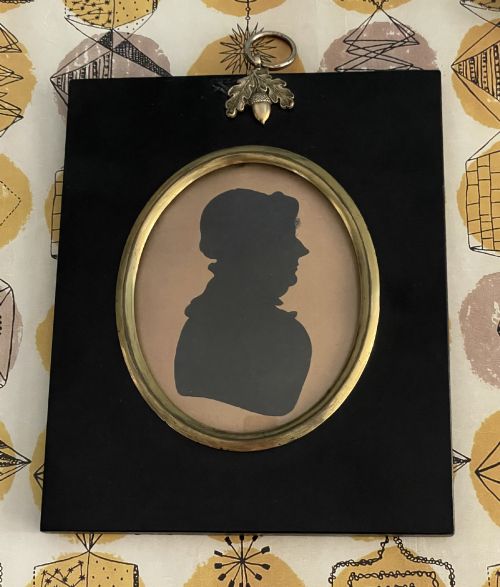
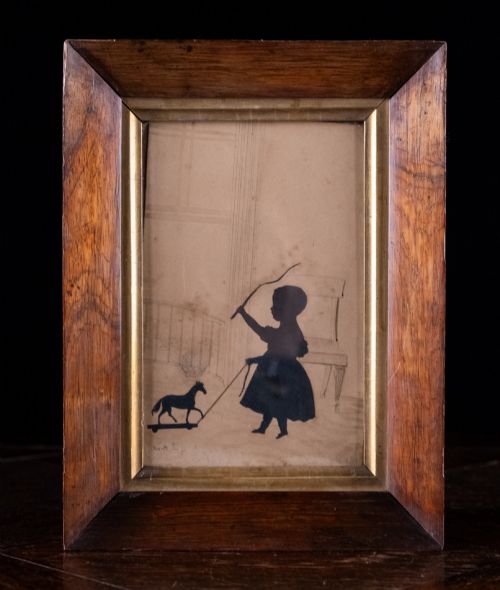
The pieces on this page span the eighteenth and nineteenth centuries, appearing primarily as framed wall art. You find full-length figures, children with animals, and bust portraits executed in paper and ink.
Makers recorded in the evidence range from notable profile artists to anonymous hands working in ebonised wood or rosewood frames. Each survivor provides a direct visual link to past sitters such as Mrs Grace Williams or Mary Watts-Russell.
Materials and construction
Craftsmen utilised paper, glass, brass, and wood to construct these profile portraits. Artists cut paper by hand or applied ink, paint, and gold leaf directly onto glass surfaces.
Reverse painting on glass required precise brushwork applied to the rear of the panel, creating a finished image viewed from the front. Cut paper silhouettes relied on scissors or knives to shape black paper, frequently enhanced with gilded highlights.
Surviving pieces utilise ebonised wood, rosewood, and brass for their frames, protecting the delicate interior materials. These components combine to form lasting miniature artworks from the Georgian and Victorian eras.
Listings incorporate 18th century, Georgian, Regency, 19th century, and Victorian periods across glass, paper, brass, wood, ink, gold leaf, and paint.
Distinctions in execution
The division between standard work and superior portrait miniatures lies in the precision of the cutting and the delicacy of the brushwork. Master profile artists captured the precise facial structure, costume details, and posture of the sitter with minimal lines.
Additional quality appears in the inclusion of gold leaf highlights and watercoloured details on paper or glass. The preservation of the original frame, whether rosewood, ebony, or ebonised wood, also contributes to the standing of an individual piece.
William James Hubard·Frith·George Atkinson·James Gillespie·Augustin Edouart·Elizabeth Hudson·Thomas London·J. Deacon·John Miers·Skeolan
The Shadow Portrait Miniatures Glossary
- Silhouette
- A profile portrait filled in with a solid dark colour, typically black. This form developed in the eighteenth century before photography became widespread.
- Reverse painting on glass
- An artistic technique where paint and gold leaf are applied to the back of a glass sheet. The finished image is viewed through the front of the glass.
- Ebonised wood
- Timber treated to resemble ebony. Makers utilised this dark wood for frames to contrast with the light paper and gold highlights of the portrait.
- Full-length silhouette
- A profile portrait depicting the entire figure of the sitter rather than just the head and shoulders. These works frequently include domestic animals or furniture.
- Gilded silhouette
- A profile portrait enhanced with applied gold leaf. This technique added decorative detail to the costume and hair of the subject.
Shadow Portrait Miniatures: Frequently Asked Questions
What are shadow portrait miniatures?
These pieces are small profile likenesses created through paper cutting, ink work, or painting on glass during the eighteenth and nineteenth centuries.
They record the appearances of individuals before the invention of photography, preserving personal histories in miniature format.
How were these miniature portraits displayed?
Historic owners typically hung these framed artworks in domestic interiors, often grouping several portraits together on a wall.
Frames made from rosewood, ebony, or brass protected the delicate paper and glass components from damage.
How do I identify a Regency silhouette?
Regency examples often feature distinct costume details such as turban caps for ladies or high-collared coats for gentlemen.
Artists during this period frequently utilised glass panels with reverse painting or added delicate gold leaf highlights.
What materials appear in these works?
Makers utilised black paper, ink, watercolours, and gold leaf alongside glass panels and wooden frames.
Brass fittings and ebonised wood surrounds provided structural support and visual contrast for the delicate interior imagery.