

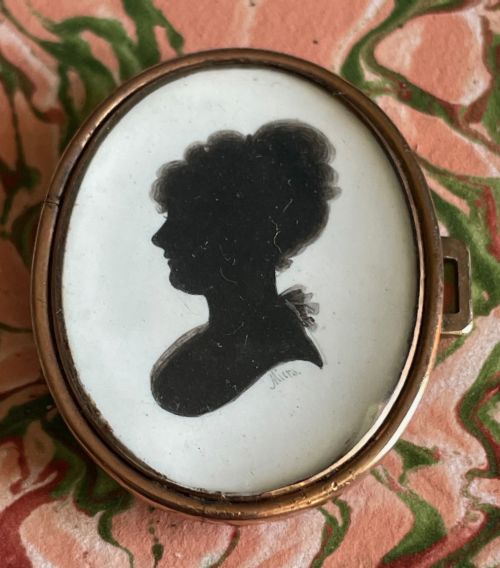


Framed Profile Silhouette Miniature
A framed profile silhouette miniature captures a sitter's likeness in sharp monochrome profile, offering an intimate glimpse into Georgian and Victorian domestic life.
Framed Profile Silhouette Miniature
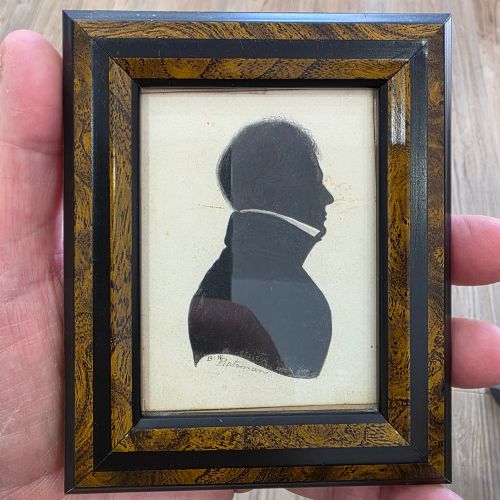
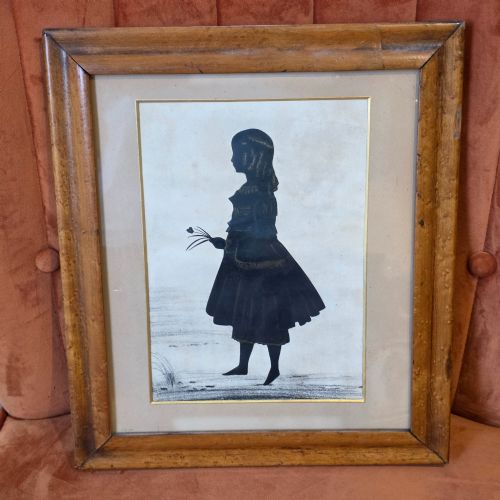
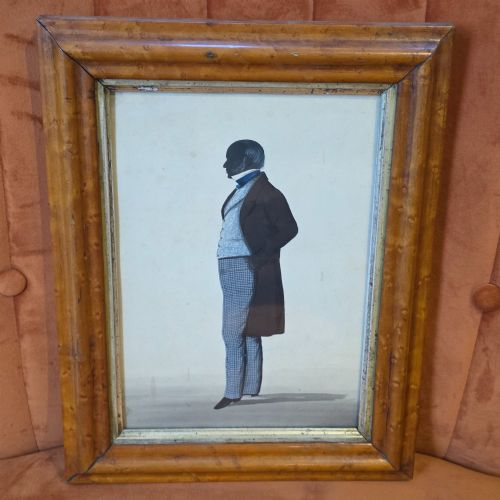
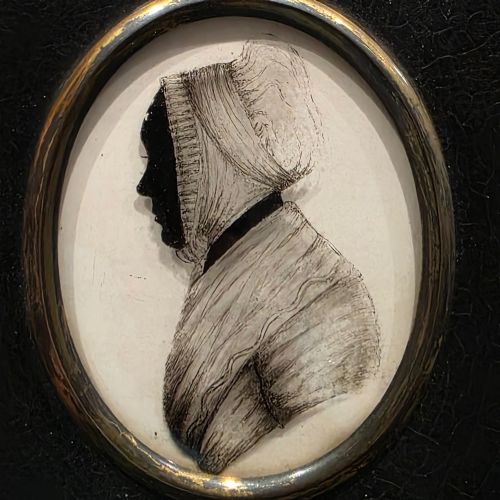
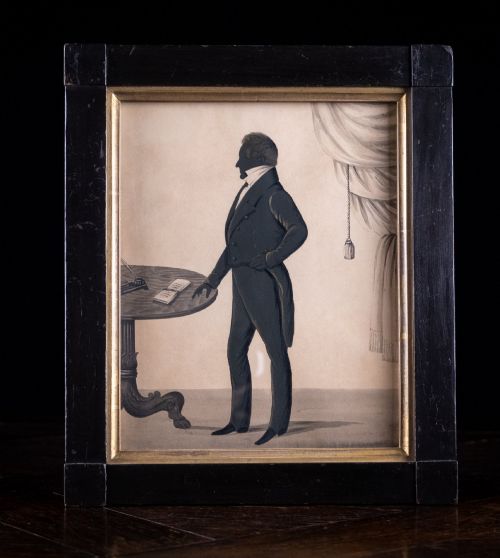
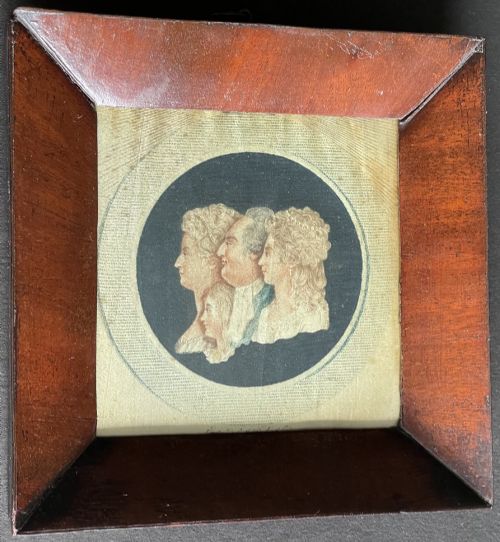
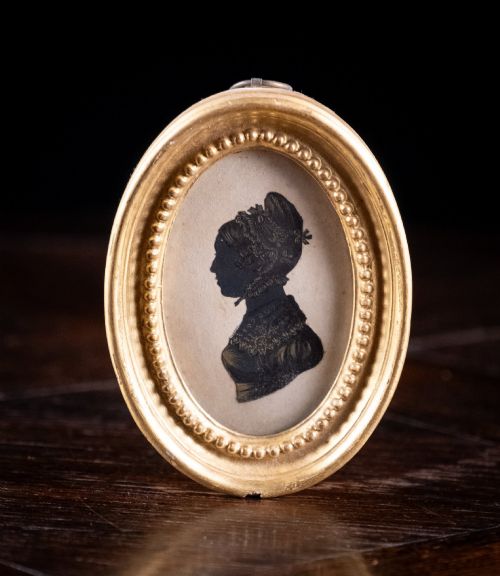
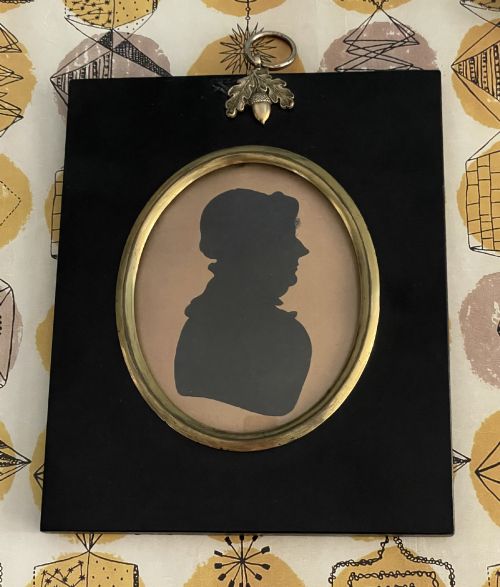
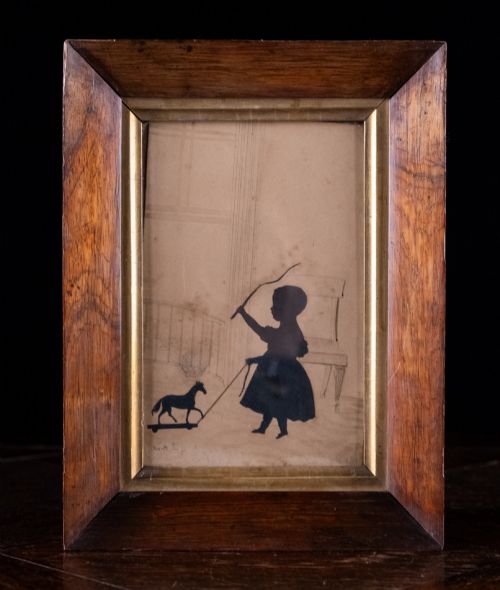
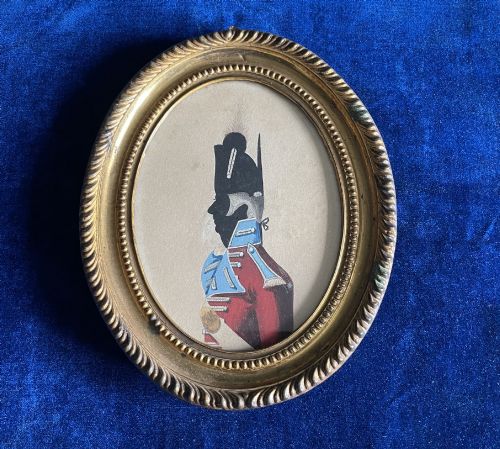
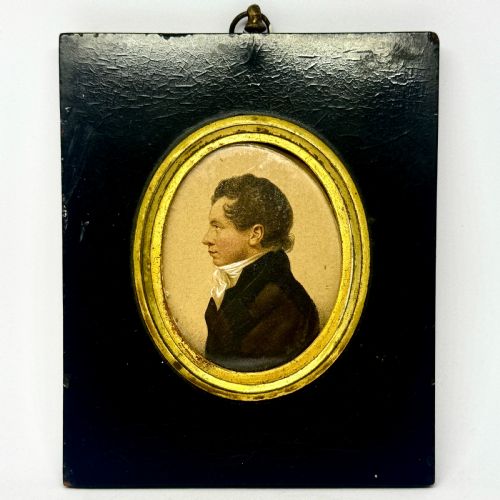
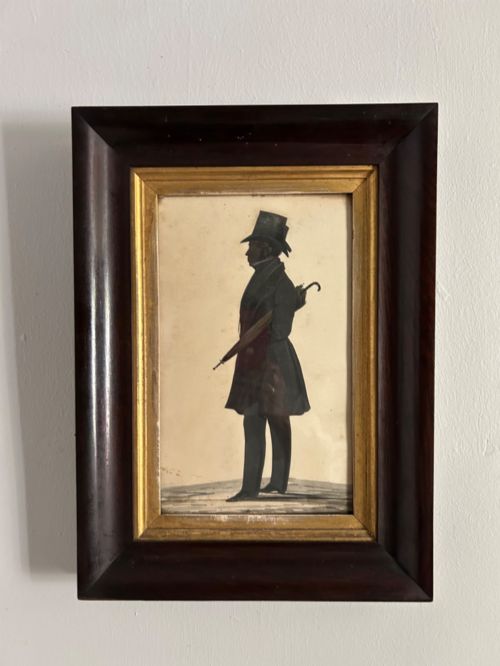
A framed profile silhouette miniature presents a human likeness reduced to a dark profile against a pale ground, mounted behind glass for preservation. When you explore this selection, you encounter portrait miniatures and wall art originating primarily from the Georgian, Regency, and Victorian periods.
The format ranges from bust-length portraits to full-length studies of gentlemen, ladies, and children, often housed in ebonised wood, rosewood, or brass frames. These pieces function as historical records and decorative focal points, reflecting the sitter's social standing and personal identity through careful delineation of hair, costume, and posture.
Materials and construction
Makers shaped these miniature portraits using paper, plaster, glass, and silk as supports, applying ink, watercolour, and gold leaf to define details. Cut-paper silhouettes required precise scissor work, while reverse-painted examples demanded steady brushwork applied directly to the underside of the glass.
Encasing the profile required protective glass held within wooden frames made of ebonised timber or rosewood, sometimes accented with brass fittings. Gold leaf highlights added crucial definition to lapels, bonnets, and buttons, contrasting sharply with the deep black of the cut or painted profile.
Among the human sitters, an individual canine portrait proves that beloved pets also sat for their profile in the nineteenth century.
Variations in quality and execution
The distinction between ordinary and superior works rests upon the precision of the cutting or brushwork, and the clarity of the sitter's profile. Master practitioners captured specific facial expressions, elaborate hairstyles, and distinctive clothing folds with remarkable economy of line.
Preservation of the delicate paper, glass, and painted surfaces also determines desirability, alongside the originality of the contemporary frame and backing. Signed works or those bearing period inscriptions regarding the sitter elevate the historical significance of the piece.
Bateman·Frith·Augustin Edouart·John Miers·John Smith of Edinburgh·Nathaniel Bermingham·Skeolan
The Framed Profile Silhouette Miniature Glossary
- Silhouette
- A portrait profile filled in with a solid dark colour, typically black, to depict a sitter in sharp outline.
- Reverse painted
- A technique where the artist paints the portrait directly on the underside of a glass panel, allowing the finished image to be viewed cleanly from the front.
- Ebonised wood
- Timber treated with a dark stain or finish to imitate true ebony, commonly utilised for framing profile miniatures.
- Plaster
- A fine casting material used as a solid base for some profile portraits, providing a smooth, matte white ground for the dark silhouette.
Framed Profile Silhouette Miniature: Frequently Asked Questions
How do I identify a Georgian silhouette?
Georgian silhouettes typically feature finely hand-cut paper or painted plaster profiles dating from the late eighteenth to the early nineteenth century. They often appear in simple rectangular wood frames without elaborate Victorian ornamentation.
Look for period handwriting on the reverse identifying the sitter and date, alongside early glazing methods and aged backing papers that confirm their eighteenth-century origins.
Where were these miniatures displayed?
Owners displayed these framed profile miniatures closely grouped on drawing-room walls or kept them as portable tokens within personal collections. Their compact scale suited intimate domestic spaces and private studies.
They also served as jewellery pieces or desk portraits, allowing family members to keep likenesses of absent relatives close at hand during travel.
Are these silhouettes painted or cut?
Makers employed both techniques, sometimes combining cut black paper with painted watercolour and gold leaf highlights on the same piece. Other examples were painted entirely with ink or pigment directly onto paper, card, glass, or plaster.
Examining the edge under magnification reveals whether the black form is formed by precise scissor cuts or by the stroke of a fine artist brush.
How should I care for my framed miniature?
Protect the miniature from direct sunlight to prevent the fading of delicate watercolours, ink pigments, and backing papers. Maintain stable indoor humidity levels to safeguard the fragile historic paper, glass, and wooden frames.
Avoid opening the sealed frame, as the aged glass and original backing materials protect the delicate interior from dust and atmospheric degradation.