



Regency Pottery Pitcher
A regency pottery pitcher brings vibrant transfer-printed scenes and striking metallic lustre into daily service.
Regency Pottery Pitcher
A regency pottery pitcher is a sturdy pouring vessel shaped during the Georgian and 19th Century periods. These pieces span utility and display, taking the form of water jugs, ale jugs, and footbath jugs produced by English potteries.
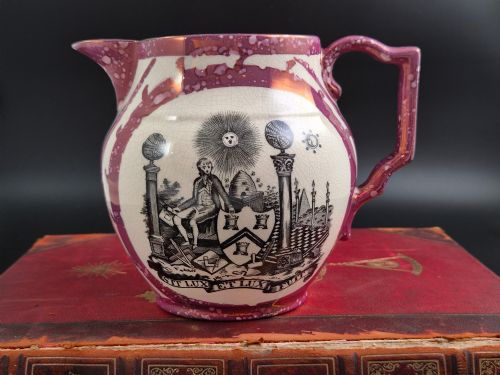
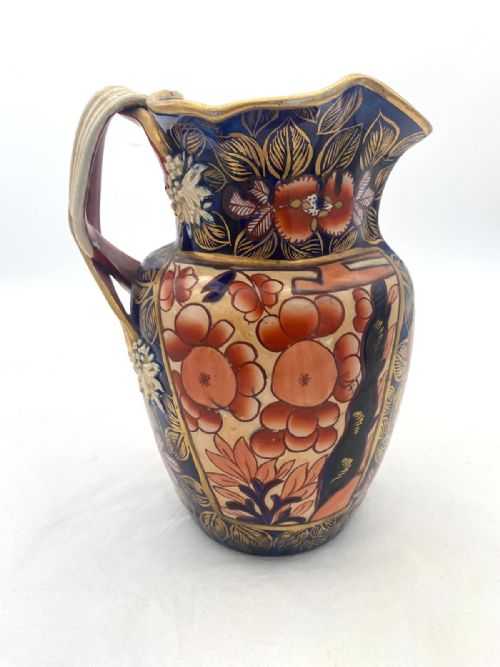
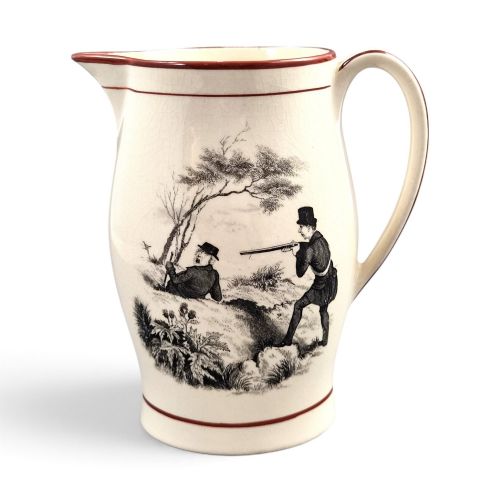
The versions most commonly met on this page include creamware, ironstone, and pearlware bodies decorated with transfer-printed Oriental scenes, sporting subjects, or pink splash lustre. Makers utilise traditional earthenware to form robust vessels intended for domestic use.
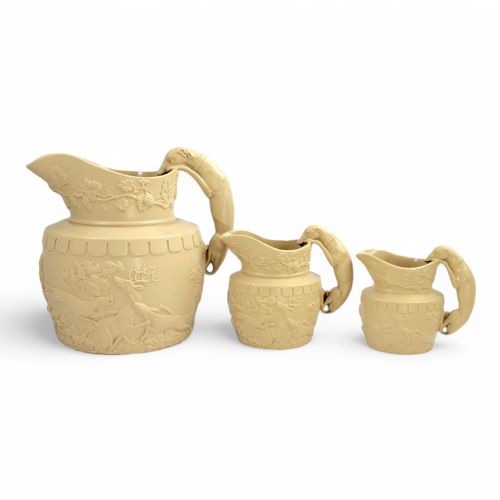
Moulded relief designs and polychrome enamels frequently define the style of these jugs. Collectors encounter forms ranging from faceted bodies to hound-handled pitchers bearing classical or narrative motifs.
How they were made
Potters shaped these vessels from earthenware, creamware, and ironstone, applying fluid glazes to seal the porous clay bodies. Many examples receive transfer-printed decoration in blue and white or polychrome enamels before final firing.
Specialised techniques include pink splash lustre finishes and metallic glazes that produce shimmering surface effects. Artisans also employed relief moulding to build textured panels depicting hunting scenes, architectural subjects, and Masonic emblems.
Regency Pottery Pitcher Retail Price Guide 2026
Typical asking prices for regency pottery pitcher among the pieces listed under this phrase on Sellingantiques today, from the lower quarter to the upper quarter. They describe what is for sale here now, not the wider market.
Listings feature earthenware, creamware, and ironstone bodies decorated with transfer printing, metallic lustre, and relief moulding.
What varies in quality
Quality rests upon the crispness of the transfer print and the control shown in the application of enamel colours and metallic lustre. Finer pieces display sharp relief moulding and carefully painted details that remain bright across the ceramic body.
The sophistication of the form dictates distinction, separating standard utility vessels from ambitious jugs featuring complex handles, such as modelled hounds or gilded accents. A well-balanced proportion and an unblemished glaze elevate an ordinary pitcher into a notable example of the period.
Phillips & Bagster·Wedgwood·Spode·Mason's
The Regency Pottery Pitcher Glossary
- Creamware
- A refined earthenware with a pale yellowish straw-coloured glaze developed by English potters during the eighteenth century. This light body served as a smooth canvas for transfer-printed and enamelled decoration.
- Ironstone
- A dense, durable type of heavy earthenware patented in the nineteenth century to rival imported Chinese porcelain. It resists chipping and provides a strong surface for vibrant patterns.
- Pearlware
- An improved earthenware body featuring a bluish-tinted transparent glaze that masked the natural cream colour of the fired clay. It became the dominant substrate for blue and white transfer printing.
- Lustreware
- Pottery decorated with a metallic film that reflects an iridescent sheen resembling copper, silver, or gold. Pink splash lustre was achieved by flicking metallic solution onto the glazed surface before firing.
- Transfer printing
- A mechanical decoration technique where an engraved copper plate transfers a design onto tissue paper, which is then stamped onto the unglazed or bisque ceramic body. This process allowed intricate scenes to be reproduced rapidly across large batches of pottery.
Regency Pottery Pitcher: Frequently Asked Questions
What were regency pottery pitchers used for?
These vessels served practical functions in the Georgian home, pouring water, ale, or milk during meals. Larger footbath jugs transported water for washing, while smaller examples functioned at the table.
Many pitchers also served as decorative display items or commemorative pieces, bearing Masonic symbols, sporting events, or narrative scenes that reflected the interests of their owners.
How do I date a regency pottery pitcher?
Dating relies on examining the ceramic body, glaze characteristics, and decorative style. Creamware and pearlware bodies typically point toward the earlier decades around eighteen hundred, while heavier ironstone pieces align with the nineteenth century.
Transfer-printed subjects and specific handle shapes, such as hound motifs, offer further clues to the manufacturing decade. Potters often incorporated moulded registry details or distinctive earthenware bodies that anchor the piece to the Georgian era.
How do I display a pottery pitcher safely?
Place pitchers on stable, flat surfaces away from heavy foot traffic or the edge of shelving. Earthenware and ironstone have considerable weight, requiring sturdy support that accommodates their base dimensions.
Keep pieces out of direct sunlight to protect enamel colours and metallic lustre finishes from fading over time. Avoid placing them near direct heat sources that might stress the historic glaze.