





Regency Period Work Box
A regency period work box brings neat elegance to a desk or table, holding sewing tools, letters, and small treasures.
Regency Period Work Box
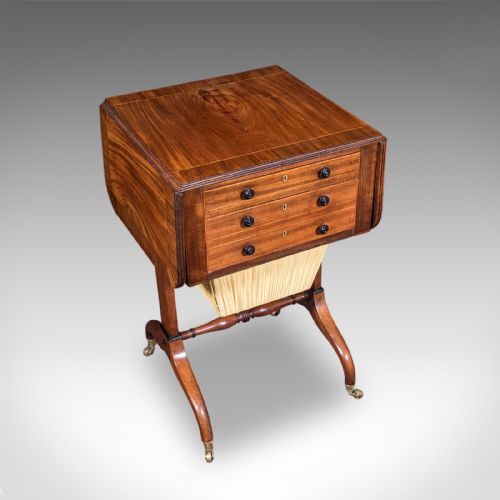
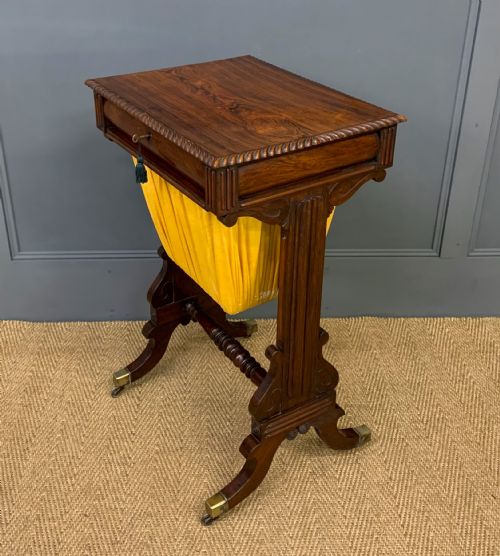
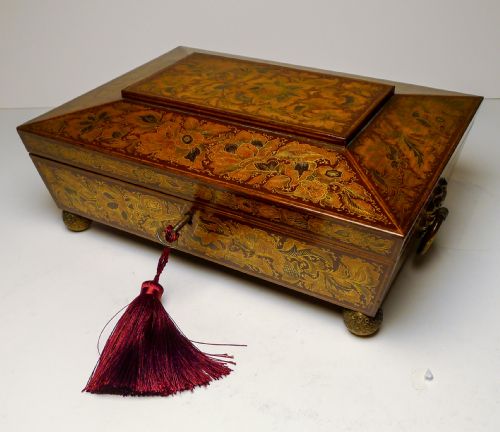
A regency period work box encompasses both compact tabletop caskets and larger freestanding drop-leaf sewing tables designed for domestic use. These pieces date principally from the early nineteenth century and George IV eras, reflecting the refined tastes of the period.
Tabletop boxes appear in materials such as rosewood, mahogany, yew, burr ash, pollard oak, birdseye maple, and leather. Freestanding versions incorporate fitted interiors, drop flaps, and storage bags for needlework.
Portable boxes frequently double as games or jewellery storage, while larger tables combine writing, sewing, and occasional surfaces into a single item of furniture.
Materials and Construction
Cabinetmakers utilised dense exotic hardwoods like rosewood and mahogany, often enhanced by intricate wood inlay, parquetry, and brass detailing. Lighter timbers such as yew and birdseye maple provided varied grain patterns for distinctive exterior finishes.
Specialised techniques include penwork decoration, where ink creates delicate surface imagery on wood, alongside black and gilt lacquer finishes influenced by Chinese export styles. Interiors feature fitted compartments lined in fabric to organise sewing implements and papers securely.
Regency Period Work Box Retail Price Guide 2026
Typical asking prices for regency period work box among the pieces listed under this phrase on Sellingantiques today, from the lower quarter to the upper quarter. They describe what is for sale here now, not the wider market.
Some work boxes doubled as gaming compendiums, ready to switch from sewing thread to playing cards at a moment's notice.
Factors of Distinction
The choice of timber veneer and the precision of wood inlay set finer examples apart from simpler utilitarian pieces. Distinctive grain selection, such as burr ash or pollard oak, elevates the visual presence of a box.
Complexity of internal fittings, original fabric linings, and specialised decorations like penwork or lacquer work indicate higher craftsmanship and original cost.
Gillows of Lancaster
The Regency Period Work Box Glossary
- Penwork
- A decorative technique using ink applied directly to a wooden surface to create intricate motifs and pictures. It appears frequently on games and jewellery boxes from this era.
- Parquetry
- Geometric patterns formed by small pieces of wood fitted together on a surface. This technique showcases the cabinetmaker's precision.
- Sarcophagus shape
- A distinctive form featuring a stepped or domed lid atop a flared body, reminiscent of classical architecture. It is seen on larger portable work boxes.
- Drop flap
- A hinged leaf on a table that raises to extend the surface area when needed. These drop leaves are typical of freestanding sewing and work tables.
Regency Period Work Box: Frequently Asked Questions
What did people store in a work box?
These boxes held sewing supplies including threads, needles, and bobbins, alongside letters and personal documents.
Many examples also served multiple functions, functioning as games boxes for cards or secure storage for jewellery.
How do freestanding work tables differ from boxes?
Freestanding work tables stand on legs and often incorporate drop leaves and fabric bags suspended beneath for textile projects.
Tabletop work boxes are smaller and portable, designed to sit upon desks or chests without requiring floor space.
Which woods are most common?
Mahogany and rosewood appear frequently across both tabletop boxes and freestanding tables from this period.
Cabinetmakers also utilised decorative timbers such as yew, burr ash, pollard oak, and birdseye maple for varied surface grains.
What is penwork decoration?
Penwork involves drawing fine, detailed designs onto wood using black ink before sealing the surface with varnish.
This technique produced intricate pictorial scenes on games and jewellery boxes without the need for complex carving.