




Antique Games Casket
An antique games casket holds the cards, boards, and counters of past evenings, bringing tactile weight and fitted elegance to a modern room.
Antique Games Casket
An antique games casket is a specialised container designed to hold the equipment for indoor pastimes such as cards, chess, and dice. These pieces survive in various forms, from simple card boxes to elaborate compendiums housing multiple pursuits in one fitted container.
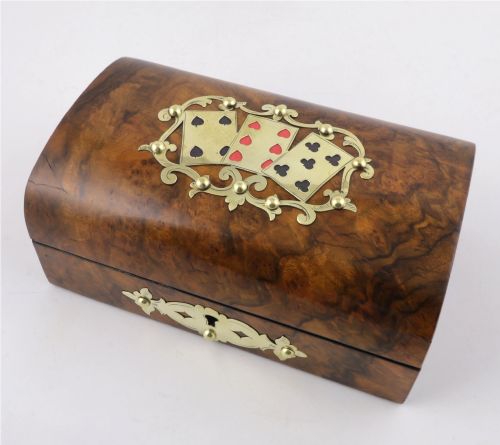
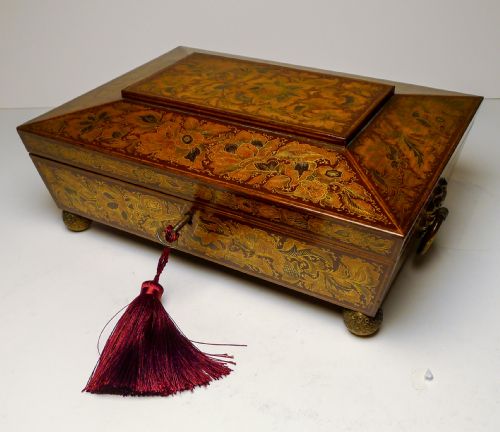
The versions most commonly met on this page date from the nineteenth century, spanning the Regency, Victorian, and Edwardian eras. They appear in rich timbers like burr walnut, mahogany, and rosewood, frequently accented with brass mountings or delicate marquetry.
Makers ranged from notable firms to skilled regional workshops, producing both compact containers for a single pack of cards and substantial caskets meant for a parlour table. Each piece reflects the social habits of its period, when entertaining guests at home relied on physical games.
How they were made
Cabinetmakers constructed the carcase of an antique games casket using dense timbers such as walnut, mahogany, or satinwood, often selecting burr veneers for decorative effect. These wooden structures were frequently reinforced with brass binding, corner mounts, or escutcheons to protect the edges during regular use.
Interior fittings required precise woodworking to create secure slots and trays for playing cards, counters, dice, and folding boards. Linings of velvet, satin, or leather cushioned the components, while specialised mechanisms sometimes raised trays or revealed hidden compartments as the lid opened.
Antique Games Casket Retail Price Guide 2026
Typical asking prices for games casket among the pieces listed under this phrase on Sellingantiques today, from the lower quarter to the upper quarter. They describe what is for sale here now, not the wider market.
Listings feature items from the Regency, Victorian, and Edwardian periods, utilising materials such as burr walnut, sterling silver, and brass.
What varies in quality
The standard of an antique games casket rests on the choice of timber and the precision of its interior joinery. Superior examples feature carefully matched veneers, flawless parquetry, and robust brass fittings that remain flush with the wood.
Complexity of internal arrangement also distinguishes finer pieces from simpler boxes. The presence of fully fitted compartments, original bone or metal markers, and smoothly functioning lifting trays indicates skilled craftsmanship and greater initial cost.
George Betjemann
The Antique Games Casket Glossary
- Compendium
- A fitted box containing the equipment for multiple different games, such as chess, backgammon, and cards. These multi-use sets were popular for travel or parlour use.
- Parquetry
- A geometric mosaic of wood pieces used for decorative floors and box lids. It creates contrasting patterns using various timbers.
- Penwork
- A decorative technique using fine ink lines to draw intricate motifs onto a light wooden surface. It was especially popular during the Regency period.
- Ormolu
- Gilded bronze or brass applied to furniture and decorative objects as mounts or feet. It added a bright metallic contrast to dark woods.
- Pietra dura
- Inlay work using polished, coloured stones to create pictorial designs. It appears on high-status nineteenth-century boxes.
Antique Games Casket: Frequently Asked Questions
What goes inside an antique games casket?
These boxes typically held playing cards, ivory or bone counters, dice, and sometimes folding game boards. Many interiors were partitioned specifically to keep these small items organised.
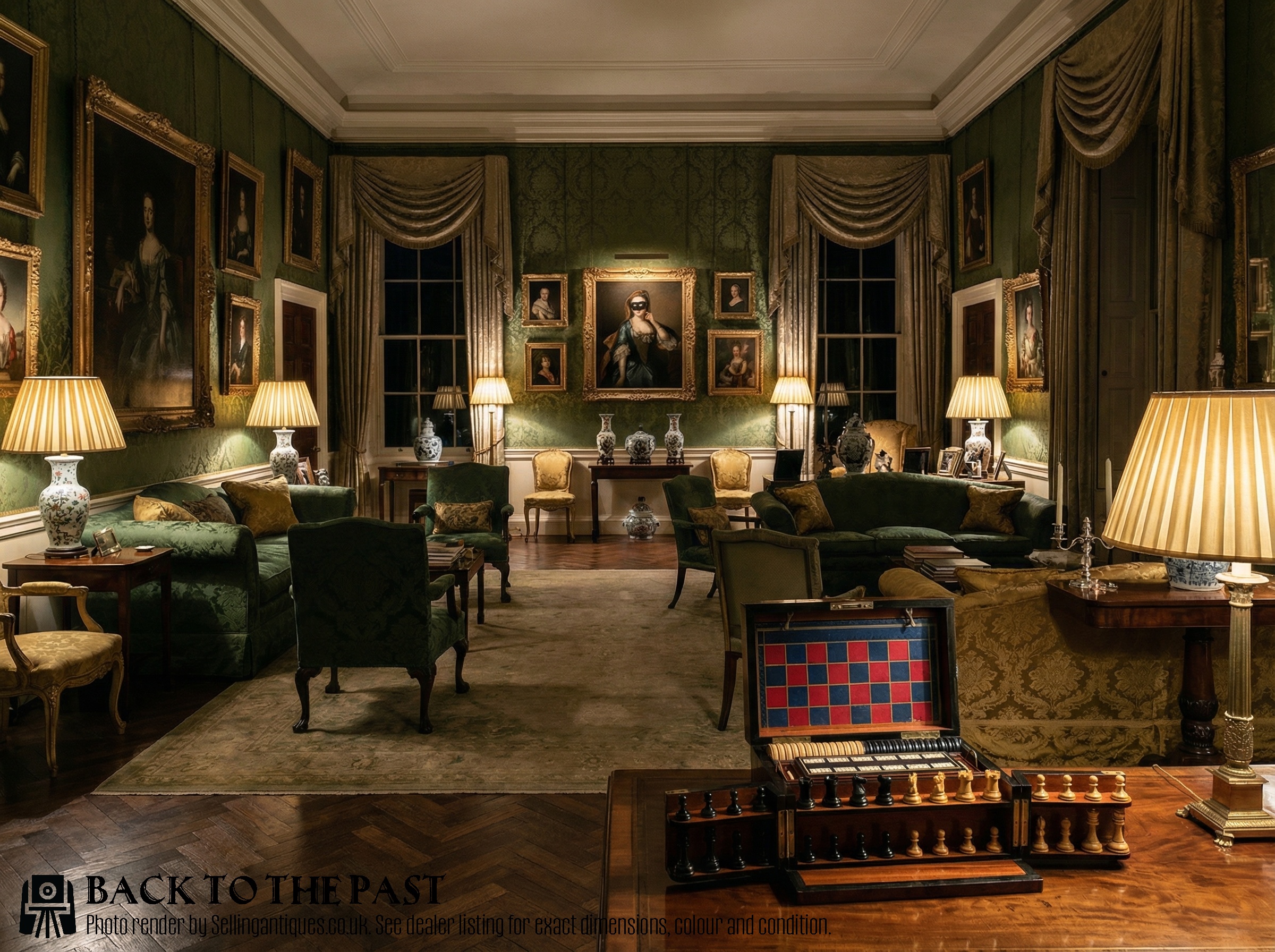
Some larger compendiums also accommodated chess pieces, cribbage boards, and dominoes within dedicated velvet-lined compartments.
How do I date an antique games casket?
Dating relies on the style of the timber, the construction methods, and any brass hardware or lock mechanisms. Regency pieces often show lighter woods and penwork, while Victorian examples frequently use burr walnut and heavy brass banding.
Interior linings and the specific typography of maker's marks or stamps also help narrow down the decade of manufacture.
Where should I place a games casket at home?
A games casket suits a coffee table, a side cabinet, or a study bookshelf where its timber and brass details can be appreciated. Keeping it out of direct sunlight prevents the polished wood and interior fabrics from fading.
Placing it flat on a stable surface ensures that internal lifting trays and mechanisms operate without jamming.
Were these boxes meant for travel?
While some compact card boxes were built for portability, many larger caskets were stationary parlour pieces designed to stay in the drawing room. Robust brass binding on certain models offered protection if the box was moved between rooms.
Heavy burr walnut and fitted silver items indicate pieces intended for permanent display rather than frequent journeys.