



Regency Period Wine Box
A regency period wine box is a substantial timber vessel built to chill and house bottles during nineteenth-century dining, prized for rich grain and classical form.
Regency Period Wine Box
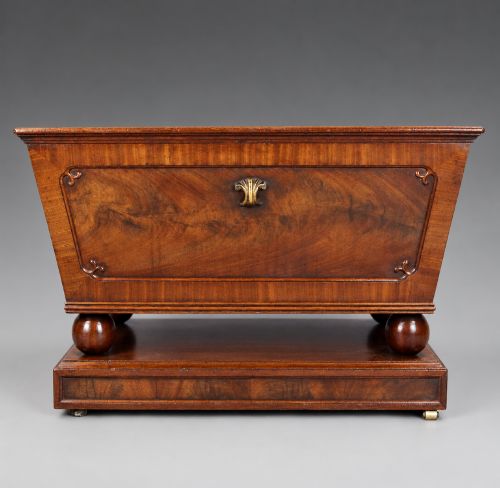
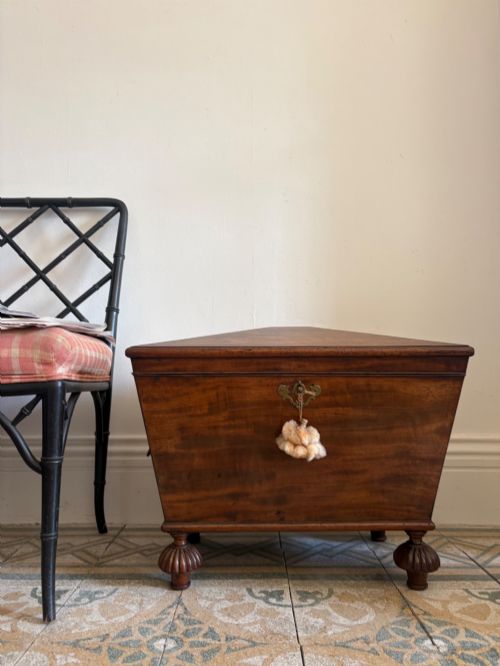
A regency period wine box takes the form of a sarcophagus or rectangular chest designed to hold bottles in the dining room. These pieces emerge primarily from the early nineteenth century, constructed during the Regency and George IV eras.
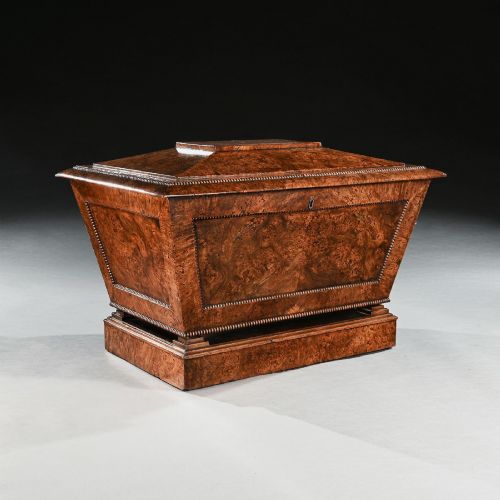
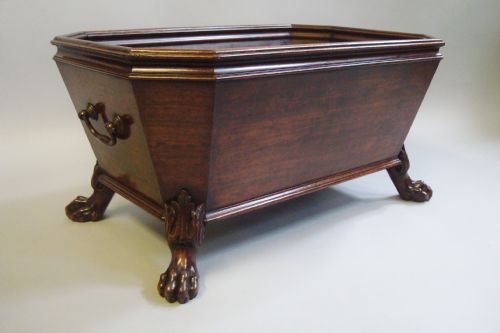
The most common form on this page is the sarcophagus shape, often fitted with carved paw feet, handles, and internal linings of lead or zinc. Examples range from standard proportions to very large vessels, occasionally reflecting the manner of Thomas Hope or incorporating Anglo-Indian padouk.
Makers shaped these boxes to sit beneath sideboards or beside dining tables, ready to serve guests. Collectors encounter them under various names including wine coolers and cellarettes.
How they were made
Cabinet makers built the primary carcass in solid timber before applying choice veneers of flame mahogany or burr elm to the exterior surfaces. Pollard oak and padouk also feature among the hardwoods selected for their striking grain patterns.
Metal components played a structural and decorative role, with brass handles and feet secured to the heavy wooden bodies. Craftsmen lined the interiors with lead or zinc to hold ice and water safely without rotting the timber.
Internal compartments rely on lead and zinc linings to contain melting ice safely alongside heavy wooden bottle dividers.
What varies in quality
Quality rests upon the choice of timber veneer and the depth of its natural patina. Flame mahogany and figured pollard oak with strong movement command greater visual presence than plain boards.
The crispness of classical carving, such as paw feet and applied mouldings, dictates the refinement of the piece. Well-proportioned sarcophagus curves and original metal hardware separate standard boxes from exceptional examples.
The Regency Period Wine Box Glossary
- Sarcophagus
- A monumental coffin-shaped box with a domed or peaked lid, popular for large wine coolers during the early nineteenth century. This classical outline mimics ancient Roman stone tombs.
- Cellarette
- A lockable container used to store bottles of wine in the dining room before service. These were built to rest on the floor or on dedicated stands.
- Flame mahogany
- Mahogany timber cut to reveal a fiery, undulating grain pattern across the surface. Cabinet makers deployed this veneer on prominent exterior panels.
- Pollard oak
- Timber taken from trees that were pollunted or pruned back, producing dense, gnarled growth rings with high decorative value. It creates a mottled appearance on luxury furniture.
- Padouk
- A heavy exotic hardwood with a reddish-brown tone, utilised in Anglo-Indian pieces. It offers durability and a distinct visual texture.
Regency Period Wine Box: Frequently Asked Questions
What is a regency period wine box?
A regency period wine box is a wooden chest built in the early nineteenth century to hold and chill wine bottles during meals. They stand on the floor, frequently featuring sarcophagus curves and metal linings.
Craftsmen built them from timbers such as mahogany, pollard oak, and burr elm. They served dining rooms before modern refrigeration existed.
How were regency wine coolers used?
Dining hosts filled the internal lead or zinc compartments with ice and water to keep wine bottles chilled during long meals. Servants accessed the bottles from beneath sideboards or dining tables.
The heavy boxes remained in the dining room rather than the cellar. Their lockable lids kept expensive vintages secure from household staff.
How do I identify a regency cellarette?
Regency cellarettes display classical architectural motifs such as carved paw feet, bold moulding, and sarcophagus lids. They date from the early nineteenth century and rely on dense tropical hardwoods.
Look for internal metal linings designed to hold melting ice. The presence of flame mahogany veneer or pollard oak further points to this specific era.
How do I care for antique mahogany?
Keep antique mahogany out of direct sunlight and away from rapid temperature shifts that cause timber to dry and split. Apply traditional wax polish sparingly to maintain the natural sheen.
Avoid placing wet items directly on the polished wooden surface. Regular dusting with a soft cloth protects the patina over decades of use.