
Georgian Wine Cellarette
A georgian wine cellarette kept bottles cool and close at hand during formal dining, combining fine cabinet-making with practical domestic utility.
Georgian Wine Cellarette
When searching for a georgian wine cellarette, a buyer encounters pieces designed to store and chill wine bottles in the dining rooms of grand houses. The selections span the eighteenth and nineteenth centuries, including the George III, Regency, and George IV periods.
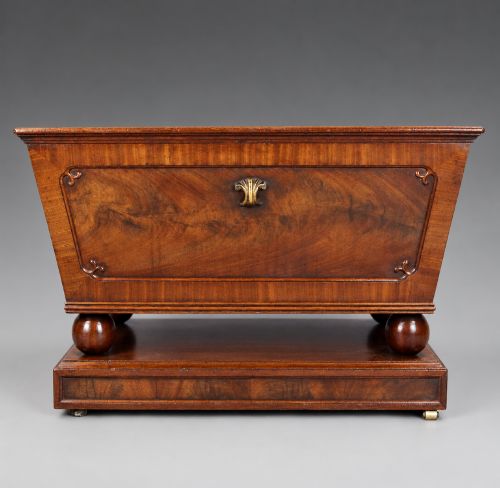
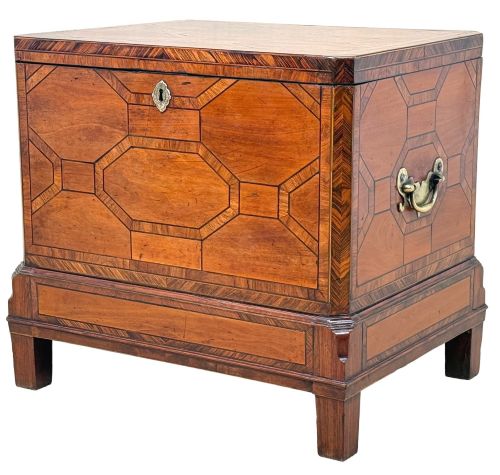
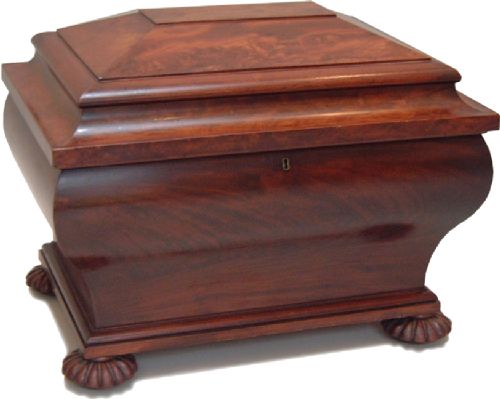
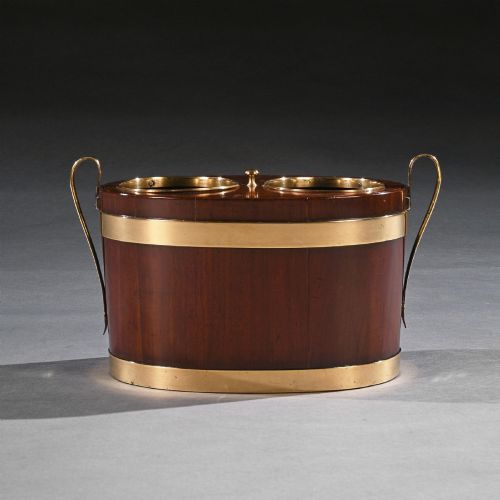
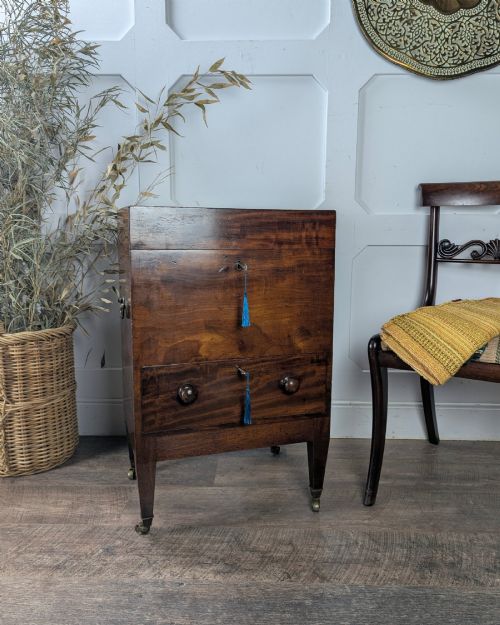
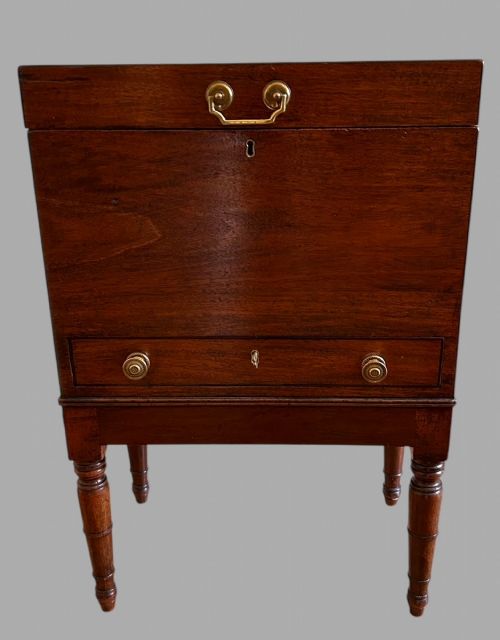
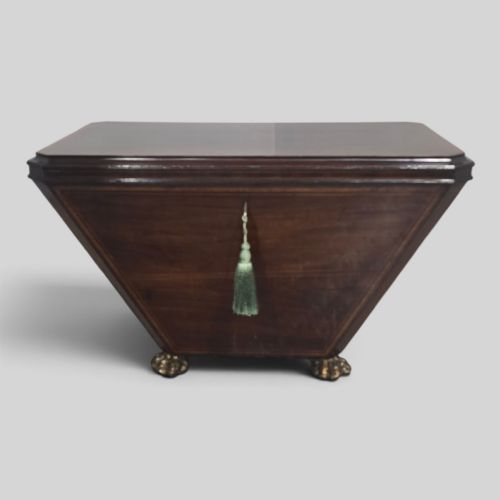
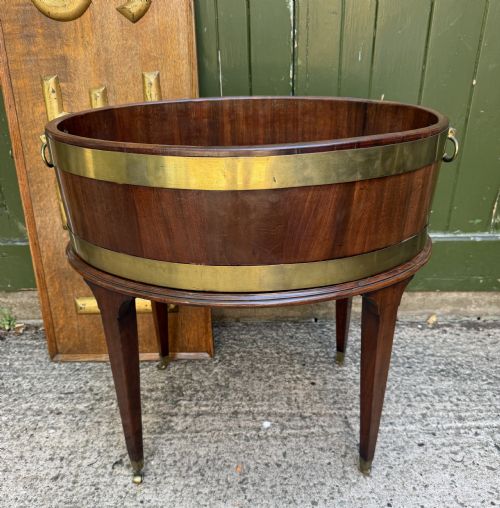
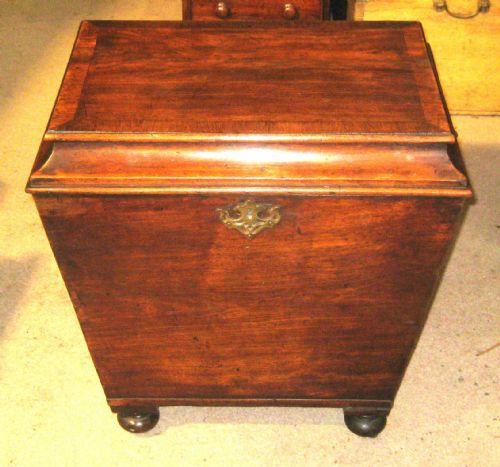
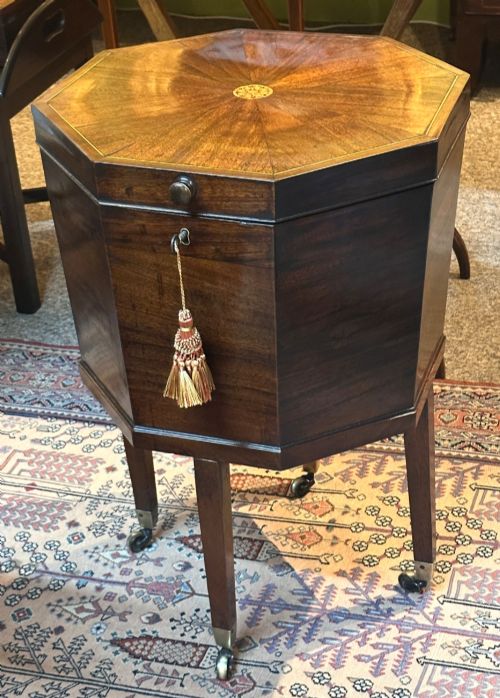
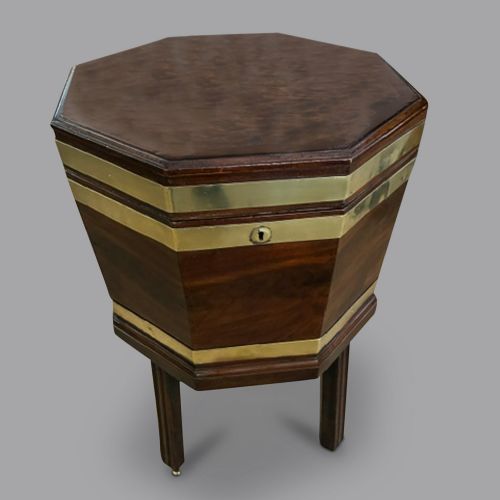
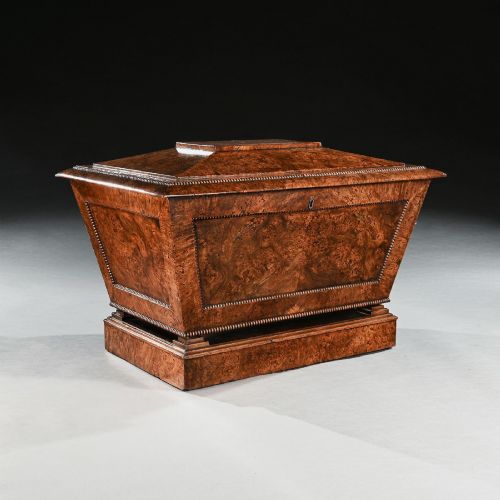
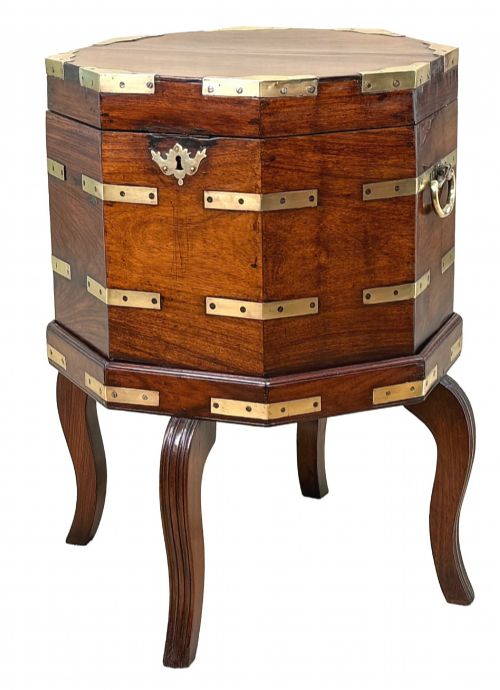
The most common form on this page is the mahogany vessel, appearing in oval, octagonal, or sarcophagus shapes. Many examples incorporate brass bands, boxwood inlay, or stands with legs.
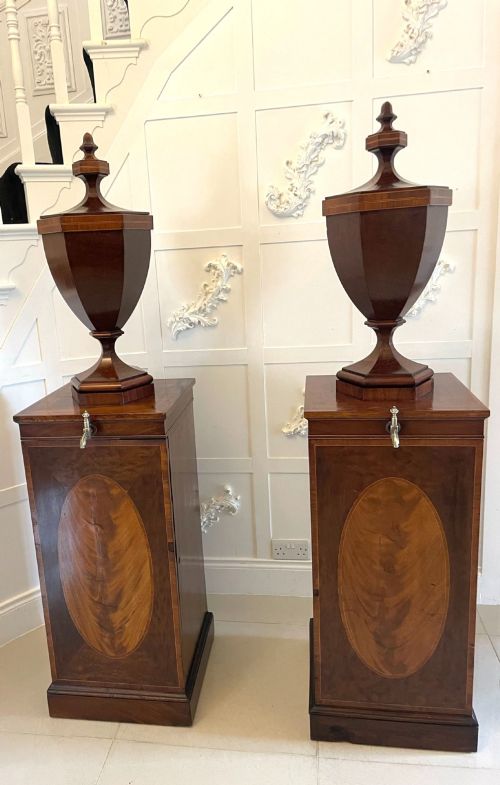
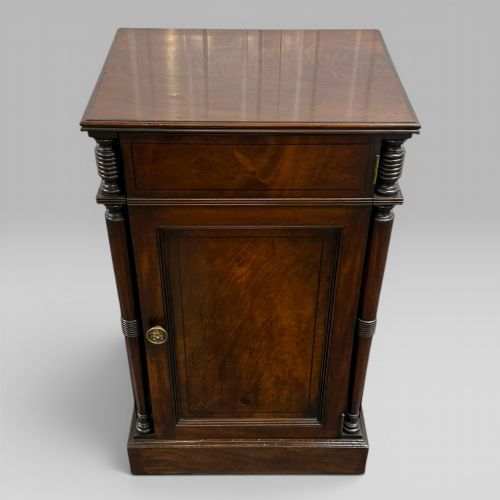
Makers and designers of the era also produced pedestal coolers, urns, and variants in pollard oak, satinwood, and padouk. These containers sat beneath sideboards or beside dining tables, ready to hold ice and bottles.
Materials and Construction
Cabinet-makers relied heavily on solid and veneered mahogany, often selecting flame mahogany or incorporating boxwood and satinwood inlay to create decorative contrast on the exterior surfaces.
Coopered construction appears frequently, where staves of wood join together to form rounded tubs or buckets, bound tightly with brass hoops for structural strength and visual definition.
Interior storage required functional linings of zinc, lead, or metal to hold ice and water without damaging the surrounding timber framework.
Georgian Wine Cellarette Retail Price Guide 2026
Typical asking prices for georgian wine cellarette among the pieces listed under this phrase on Sellingantiques today, from the lower quarter to the upper quarter. They describe what is for sale here now, not the wider market.
Some nineteenth-century versions double as log baskets or Champagne holders, proving that country houses repurposed furniture whenever the dining habits changed.
Assessing Quality
Quality rests upon the crispness of the cabinet-making, the choice of figured timber veneers, and the survival of original interior linings and stands. Pieces attributed to prominent makers or workshops often display superior carving and attention to detail.
The integration of brass handles, mounts, and heavy binding bands distinguishes standard utility boxes from grand dining room furnishings. Patina and depth of colour in the aged timber further separate fine examples from simpler provincial work.
Edwards and Roberts·Gillows·Gillingtons·T.Feetham
The Georgian Wine Cellarette Glossary
- Cellarette
- A freestanding box, chest, or pedestal designed specifically for holding wine bottles and ice in a dining room. These containers sat beneath sideboards during meals.
- Coopered
- Constructed using vertical wooden staves joined together with metal or brass bands, much like a barrel or a bucket. This technique provided strength for holding liquids and ice.
- Sarcophagus
- A monumental chest form with a domed lid and panelled sides, popular during the Regency period for large wine coolers. The shape mimics classical stone tombs.
- Brass bound
- Fitted with heavy metal bands encircling the wooden body to secure the staves and add decorative contrast. These mounts often include carrying handles.
- Flame mahogany
- Timber cut from the fork of the mahogany tree, displaying a vivid, flickering grain pattern. Cabinet-makers used these veneers on principal display surfaces.
Georgian Wine Cellarette: Frequently Asked Questions
How were cellarettes used during dinner?
Servants placed ice and bottles inside the lined interior of the vessel to chill the wine before pouring. The box typically rested on the floor beneath the dining room sideboard.
During the meal, guests selected their drinks directly from the container without needing to leave the dining table or summon fresh bottles from the cellar.
What is the difference between a cellarette and a wine cooler?
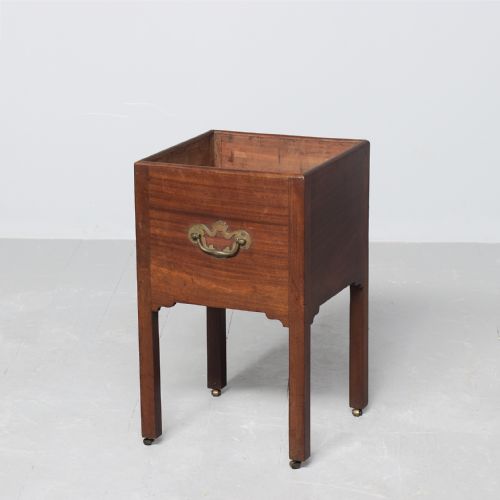
The terms overlap significantly in antique furniture, though a cellarette often implies a lockable box with interior dividers for individual bottles. Wine coolers frequently take open or bucket-like forms.
Both items served the same fundamental purpose of keeping wine at the correct temperature during eighteenth and nineteenth-century dining rituals.
Did these pieces always have stands?
Many examples sit directly on short feet or castors so they could roll easily across carpets or wooden floors. Other variants rested upon dedicated pillar stands, frames, or pedestal cupboards.
The presence of an original stand usually elevates the formal status of the piece within the dining room hierarchy.
How do I identify a Regency period piece?
Regency items often feature classical revival motifs, bolder architectural shapes like the sarcophagus, and exotic timbers such as pollard oak or rosewood. Ormolu mounts and heavier brass details frequently appear.
These designs reflect the early nineteenth-century fascination with ancient Roman, Greek, and Egyptian forms under the influence of designers like Thomas Hope.