

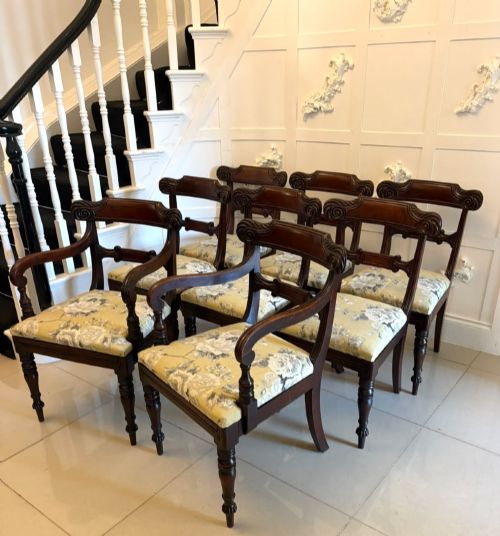
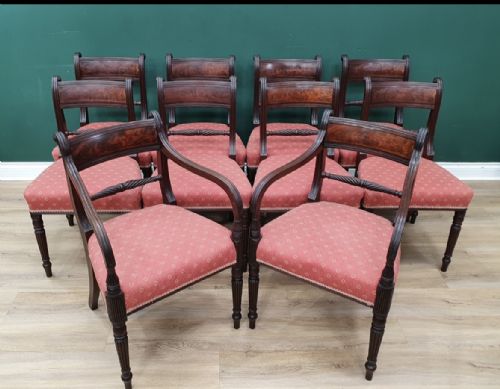
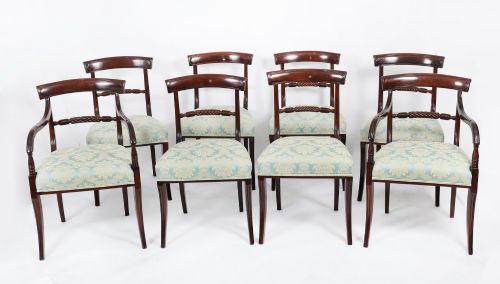
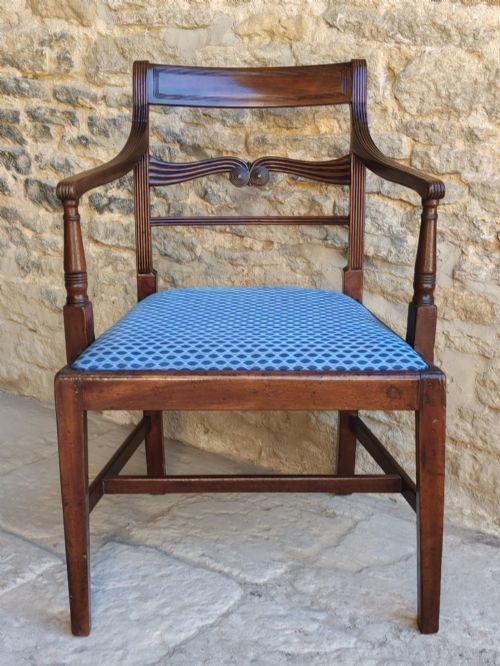
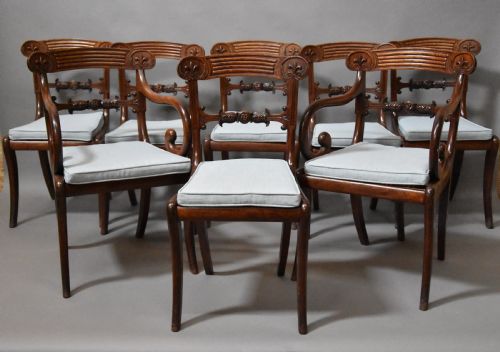
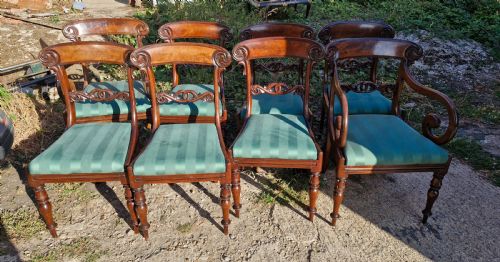
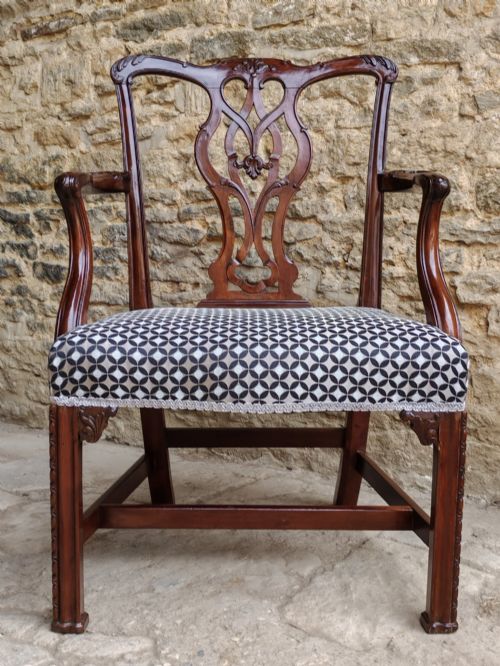
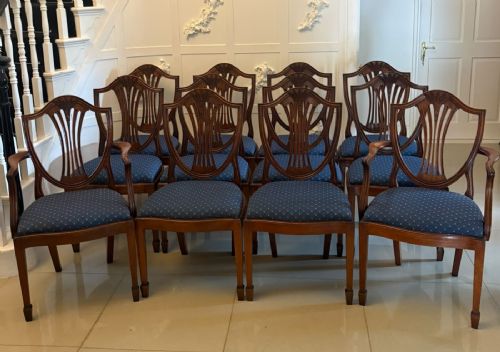
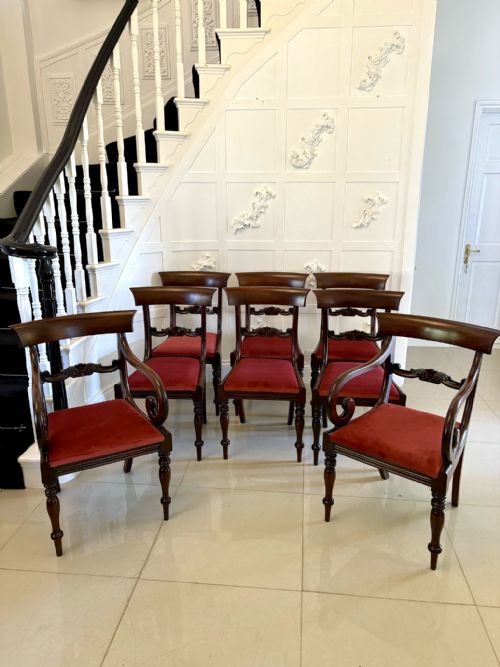
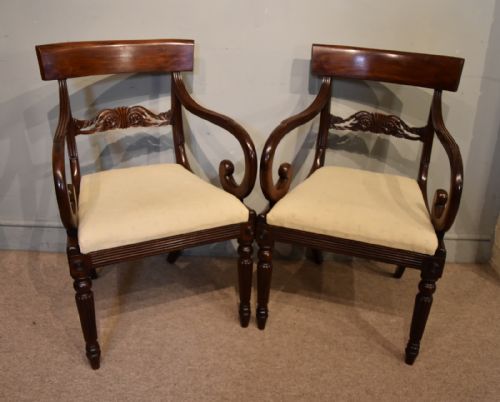
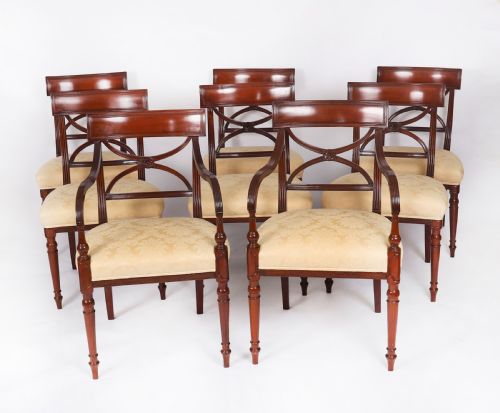
Regency Period Dining Armchairs
Regency period dining armchairs combine architectural line with comfortable seating, offering formal elegance for the dining table.
Regency Period Dining Armchairs
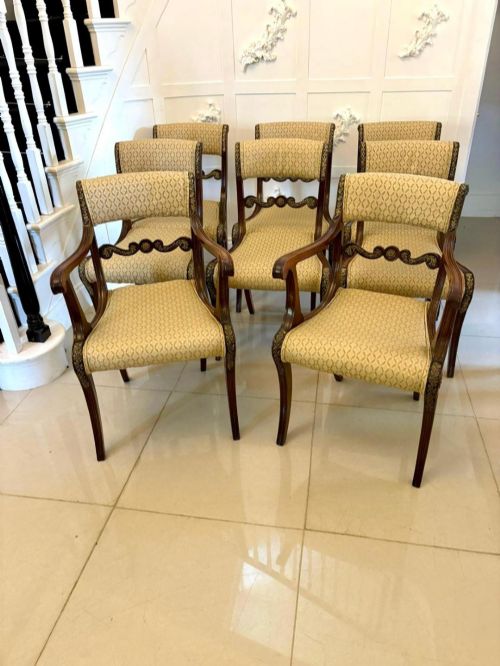
Regency period dining armchairs encompass seating designed primarily for the dining room during the early nineteenth century and surrounding periods. When you search for regency period dining armchairs, you encounter single carvers, matched pairs, and larger sets that often include matching side chairs alongside the armchairs.
The pieces appearing on this page span the Regency, Georgian, and George III eras, alongside later revival interpretations. Forms range from standard elbow chairs and carvers to high back chairs, desk chairs, and bar back variants originating from English, Scottish, Irish, and Anglo-Indian workshops.
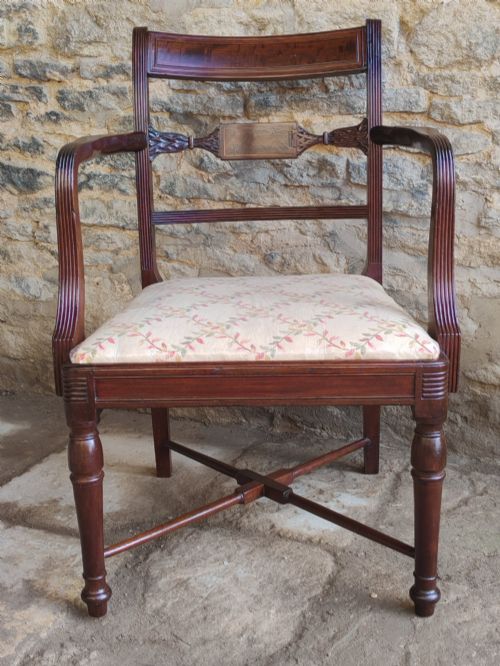
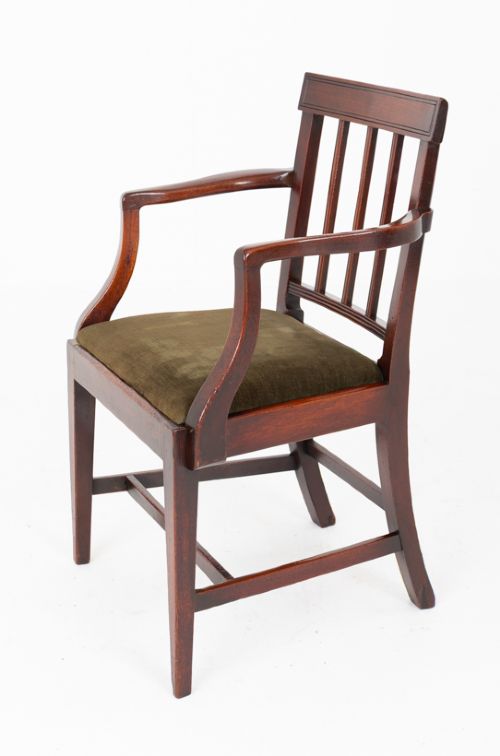
Most examples take the form of mahogany armchairs featuring scroll arms, open elbow designs, or sabre legs. Buyers also find occasional fruitwood, elm, rosewood, and ebony pieces that reflect the broader aesthetic range of the era.
Distinctions in quality and execution
The distinction between standard examples and the finest pieces rests upon the crispness of the timber carving and the sophistication of the joinery. Superior items exhibit harmonious proportions, well-defined scroll work, and integrated brass inlay that remains flush with the surrounding wood surface.
Originality of components and surface patination heavily influence the standing of an armchair. Pieces retaining their structural integrity, uncompromised frame geometry, and period upholstery materials sit at the upper end of the range.
Listings feature mahogany, rosewood, ebony, fruitwood, and elm timber across multiple periods including Regency, Georgian, and the 1920s revival.
The Regency Period Dining Armchairs Glossary
- Carver chair
- An armchair designed to sit at the head of a dining table or alongside matching side chairs. These seats typically feature supportive elbow rests.
- Sabre leg
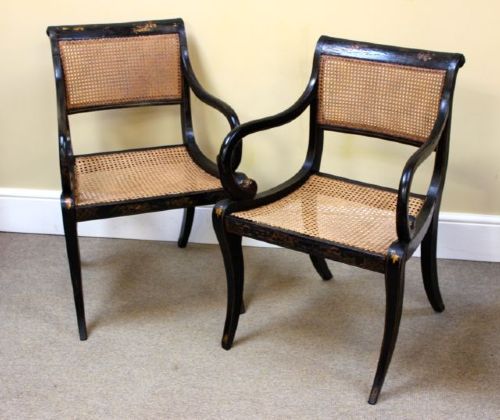
- A concave, outwardly curving furniture leg that tapers toward the foot. This form derives from classical Greek klismos chairs and is characteristic of Regency design.
- Bar back
- A chair back featuring a horizontal splat or rail running across the uprights. This style frequently appears on Irish dining chairs from the early nineteenth century.
- Shield back
- A chair back shaped in the outline of a heraldic shield, popular during the Georgian and Hepplewhite stylistic periods. The open framework often encloses carved vertical splats.
- Caned
- Woven rattan or split cane material used to form light, supportive panels for seats and backs. This technique allows for resilient flexibility within an open wooden frame.
Regency Period Dining Armchairs: Frequently Asked Questions
How do I spot a true Regency armchair?
Look for characteristic design markers such as sabre legs, brass inlay, and classical proportions dating from the early nineteenth century. Makers often utilised solid mahogany and incorporated scroll arms typical of the Regency style.
Compare the timber grain, construction joints, and decorative motifs against known pieces from the Regency and late Georgian periods. Revival pieces from later decades often display subtle differences in timber treatment and weight.
Can I use antique armchairs for daily dining?
These armchairs were built for daily use in nineteenth-century homes using robust hardwoods like mahogany. Ensuring the frame joints and seat supports remain stable allows for continued domestic service.
Periodic inspection of the underpinnings and careful handling will protect the antique timber and upholstery. Pairing them with a suitable dining table provides a functional and historic seating arrangement.
How do I care for antique mahogany frames?
Maintain the timber by keeping the chairs away from direct heat sources and fluctuating humidity levels. Applying appropriate wax polishes helps preserve the natural sheen of the mahogany wood surface.
Avoid harsh chemical cleaners that can strip the historic finish or damage the surrounding upholstery fabric. Gentle dusting with a soft cloth is sufficient for regular maintenance.