
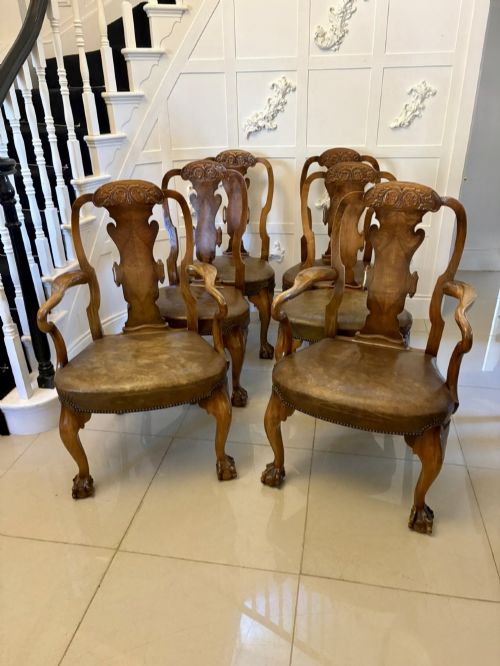
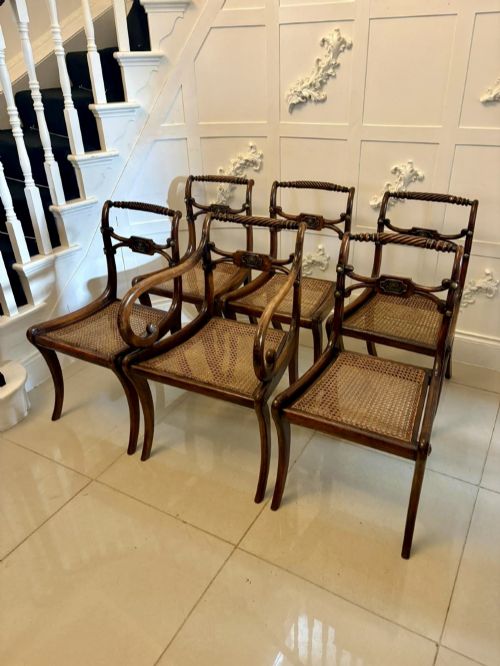
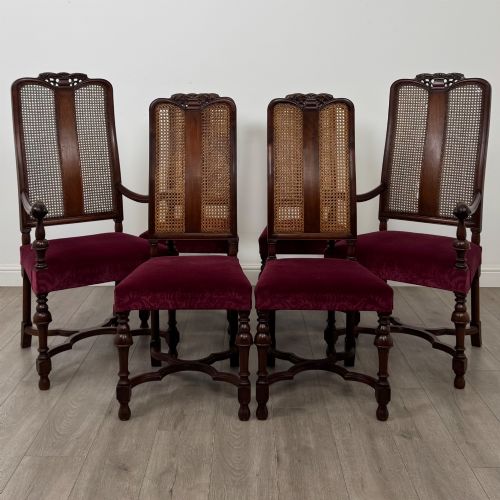
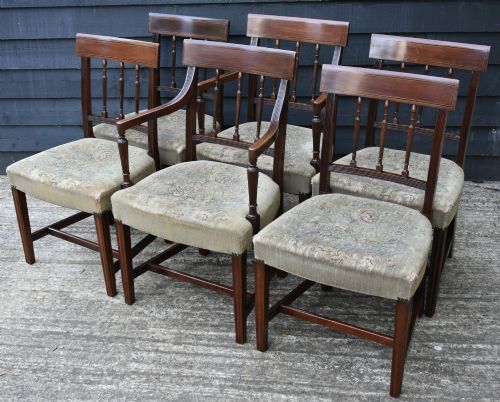
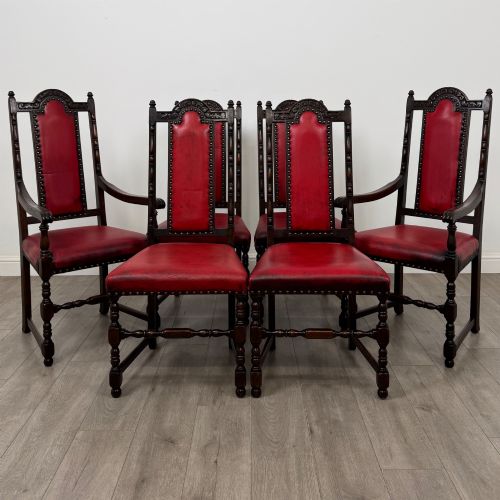
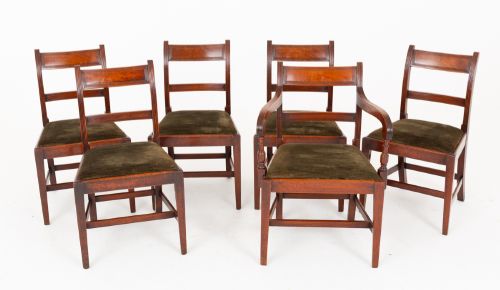
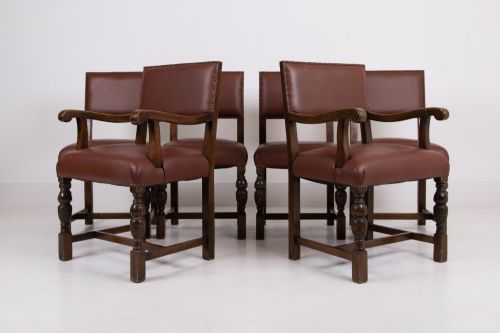
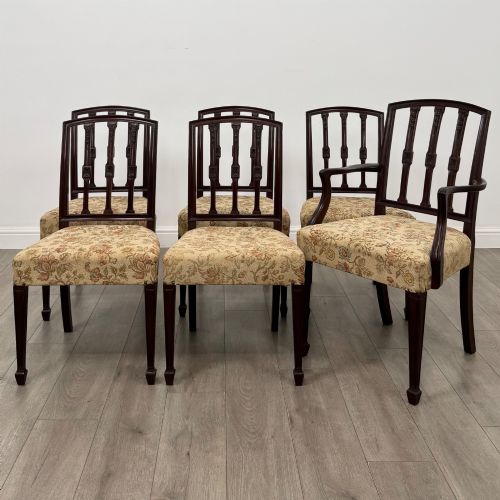
Set of Six Carvers
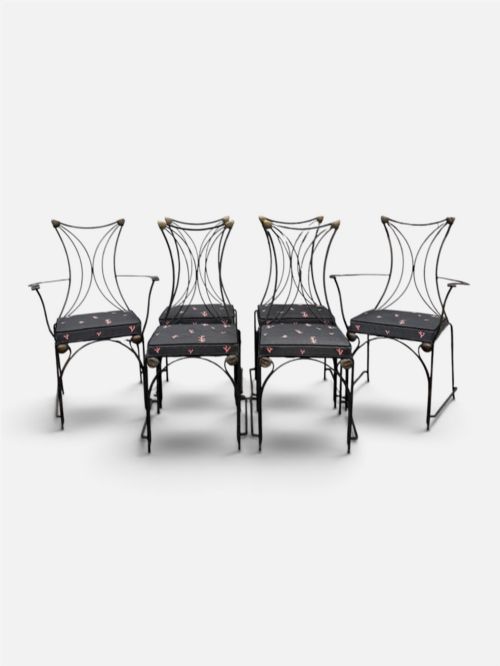
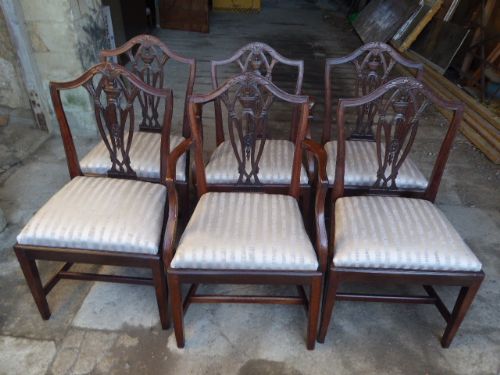
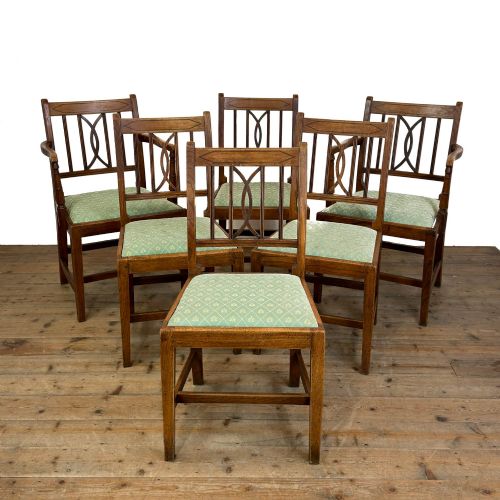
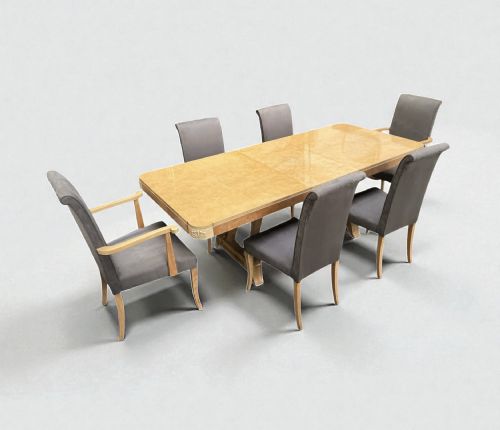
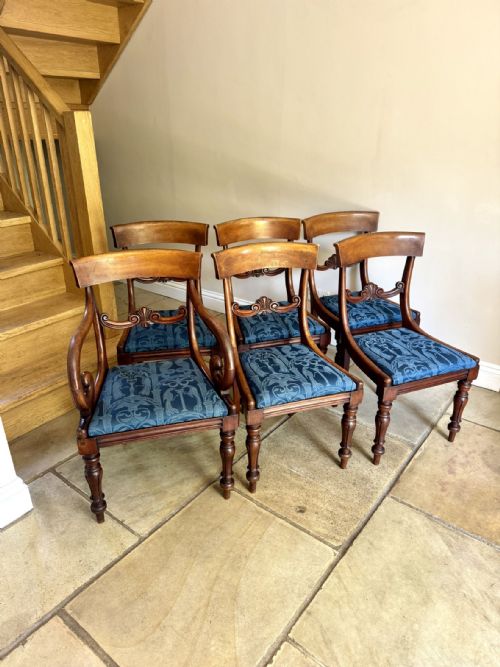
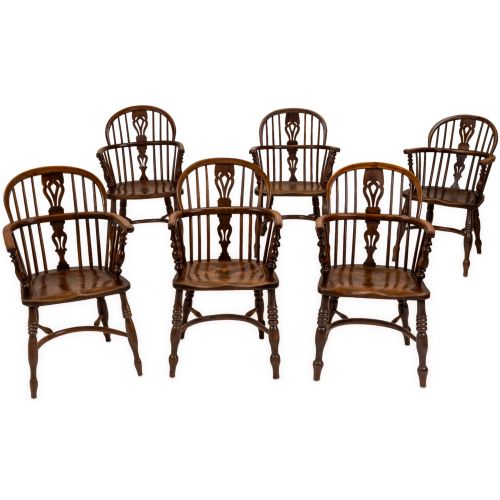
A set of six carvers brings together sturdy armchairs for the heads of the table alongside matching seating.
Set of Six Carvers
A set of six carvers typically comprises a group of dining chairs that includes open-armed chairs designed to sit at the head and foot of a table. The selections found here span periods from the Georgian era through the Victorian period, Edwardian years, and into the 1930s.
Buyers will encounter various configurations, such as matched sets where all chairs share identical frames, or combinations that pair several single chairs with one or two carvers. Woods range from mahogany and oak to elm, beech, yew, and walnut.
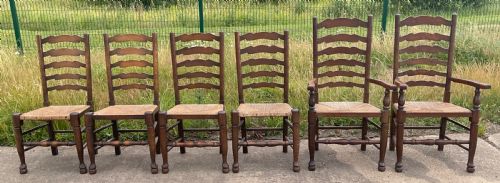
Stylistic influences vary widely, taking cues from Regency, Chippendale, Queen Anne, and Arts and Crafts designs. Many sets adapt traditional forms like ladderbacks, Windsor frames, and stick backs for everyday dining use.
Materials and construction methods
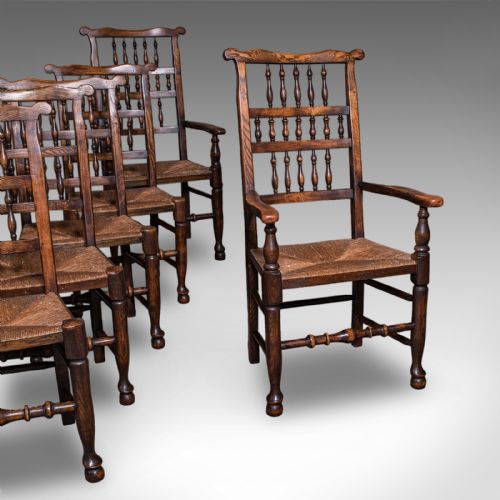
Cabinetmakers utilised hardwoods like mahogany and oak for formal dining suites, employing intricate carving on splats and cabriole legs. Country workshops relied on regional timbers such as elm, beech, and ash, often turning spindles and shaping solid wooden seats.
Joints were secured using traditional pegged mortise and tenon construction to withstand the daily stresses placed on dining furniture. Seat bases incorporated dropped rush, woven cane, or wooden panels beneath squab cushions and upholstered pads covered in fabric, leather, or velvet.
Some ladderback chairs come with rush seating that whispers slightly whenever a guest shifts their weight.
Distinguishing quality across periods
The standard of timber selection largely dictates a set's standing, with finely figured mahogany grains and dense quarter-sawn oak representing superior workmanship. Crispness in hand-carved details, such as crest rails and arm terminals, separates workshop output from mass-produced furniture.
Structural integrity depends upon the survival of original joinery and minimal replacement parts within the group. Sets that retain uniform colour, matching timber patination, and original stretchers command greater respect among collectors.
James Shoolbread·Hille
The Set of Six Carvers Glossary
- Carver
- An armchair designed with open sides to accommodate the wider garments of the person sitting at the head of a dining table. They frequently match a larger set of single dining chairs.
- Splat
- The vertical wooden slat positioned in the centre of a chair back, often shaped, carved, or pierced according to period styles like Chippendale or Queen Anne.
- Cane
- Woven rattan strips utilised to form flexible, breathable seat and back panels. It requires careful handling to maintain tension over decades.
- Ladderback
- A chair back featuring multiple horizontal wooden rails stacked between the upright stiles. This traditional form appears in country oak and ash variations.
- Windsor
- A traditional chair constructed by inserting separate turned legs, spindles, and a bow into a solid, saddled wooden seat. Regional variations include stick backs and comb backs.
Set of Six Carvers: Frequently Asked Questions
How do I seat six people with carvers?
A set typically places a carver at each head of the dining table with four single chairs along the sides.
Alternatively, mixed sets allow diners needing extra arm room to use the carvers while maintaining a uniform look around the room.
What is the difference between a carver and a single chair?
Carvers feature integrated armrests designed to provide extra comfort and support for the host at the table.
Single chairs lack arms, allowing more of them to fit neatly along the length of a standard dining table.
Can I mix different wood tones in a dining set?
Matched sets ensure consistent timber tones like mahogany or oak throughout the entire group of chairs.
Some buyers choose matched sets specifically to avoid clashes between varying wood grains and finishes around the dining room.
How do I identify a Georgian set from an Edwardian revival?
Georgian chairs display the genuine timber patination and construction techniques characteristic of the eighteenth century.
Edwardian revival pieces replicate earlier styles like Chippendale or Sheraton using machine tools and turn-of-the-century manufacturing methods.