


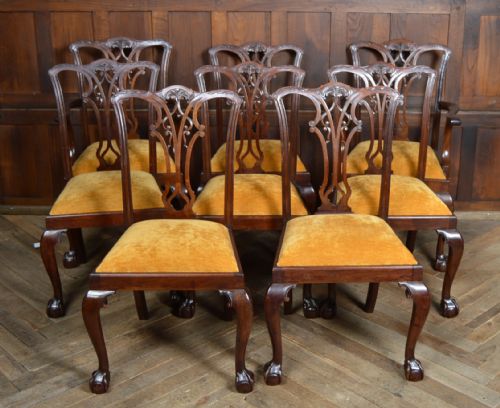
Antique Dining Table Carvers
These antique dining table carvers are the commanding armchairs placed at the head and foot of a formal dining suite.
Antique Dining Table Carvers
When you search for antique dining table carvers, you are looking at the principal armchairs that traditionally anchored the ends of a dining arrangement. These pieces provide a heavier presence than side chairs, often matching larger dining suites from various periods.
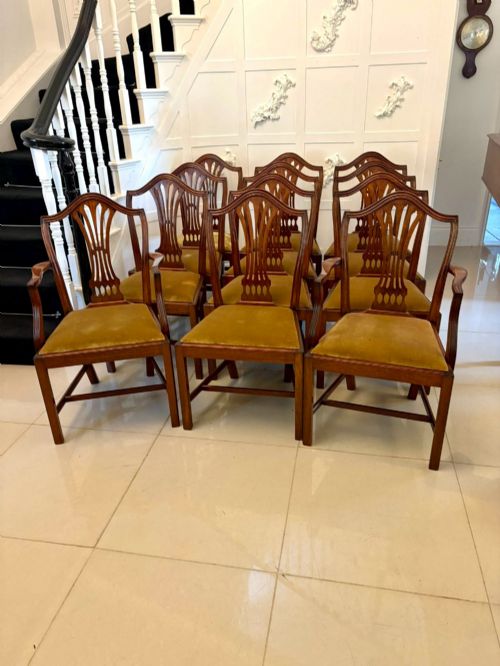
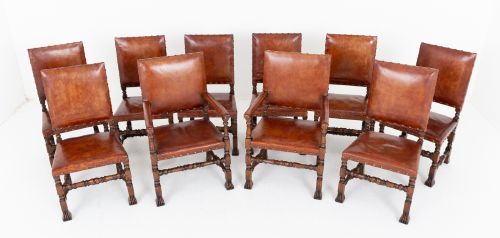
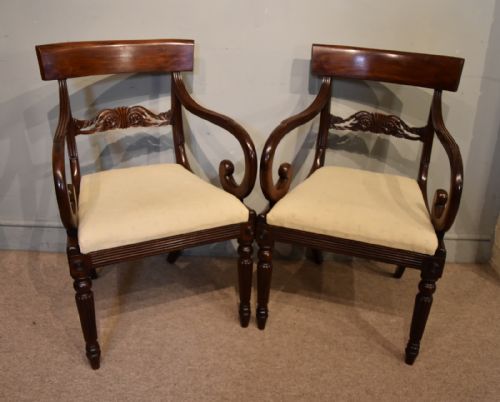
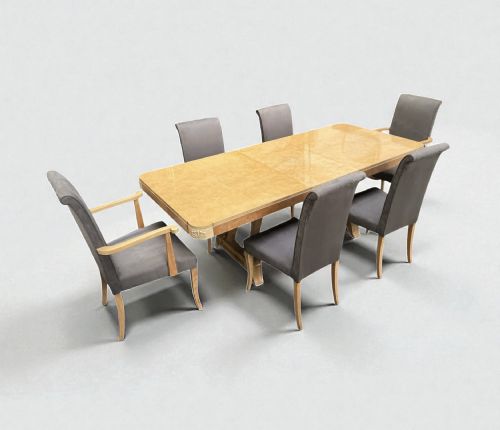
You will most commonly meet these carvers as part of larger sets, or occasionally as matched pairs, spanning several distinct eras of design. The selection here includes substantial seating from the Regency, Edwardian, and Art Deco periods, alongside revival styles.
The forms range from austere mahogany models to elaborate Queen Anne and Chippendale interpretations. Each piece offers an insight into the formal dining customs of its respective era through its scale and upholstery.
How they were made
Makers relied heavily on solid timber foundations, predominantly utilising mahogany, oak, and beech to construct the load-bearing frames. These woods were chosen for their structural strength and capacity to hold intricate carved details along the arms and legs.
Decorative surfaces often incorporated burr walnut and birds eye maple veneers to add visual depth to the back splats and rails. Upholstery techniques varied widely across the eras, employing traditional stuffing beneath top coverings of leather, velvet, and patterned fabric.
These imposing chairs ensure the host sits physically elevated above guests, continuing centuries of dining room hierarchy.
What varies in quality
The distinction between standard examples and exceptional pieces lies in the crispness of the timber carving and the fidelity of the period style. Master craftsmen invested significantly more time in shaping the cabriole legs, arm terminals, and splats by hand.
Proportion and wood selection also dictate the standing of a carver, with well-figured mahogany or burr walnut elevating the piece. The integrity of the original frame construction remains paramount, reflecting the skill of the cabinetmaker.
Hille·Waring
The Antique Dining Table Carvers Glossary
- Carver
- An armchair designed specifically to sit at the head of a dining table. These seating options feature supportive armrests for the host.
- Splat
- The vertical wooden slat positioned in the centre of a chair back. This component often bears the primary decorative style of the piece.
- Cabriole leg
- A furniture leg that curves out and then in, resembling the leg of an animal. This form frequently terminates in a pad or claw and ball foot.
Antique Dining Table Carvers: Frequently Asked Questions
How do I match carvers to existing chairs?
Matching carvers to a set requires careful attention to timber species, such as mahogany or oak, and the specific historical style. Look for consistent design motifs in the back splats and leg profiles.
Minor variations in patination are normal in older pieces, but the overall proportion and wood colour should harmonize with your existing dining furniture.
Can I use carvers as standalone chairs?
Carvers function admirably as standalone seating in studies, hallways, or living rooms due to their substantial armrests and supportive proportions. Their decorative back designs ensure they hold visual weight on their own.
Positioning them away from the dining table allows the detailed woodwork and upholstery to become a focal point in a different part of the room.
What is the difference between Georgian and revival styles?
Authentic Georgian pieces were produced during the eighteenth and early nineteenth centuries, displaying the construction methods and material availability of that specific time. Revival pieces, such as those from the Edwardian era, consciously copied these earlier aesthetics.
Examining the internal framing, fixings, and secondary woods usually reveals the true age of the piece rather than relying solely on the exterior style.
How do I care for antique wood and upholstery?
Protect antique wood surfaces by avoiding direct sunlight and maintaining stable humidity levels to prevent the timber from splitting. Regular dusting with a soft, dry cloth preserves the natural finish without building up residue.
For upholstered elements covered in leather, velvet, or fabric, gentle professional cleaning ensures the historic textiles remain intact and durable over time.