
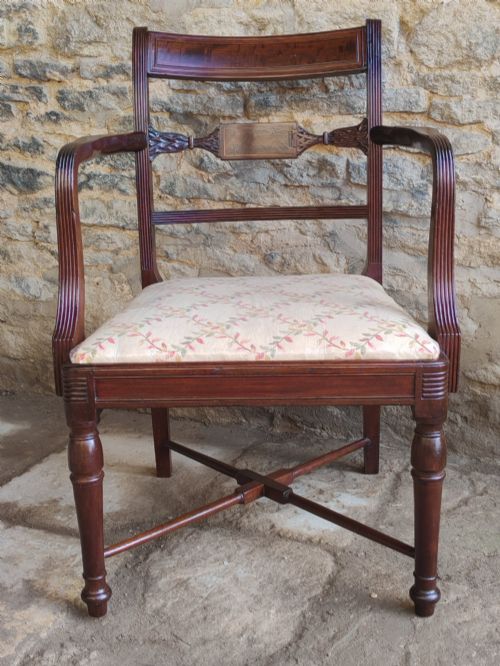
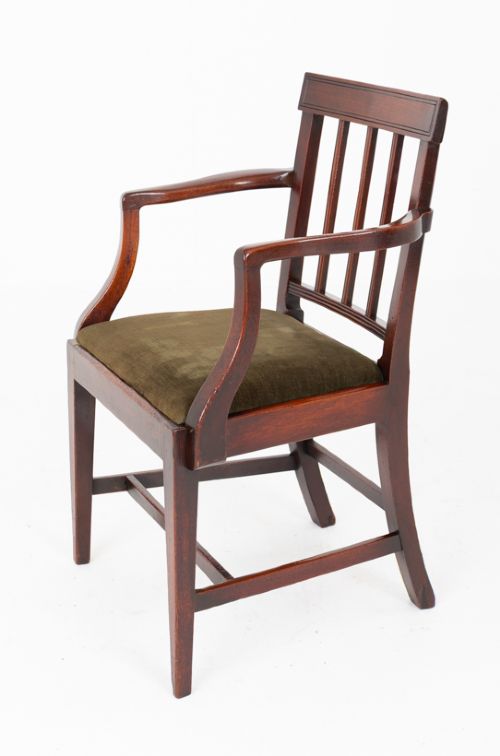
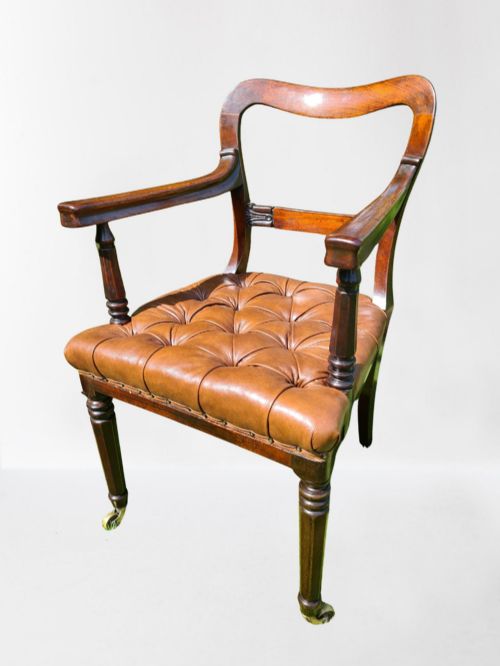
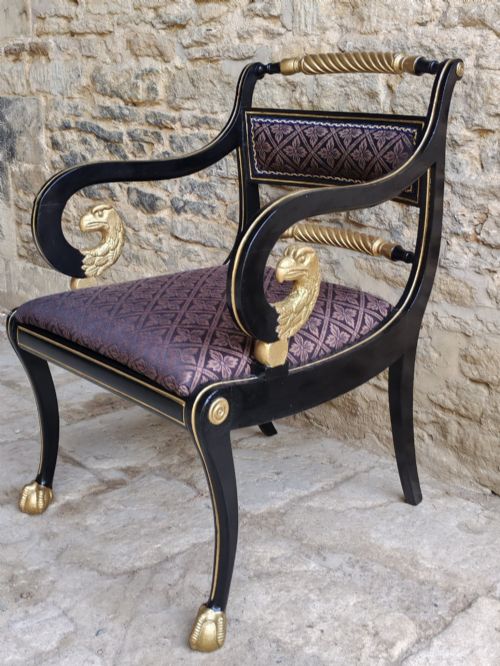
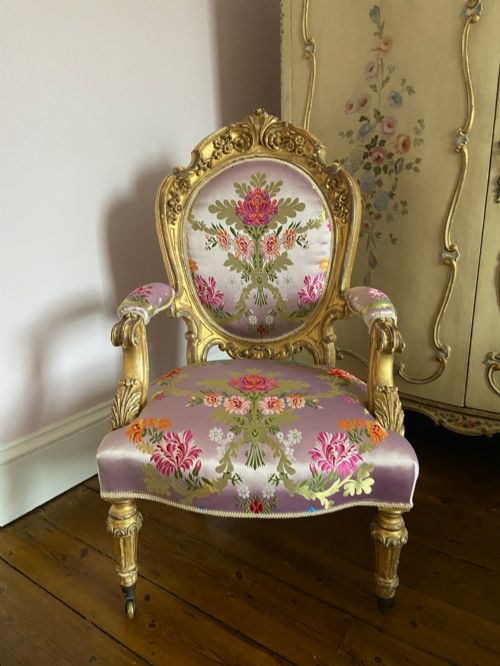
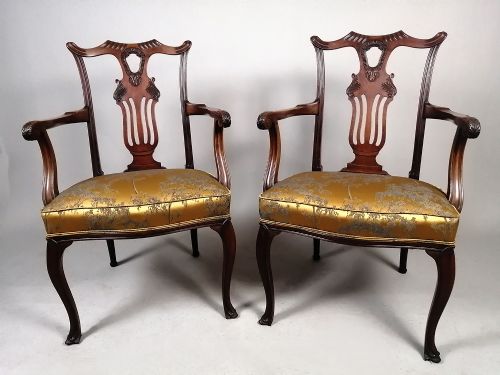
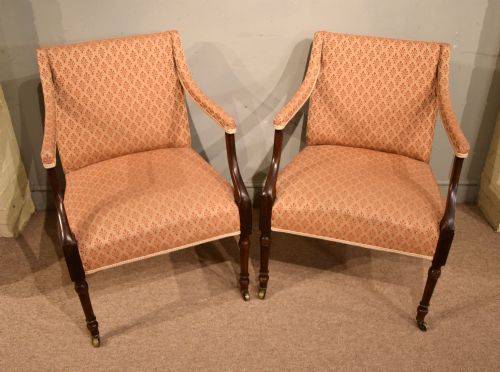

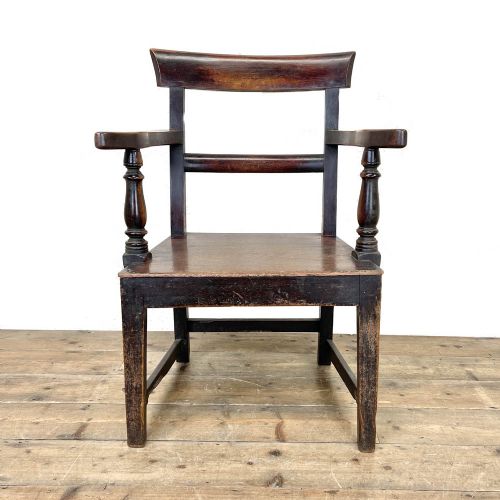
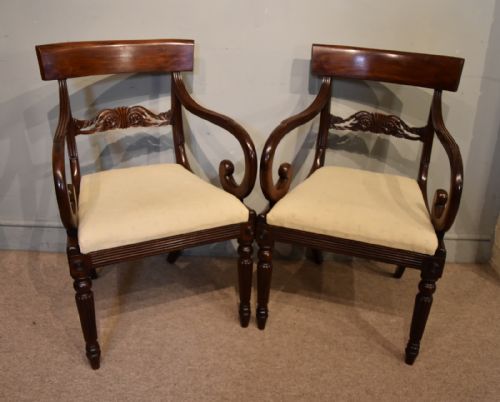
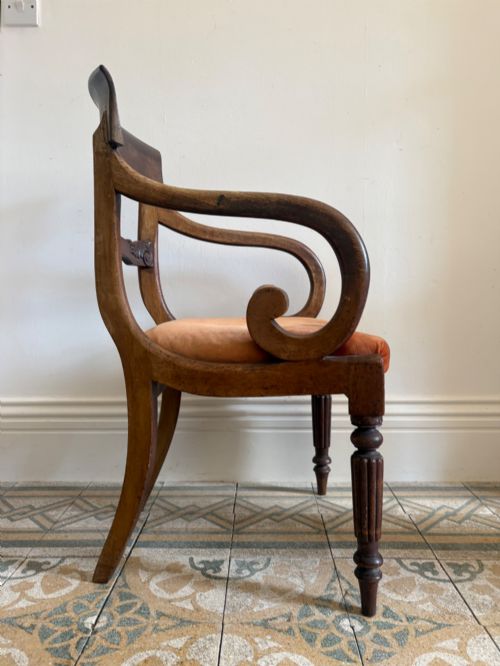
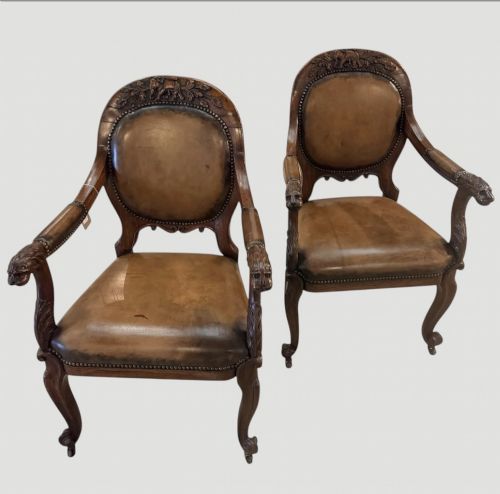
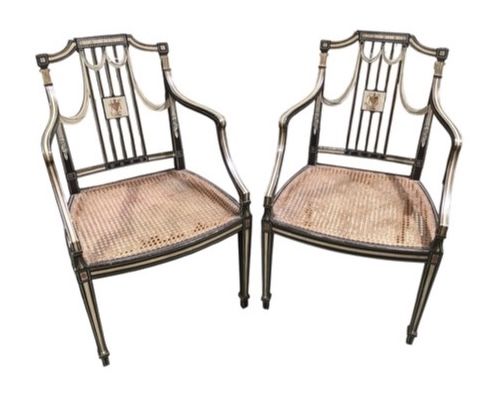
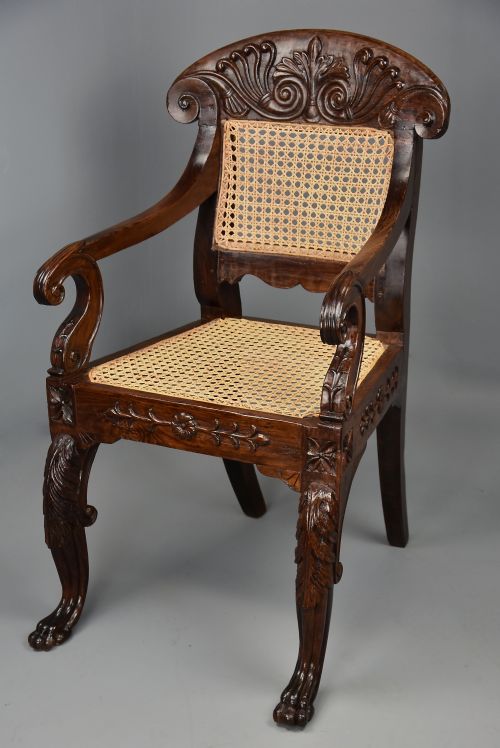
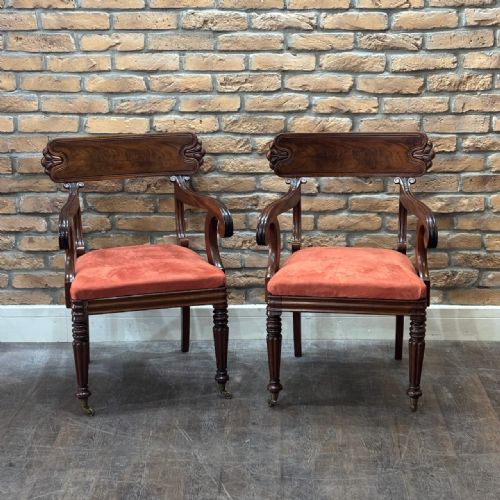
Regency Open Armchairs
Regency open armchairs bring lightness and refined classicism to a room, offering low-slung seating born from the early nineteenth century.
What regency open armchairs are
Regency open armchairs represent a defining phase of British furniture design, encompassing armchairs, dining armchairs, and desk chairs created during the early nineteenth century. Buyers searching for regency open armchairs will encounter distinct groupings ranging from pairs to large dining sets.
The materials and styles span traditional British mahogany and painted finishes to more exotic iterations such as Anglo-Indian ebony and faux bamboo. The form relies on open sides rather than padded upholstery enclosing the sitter, maintaining a light and architectural silhouette.
While genuine pieces from the Regency period dominate the historical record, subsequent interpretations from around nineteen hundred also appear. These later iterations continue the classical vocabulary of scroll arms and elegant upright supports established decades earlier.
How they were made
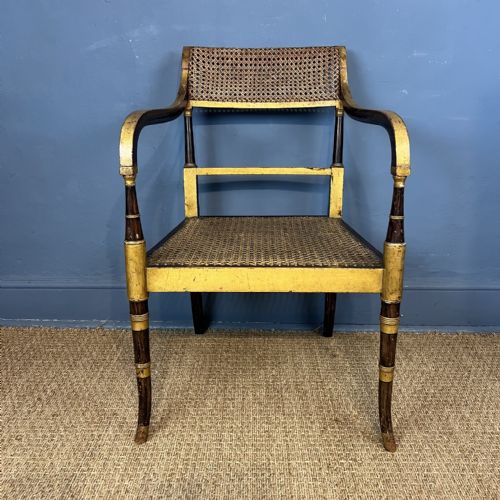
Makers utilised dense timbers such as mahogany and ebony alongside lighter supports shaped into faux bamboo. Construction often incorporated turned elements, brass mounts, and cane seating surfaces alongside traditional fabric upholstery.
Surfaces were frequently finished with paint, gold leaf, and ebonised wood to achieve the striking contrasts favoured by the Regency aesthetic. Joinery techniques ensured sturdy frames capable of supporting daily use while retaining slender proportions.
Retail Price Guide 2026
Typical UK retail prices for regency open armchairs, calculated from the Sellingantiques database of over a million retail prices indexed since 2003. This retail price guide relies exclusively on Sellingantiques data; no external sources or auction records are used, so the figures do not describe the wider market.
Listings feature mahogany, cane, ebonised wood, paint, fabric, brass, gold leaf, and ebony.
What varies in quality
The distinction between standard examples and the finest work lies in the crispness of carved details and the sophistication of painted or gilt decoration. Superior pieces display harmonious proportions and careful selection of timber grain, particularly in mahogany and ebony elements.
Complete sets naturally command greater interest than assembled groups, whilst unusual decorative choices such as faux bamboo or elaborate scroll arms elevate the visual ambition of the design.
The Regency Open Armchairs Glossary
- Elbow chair
- An alternative term for an armchair, often used to describe seating with low armrests designed to accommodate formal dress.
- Scroll arm
- A structural armrest curving outwards and downwards in a continuous volute, typical of Regency joinery.
- Ebonised wood
- Timber stained or treated to resemble ebony, creating a dark, uniform surface often paired with gilt highlights.
- Anglo-Indian
- Furniture produced in India under British rule, frequently utilising native hardwoods like ebony for European forms.
Frequently Asked Questions
Where were regency open armchairs placed?
These chairs served primarily in drawing rooms, libraries, and formal dining spaces as supplementary seating.
Their open construction made them easy to move around social rooms as required.
How do I identify a genuine period piece?
Look closely at the timber patina, hand-cut joinery, and the consistency of the turning on the legs and arm supports.
Compare the proportions and decorative motifs against documented examples from the early nineteenth century.
Are these chairs comfortable for daily use?
The open wooden arms and upright backs provide firm support rather than deep lounge comfort.
They were built for formal posture and refined interior aesthetics.
Can I mix different finishes in one room?
Mixing mahogany, painted surfaces, and ebonised wood reflects historical Regency interior practices.
Matching the overall scale and period silhouette matters more than uniformity of timber.