




Regency Metal Candlesticks
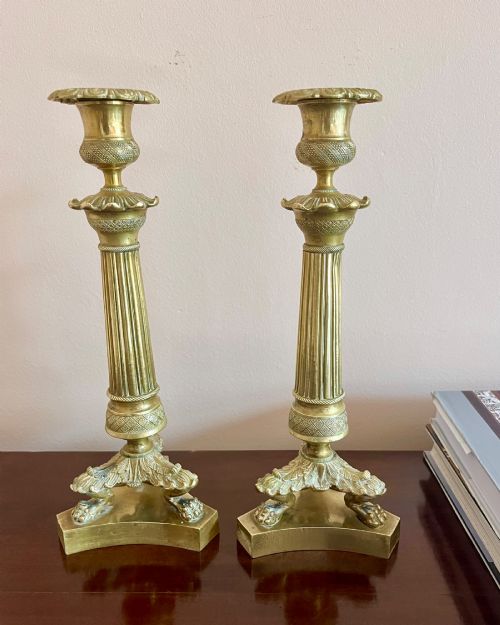
Regency metal candlesticks bring architectural weight and disciplined design to a tabletop, offering a striking display of cast bronze, brass and ormolu.
Regency Metal Candlesticks
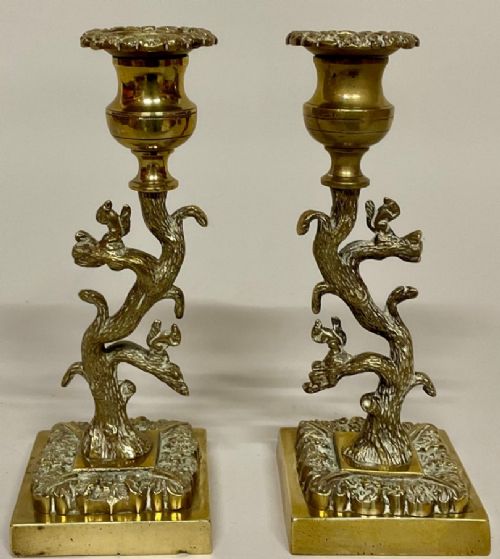
Regency metal candlesticks comprise practical lighting items produced during the early nineteenth century and later revival periods, spanning forms from simple chamber sticks to elaborate sculptural pairs. When buyers search for regency metal candlesticks, they most commonly encounter matched pairs cast in brass or patinated bronze, featuring classical proportions and square or stepped bases.
The selection ranges from Georgian telescopic brass examples to French Empire gilt bronze designs and later twentieth-century interpretations. Makers utilised durable base metals to achieve substantial weight, ensuring the candle remained stable during use in domestic interiors.
What varies in quality
Quality rests upon the crispness of the original chasing and the depth of the metal casting, where superior examples retain sharp definition in leaf work, drapery and figural elements. Heavy gauge metal and precise assembly distinguish workshop production from standard commercial output.
The integrity of the surface finish also determines standard, with original patination or intact fire gilding commanding greater appreciation than later replating or aggressive cleaning that softens the underlying detail.
Listings feature items spanning the Regency period, the nineteenth century, and twentieth-century revival eras in brass, bronze, ormolu, and silver plate.
Blagden Hodgson And Co
The Regency Metal Candlesticks Glossary
- Ormolu
- Gilt bronze produced by applying a mixture of gold and mercury to a bronze base and heating it to drive off the mercury. This technique creates a durable golden finish characteristic of high-status metalwork.
- Campana
- A bell-shaped socket or sconce found at the top of a candlestick designed to catch wax drippings. The shape mimics classical Roman wine vessels.
- Pricket
- A sharp metal spike set in the centre of a candleholder to secure large church-style candles rather than a socket. This form appears on heavier altar and ceremonial lights.
- Telescopic
- An adjustable stem design allowing the height of the candlestick to extend through sliding tubular brass sections. Harrison Patent examples frequently utilise this mechanism.
- Patinated bronze
- A dark chemical or natural surface oxidation applied to bronze to protect the metal and provide aesthetic depth. The finish ranges from deep chocolate brown to greenish tones.
Regency Metal Candlesticks: Frequently Asked Questions
How do I clean old brass?
Dust the metal gently with a soft dry cloth to remove surface particles without disturbing the underlying oxidation. Avoid harsh chemical polishes that strip away age and diminish the character of the piece.
For stubborn grime, use mild soapy water on a damp cloth, drying immediately to prevent spotting. Preserving the natural patination maintains the historical integrity of antique metalwork.
Are these wired for electricity?
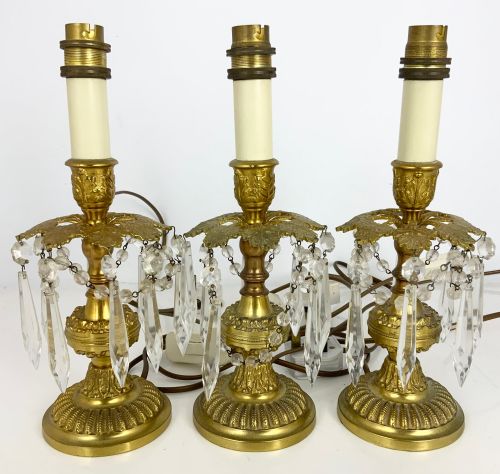
Most traditional examples were originally designed for wax candles and retain their original sockets and drip pans. Some pieces have been adapted into table lamps with electrical wiring threaded through the stem.
Conversion methods vary between reversible fittings and permanent alterations. Buyers should inspect the wiring status to determine whether the piece functions as a candleholder or a lamp.
What is the difference between brass and bronze?
Brass is an alloy primarily composed of copper and zinc, typically exhibiting a bright golden or yellow metallic tone. Bronze consists mainly of copper combined with tin, resulting in a heavier and darker material well-suited to fine casting.
Patinated bronze often receives dark chemical treatments to accentuate sculptural details. Both metals served as primary materials for Regency lighting but yield distinctly different visual weights.
How can I date a pair?
Dating relies on stylistic markers such as neoclassical motifs, proportions, and manufacturing techniques like sand-casting seams. Regency and Georgian pieces display specific base shapes and sconce profiles typical of the early nineteenth century.
Comparison with documented examples and patent marks helps establish the period. Later revival pieces from the Victorian era or twentieth century often incorporate heavier bases or different assembly methods.