



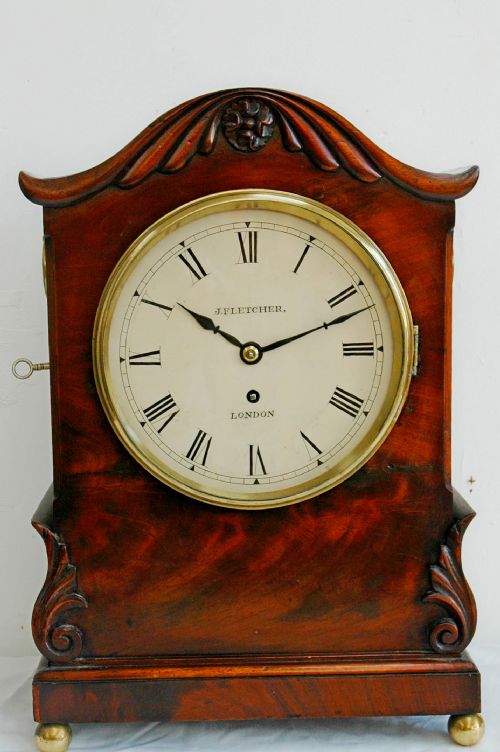


Regency Mantle Clock
A regency mantle clock brings architectural precision and rich mahogany or rosewood into a room, anchoring a mantelpiece with enduring 19th century mechanics.
Regency Mantle Clock
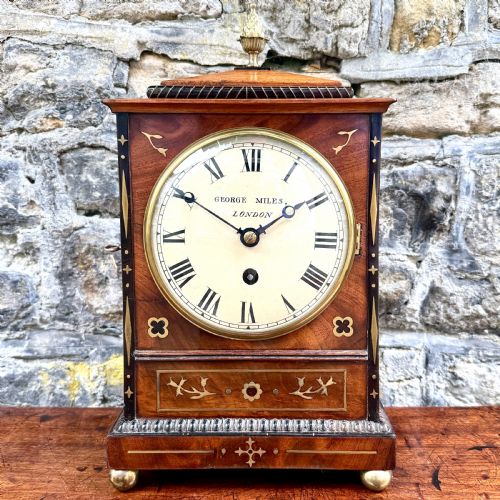
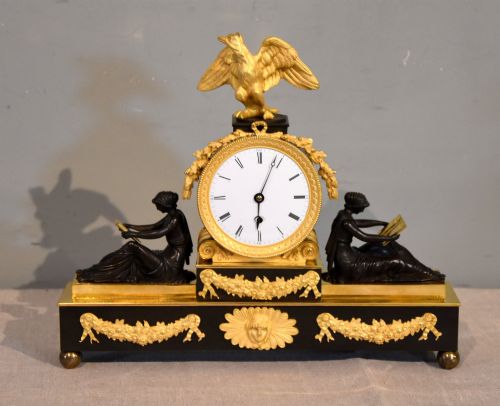
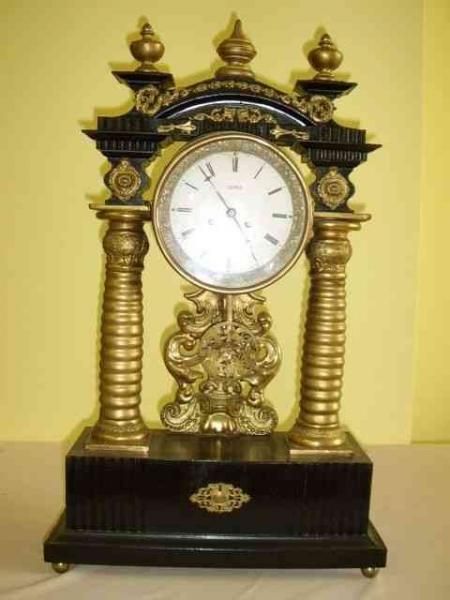
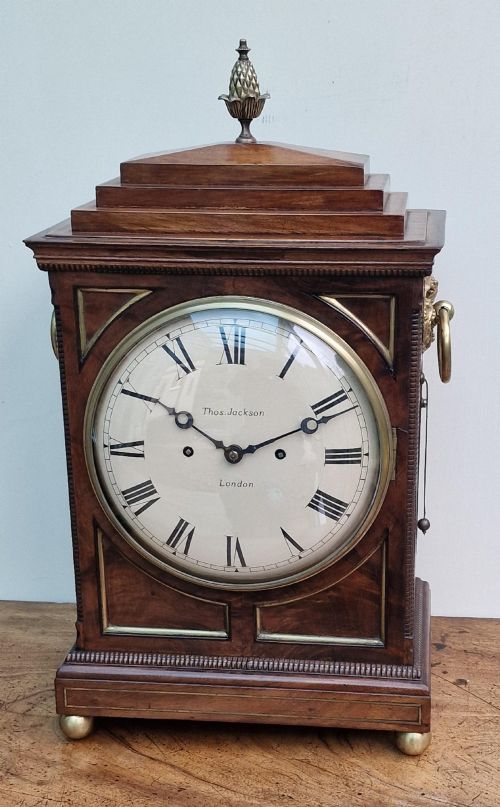
When searching for a regency mantle clock, collectors encounter a diverse range of mantel, bracket and portico timepieces dating from the Georgian and Regency periods. The selection on this page leans heavily toward mahogany and rosewood bracket clocks alongside striking marble, ormolu and bronze architectural designs.
These pieces function as both reliable timekeepers and decorative centrepieces for mantelpieces and tables. Forms vary from simple lancet and pad top wooden cases to elaborate musical portico clocks and French empire models.
How they were made
Cabinetmakers constructed the wooden housings using dense timbers such as mahogany, rosewood and burr walnut, frequently embellishing them with intricate brass inlay and ebonised details. Metal components combined cast ormolu, gilt bronze and brass with silvered dials and protective glass panels.
Mechanical interiors relied upon precision movements, notably 8-day fusee driven mechanisms and twin fusee systems. Enamel and metal dials received careful hand-finishing by period horologists.
Regency Mantle Clock Retail Price Guide 2026
Typical asking prices for regency mantle clock among the pieces listed under this phrase on Sellingantiques today, from the lower quarter to the upper quarter. They describe what is for sale here now, not the wider market.
What varies in quality
Quality reveals itself in the crispness of the brass inlay, the selection of figured mahogany or rosewood veneers, and the architectural proportion of the case. Maker attribution, particularly pieces signed by London or provincial clockmakers, elevates the standing of an individual clock.
The sophistication of the internal movement dictates distinction, with twin fusee striking mechanisms and complex musical cylinders representing the upper tier of period production.
Baetens London·Thomas Jackson·George Orpwood·L. Vick of Stroud·Thomas Moss·Cording of London·John Leroux·Perigal and Duterrau·Ganthony of London·Adams of Lombard Street·Vulliamy·Mitchell and Russell of Glasgow·Walker and Hall
The Regency Mantle Clock Glossary
- Fusee
- A conical pulley used in clock movements to maintain an even pull on the chain or gut line as the mainspring unwinds. This mechanism ensures consistent timekeeping accuracy across the duration of the winding cycle.
- Bracket clock
- A portable household clock originally designed to sit upon a matching wall bracket or table. These pieces typically feature wooden cases with carrying handles and glazed side panels.
- Portico clock
- An architectural mantel clock styled to resemble a classical temple with columns supporting a central pediment. They frequently incorporate French ormolu, marble and bronze elements.
- Lancet top
- A clock case design featuring a pointed, Gothic-arch silhouette reminiscent of lancet windows. This distinct architectural profile appears frequently in Regency bracket clocks.
- Ormolu
- Gilt bronze produced by applying a finely ground high-carat gold-mercury amalgam to a bronze base. The technique imparts a rich, warm golden lustre to decorative mounts and architectural details.
Regency Mantle Clock: Frequently Asked Questions
Where should I place a bracket clock?
Position your clock on a stable, level surface away from direct sunlight, central heating vents and damp walls. A sturdy mantelpiece or dedicated table provides an ideal environment.
Level placement ensures the pendulum swings evenly and the escapement mechanism maintains accurate timekeeping.
How can I tell a Regency clock from a Victorian one?
Examine the timber selection and decorative motifs, noting that Regency pieces often employ clean architectural lines, brass inlay and figured rosewood or mahogany. Victorian variants frequently introduce heavier carvings or different proportions.
Maker signatures and dial styles also offer clear indicators of the era in which the piece was constructed.
What is an 8-day movement?
An 8-day movement requires winding approximately once a week to maintain continuous operation. This mechanical efficiency became standard in better quality bracket and mantel clocks.
It reduced the frequency of handling the movement, thereby preserving the internal gears and escapement from unnecessary wear.