

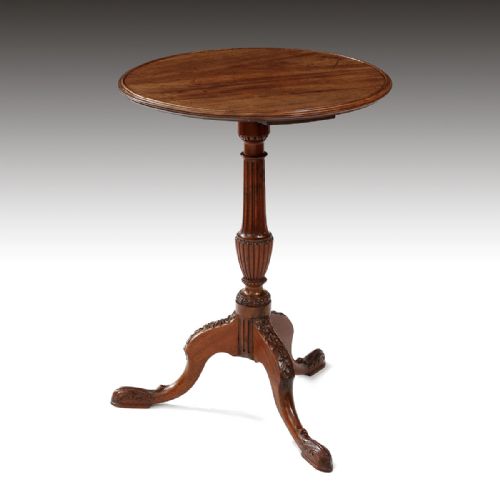
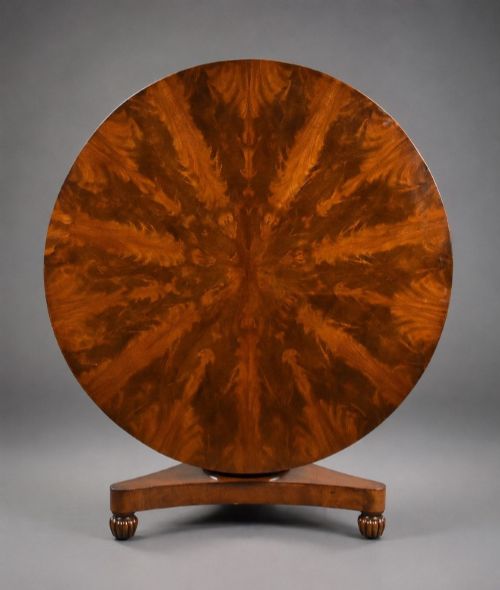
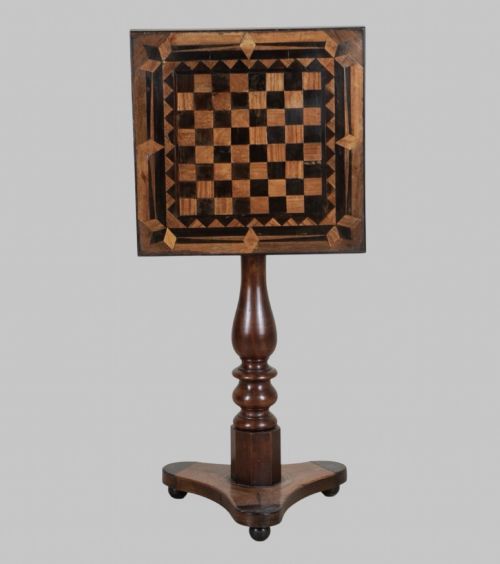
Regency Mahogany Tilt Table
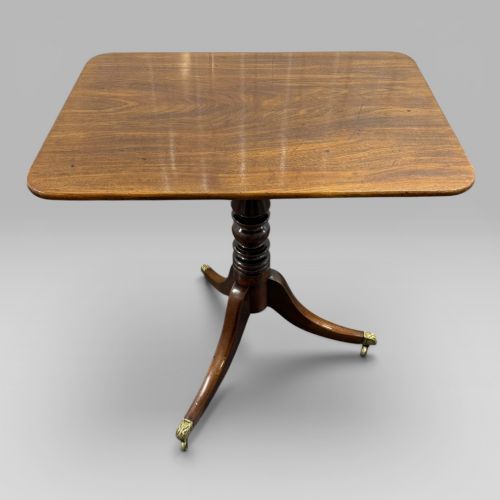
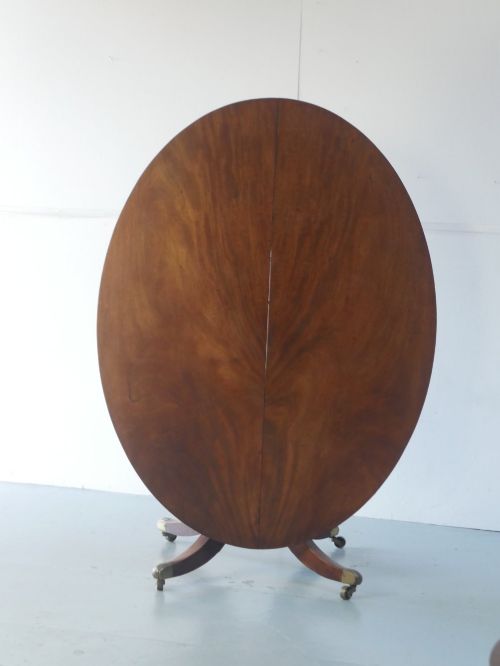
A regency mahogany tilt table offers a clever space-saving pivot mechanism combined with rich timber grain.
Regency Mahogany Tilt Table
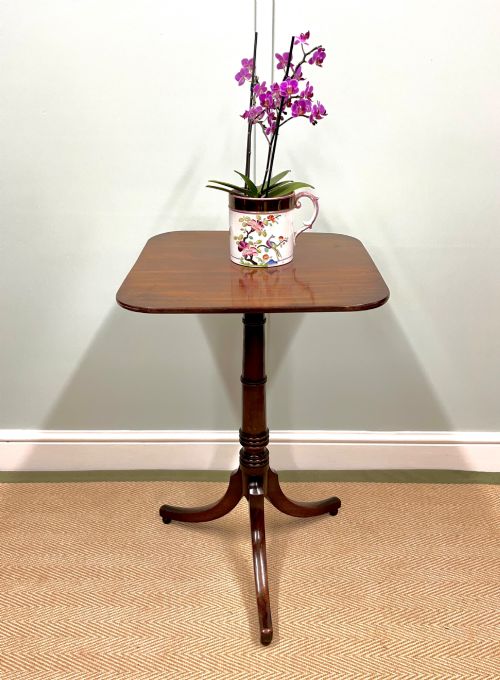
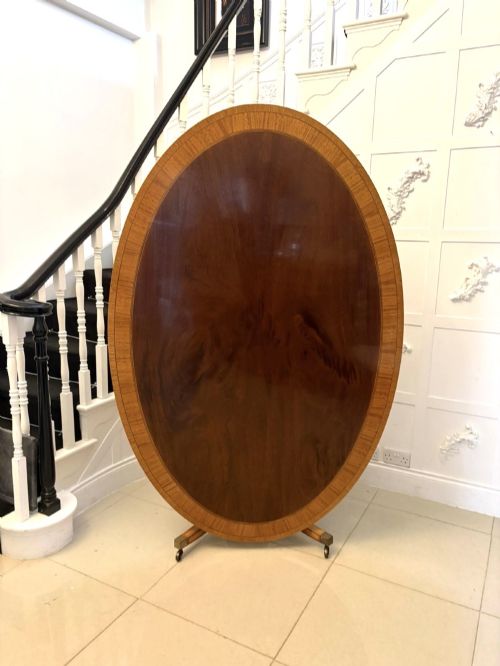
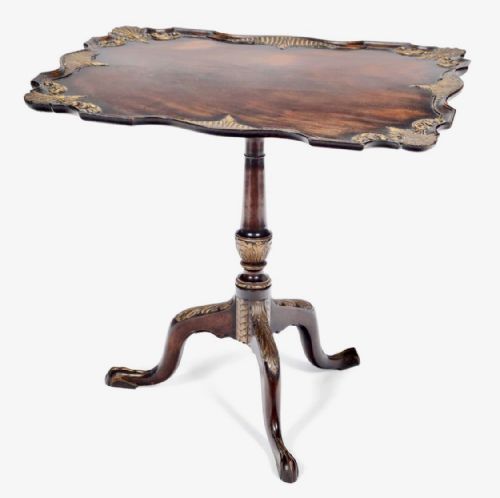
When you search for a regency mahogany tilt table, you encounter practical furniture designed to tip vertical when not in use. These pieces serve as dining tables, breakfast tables, tea tables, and occasional tables.
The versions most common on this page date from the nineteenth century, including the Regency period, George III, George IV, and William IV eras. Revival pieces also appear from later decades.
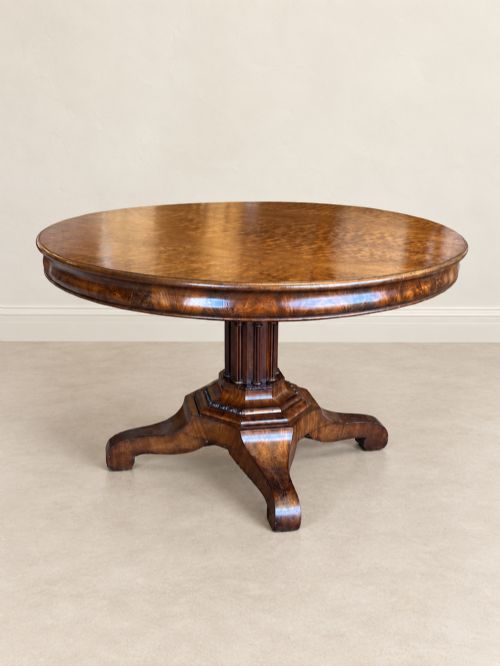
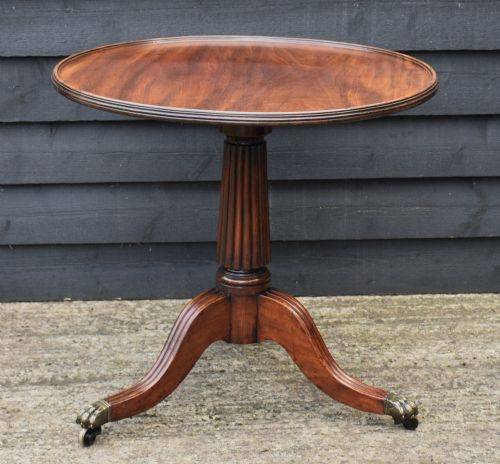
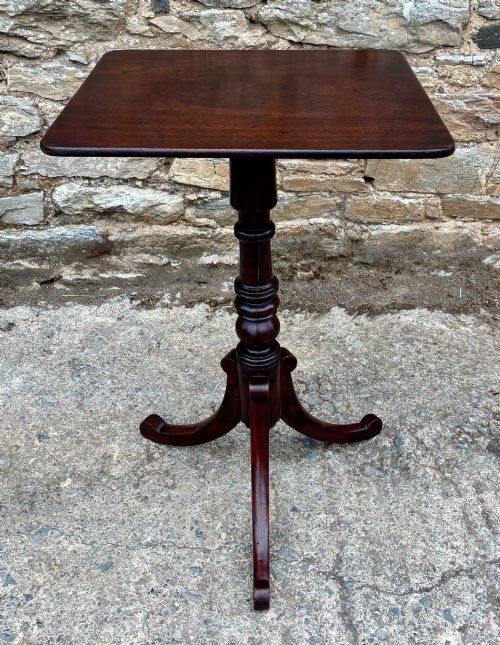
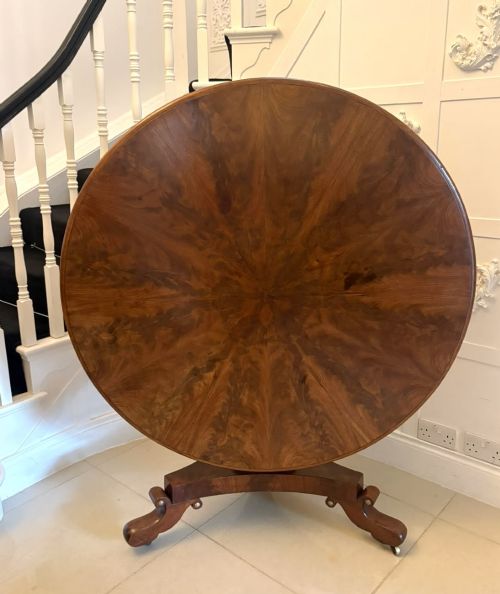
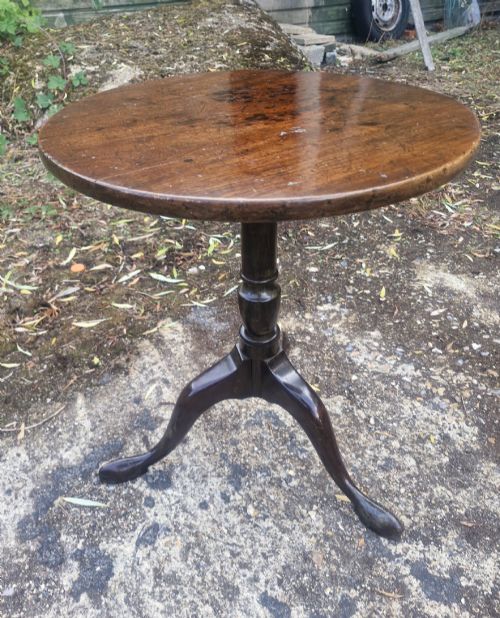
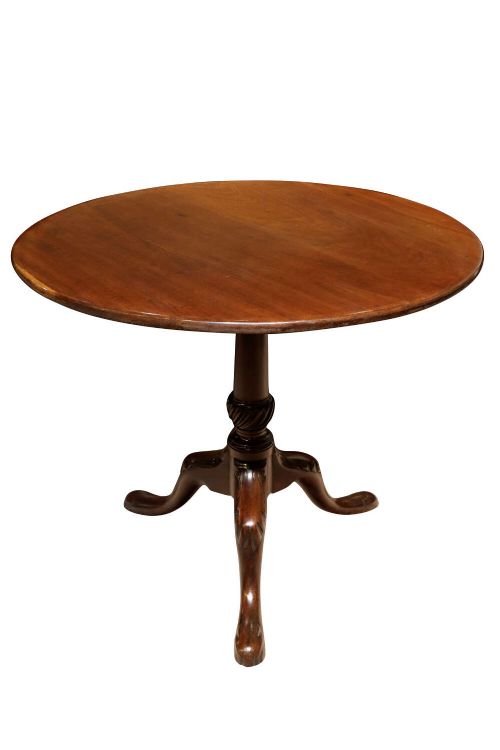
Forms range from compact tripod wine tables with revolving tops to large circular dining tables resting on heavy pedestals and triform bases.
Materials and Construction
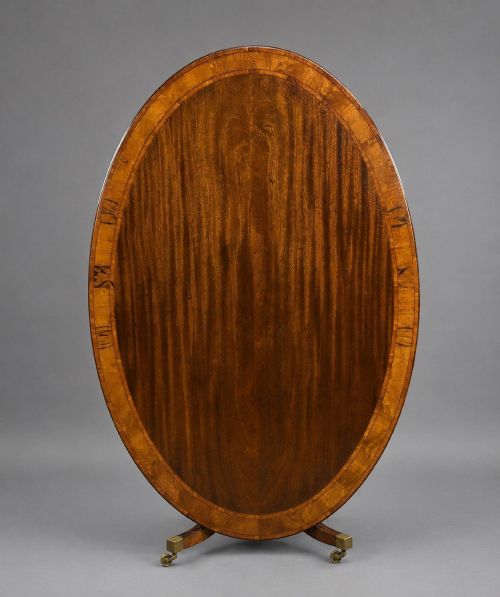
Cabinet makers utilised solid mahogany and figured mahogany veneer, often enhancing the timber with satinwood crossbanding, boxwood inlay, and parcel gilt highlights.
Pedestal bases frequently feature brass casters beneath tripod or triform supports, while the tops employ mechanical catches for the tilt action.
Listings feature mahogany alongside rosewood, walnut, satinwood, and boxwood inlay.
Assessing Craftsmanship
The standard of the timber defines the piece, distinguishing plain surfaces from richly figured mahogany and carefully matched veneers.
The precision of the pivot mechanism and the stability of the central pillar dictate the functional success of the table.
Gillow·Walker Lancaster
The Regency Mahogany Tilt Table Glossary
- Tilt top
- A tabletop mounted on a hinge mechanism that allows the surface to rotate vertically for storage against a wall.
- Crossbanding
- A border of veneer laid perpendicular to the grain of the main surface to create a framed visual effect.
- Tripod base
- A support structure featuring three legs radiating from a central pillar, common in smaller occasional and tea tables.
- Triform base
- A three-sided pedestal base often seen on larger breakfast and centre tables from the Regency and William IV periods.
Regency Mahogany Tilt Table: Frequently Asked Questions
How does the tilt mechanism work?
The tabletop connects to a clever pivoting block and catch system atop the central pillar. This allows the surface to swing from horizontal to vertical with minimal effort.
Once upright, the table occupies very little floor space, which historically allowed rooms to serve multiple functions throughout the day.
Where were these tables used?
These pieces sat primarily in drawing rooms, libraries, and parlours for serving tea, reading, or playing games. Larger breakfast tables stood centrally in dining spaces.
Because the tops tipped away, servants could easily clear the floor perimeter when the furniture was idle.
How do I identify a Regency piece?
Authentic Regency examples display characteristic classical proportions, dark mahogany grain, and sometimes brass inlay or parcel gilt details. Look for construction methods typical of the early nineteenth century.
Revival versions made later in the Victorian era or during the twentieth century often display subtle differences in timber finish and interior hardware.
Can I use a tilt table for daily dining?
Many circular breakfast tables and larger pedestal designs provide sturdy surfaces suitable for everyday meals. The central pillar leaves ample legroom around the base.
Care should be taken with antique polishes and veneers by using mats and avoiding excessive moisture on the mahogany surface.