


Edwardian Style Tilt Table
These pieces for edwardian style tilt table search terms offer convenient folding tops and tripod bases for occasional use.
Edwardian Style Tilt Table
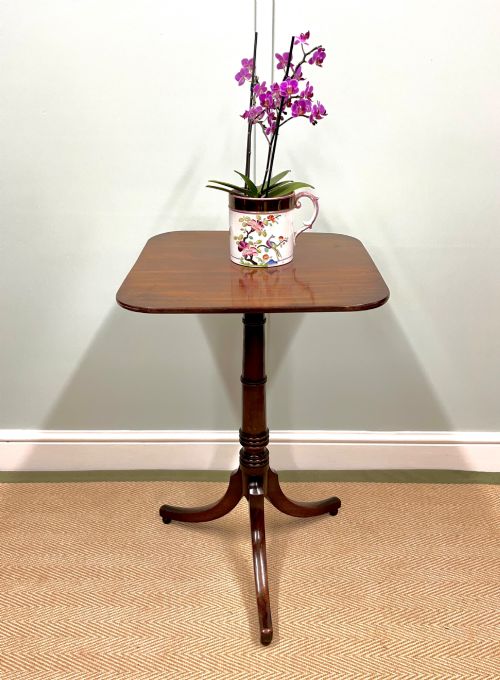
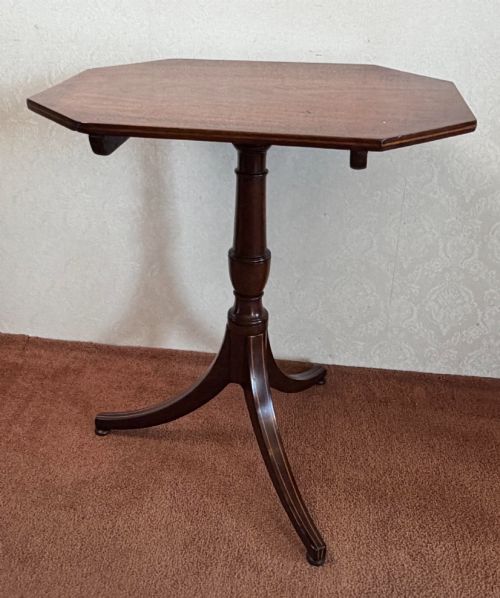
When searching for an edwardian style tilt table, buyers encounter folding occasional furniture spanning multiple historical periods and revival movements. These tables function primarily as compact surfaces that tilt vertically when not in use to save floor space.
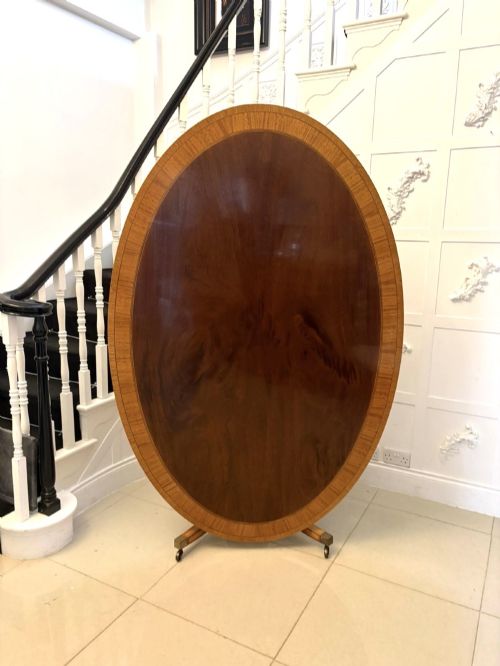
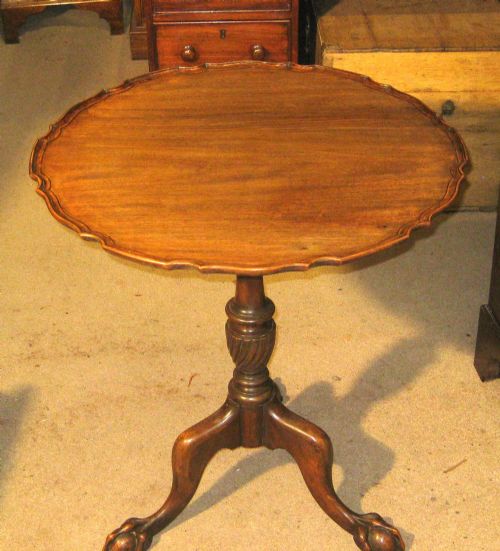
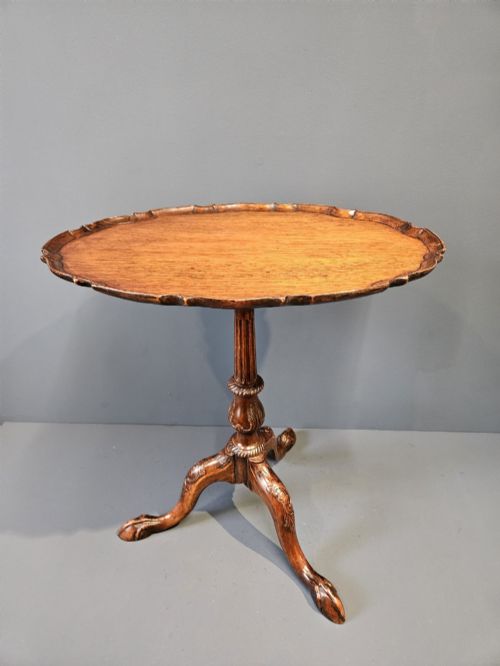
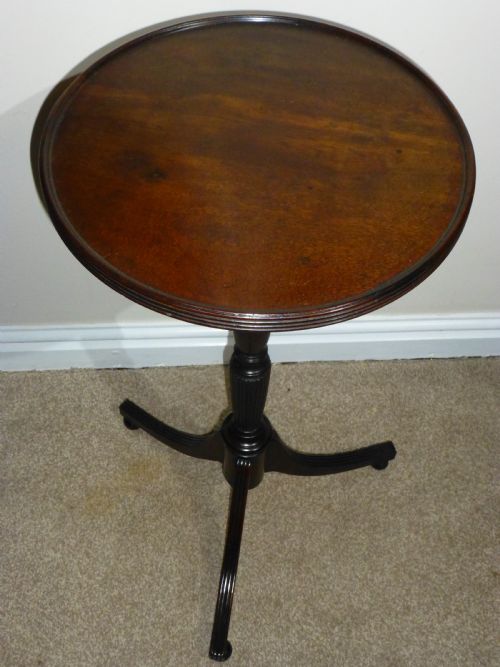
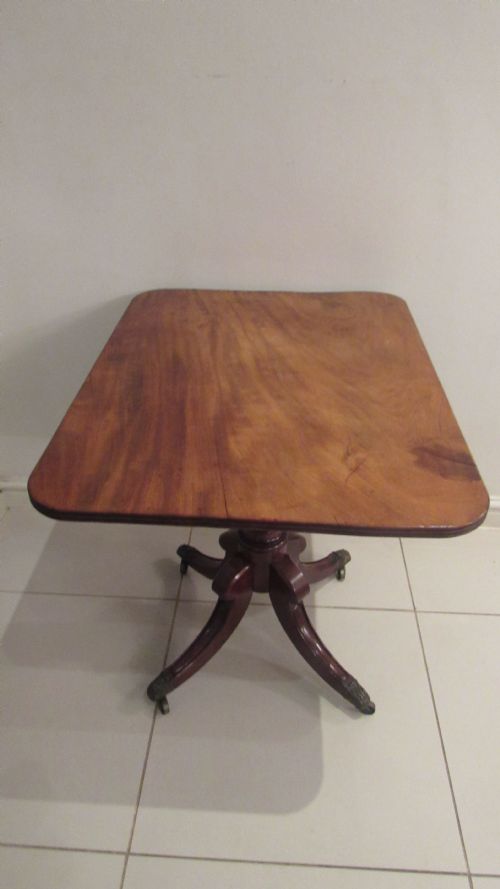
The selections here frequently draw on earlier Regency, Victorian, and Georgian aesthetic traditions while dating from the nineteenth and early twentieth centuries. Forms range from simple circular tripod tables to oval occasional tables with distinct edge treatments.
Materials and construction
Cabinetmakers constructed these tables predominantly using solid and figured mahogany, frequently enhanced with contrasting boxwood inlay or satinwood crossbanding along the edges. Oak also appears in heavier bench and hall seating formats.
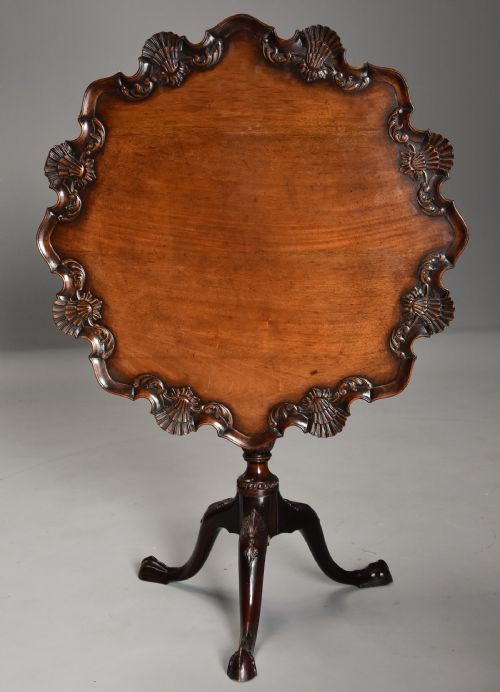
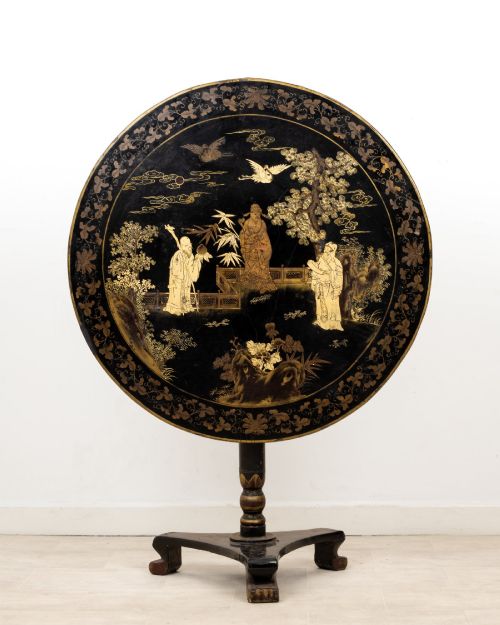
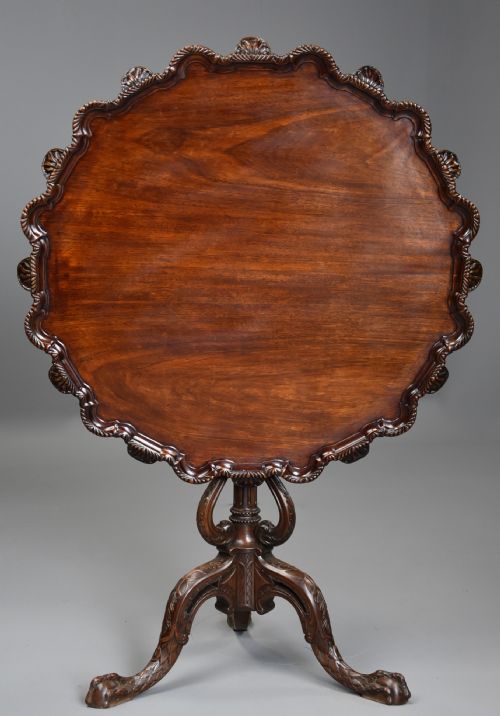
Decorative details rely on traditional techniques including hand-applied lacquer, delicate wood inlay, and carved piecrust edges surrounding the top. Brass fittings often secure the tilting mechanisms and support the pivoting movement of the snap top.
Listings feature mahogany, oak, and lacquer materials spanning the nineteenth century through the early twentieth century.
What separates the best examples
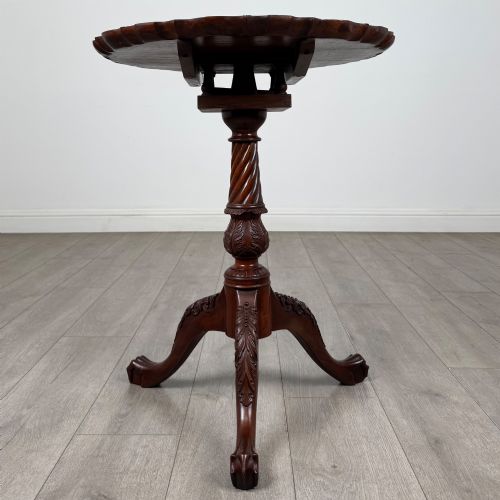
Quality in these tables rests on the crispness of the wood carving, particularly along tripod legs, pillar turnings, and raised table edges. Figured timber selections with balanced grain patterns elevate a piece above standard utility versions.
The precision of the snap top mechanism determines how securely the surface locks into position when lowered. Subtle stringing, boxwood inlay, and well-executed crossbanding demonstrate superior workshop execution.
The Edwardian Style Tilt Table Glossary
- Tilt top
- A table top hinged to the central pillar so it can pivot vertically when not in use. This clever space-saving design originated in earlier centuries.
- Snap top
- A specific tilt top variation incorporating a catch or spring mechanism to lock the surface firmly in the horizontal position.
- Tripod table
- A small freestanding table supported by a single central pillar resting on three spreading legs. They provide stable placement on uneven floors.
- Piecrust edge
- A raised, scalloped carved rim shaping the perimeter of the tabletop. It prevents small items from rolling off.
- Crossbanding
- A narrow strip of veneer applied perpendicularly to the grain of the main surface. This frames the top with a contrasting border.
Edwardian Style Tilt Table: Frequently Asked Questions
What is an edwardian style tilt table used for?
These tables served historically as portable tea, lamp, or occasional tables that could be folded flat against a wall when extra floor space was needed.
Today they function effectively beside seating areas to hold lamps, drinks, or decorative objects while adding traditional character to a room.
How do you operate the tilt mechanism?
Most examples use a catch or pivoting block beneath the top that releases the surface so it can swing from horizontal to vertical.
Operation should feel smooth without excessive wobble in the central pillar or loose joints in the tripod base.
Where should I place a tripod table?
The three-legged design allows the base to tuck neatly into corners or beside armchairs where four-legged tables might crowd the room.
Because the top tilts away, the table can also be stored flat against a hallway or parlour wall when not actively in use.
How do I distinguish revival styles from original pieces?
Revival pieces combine historical design vocabularies like Chippendale or Regency with manufacturing methods and timber selections typical of their actual production date.
Examining the construction beneath the top and the wear patterns on the timber helps clarify the age of the piece.