




Regency Mahogany Tea Caddy
A regency mahogany tea caddy is a compact wooden container once used to store expensive loose leaves securely under lock and key.
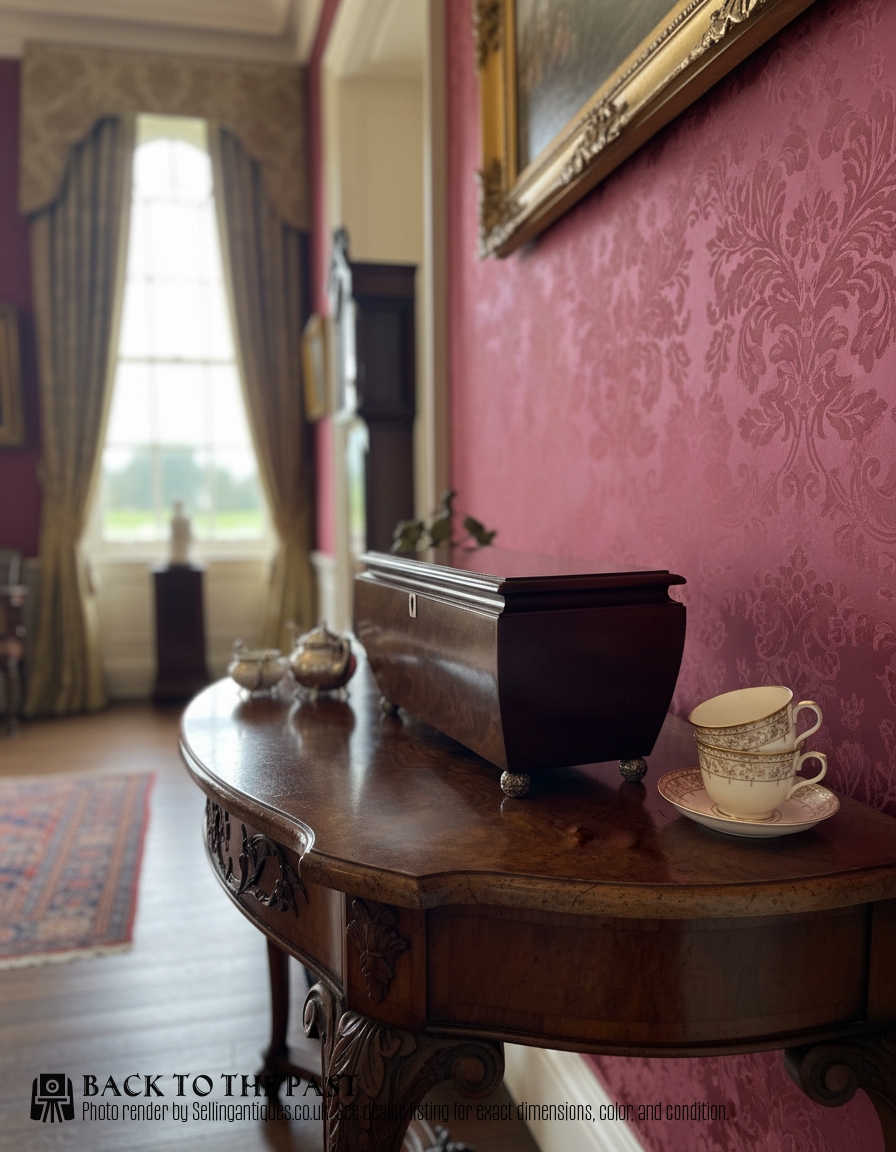
Regency Mahogany Tea Caddy
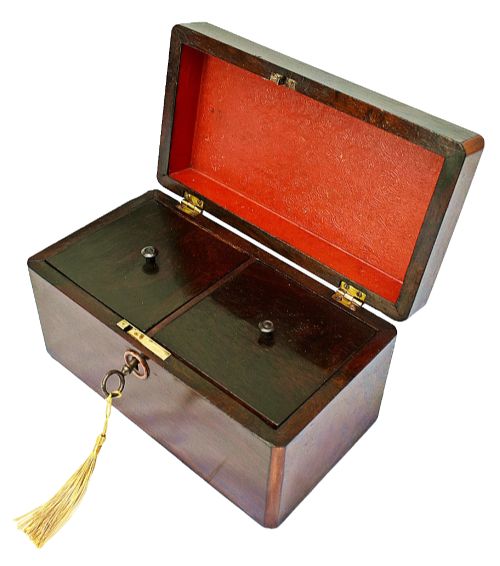
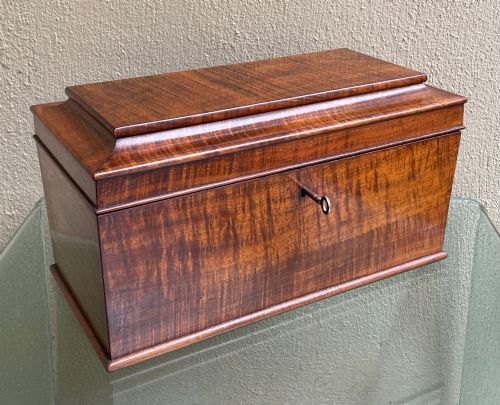
A regency mahogany tea caddy is a small box designed to hold dry leaf blends in separate interior compartments, often alongside a glass mixing bowl. These pieces span the early nineteenth century, crossing George III, Regency, William IV and early Victorian periods.
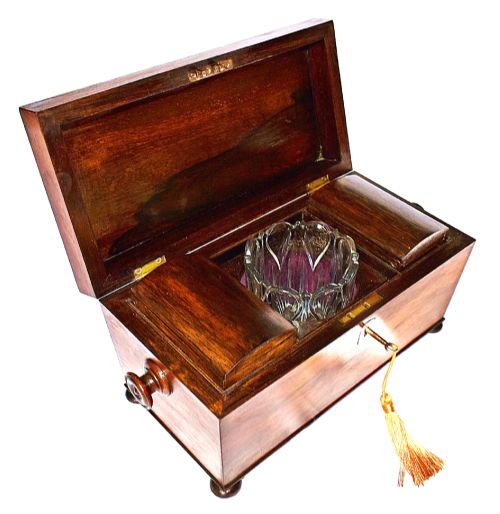
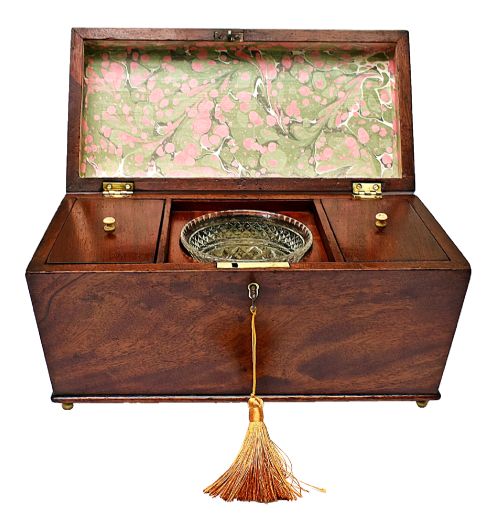
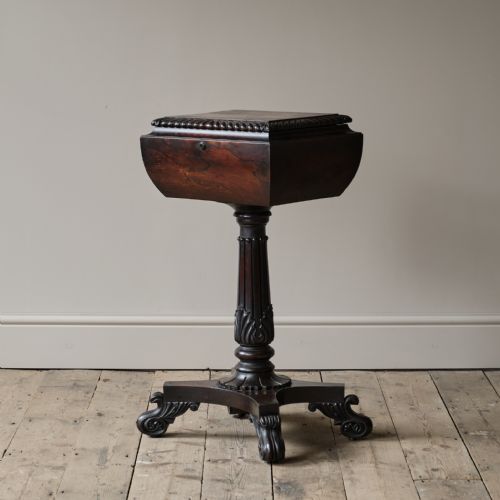
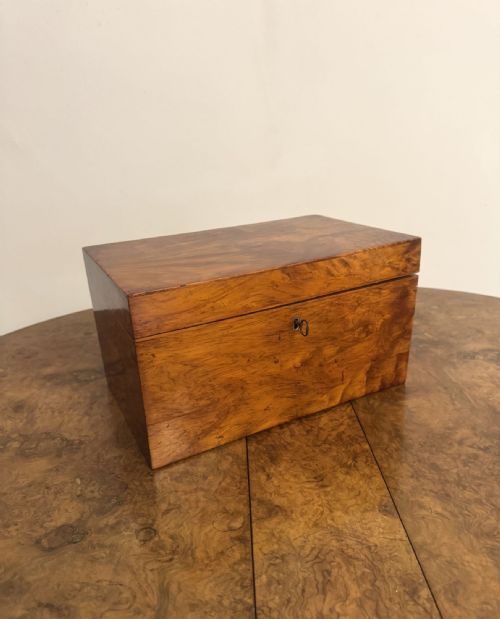
The most common form on this page is the sarcophagus shape resting on bun feet or paw feet, constructed from figured or flame timber. Alongside standard table boxes, the inventory includes larger freestanding teapoys and miniature sideboard variants.
Makers utilised dense tropical hardwoods, embellishing the exterior with contrasting stringing, brass handles and bone escutcheons. Surviving examples demonstrate how households kept valuable dry provisions secure in entertaining spaces.
How they were made
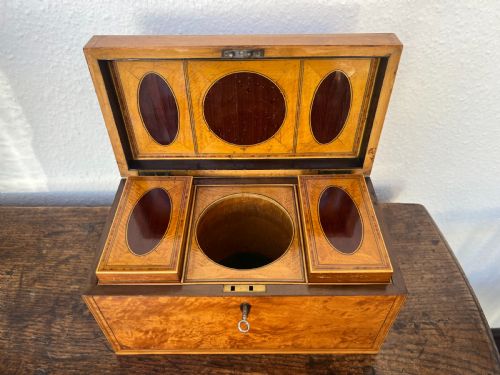
Cabinet makers built these containers using solid or veneered mahogany over a secondary wood carcase, frequently selecting flame or figured varieties for visual movement. Artisans applied thin sheets of satinwood, ebony, boxwood and amboyna for contrasting stringing and geometric inlay.
Interiors often featured fitted wooden lids covering individual compartments, sometimes paired with cut glass mixing bowls or central glass canisters. Brass ring handles, lion mask mounts, and bone keyhole escutcheons completed the hardware.
Regency Mahogany Tea Caddy Retail Price Guide 2026
Typical asking prices for regency mahogany tea caddy among the pieces listed under this phrase on Sellingantiques today, from the lower quarter to the upper quarter. They describe what is for sale here now, not the wider market.
Listings feature mahogany, satinwood, ebony, boxwood, and amboyna veneers across nineteenth-century forms.
What varies in quality
The standard of a regency mahogany tea caddy rests upon the selection of timber veneers, where symmetrical flame figures and crisp contrasting inlay elevate the piece. Superior examples retain original brass fittings, working locks with matching keys, and intact internal veneer lids.
Proportion and architectural form define the better works, particularly sarcophagus shapes with carved paw feet or well-executed brass lion mounts. Lower tiers show plainer straight-grained timber, replaced hardware, or simplified interior partitions lacking the original mixing bowls.
Strahan·Gillows
The Regency Mahogany Tea Caddy Glossary
- Teapoy
- A freestanding table or large pedestal box designed to hold tea canisters, standing on a central pillar or four legs. These elevated versions often incorporated internal mixing bowls and storage compartments.
- Sarcophagus
- A box shape featuring a domed or stepped lid sloping outward toward the base, resembling a stone coffin. This architectural style proved popular for large containers during the Regency period.
- Escutcheon
- A small protective plate surrounding the keyhole, frequently fashioned from bone, brass or ivory. It protected the surrounding timber from wear caused by the key.
- Veneer
- A thin layer of figured timber applied over a secondary wood carcase to create decorative surfaces. Cabinet makers utilised flame mahogany and exotic woods this way.
- Canister
- An internal lidded box or tin housed within the main container to keep individual tea varieties dry. Double versions held two distinct leaf blends.
Regency Mahogany Tea Caddy: Frequently Asked Questions
What is a regency mahogany tea caddy?
A regency mahogany tea caddy is a lidded wooden box created in the early nineteenth century to store dry leaves safely. These containers kept expensive provisions locked away from household staff.
Inside, divided compartments held different blends alongside a glass bowl used for diluting the brew. The exterior displays the rich grain of tropical hardwoods typical of the period.
How were teapoys used in homes?
Teapoys functioned as freestanding tables or heavy boxes placed in drawing rooms where hostesses prepared hot drinks for guests. The hostess unlocked the lid to measure out leaves before closing the box again.
Lower storage compartments often held sugar, mixing bowls, and spoons required for service. These pieces combined utility with decorative presence in formal reception rooms.
How do I date a tea caddy?
Dating relies on architectural proportions, secondary woods, and decorative motifs such as brass inlay or bone escutcheons. Sarcophagus shapes with bold paw feet typically point toward the Regency decades.
Straight-sided rectangular boxes with simpler stringing often align with earlier George III manufacture. Interior construction details and hinge types offer further clues to the exact decade of production.
How do I care for mahogany boxes?
Keep wooden containers away from direct sunlight and rapid temperature shifts to prevent timber shrinkage and veneer lifting. Maintaining stable indoor humidity protects both the polished surface and internal partitions.
Apply a microcrystalline wax sparingly to nourish the polish without building up residue. Handle original brass hardware and bone escutcheons with care during cleaning.