

Regency Mahogany Storage Drawers
Regency mahogany storage drawers bring architectural clarity and rich timber figure into a room, offering practical containment with enduring presence.
Regency Mahogany Storage Drawers
Regency mahogany storage drawers encompass chests of drawers, bow fronts, tallboys, and linen presses originating primarily from the Regency and Georgian periods. These pieces combine robust structural proportions with generous interior capacity.
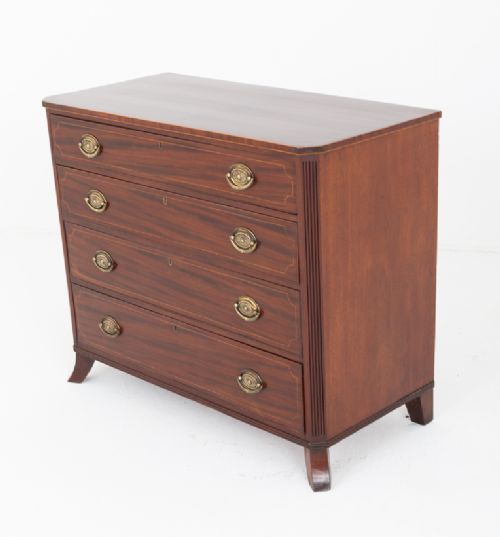
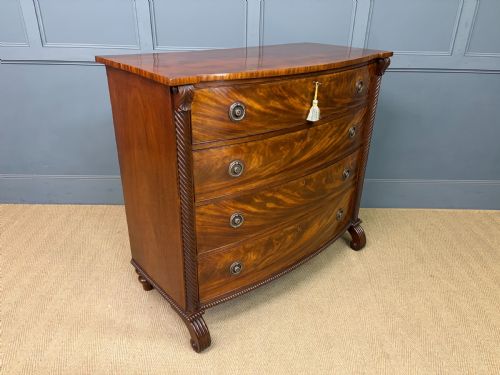
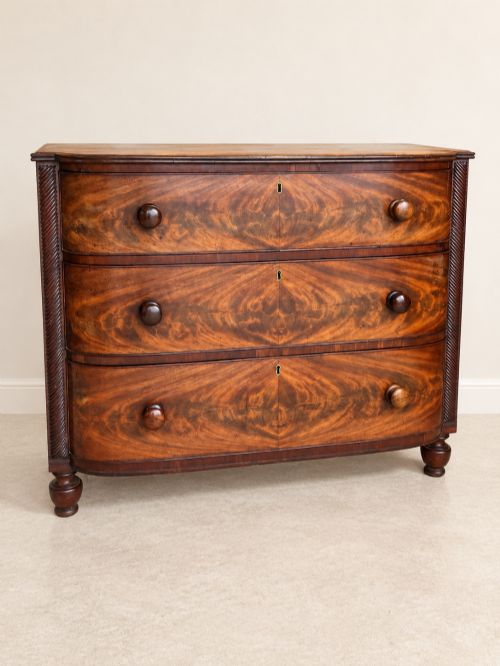
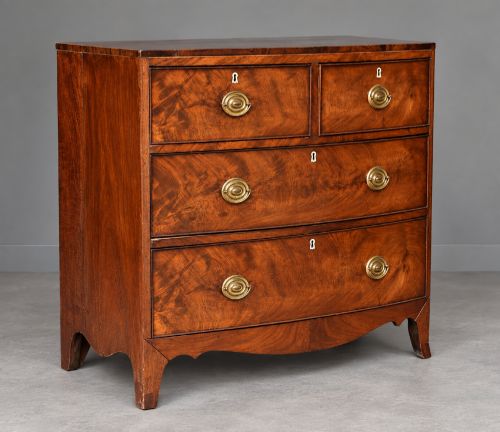
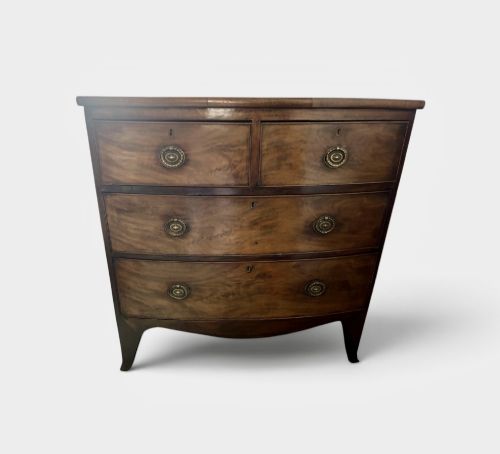
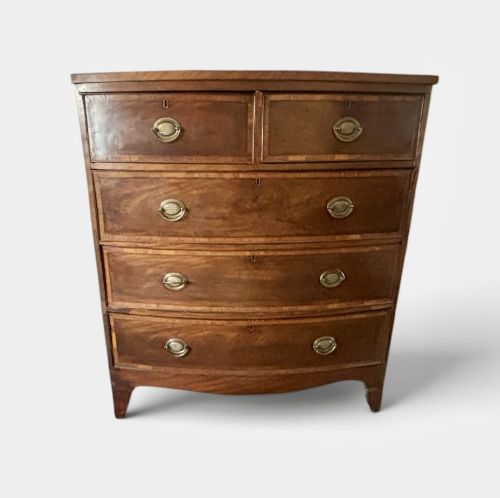
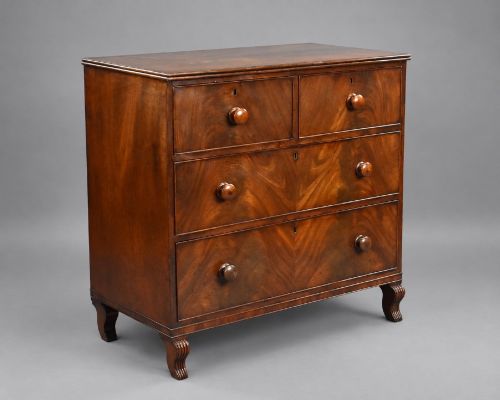
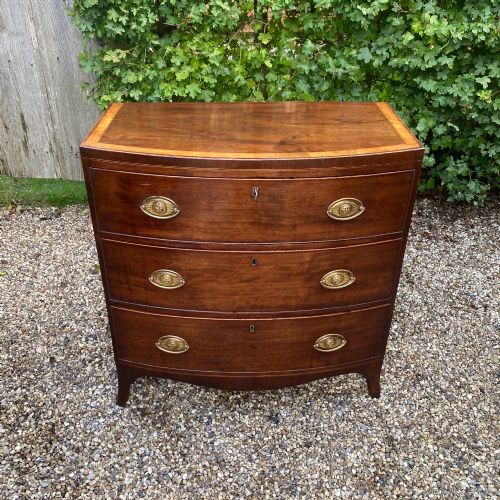
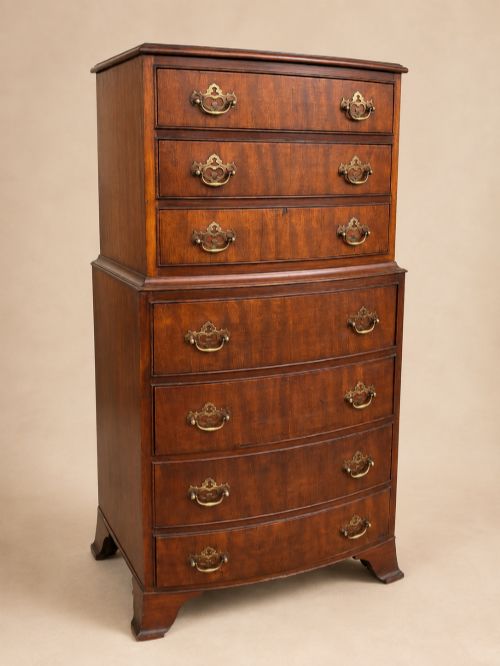
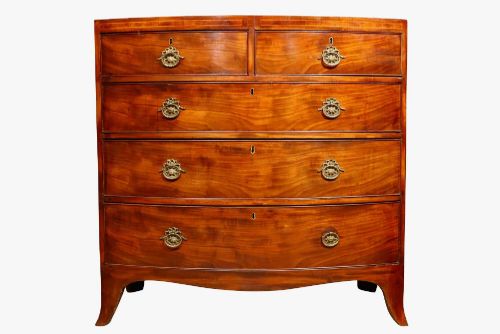
The version most commonly met on this page is the bow front chest of drawers, often finished in flame mahogany veneer with contrasting banded edges. Such pieces range from narrow bedside proportions to larger Scottish forms.
Makers utilised native and imported timbers, pairing solid framing with oak drawer linings. The focus remains on functional storage contained within clean horizontal lines and restrained decorative ornament.
Materials and Construction
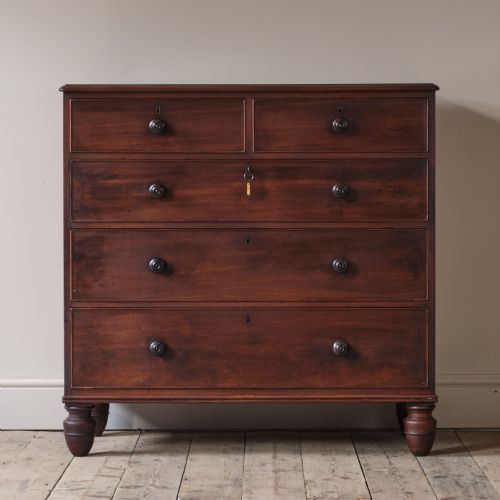
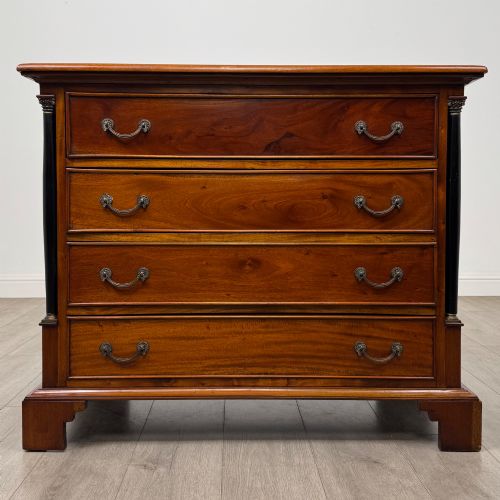
Construction relies heavily on solid mahogany and carefully selected wood veneers, particularly flame mahogany and satinwood for banding and crossbanding. Secondary timbers such as oak appear routinely within internal drawer linings and structural framing.
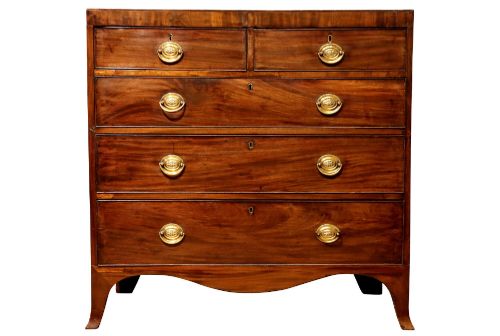
Cabinetmakers employed hand-cut dovetails for drawer construction and applied brass fittings including handles and escutcheons. Fine details such as satinwood stringing and blind fretwork cornice work require precise hand woodworking techniques.
Several pieces conceal secret compartments behind standard moulding, guarding small valuables from casual inspection.
Distinctions in Quality
Quality rests upon the selection and matching of timber veneers, where symmetrical flame figures and crisp satinwood bandings elevate the visual impact of a piece. Lesser examples rely on plain mahogany planks without contrasting stringing or matched grain patterns.
Structural integrity and the retention of original hardware, working locks, and secondary timbers dictate a piece's standing. Refined proportions, such as slender bow fronts and neat bracket feet, separate master cabinet work from utilitarian regional production.
T & G Seddon
The Regency Mahogany Storage Drawers Glossary
- Bow front
- A convex curved cabinet front that swells outward, frequently seen on Regency chests of drawers and sideboards. This shape softens room lines while adding interior depth.
- Flame mahogany
- A highly figured wood veneer derived from the branch junctions of the mahogany tree, displaying dramatic flame-like patterns. Cabinetmakers placed these veneers symmetrically across drawer fronts for visual impact.
- Crossbanding
- A narrow strip of veneer laid perpendicular to the surrounding grain along the edges of a top or drawer front. It creates a formal border utilising contrasting timbers like satinwood.
- Linen press
- A tall storage piece featuring upper cabinet doors enclosing sliding trays, placed above a base of lower drawers. Originally designed to store household linens flat.
- Tallboy
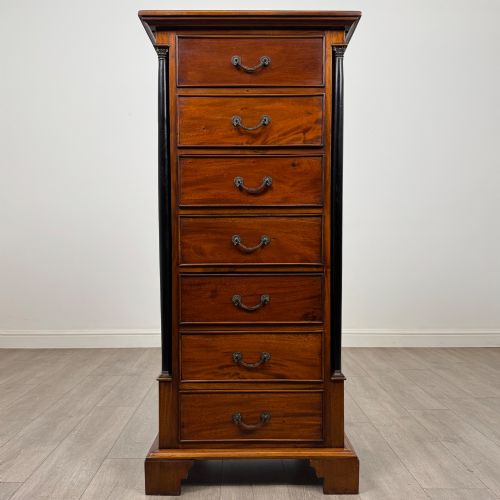
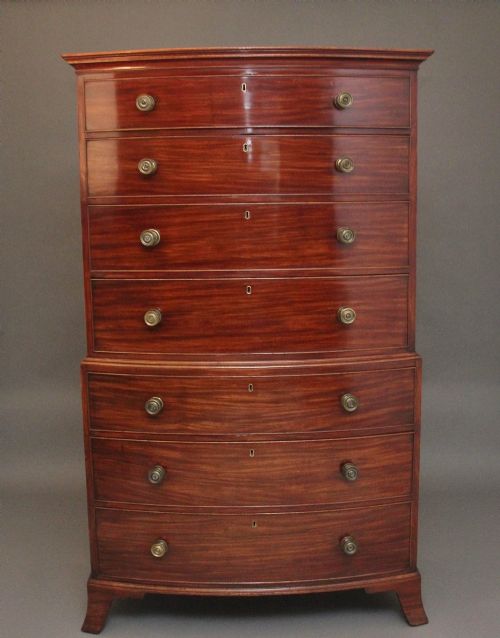
- A tall chest of drawers built in two stacked sections, providing extensive vertical storage capacity. These pieces maximise floor space while offering multiple graduated drawer tiers.
Regency Mahogany Storage Drawers: Frequently Asked Questions
How are linen presses used today?
Linen presses function effectively as generous wardrobes or general storage cabinets in modern bedrooms. The internal sliding trays accommodate folded garments, bedding, or textiles.
The lower drawers provide supplementary space for miscellaneous items, keeping rooms tidy without losing period character.
What is flame mahogany veneer?
Flame mahogany is a decorative wood veneer cut from specific sections of the mahogany tree where the grain twists and ripples. This figure resembles flickering flames across the surface.
Craftsmen book-matched these veneers to create mirrored patterns across drawer fronts.
Where were these chests made?
These pieces originated in workshops across England and Scotland during the late Georgian and Regency eras. Regional cabinetmakers produced varied interpretations ranging from formal London pieces to sturdy Scottish designs.
Local timbers like oak frequently appear alongside imported mahogany in the internal framing and drawer linings.