
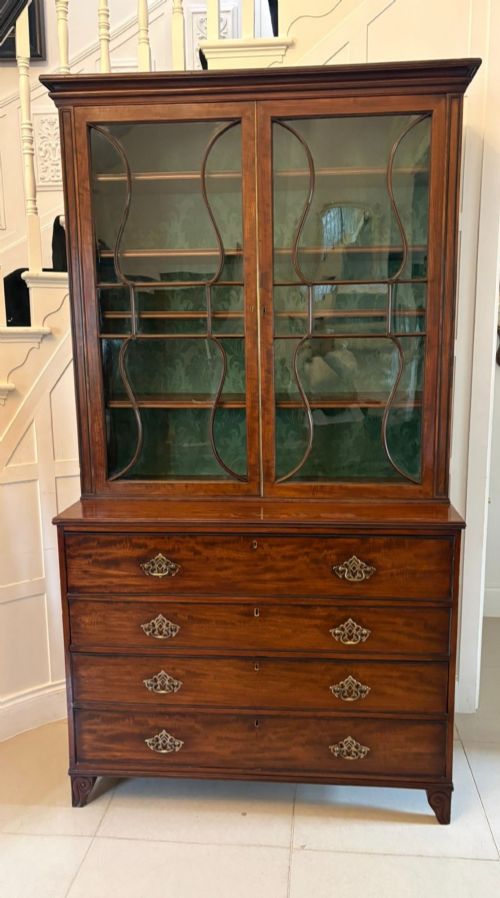
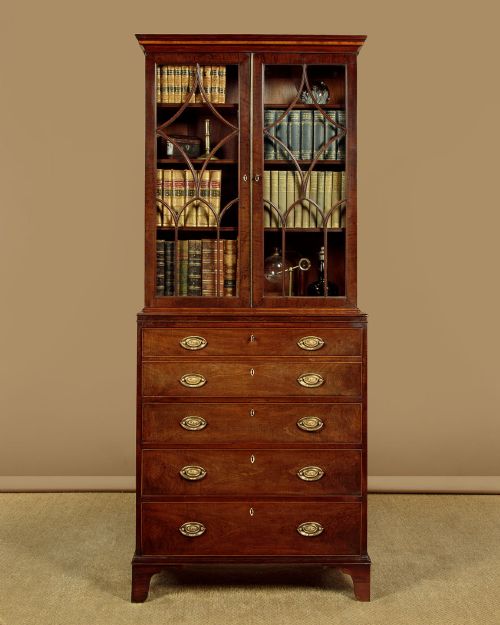
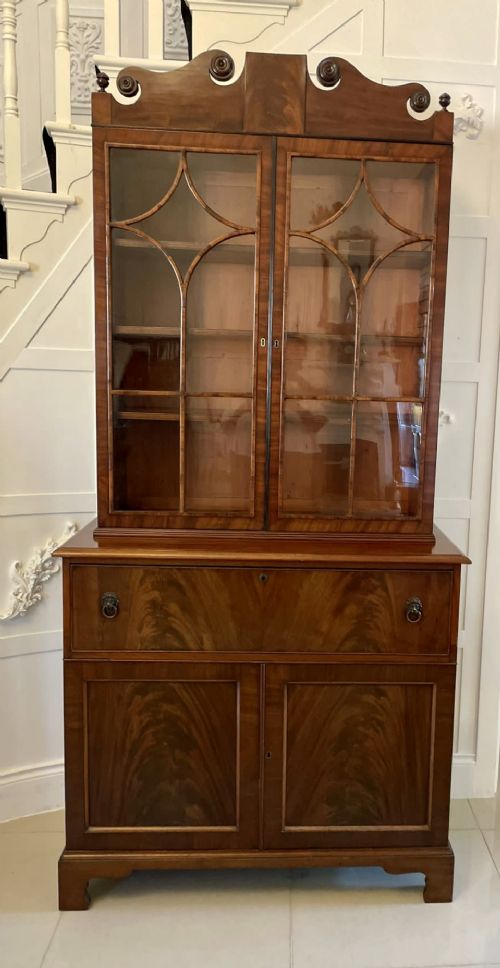
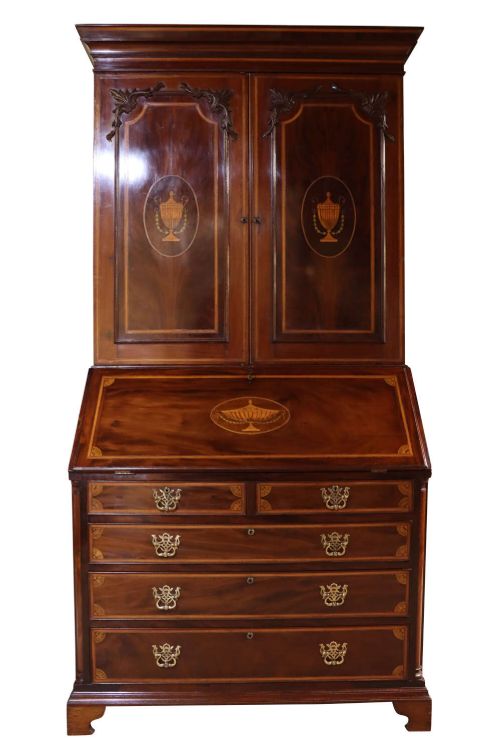


Regency Mahogany Secretary
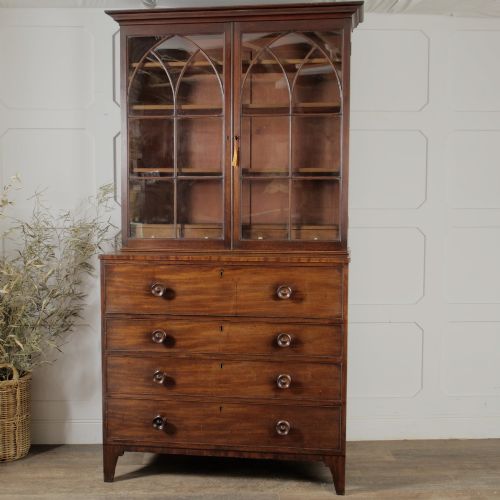
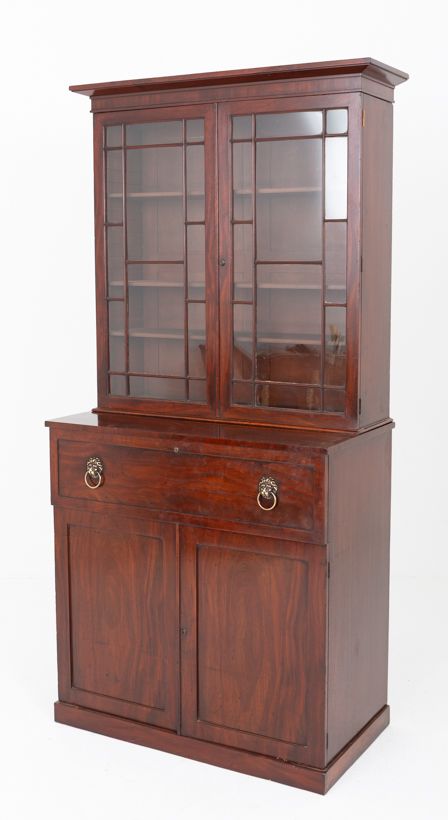
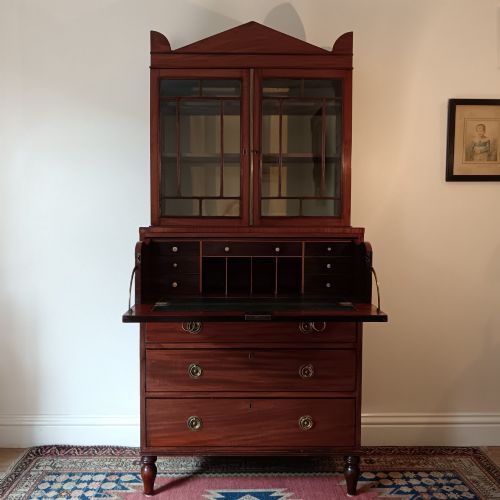
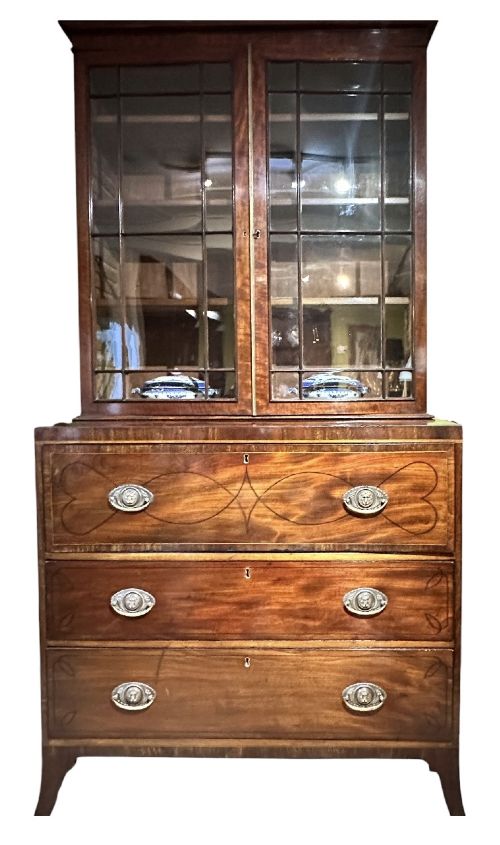
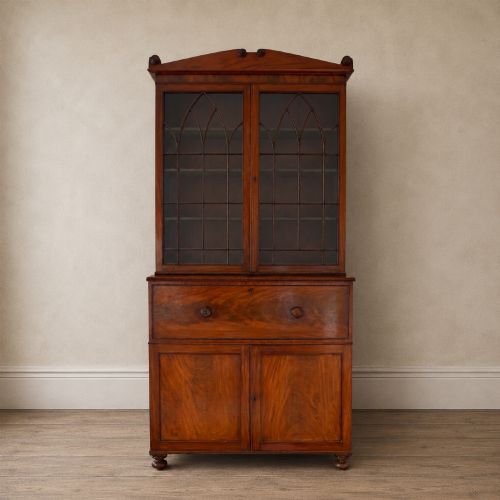
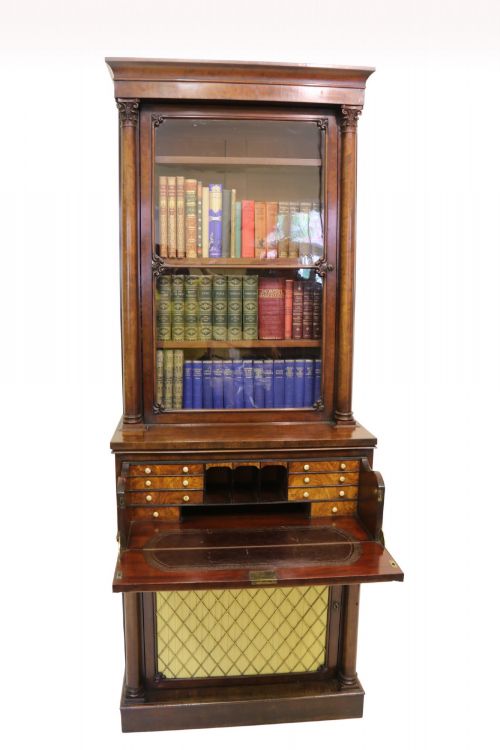
A regency mahogany secretary brings together fine cabinetmaking and practical workspace, offering a fitted fall-front writing drawer hidden beneath glazed bookcase doors.
Regency Mahogany Secretary
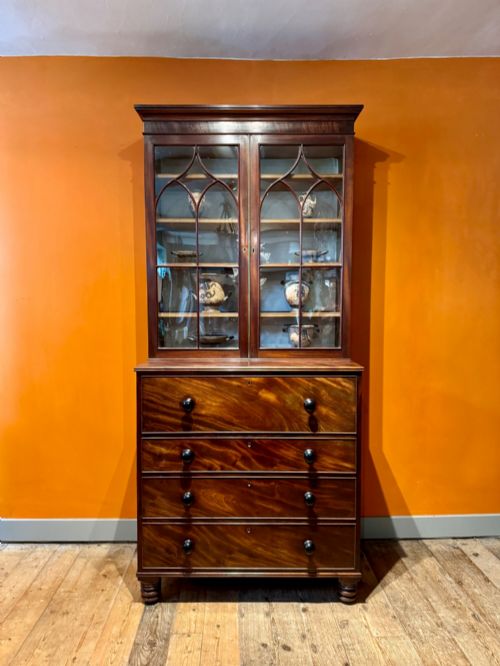
A regency mahogany secretary typically takes the form of a tall bureau bookcase, combining upper shelving behind glass with a pull-out writing drawer at desk height. The listings show these pieces spanning the Regency, Georgian, and William IV periods, alongside related forms such as writing chests, cabinets, and compact Davenport desks.
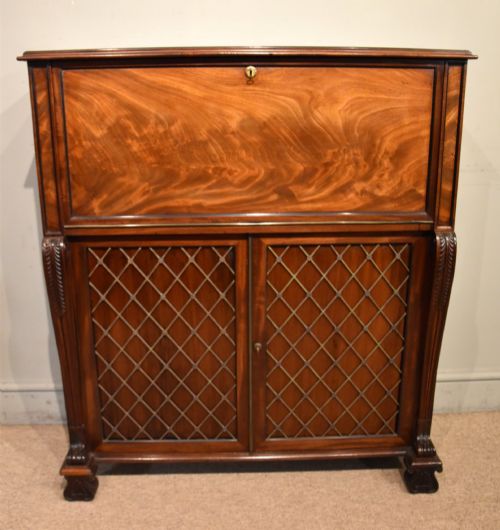
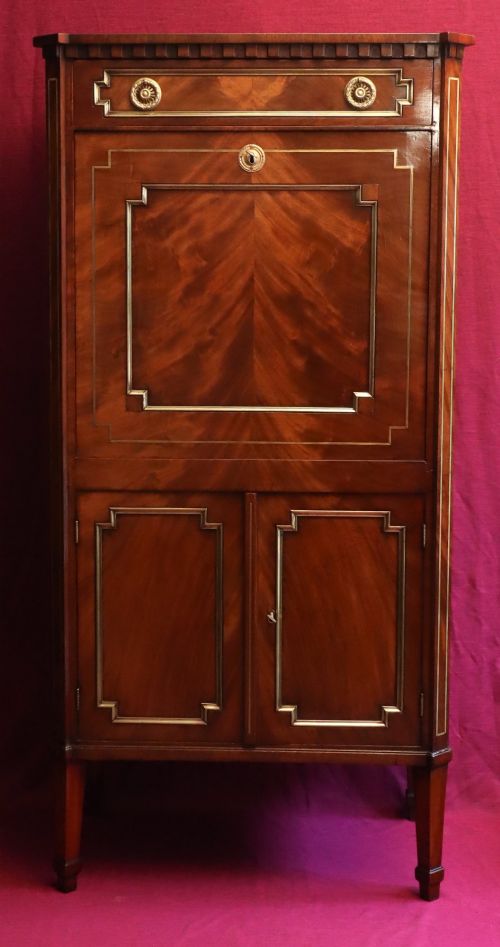
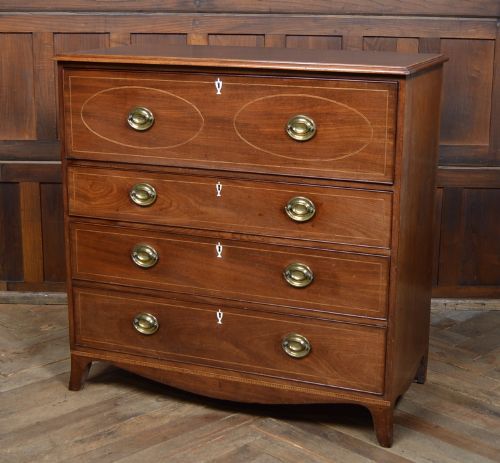
Buyers will most frequently encounter large secretaire bookcases alongside smaller secretaire chests of drawers. These pieces frequently utilise figured mahogany and flame mahogany veneers to create rich grain patterns across the fall-front writing surfaces and lower drawer fronts.
Origins stretch across the nineteenth century, encompassing early nineteenth century examples as well as later nineteenth century interpretations. The form serves dual purposes, functioning as both an upright bookcase and a fully equipped writing desk with fitted interior compartments.
Materials and Construction
Makers constructed these cabinets primarily from solid mahogany and applied flame mahogany veneers to large flat surfaces to highlight the natural figuring of the wood. Secondary timbers such as oak frequently appear inside drawer linings.
Glazed upper doors utilise individual wooden glazing bars to hold glass panels, protecting book collections while keeping them visible. Brass hardware, including handles and escutcheons, secures the drawers and doors.
Writing compartments incorporate internal arrangements of small drawers and pigeonholes, sometimes accompanied by baize or leather writing surfaces inset into the fold-down desk flap.
Many writing drawers conceal secret compartments behind miniature drawers, built specifically for hiding love letters and bank notes.
Distinctions in Quality
The selection of timber grain defines much of the visual merit, with carefully matched flame mahogany veneer creating symmetrical patterns across major surfaces. Simpler pieces rely on plain mahogany boards with minimal figuring.
The complexity of the fitted interior inside the fall-front drawer indicates the standard of workshop execution. Simpler stationery compartments contrast with elaborate small drawers and concealed compartments.
Proportion and scale also separate standard cabinetwork from exceptional examples, particularly in smaller secretaire chests and grand scale bookcases where maintaining balanced lines requires considerable joinery skill.
George Oakley·Gillows of Lancaster
The Regency Mahogany Secretary Glossary
- Secretaire
- A writing cabinet or desk featuring a pull-out drawer with a hinged drop-front that conceals small drawers and pigeonholes. This serves as the defining element of these pieces.
- Flame mahogany
- A veneer cut from the fork of the mahogany tree where the branch joins the trunk, producing a distinctive rippled flame pattern. Cabinetmakers placed these veneers symmetrically on drawer fronts.
- Escritoire
- An alternative term for a writing desk or cabinet with a fall-front writing surface. It shares functional similarities with the bureau bookcase.
- Glazed doors
- Glass-fronted upper doors fitted into wooden frames, allowing books to be displayed while protected from dust. These doors often feature geometric wooden glazing bars.
- Baize
- A coarse woollen material used historically to line writing surfaces within desks and bureau drawers. It provides a soft writing plane when the fall-front is lowered.
Regency Mahogany Secretary: Frequently Asked Questions
What is a secretaire bookcase?
A secretaire bookcase combines a tall upper bookcase with glazed doors and a lower section featuring a pull-down writing drawer.
Inside this drop-front drawer lies a fitted interior of small compartments and pigeonholes for correspondence.
Where should I place a secretary?
These tall pieces require adequate wall space and vertical clearance, making them well suited to studies, libraries, or drawing rooms.
Positioning them away from direct sunlight protects the mahogany veneers and interior leather or baize surfaces from fading.
How do I care for mahogany veneer?
Maintain the wood by dusting with a dry cloth and occasionally applying a traditional beeswax polish to nourish the grain.
Avoid placing the cabinet near heat sources to prevent the mahogany veneer from drying out or lifting.