

Regency Mahogany Secretaire
When you examine a regency mahogany secretaire, you are looking at a multifunctional piece designed to conceal a writing surface within drawers or cabinetry.
Regency Mahogany Secretaire
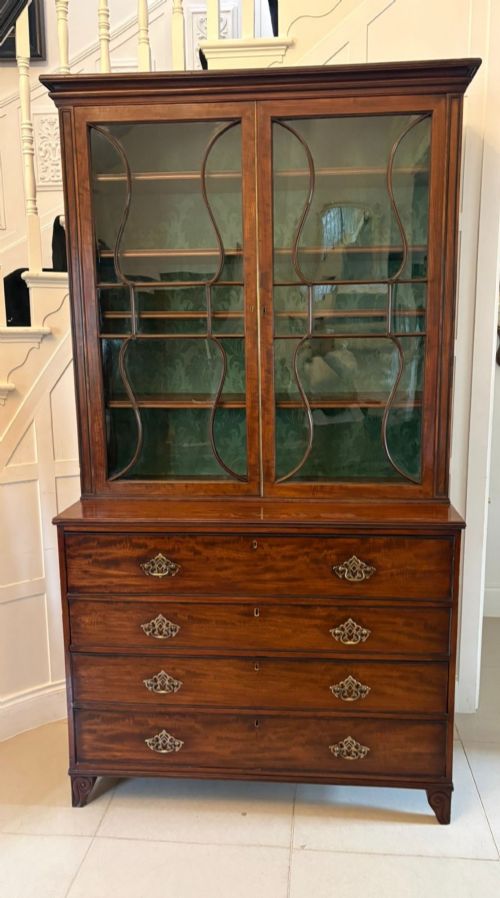
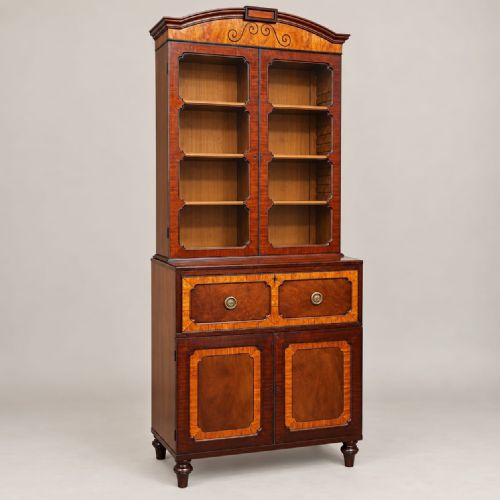
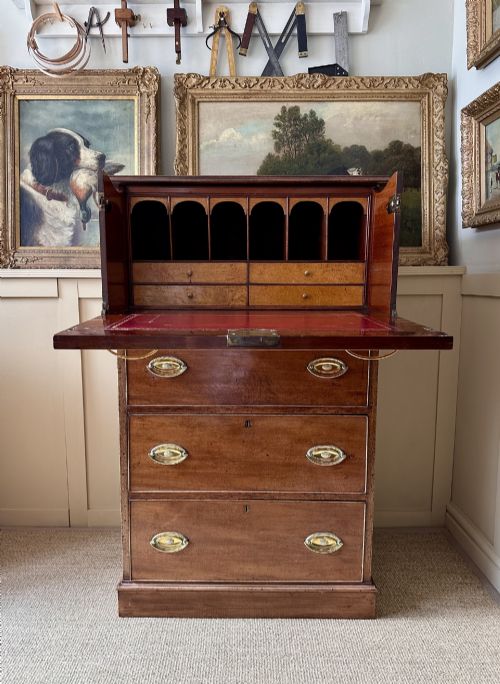
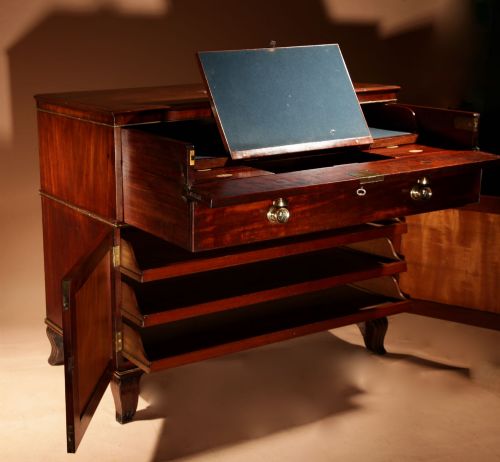
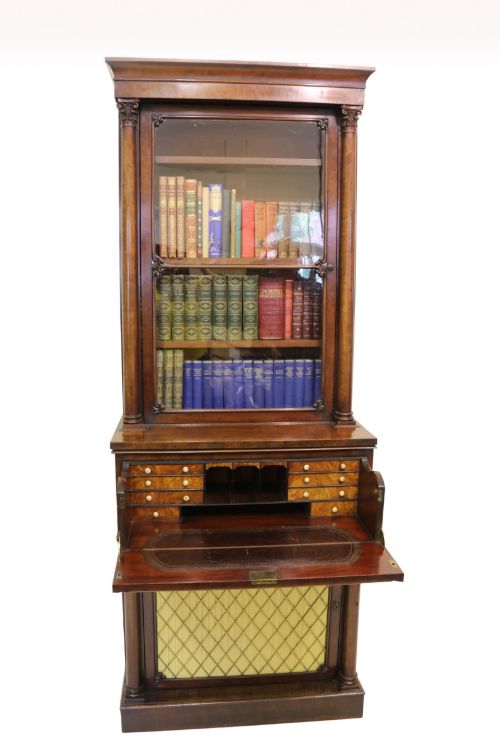
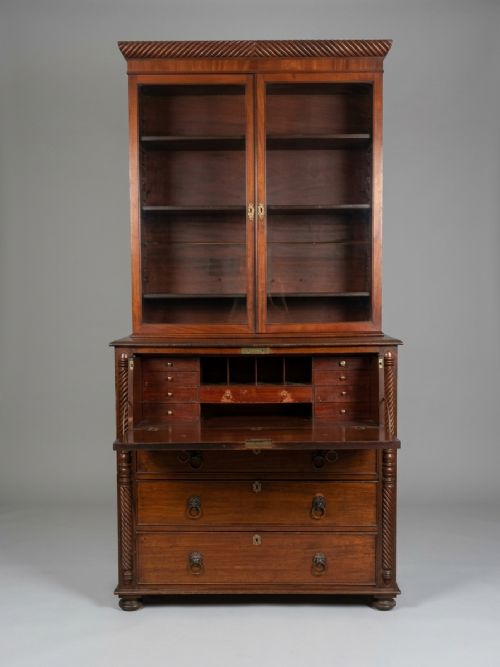
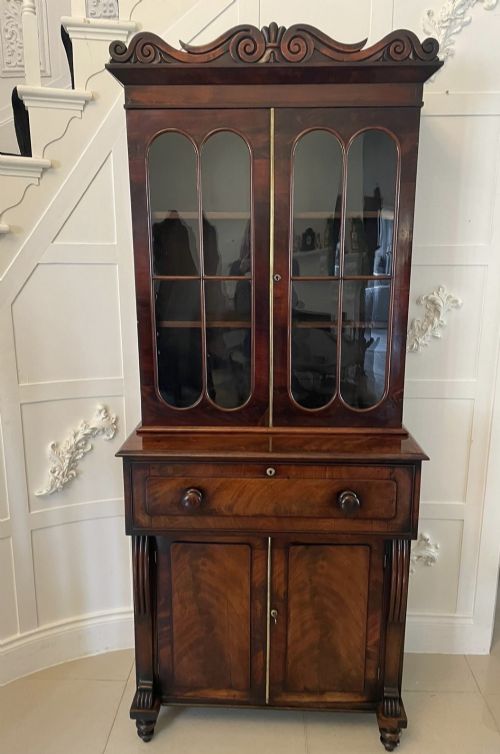
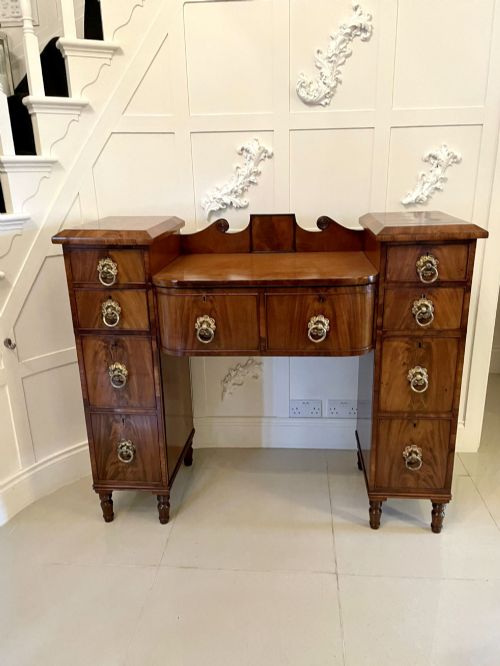
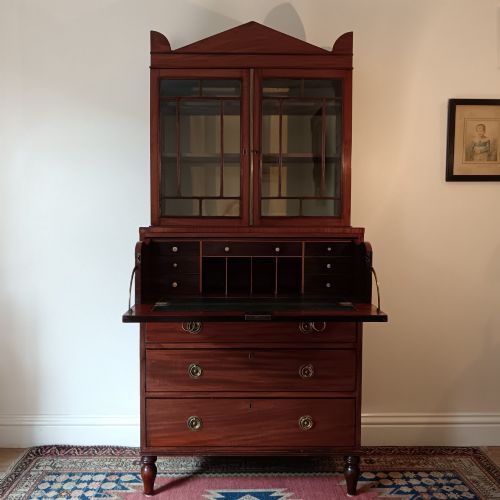
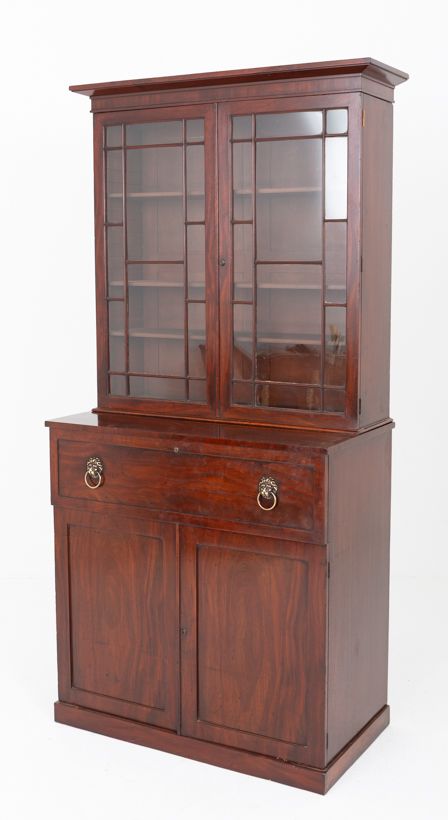
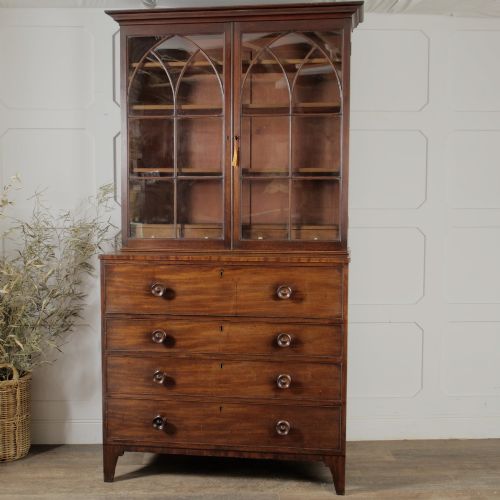
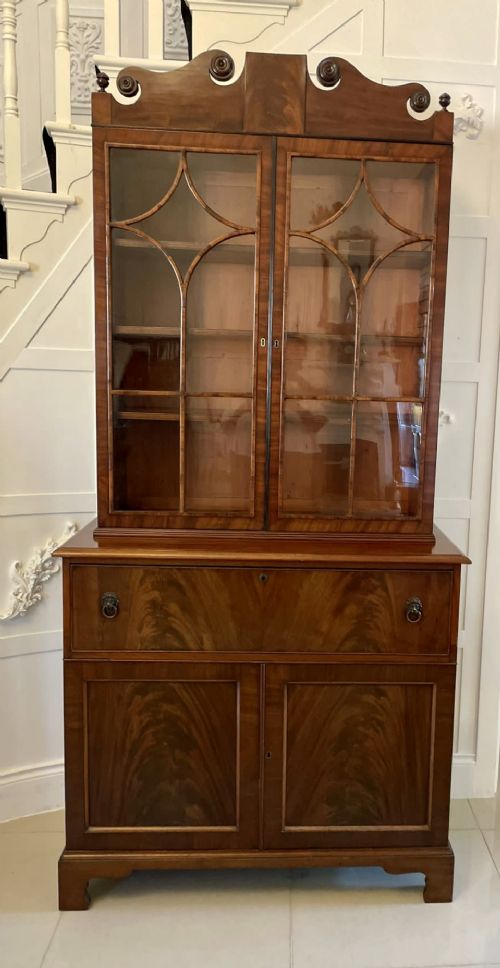
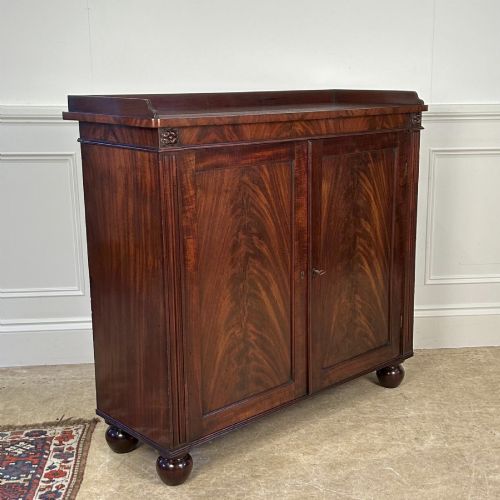
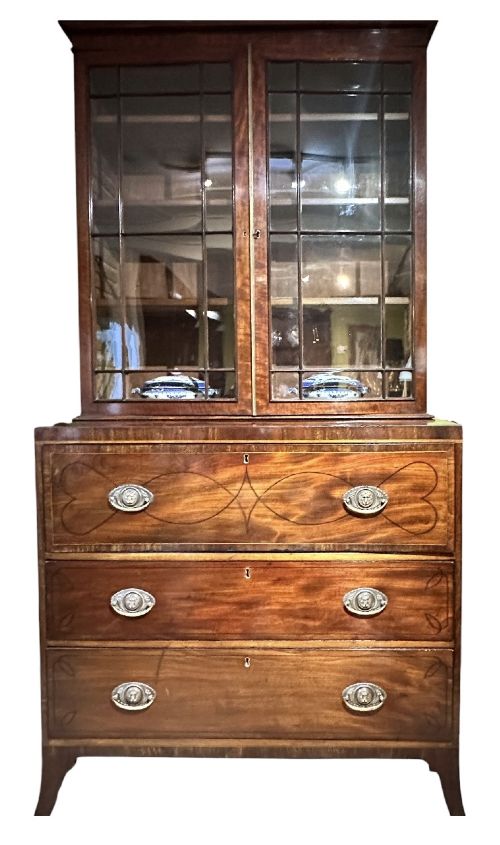
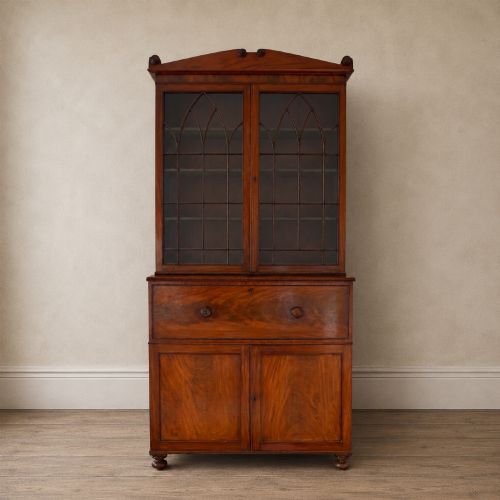
A regency mahogany secretaire combines the practical storage of a chest of drawers or bookcase with a drop-down writing drawer containing small compartments and pigeonholes. The most common form on this page is the tall secretaire bookcase featuring glazed upper doors, alongside lower chests of drawers and compact side cabinets.
Originating primarily from the 19th century, Georgian, and Regency periods, these pieces reflect the refined joinery of the era. Makers utilised standard mahogany as well as flame mahogany veneer to achieve striking grain patterns on the principal surfaces.
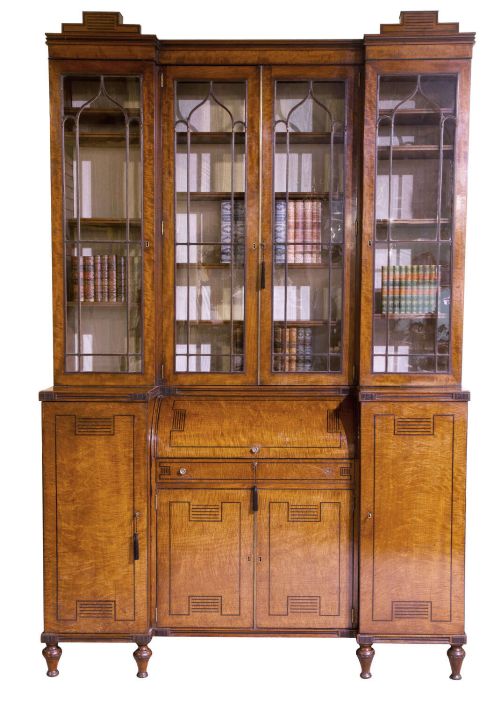
Buyers also encounter variations like sideboards, breakfront bookcases, and escritoires equipped with fall-front writing surfaces. These formats served domestic studies and libraries, offering concealed desks that maintained a neat exterior appearance.
Materials and Construction Techniques
Joiners relied on solid mahogany and flame mahogany veneer applied to secondary woods, creating deep reddish-brown tones across the exterior. Selected sections often featured contrasting satinwood inlay and brass hardware to accent the drawers and doors.
The drop-down writing drawer required complex interior fitting, incorporating miniature drawers, pigeonholes, and sometimes leather or baize writing surfaces with bone pulls. Glazed upper bookcase sections utilised delicate wooden bars to hold individual glass panes securely.
Regency Mahogany Secretaire Retail Price Guide 2026
Typical asking prices for regency mahogany secretaire among the pieces listed under this phrase on Sellingantiques today, from the lower quarter to the upper quarter. They describe what is for sale here now, not the wider market.
Listings feature mahogany, flame mahogany veneer, brass, glass, leather, baize, and bone across pieces built during the Georgian, Regency, and Victorian periods.
Distinctions in Execution and Detail
The selection of timber dictates much of the visual appeal, with highly figured flame mahogany veneers representing a more ambitious standard than plain stock. The intricacy of the fitted interior compartments also signals the level of craftsmanship invested in the piece.
Attribution to known workshops introduces a distinct tier of design, where proportion, balanced grain matching, and robust secondary framing elevate the stature of the furniture.
George Oakley·Gillows of Lancaster
The Regency Mahogany Secretaire Glossary
- Secretaire
- A desk or chest of drawers featuring a pull-out drawer with a hinged front that drops down to form a writing surface. This fitted compartment contains smaller drawers and pigeonholes for correspondence.
- Flame mahogany
- A veneer cut from the branch junctions of the mahogany tree, producing a distinctive, rippled flame-like grain pattern. Cabinet makers reserved this timber for prominent drawer fronts and door panels.
- Escritoire
- A small writing cabinet or desk used for handling letters and documents. The term often describes pieces with a fall-front panel concealing internal stationery compartments.
- Baize
- A coarse woollen material resembling felt, historically used to line the writing surfaces of desks and secretaire drawers. It provides a soft, flat texture suitable for writing.
- Glazed doors
- Cabinet doors fitted with glass panes to display books or collections while protecting them from dust. These doors frequently incorporate wooden lattices or astragals.
Regency Mahogany Secretaire: Frequently Asked Questions
What is a regency mahogany secretaire?
A regency mahogany secretaire is a piece of furniture from the early nineteenth century that disguises a functional writing desk within a chest of drawers, sideboard, or bookcase. The middle drawer pulls forward and drops open to reveal a fitted interior.
Inside, smaller drawers and pigeonholes provide storage for letters and writing implements. The exterior showcases the rich dark timber characteristic of the period.
How were these pieces used historically?
These items functioned as dual-purpose furniture for writing and storage in drawing rooms, libraries, and bedrooms. The concealed desk allowed owners to write correspondence without keeping a bulky standalone desk in a formal room.
The upper bookcase sections held libraries, while the lower drawers stored household linens or personal papers.
How do you identify a Regency period piece?
Regency pieces typically date from the early nineteenth century and display classical proportions influenced by Greek and Roman design. Characteristic elements include flame mahogany veneers, satinwood stringing, and brass hardware.
Construction details such as oak linings and hand-cut dovetails help distinguish pieces from later revival items.
Where should I place a secretaire in my home?
A secretaire fits well in a study, living room, or hallway where its dual function remains useful. The drop-down desk provides a compact working space that closes away when not in use.
Keeping the piece away from direct sunlight protects the mahogany finish and any internal leather or baize surfaces.