

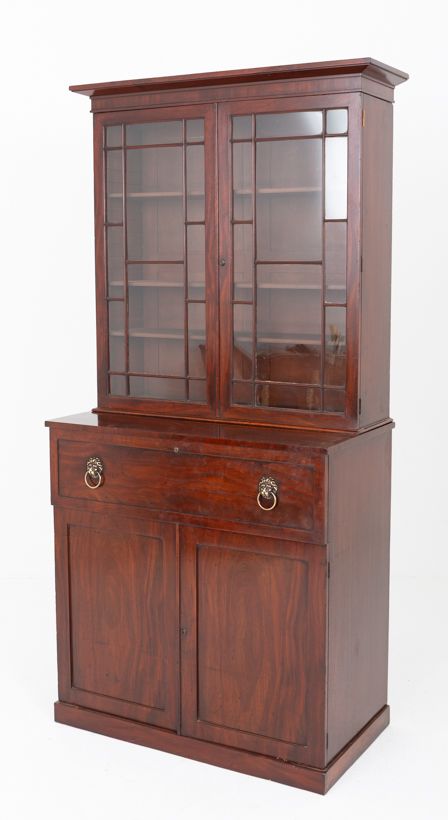
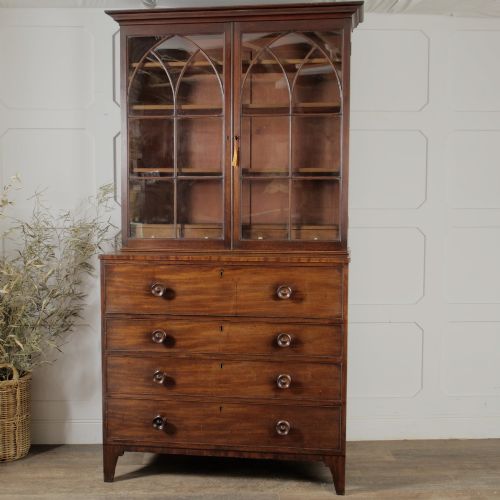
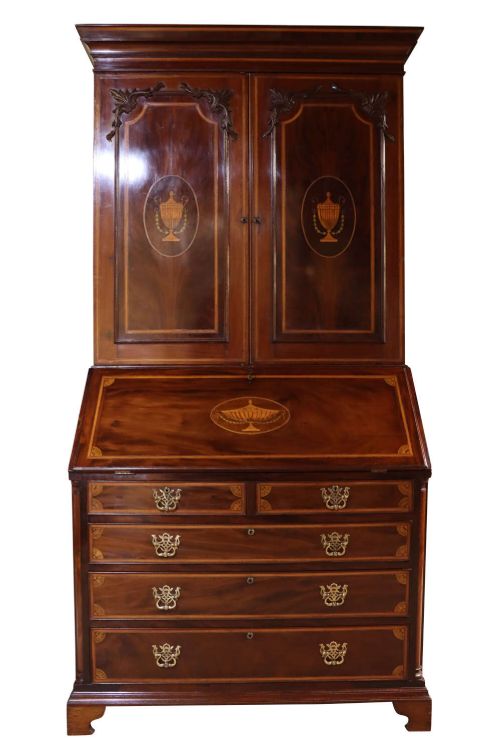
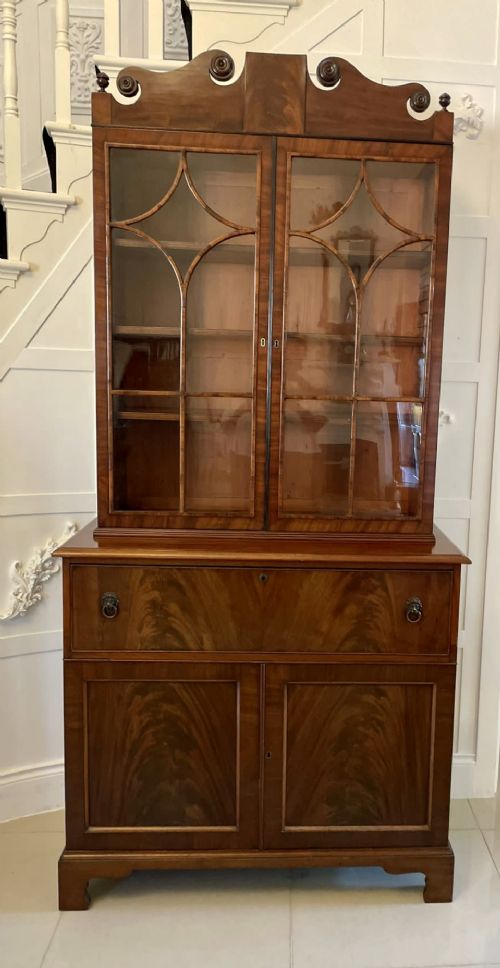
Regency Mahogany Writing Cabinet
A regency mahogany writing cabinet combines architectural book storage with a concealed writing drawer, built for practical domestic administration.
Regency Mahogany Writing Cabinet
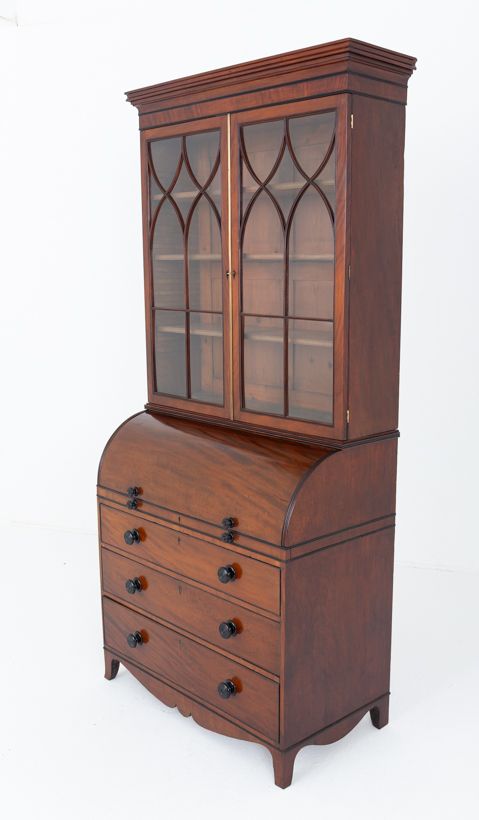
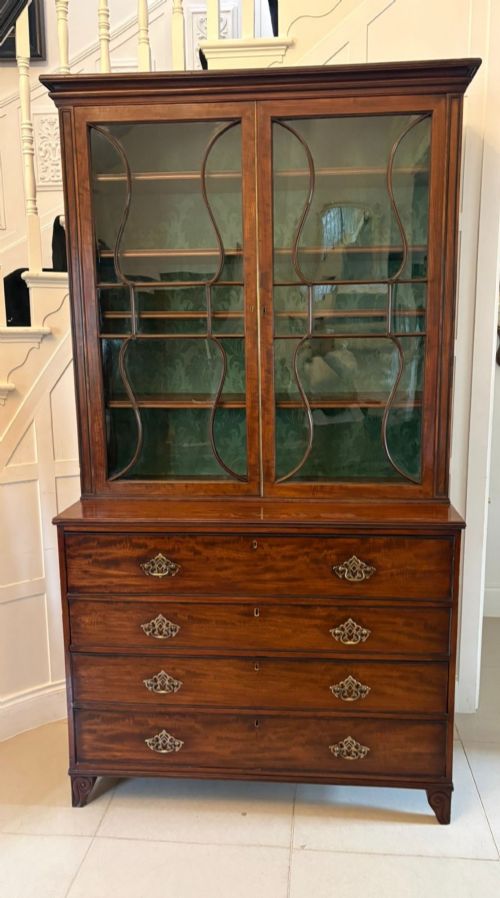
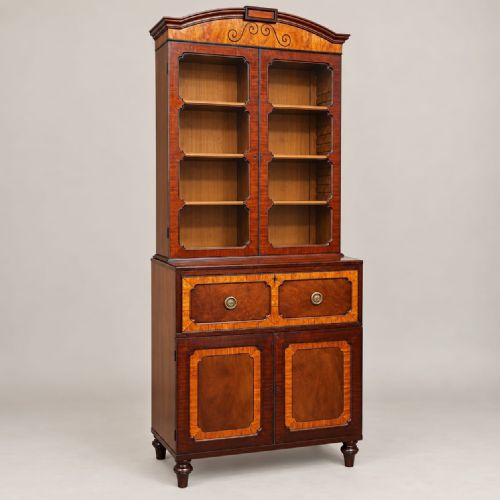
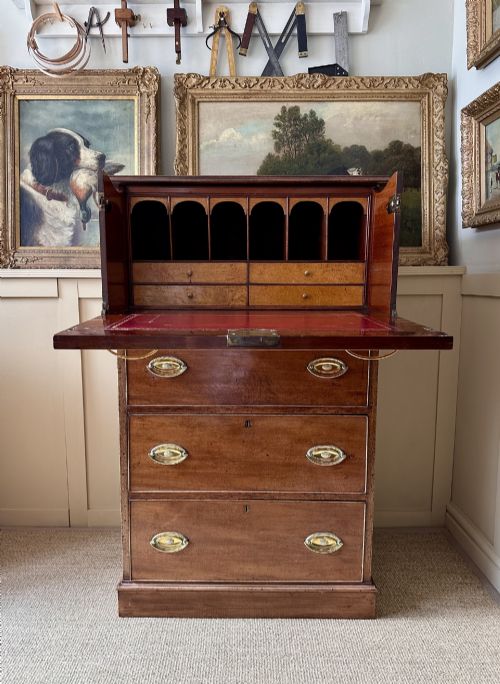
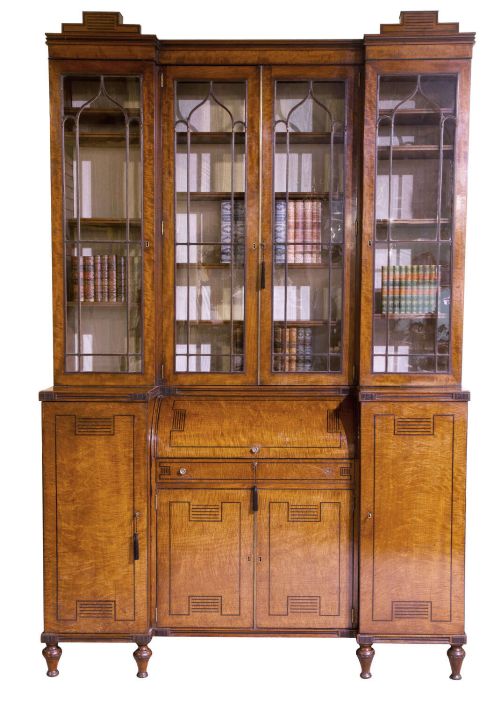
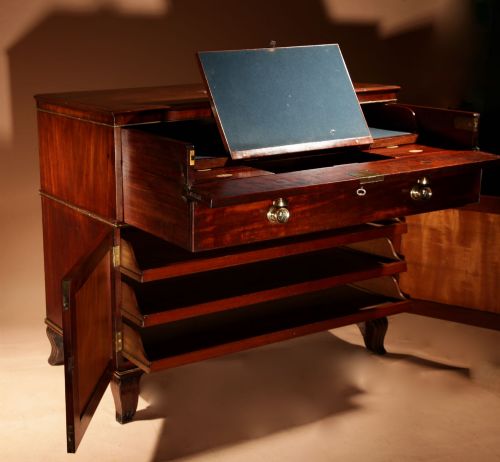
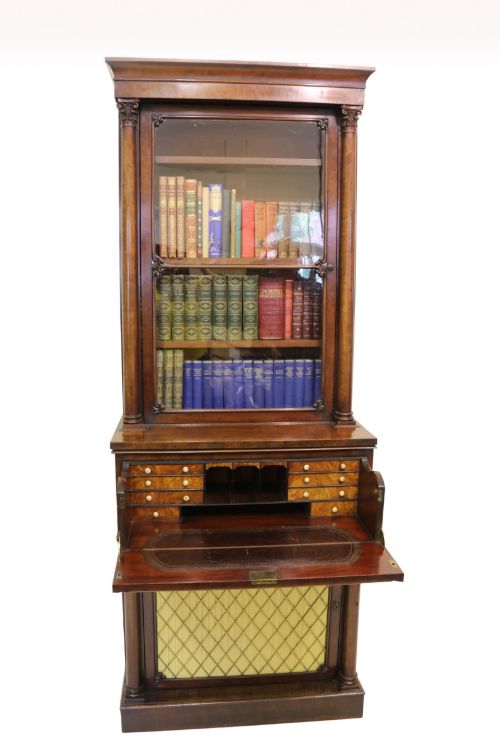
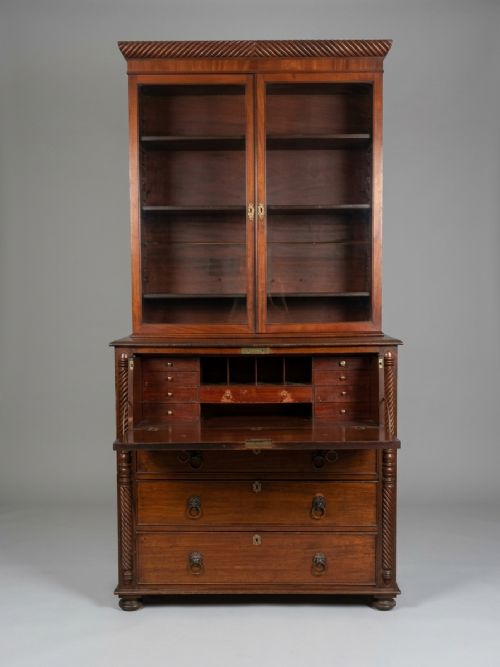
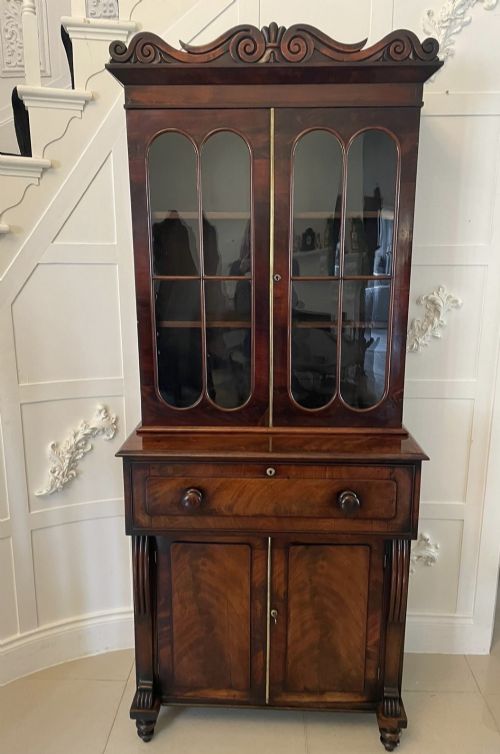
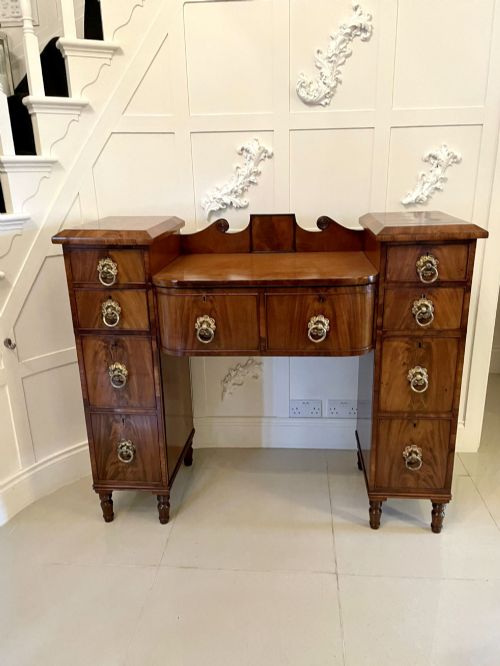
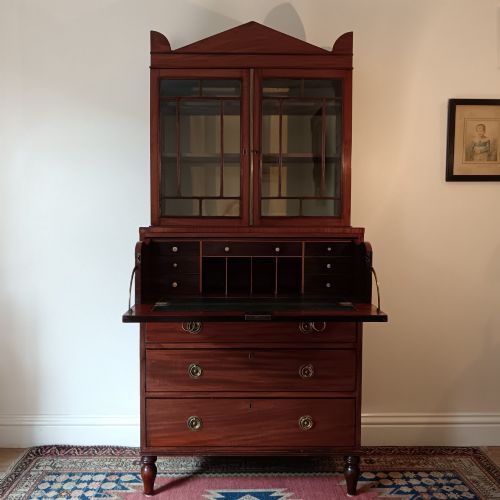
A regency mahogany writing cabinet encompasses tall secretaire bookcases, compact Davenport desks, and tiered chiffoniers dating from the late eighteenth century through the reign of William IV. These pieces originate primarily from the Regency and Georgian periods, reflecting an era when domestic correspondence required dedicated, elegant furniture. The most common form on this page is the secretaire bookcase, featuring glazed upper doors above a fitted drop-front writing drawer.
Smaller formats such as the Davenport desk and the bonheur du jour appear frequently alongside grand scale breakfront bookcases. Cabinetmakers of the period also produced side cabinets and secretaire chests that integrated writing surfaces into lower drawer compartments. Each iteration serves the dual purpose of displaying bound volumes while concealing private correspondence and ledgers.
Materials and Construction
Makers utilised solid mahogany and applied flame mahogany veneers over secondary timbers to create rich, figured exterior surfaces. Glass panels are set into the upper bookcase doors, while interiors frequently incorporate contrasting satinwood and fitted pigeonholes. Brass hardware, leather writing inserts, and baize linings provide functional detail to the internal drawers and pull-out surfaces.
Structural joinery relies on tightly fitted drawer construction and architectural cornices that define the upper sections of larger bookcases. Ebonised detailing and occasional inlay add linear contrast to the primary mahogany carcase. The application of flame veneer requires skilled timber selection to ensure symmetrical grain patterns across the fall-front writing surfaces.
Regency Mahogany Writing Cabinet Retail Price Guide 2026
Typical asking prices for regency mahogany writing cabinet among the pieces listed under this phrase on Sellingantiques today, from the lower quarter to the upper quarter. They describe what is for sale here now, not the wider market.
Secret spring-loaded catches hide miniature ledger drawers away from curious houseguests.
Craftsmanship and Proportion
The distinction between standard utility pieces and exceptional examples rests in the choice of timber figure and the complexity of the internal fittings. Cabinets featuring highly figured flame mahogany veneers or intricate satinwood pigeonholes demonstrate superior workshop origin. Attribution to known makers like Gillows elevates the standing of a piece through documented construction standards.
Proportion and scale dictate the visual success of taller secretaire bookcases and dwarf cabinets. Refined glazing bar arrangements and original brass handles distinguish superior examples from later alterations. The integration of the writing drawer must operate smoothly within the architectural lines of the carcase without disrupting the exterior grain.
Gillows of Lancaster·George Oakley
The Regency Mahogany Writing Cabinet Glossary
- Secretaire
- A desk or cabinet featuring a concealed writing drawer with a drop-front panel. This mechanism allows a chest of drawers or bookcase to function as a writing desk when opened.
- Davenport
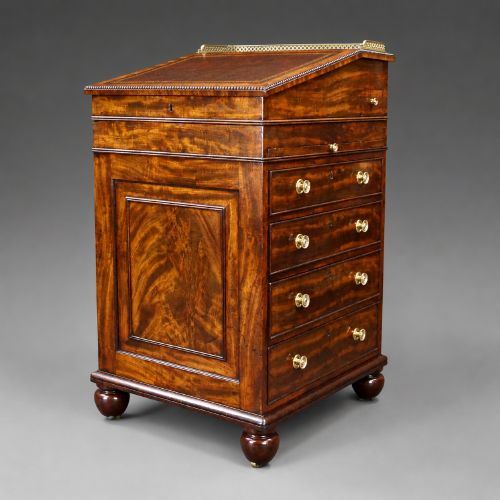
- A compact desk featuring a sloping writing surface above a pedestal of drawers. These small writing cabinets gained popularity during the Regency period for use in private drawing rooms.
- Flame mahogany
- A veneer cut from the fork of a mahogany tree to produce a distinctive, flickering flame pattern. Cabinetmakers reserved this timber for the primary facades of high-status writing cabinets.
- Bonheur du jour
- A light, portable lady's writing desk featuring a small cabinet or set of shelves upon the top surface. The evidence shows these delicate pieces executed in fiddle back mahogany during the Regency period.
- Breakfront
- A piece of furniture whose central section projects forward from the flanking wings. This architectural arrangement appears on larger bookcases and cabinets from the Georgian and Regency eras.
Regency Mahogany Writing Cabinet: Frequently Asked Questions
What is a secretaire bookcase?
A secretaire bookcase combines an upper section of glazed shelves for books with a lower section containing a pull-out writing drawer.
The middle drawer conceals a fitted interior of small pigeonholes and tiny drawers behind a folding front.
How do I use a Davenport desk?
The sloping top opens or pulls forward to reveal a leather-lined writing surface and internal stationery compartments.
Drawers typically open to the side rather than the front, making efficient use of compact floor space.
What is flame mahogany?
Flame mahogany is a highly figured timber veneer sliced from the branching part of the mahogany tree.
Cabinetmakers matched these dramatic grain patterns symmetrically across the front panels of fine Regency furniture.
How do I date a writing cabinet?
Dating relies on architectural proportions, secondary timber analysis, and specific design motifs like reeded legs or brass gallery rails.
Pieces from the Regency era often display bolder grain patterns and classical revival details compared to earlier Georgian examples.