




Regency Period Bureau
A regency period bureau brings architectural discipline and clever writing compartments into a room, offering refined storage that demands attention.
Regency Period Bureau
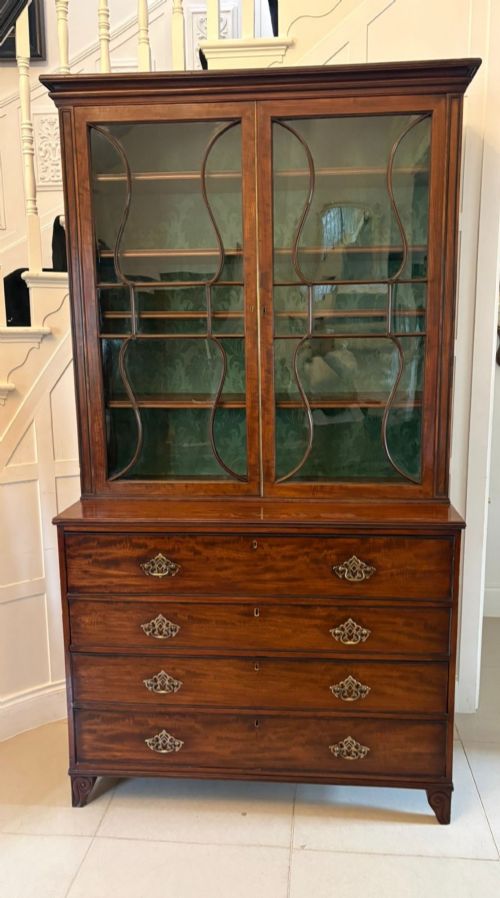
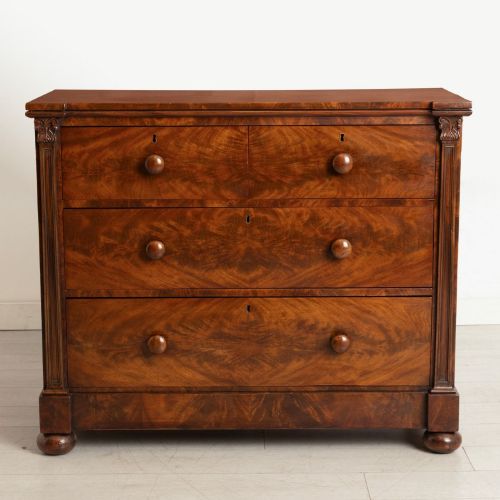
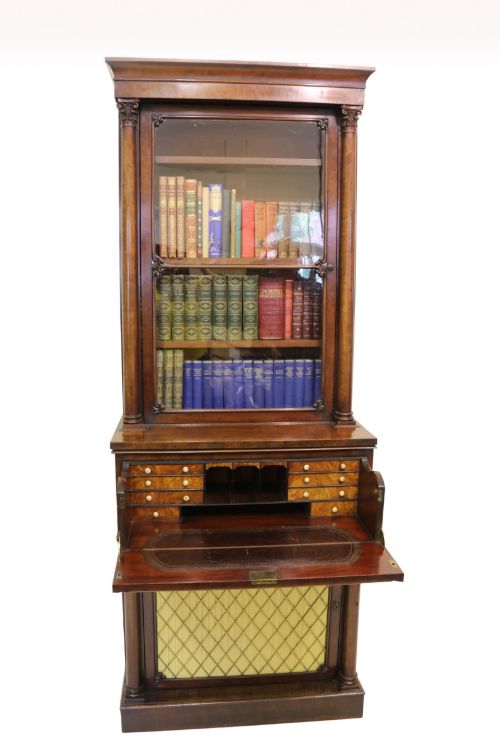
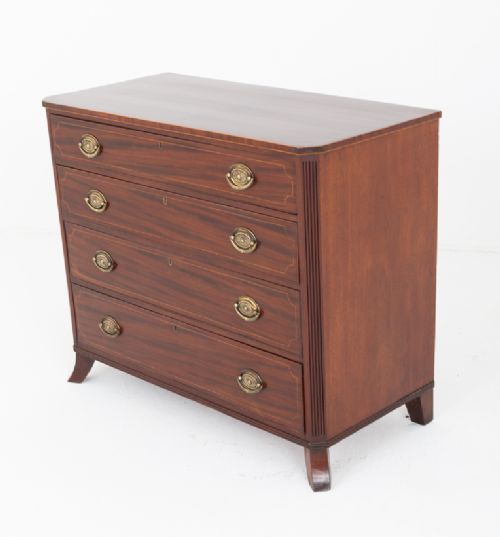
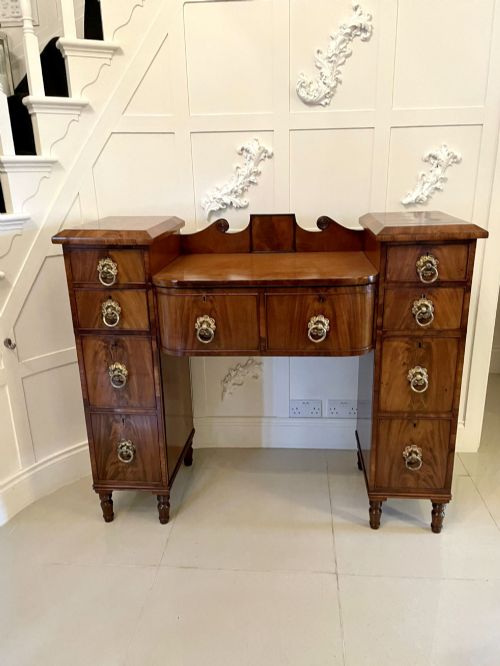
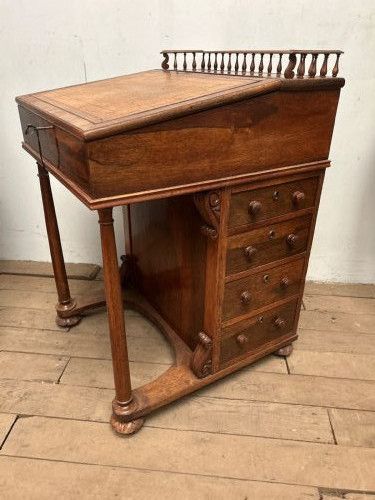
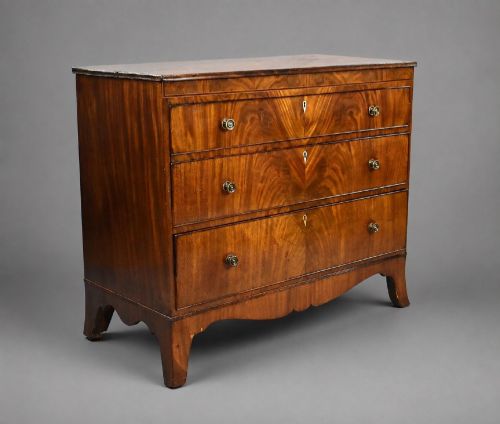
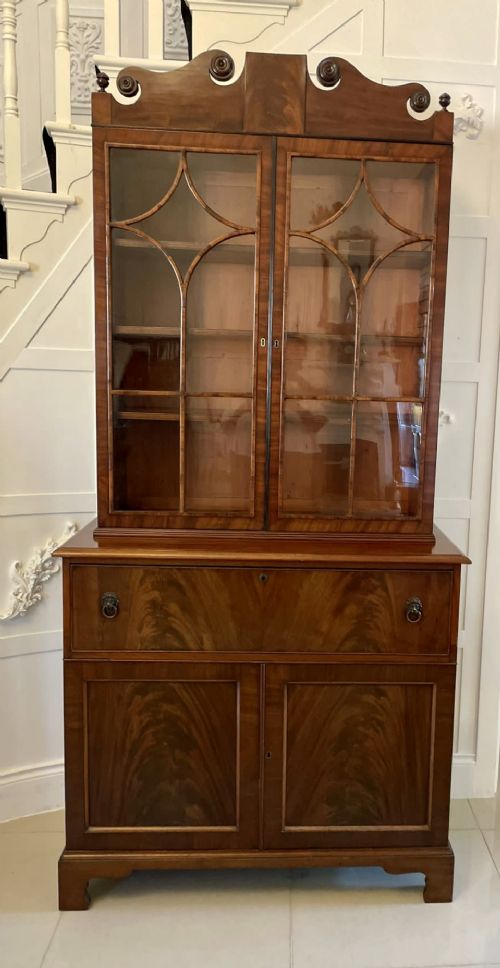
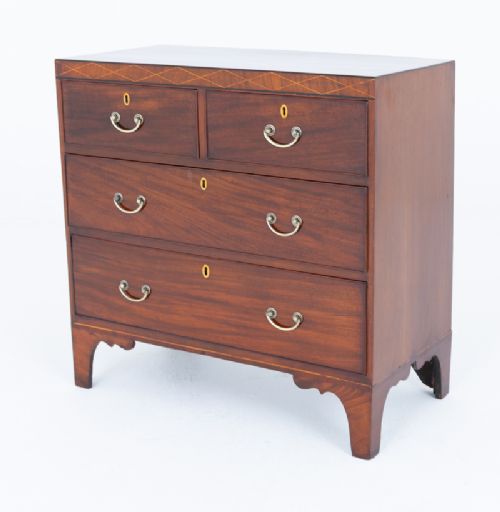
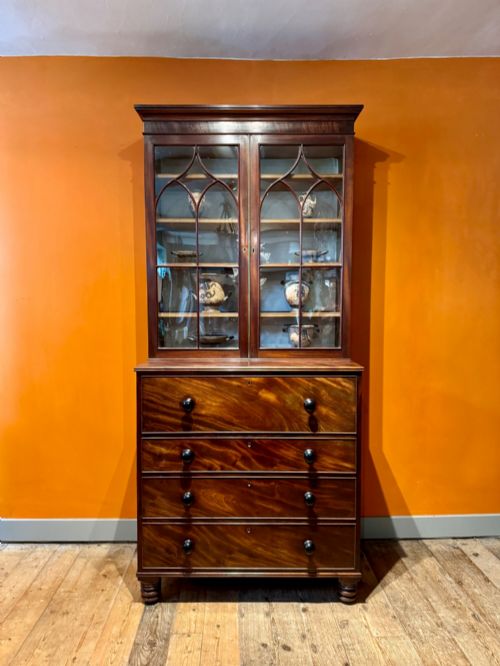
A regency period bureau covers a range of sophisticated writing furniture, from compact davenports and chamber writing tables to tall secretaire bookcases and chests. You will frequently encounter mahogany and flame mahogany chests of drawers alongside rosewood davenports and fitted secretaire cabinets.
The objects span periods from the late eighteenth century through the Georgian, Regency, and William IV eras, though the core of the selection remains firmly Regency. Makers and designers of the time produced both imposing library bookcases and diminutive writing desks with equal care.
Materials and construction
Cabinet makers relied heavily on solid mahogany and flame mahogany veneer, often enhanced by contrasting rosewood, satinwood, burr walnut, and oak linings. Brass hardware and leather inserts completed the writing surfaces and drawer pulls.
Structural finesse showed in figured mahogany drawer graduations, bow fronts, and sliding top mechanisms that concealed intricate internal compartments.
Regency Period Bureau Retail Price Guide 2026
Typical asking prices for regency period bureau among the pieces listed under this phrase on Sellingantiques today, from the lower quarter to the upper quarter. They describe what is for sale here now, not the wider market.
Listings feature mahogany, flame mahogany veneer, rosewood, burr walnut, satinwood, oak, brass, glass, leather, and bone.
Assessing craftsmanship and proportion
Quality rests in the choice of timber and the precision of the cabinet work, particularly how flame mahogany veneers or burr walnut are matched across drawer fronts. Finer pieces demonstrate superior proportion, whether in a diminutive davenport or a large secretaire bookcase.
The complexity of internal fittings, such as secret drawers within a secretaire chest or writing desk, distinguishes standard workshop output from exceptional cabinet making.
Gillows of Lancaster·John MaClean·Thomas Hope
The Regency Period Bureau Glossary
- Secretaire
- A piece of furniture containing a built-in writing drawer or fall-front compartment that conceals pigeonholes and small drawers. This clever design allowed a chest of drawers or bookcase to double as a fully functional desk.
- Davenport
- A small, compact writing desk featuring a sloping lid and drawers opening to the side. These desks became popular during the Regency era for domestic correspondence.
- Flame mahogany
- A veneer cut from the fork of a mahogany tree where the branches meet the trunk, producing a distinctive flickering flame pattern. Cabinet makers used this timber on prominent drawer fronts to create dramatic visual movement.
- Bow front
- A convex, curved front elevation typical of many Regency chests of drawers and cabinets. This shaping softens the rigidity of rectangular case furniture.
- Graduated drawers
- A series of drawers decreasing in depth from bottom to top, creating visual harmony and balance. This feature is common on finer Regency chests.
Regency Period Bureau: Frequently Asked Questions
What is a regency period bureau?
A regency period bureau is a piece of writing furniture from the early nineteenth century, encompassing davenports, secretaire chests, and fitted bookcases.
These items combine practical drawer storage with specialised compartments designed for correspondence and paperwork.
How do I identify a secretaire chest?
A secretaire chest appears outwardly like a standard chest of drawers, but the top drawer pulls down or drops open to reveal a writing surface and small pigeonholes.
This clever dual-purpose design provides a private workspace without sacrificing the storage capacity of a traditional chest.
Where were these desks used?
These items were primarily utilised in libraries, parlours, and private chambers for letter writing, reading, and managing household accounts.
Their compact forms made them versatile enough to sit comfortably in both grand reception rooms and smaller private spaces.
How do I care for mahogany surfaces?
Mahogany and rosewood surfaces benefit from regular dusting with a soft, dry cloth and occasional light waxing to maintain the grain's natural depth.
Avoid placing these pieces in direct sunlight or near heat sources to protect the aged wood and delicate veneers from drying out.