


Regency Mahogany Inlaid Chest
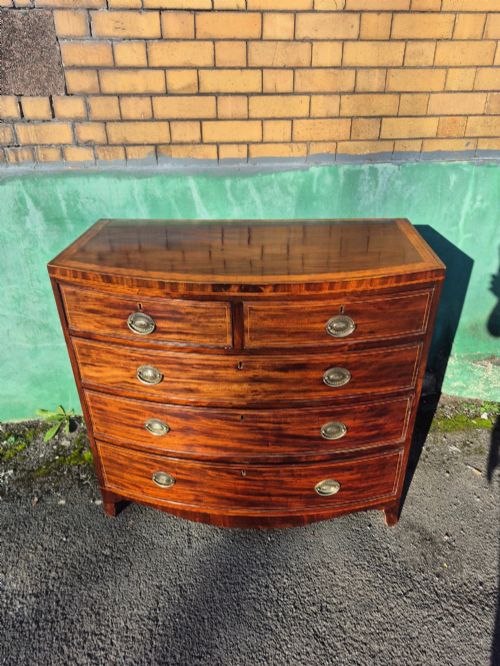
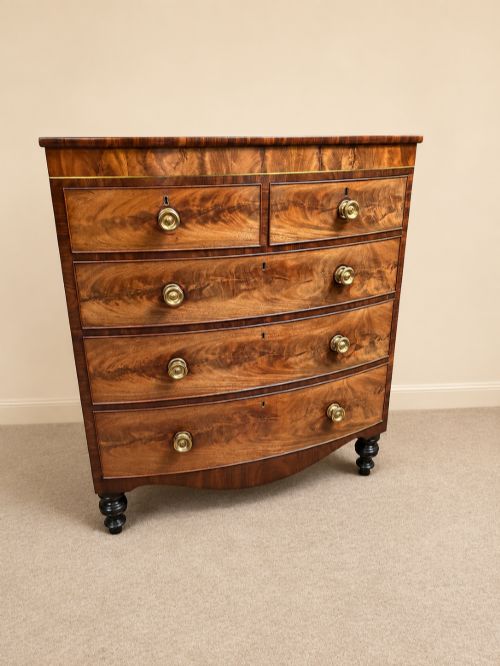
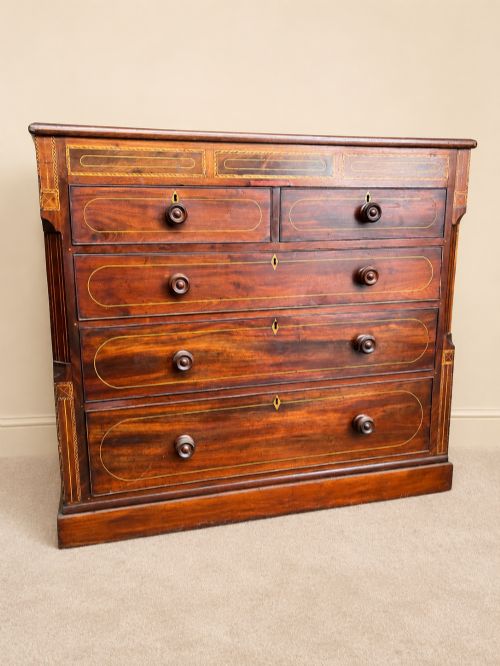
A regency mahogany inlaid chest combines rich cabinet timbers with precise decorative banding for domestic storage.
Regency Mahogany Inlaid Chest
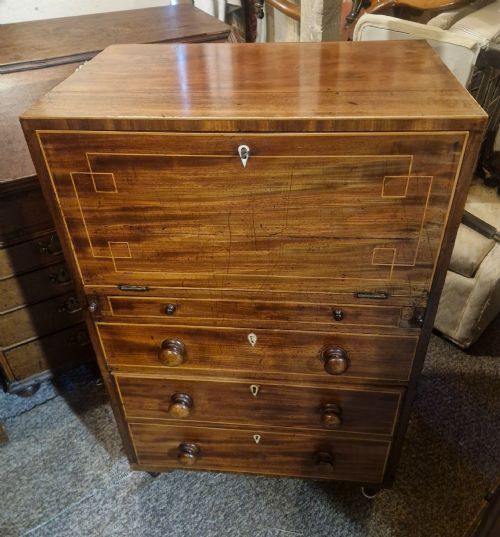
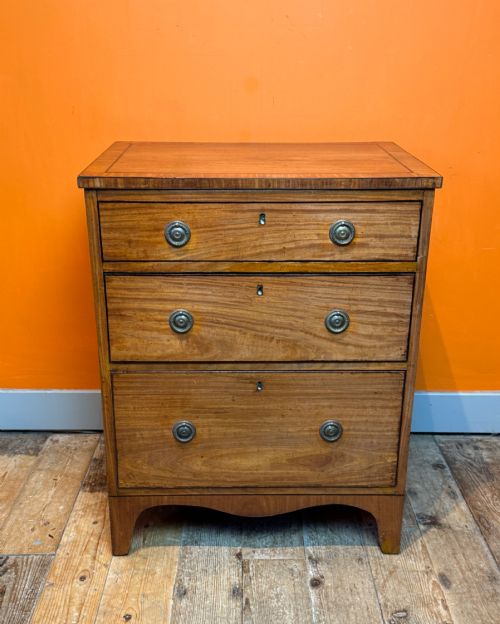
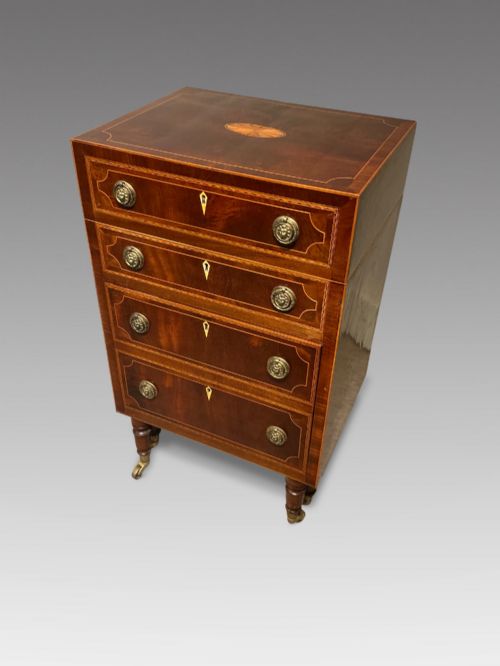
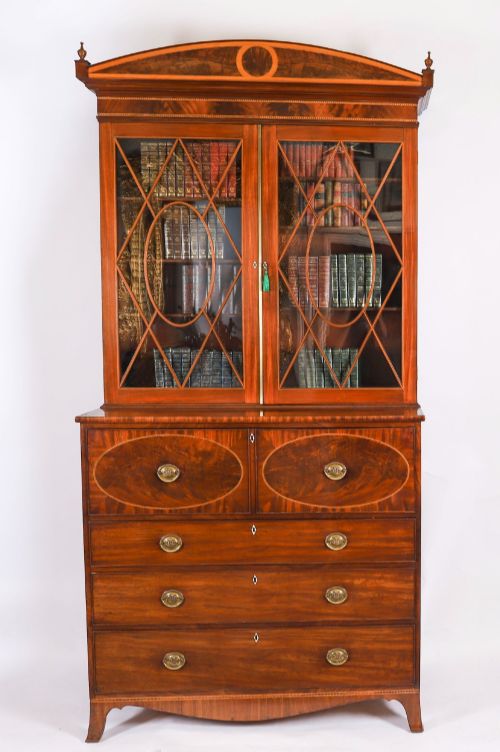
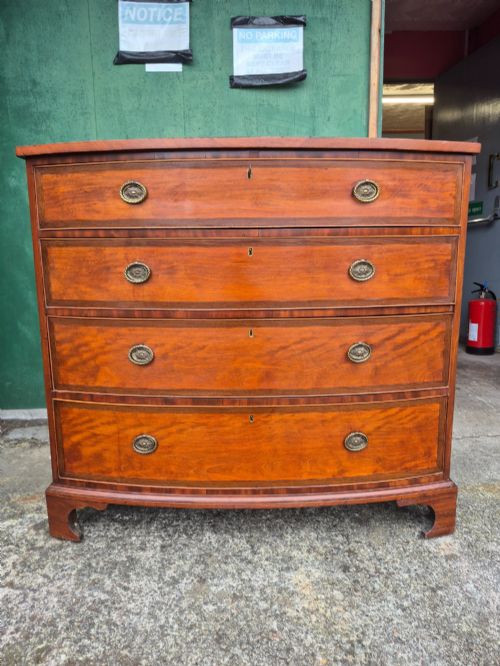
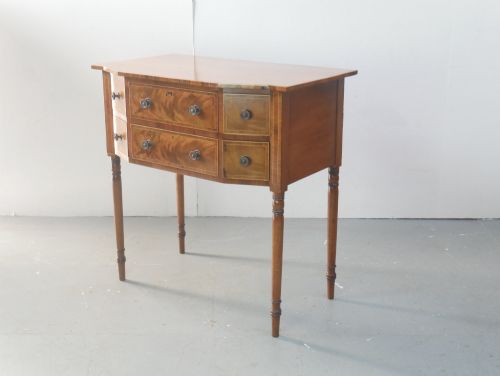
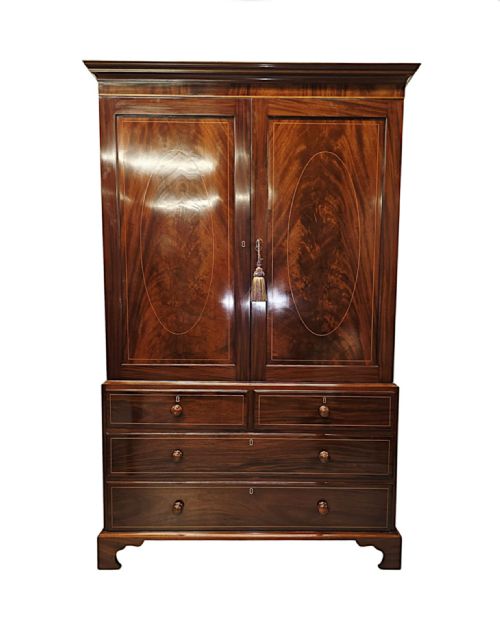
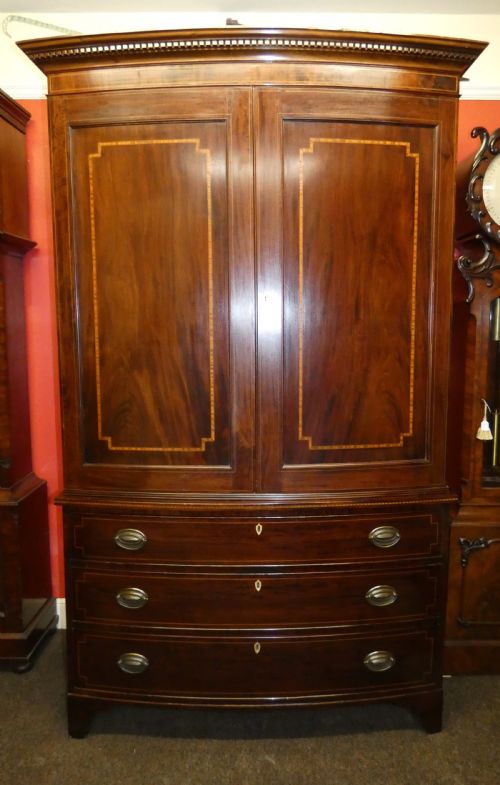
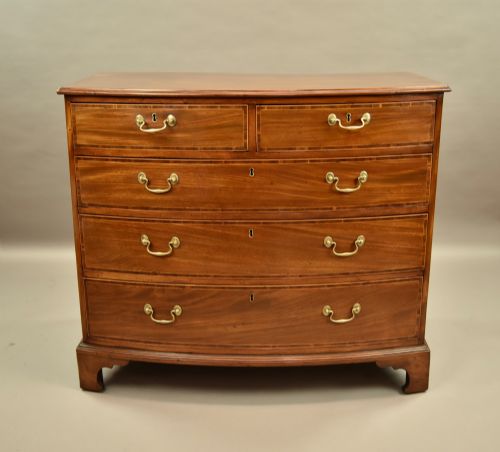
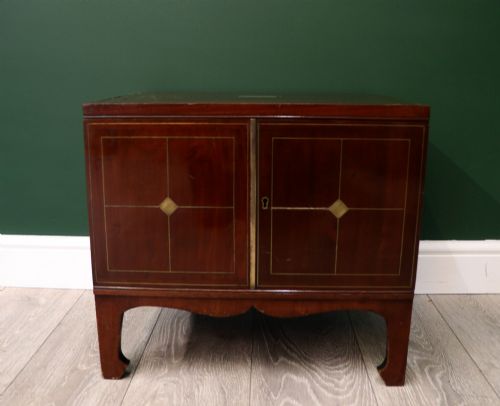
A regency mahogany inlaid chest typically takes the form of a bowfront or straight-front case of drawers, alongside related storage pieces such as linen presses, secretaire chests, and smaller side cabinets. These items originate predominantly across the nineteenth century, including Georgian, Regency, George III, George IV, and Victorian periods, reflecting shifting domestic tastes for polished timber.
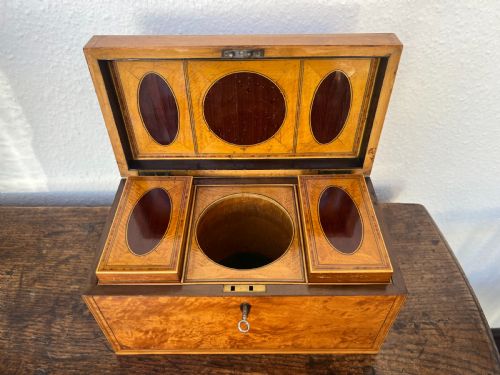
Buyers seeking this phrase encounter various configurations, from large bedroom chests to compact bedside cabinets and spice cupboards. The construction relies on durable cabinet woods accented by contrasting stringing and line inlay, offering functional storage with distinctive period proportion.
What varies in quality
The standard of a piece depends on the precision of the timber selection and the crispness of the inlaid decoration. Grain matching across drawer fronts and the fineness of the boxwood or satinwood stringing separate superior examples from standard production work.
Proportion and structural integrity dictate the overall calibre of the item, particularly in how well the drawers run within their carcases and how cleanly the secondary woods are finished internally. Retained original brass hardware and untouched polished surfaces further elevate the standing of a piece.
Regency Mahogany Inlaid Chest Retail Price Guide 2026
Typical asking prices for regency mahogany inlaid chest among the pieces listed under this phrase on Sellingantiques today, from the lower quarter to the upper quarter. They describe what is for sale here now, not the wider market.
Certain bedside cabinets include a clever pull-out wooden step to assist with high-post bed climbing.
Hepplewhite
The Regency Mahogany Inlaid Chest Glossary
- Bowfront
- A curved front profile that swells outward toward the centre, commonly found on nineteenth-century chests of drawers. This shape required skilled joinery to bend or shape the timber accurately.
- Stringing
- Thin inlaid lines of contrasting wood or bone used to outline drawer edges and top surfaces. It provides a sharp linear border against the darker mahogany background.
- Linen Press
- A tall double-door storage piece containing sliding trays above lower drawers for textiles. These large items served as primary bedroom furniture in well-appointed homes.
- Secretaire
- A cabinet or chest featuring a fitted pull-out writing drawer with a drop-front desk surface. This dual-purpose form combines drawer storage with a concealed writing space.
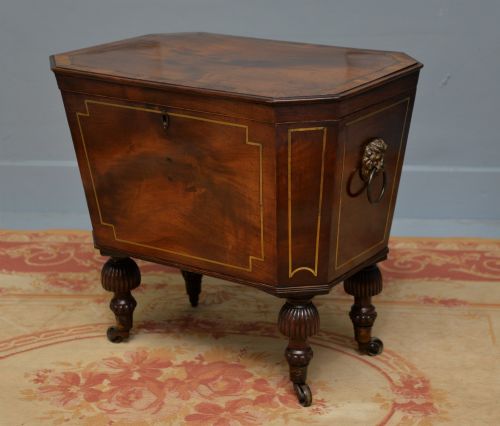
- Cellarette
- A specialised standalone container used for storing and cooling wine bottles. They often feature fitted interior compartments and substantial stand structures.
Regency Mahogany Inlaid Chest: Frequently Asked Questions
What is a regency mahogany inlaid chest?
A regency mahogany inlaid chest is a wooden storage unit featuring multiple drawers, constructed from mahogany and decorated with contrasting wood stringing or banding.
These pieces date primarily from the late eighteenth and early nineteenth centuries, serving as functional bedroom or living space furniture.
How do I identify a Regency period chest?
Regency pieces often display classical proportions, subtle brass hardware, and precise line inlay using satinwood or boxwood against dark mahogany.
Cabinetmakers of this era favoured restrained classical motifs and clean architectural lines over heavier ornamentation.
Where were these chests placed originally?
These items were designed for principal bedrooms, dressing rooms, and formal parlours to store clothing, linens, and personal valuables.
Larger versions stood against bedroom walls, while smaller variations functioned as bedside or side cabinets.
What is line inlay?
Line inlay involves cutting narrow channels into the primary wood surface and inserting contrasting strips of lighter or darker timber.
This technique creates neat geometric borders and frames around drawer perimeters and top panels.