
Vintage Bow Front Chest
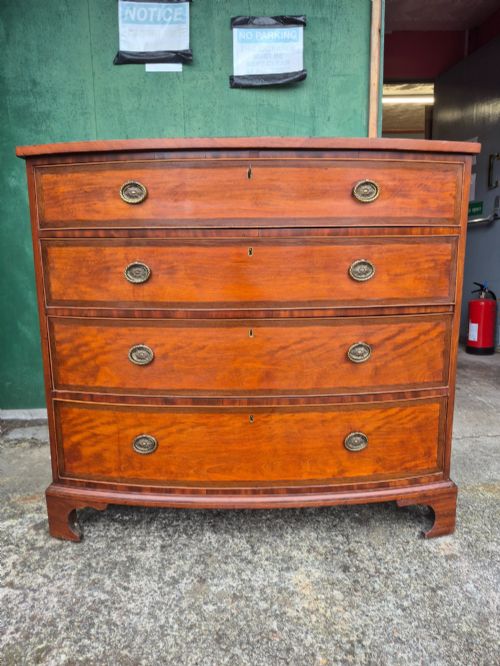
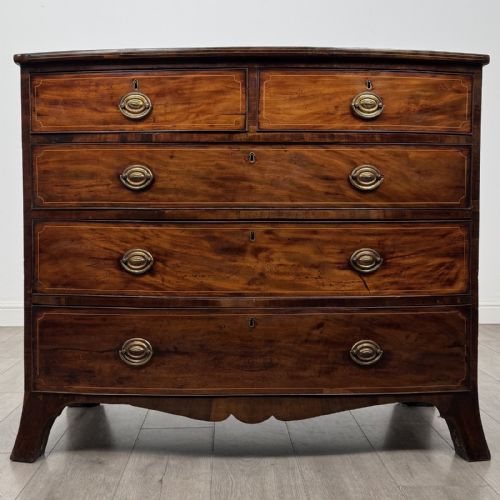
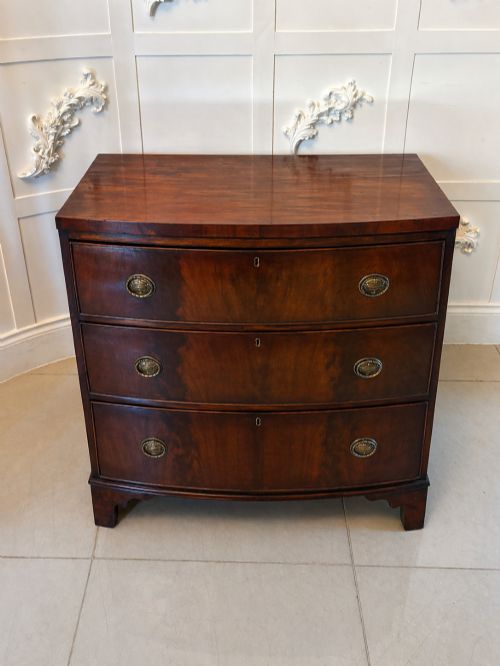
These vintage bow front chest pieces offer curved fronts and generous drawer storage, combining practical capacity with strong visual presence.
Vintage Bow Front Chest
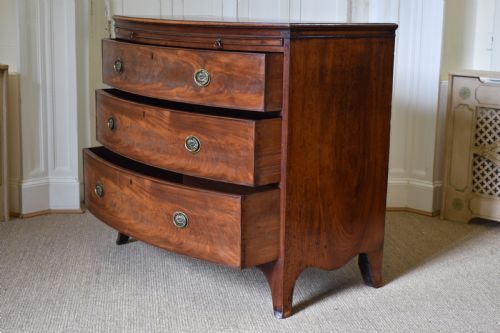
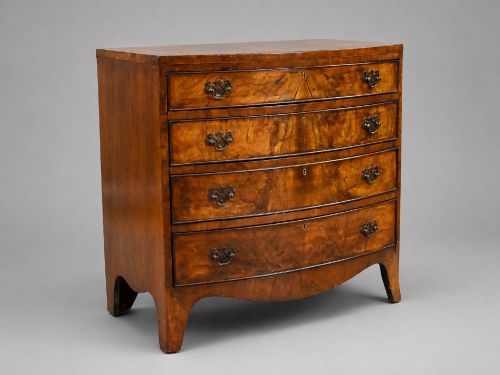
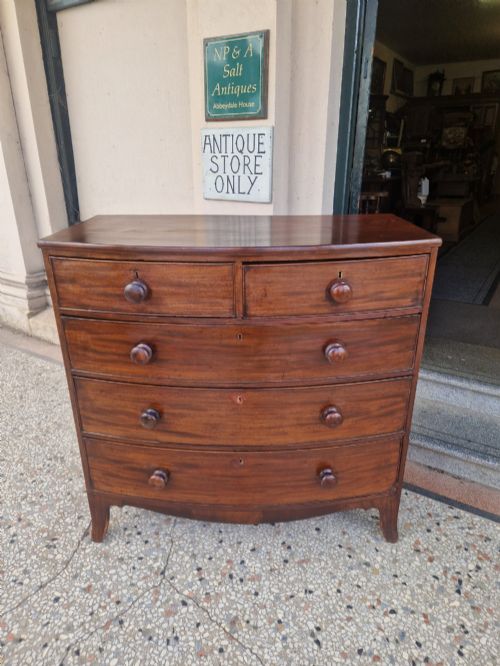
A vintage bow front chest brings a curved silhouette and deep drawer capacity to a room, functioning as a primary storage unit or a bedroom focal point. When searching for a vintage bow front chest, buyers encounter numerous variations spanning the Georgian, Regency, Victorian, and Edwardian eras.
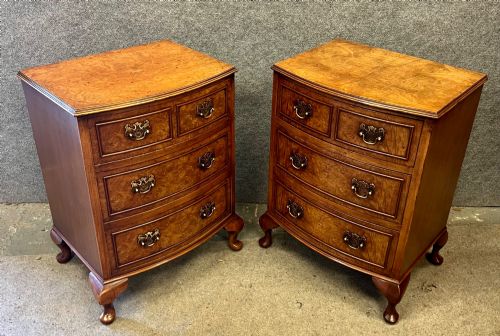
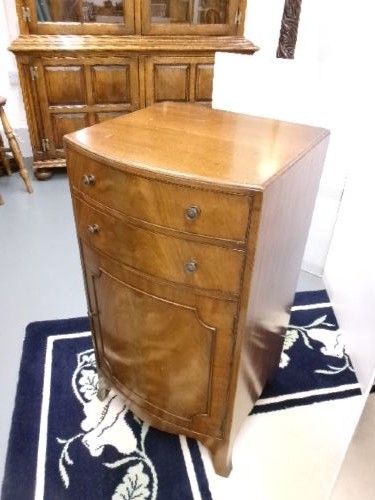
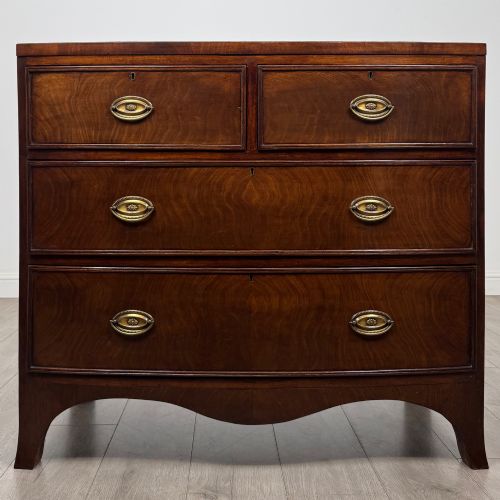
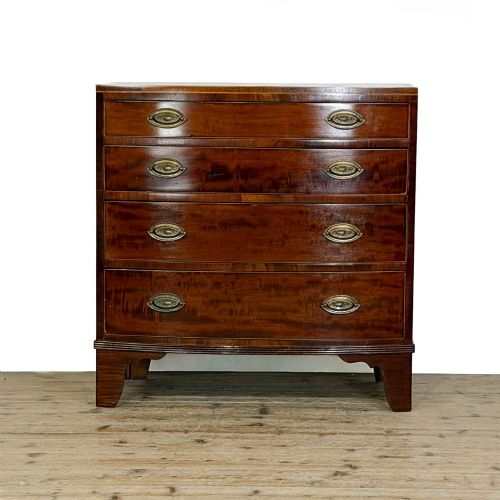
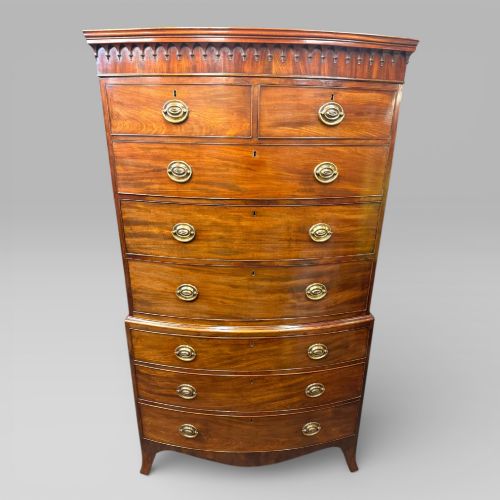
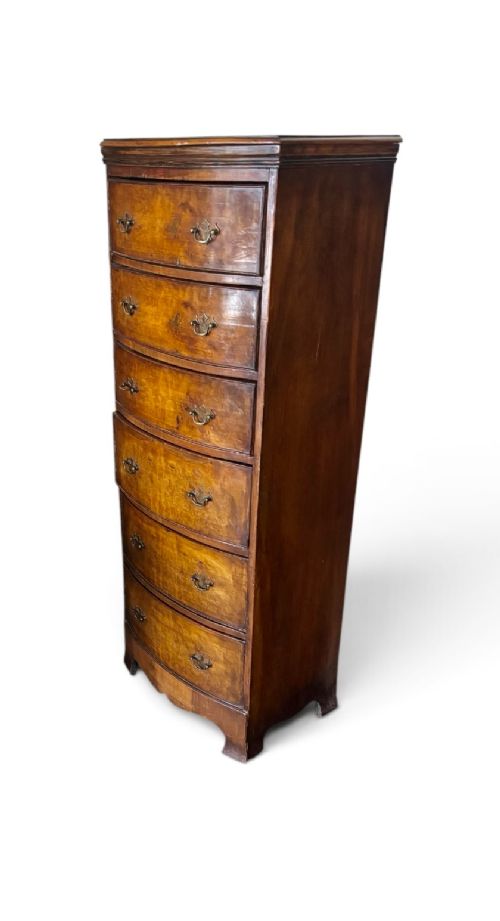
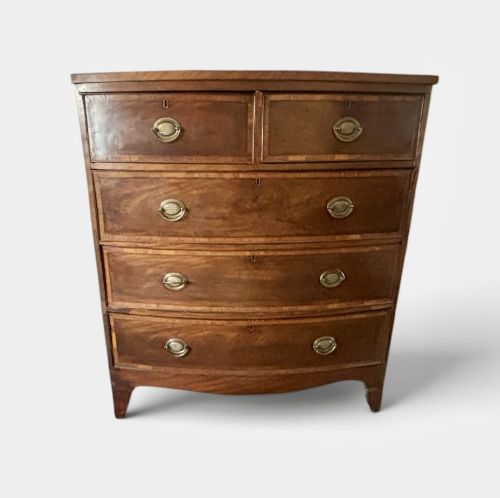
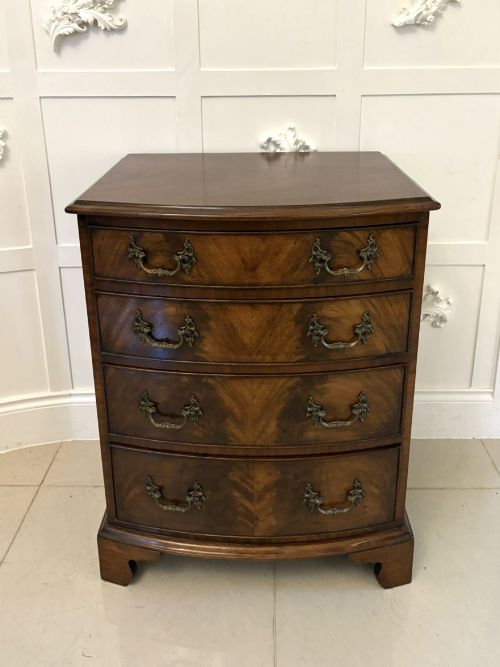
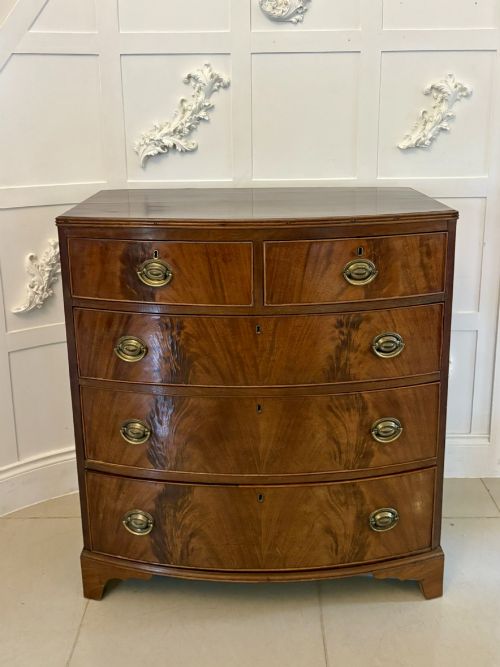
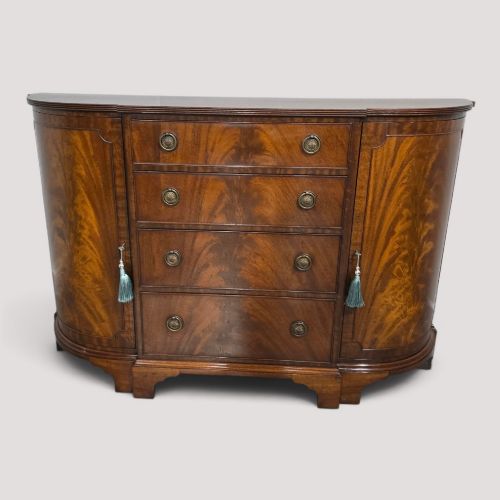
The standard form on this page is the mahogany chest of drawers, though walnut, flame mahogany veneer, painted wood, and oak also appear. Pieces range from large Georgian and Regency examples to smaller Edwardian and early twentieth-century editions, including tallboys and bedside cabinets.
Makers and cabinetmakers from the eighteenth century onward utilised the curved facade to soften the rigid geometry typical of standard case furniture. The prevalence of mahogany and flame mahogany across the listings reflects the enduring popularity of dense, figured timbers for these curved carcases.
Materials and construction methods
Cabinetmakers constructed the carcase using solid foundational timbers such as oak or pine, applying mahogany, walnut, or flame mahogany veneers across the visible surfaces. The distinctive curved front required careful bending or sawing of timber to achieve the precise radius without compromising the structural integrity of the drawer openings.
Makers integrated solid brass handles and escutcheons to secure the drawer fronts, often matching the period taste for polished metalwork against dark wood. Satinwood banding and intricate grain matching on drawer faces demonstrate the advanced joinery techniques applied during the Georgian and Regency periods.
Formats span standard chests of drawers, tallboys, bedside cabinets, sideboards, and linen presses.
Distinctions in quality and finish
Quality rests upon the selection of timber, particularly the depth of figure in flame mahogany or burr walnut veneers used on the drawer fronts. Superior examples exhibit continuous grain patterns that flow horizontally across the curved facade, showing intentional planning by the maker.
The integrity of the structural joints and the smooth operation of the graduated drawers separate finely constructed pieces from standard utilitarian items. Original brass hardware, crisp edge moulding, and well-preserved secondary timbers inside the drawers indicate higher standards of workshop production.
The Vintage Bow Front Chest Glossary
- Bow front
- A convex curved front facade that projects outward in a smooth arc. This shape distinguishes these chests from flat-fronted furniture.
- Flame mahogany
- A veneer cut from timber where the grain resembles flickering flames. It provides high visual movement on drawer faces.
- Graduated drawers
- A series of drawers that decrease in depth from bottom to top. This arrangement creates balanced proportions on tall chests and tallboys.
- Tallboy
- A tall chest of drawers, often constructed in two sections with a smaller chest sitting atop a larger base. These pieces maximise vertical storage space.
- Satinwood banding
- A narrow strip of light-coloured satinwood inlaid around the edges of drawer fronts or top boards. It creates a contrasting geometric border.
Vintage Bow Front Chest: Frequently Asked Questions
Where should I put a vintage bow front chest?
These chests suit bedrooms, hallways, or living rooms where the curved projection softens room layouts. Their depth requires sufficient clearance from opposing walls or furniture.
Smaller versions function effectively as bedside cabinets or compact sideboards while retaining the signature curved facade.
How do I date a bow front chest?
Dating relies on timber selection, handle styles, construction methods, and overall proportions. Georgian and Regency pieces often feature flame mahogany and hand-cut dovetails.
Later Victorian and early twentieth-century examples display different secondary woods, turned wooden handles, or revival styling such as Edwardian and French Chateau influences.
Are these chests practical for daily storage?
The internal drawer space accommodates clothing, linens, and household items securely. Graduated drawers allow heavier items to sit in the deeper lower compartments.
Drawer runners and internal partitions maintain smooth operation when opened and closed regularly.
What maintenance do these wooden chests need?
Regular dusting with a dry, soft cloth preserves the polished surface of the mahogany or walnut veneer. Avoiding direct sunlight prevents timber fading and veneer lifting.
Occasional application of appropriate wax feeds the antique wood without building up heavy chemical residues.