




19th Century Satinwood Commode
A 19th century satinwood commode brings pale timber and delicate proportions into a room.
19th Century Satinwood Commode
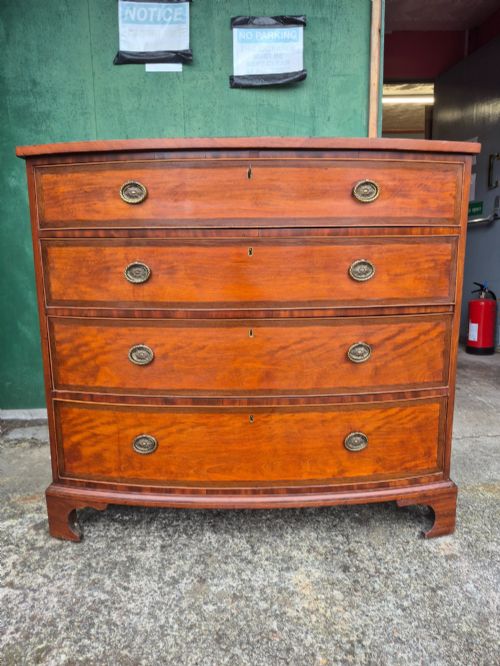
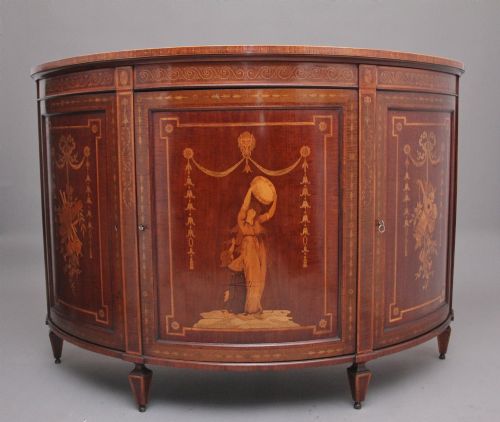
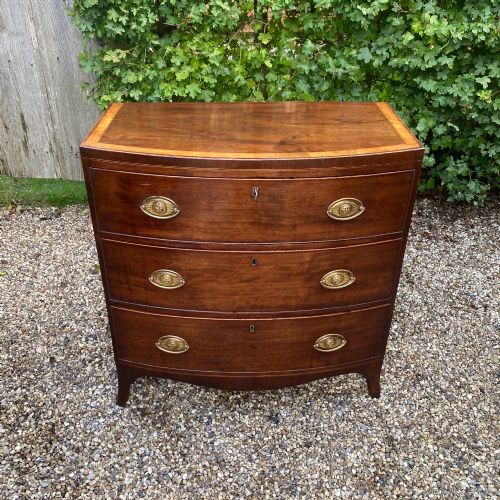
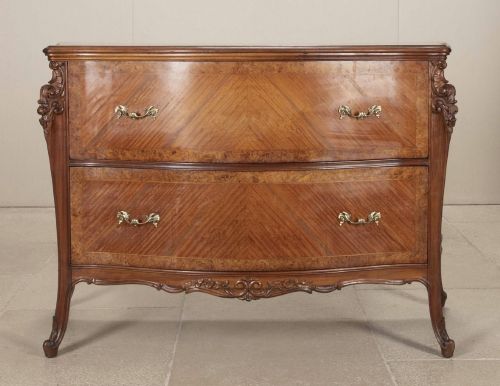
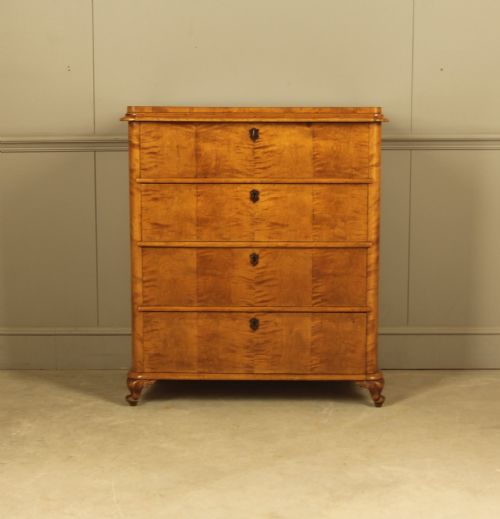
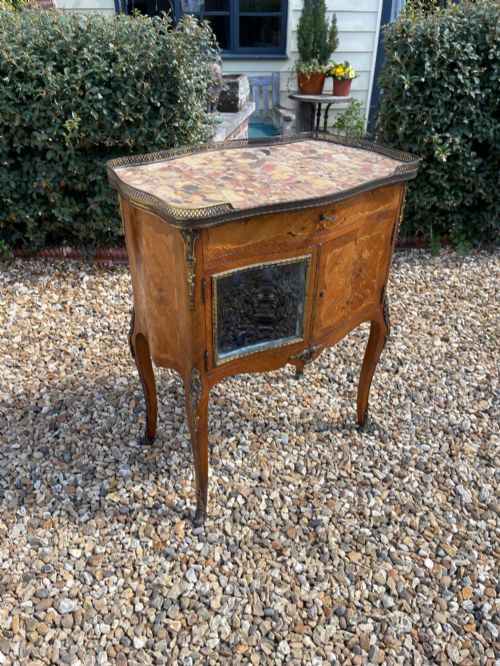
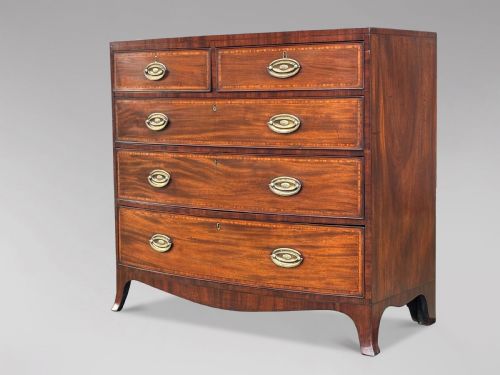
When you search for a 19th century satinwood commode, you encounter a variety of storage furniture including chests of drawers, side cabinets, demi-lune cabinets, and washstands. These pieces range from early century English bow-front designs to continental pieces featuring rich veneers and revival styles.
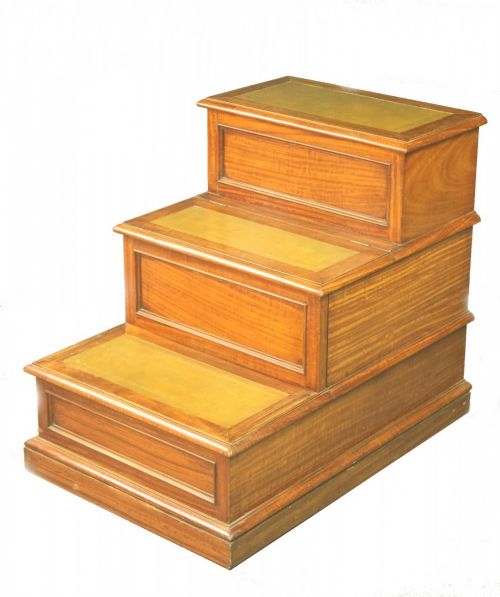
The selection includes items spanning the Victorian and Edwardian eras, alongside Italian, French, and Swedish examples. Alongside traditional drawer configurations, the inventory encompasses specialised items such as bed steps and marble-topped cabinets.
Makers and workshops across Europe drew upon classical idioms, producing pieces with inlaid motifs, painted decoration, and contrasting crossbanding. The core characteristic remains the use of light-toned exotic timbers, principally satinwood, paired with mahogany, birch, or walnut.
How they were made
Cabinet makers utilised fine timbers in veneer form, laying satinwood, rosewood, tulipwood, and kingwood over carcases of pine or mahogany. This method allowed craftsmen to create striking geometric patterns and contrasting borders across drawer fronts and cabinet doors.
Decoration relied on marquetry inlay, painted panels, and brass mounts, reflecting Adam Revival, Sheraton Revival, and French transitional designs. Structural stability was achieved through traditional joinery, dovetailing drawer carcases, and fitting heavy marble slabs to the tops of continental commodes.
Among the storage cabinets and chests, one set of satinwood bed steps survives to help morning climbers reach lofty Victorian mattresses.
What varies in quality
The standard of execution in the timber selection and inlay work dictates the distinction between ordinary and exceptional pieces. Finely figured flame birch, tightly patterned satinwood, and precise contrasting stringing indicate superior workshop production.
The crispness of carved details, the integration of painted decoration, and the preservation of original brass hardware elevate certain commodes. Structural integrity, particularly the smooth operation of drawer runners and the preservation of original marble tops, defines the lasting worth of a piece.
The 19th Century Satinwood Commode Glossary
- Satinwood
- A hard, durable timber with a characteristic golden-yellow sheen and satiny lustre. It was frequently used for fine veneers and stringing on late period furniture.
- Commode
- A low chest of drawers or cabinet, often fitted with doors or drawers, originating in French furniture design. In this context, the term covers decorative side cabinets and chests.
- Demi-lune
- A half-moon shape used for the footprint and top of small cabinets and commodes. This curved form suited the neoclassical revival styles popular in the period.
- Marquetry
- The art of applying small pieces of veneer to a structure to form decorative patterns and pictures. Cabinet makers used contrasting timbers to achieve pictorial depth.
- Crossbanding
- A border of veneer laid around the main panel of a drawer or top with the grain running perpendicular to the centre. It creates a neat framing effect on cabinet surfaces.
19th Century Satinwood Commode: Frequently Asked Questions
What is a satinwood commode?
A satinwood commode is a decorative cabinet or chest of drawers surfaced with pale, glossy satinwood veneer. These pieces function as storage furniture while introducing bright tones to an interior.
Originating across Britain and continental Europe, they often incorporate detailed inlay, contrasting timbers, and painted ornamentation.
How do I style a commode at home?
These cabinets work effectively in entrance halls, drawing rooms, or bedrooms as focal storage surfaces. Their reflective timber surfaces complement both traditional and contemporary room schemes.
Keep the top uncluttered to allow the grain patterns and inlay work to remain visible.
Are marble tops original?
Many continental commodes feature fitted marble tops designed to provide a durable, decorative surface. French and Italian workshops frequently paired stone slabs with veneered carcases.
Check that the marble sits flush and matches the proportions of the cabinet base.
How do I identify a revival piece?
Revival pieces borrow design vocabulary from earlier centuries, such as Adam or Sheraton motifs, while employing late period construction methods. Cabinet makers in the later Victorian and Edwardian eras recreated these classical proportions.
Examine the secondary woods inside the drawers to help determine the manufacturing period.