



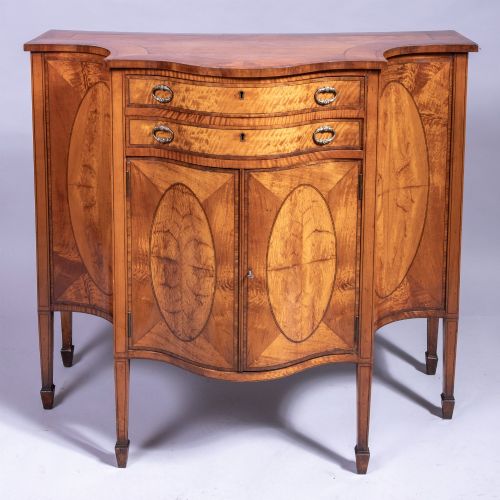
Edwardian Style Satinwood Cabinet
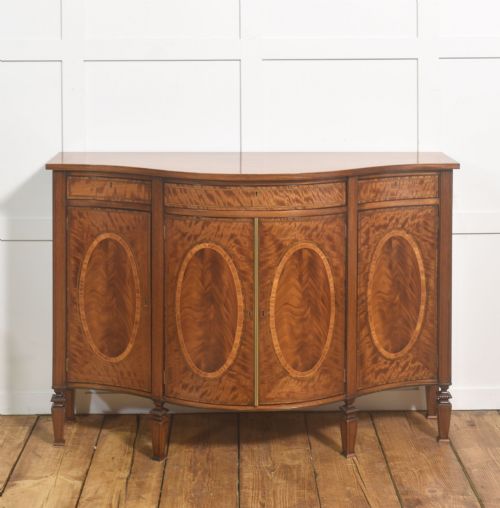
These edwardian style satinwood cabinet designs bring figured timbers and classical revival motifs into the room, offering refined storage and display.
Edwardian Style Satinwood Cabinet
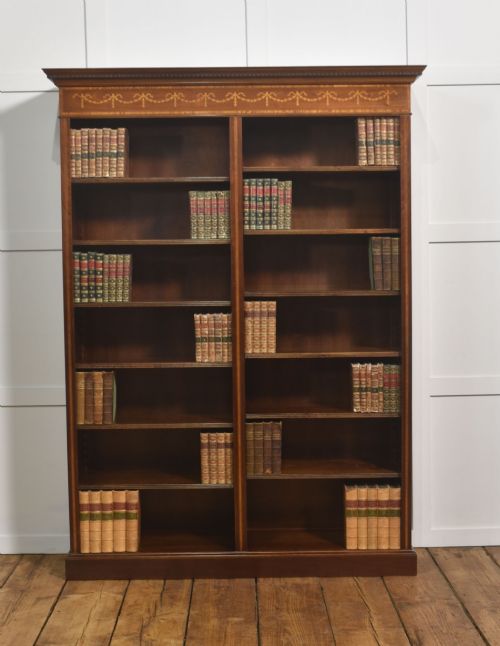
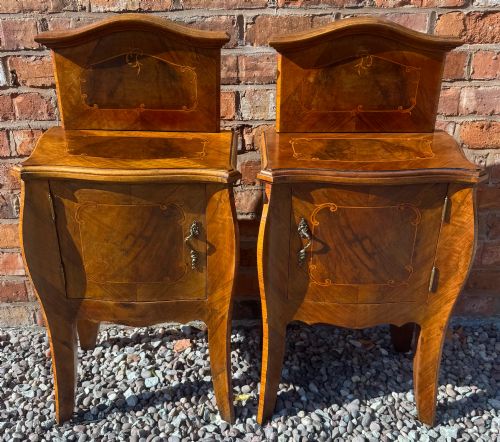
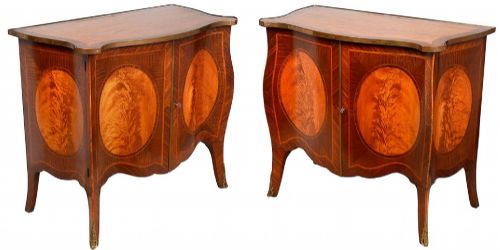
Buyers seeking an edwardian style satinwood cabinet look for case pieces shaped by classical revivals and executed in pale, lustrous veneers. The pieces on this page span display cabinets, side cabinets, bookcases, and bedside cabinets originating from the Edwardian era, the Victorian period, and the early twentieth century.
The prevailing aesthetic draws heavily on Sheraton Revival and Adam Revival idioms, marked by symmetrical layouts and delicate proportions. Alongside pieces made strictly in the Edwardian period, the selection includes related nineteenth-century examples and later interpretations from nineteen-thirty.
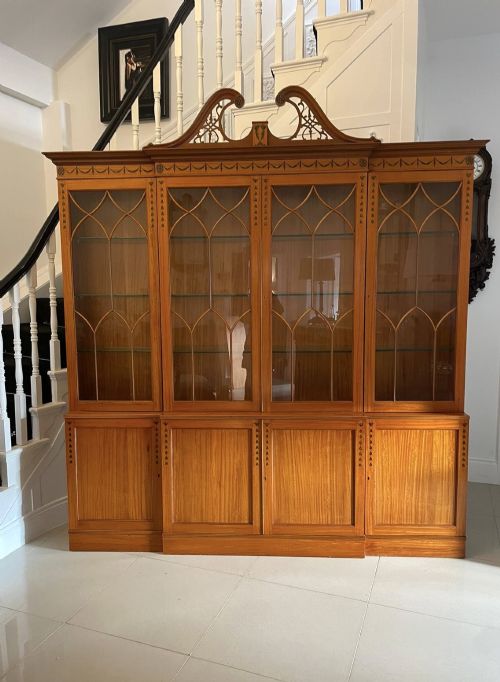
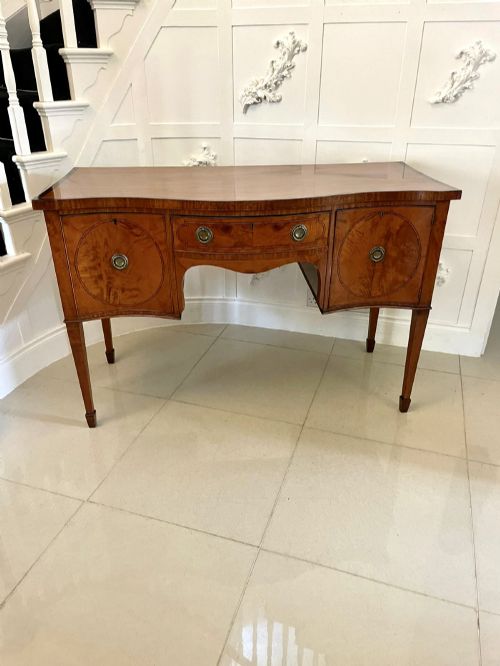
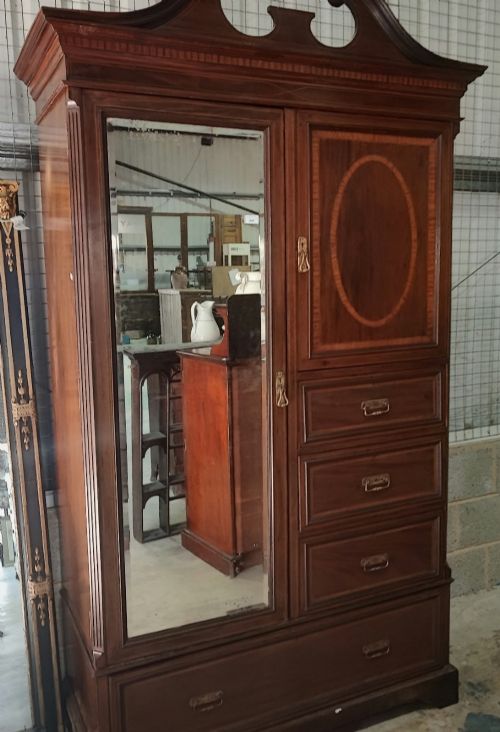
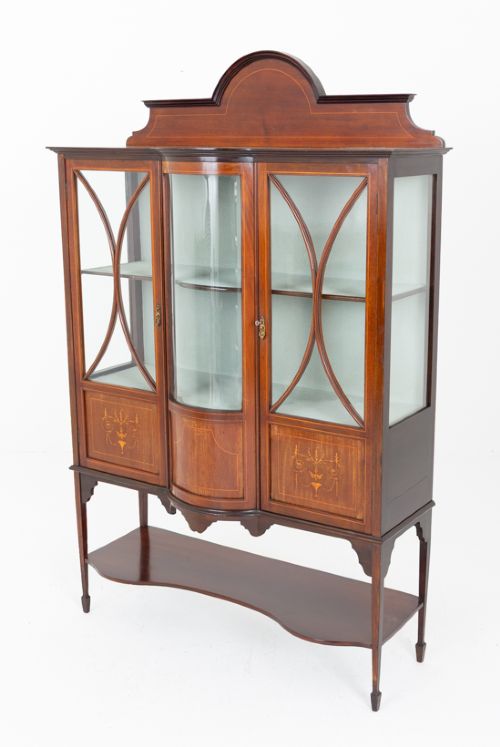
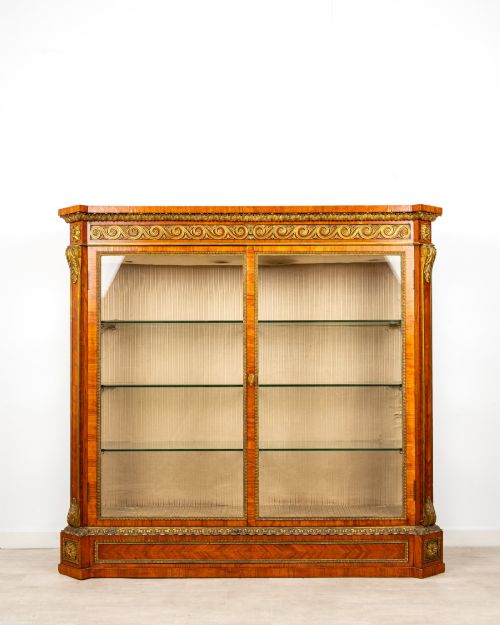
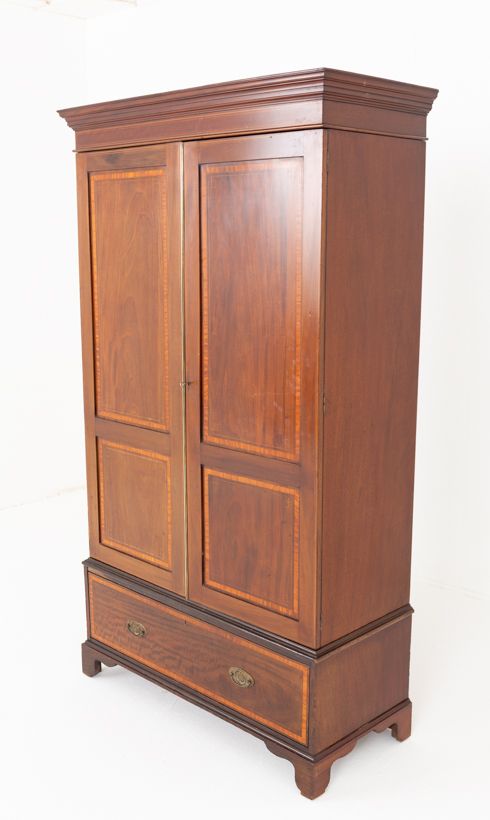
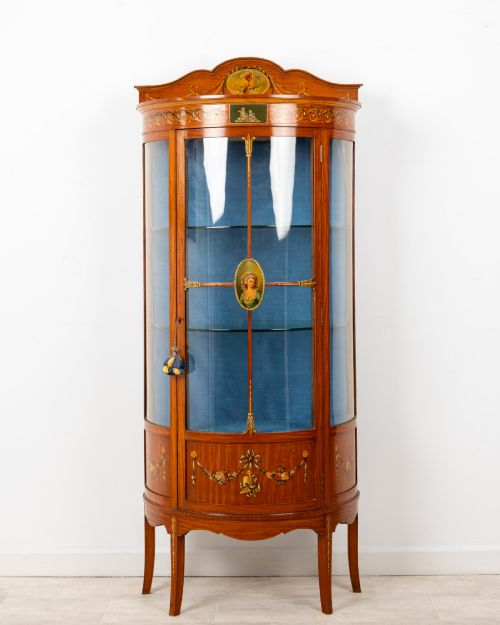
Display cabinets with glazed doors and vitrines dominate the forms, accompanied by sideboards, commodes, and compactum wardrobes. These pieces were built to showcase porcelain and glassware or to provide formal storage in drawing rooms and dining parlours.
Materials and construction
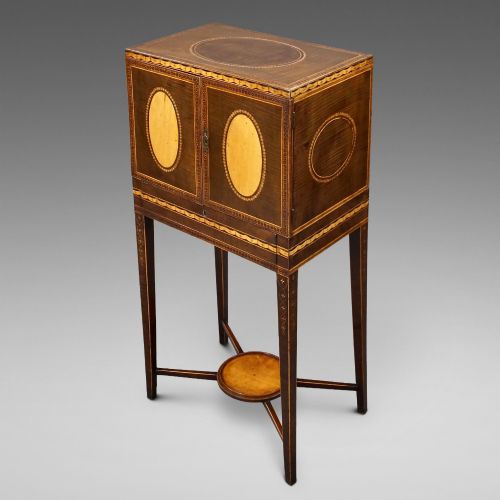
Cabinetmakers utilised satinwood as a primary veneer, selected for its natural golden sheen and contrasting grain. This timber was frequently paired with mahogany, rosewood, harewood, and ebony to create geometric banding and contrasting borders.
Inlay and marquetry form a central part of the technique, incorporating boxwood stringing and floral motifs. Painted decoration also appears on select satinwood surfaces, showing fine brushwork in classical festoons and urns.
Glazing techniques involve leaded or astral bars framing glass panels in display doors, while hardware relies on cast brass handles and escutcheons.
The selection includes breakfront display cabinets, demi-lune side cabinets, and compactum wardrobes executed in Sheraton and Adam revival styles.
Quality factors in cabinetmaking
The distinction between tiers of execution rests on the crispness of the marquetry and the choice of veneer figures. Finer pieces display tightly matched satinwood grains across drawer fronts and doors, whereas simpler examples rely on plain timber surfaces.
Structural integrity reveals itself in the joinery of drawer linings and the weight of the timber used in carcase construction. Superior items feature hand-cut dovetails and substantial secondary woods like oak or mahogany beneath the decorative veneers.
The refinement of painted decoration and hand-chiselled brass mounts separates standard commercial production from workshop pieces commissioned for prominent collections.
Edwards and Roberts·H. J. Hatfield and Sons·Maple and Co.·Druce and Co.·Jewell of Holborn
The Edwardian Style Satinwood Cabinet Glossary
- Satinwood
- A dense, lustrous timber native to tropical regions, prized for its pale yellow colour and chatoyant grain. It serves as the primary decorative veneer on neoclassical and revival case pieces.
- Sheraton Revival
- A late nineteenth and early twentieth-century design movement inspired by the neoclassical furniture of George Sheraton. It is characterised by straight tapered legs, urn motifs, and intricate marquetry.
- Marquetry
- The art of applying small pieces of veneer to a structure to form decorative patterns and pictorial scenes. Craftsmen cut contrasting woods together to achieve tight joints.
- Astral Glazing
- A method of dividing glass panels within a door or bookcase using thin wooden bars. These bars form geometric or Gothic tracery patterns.
- Compactum
- A large fitted wardrobe combining hanging space with internal drawers, shelves, and sliding trays. It was designed to provide comprehensive clothing storage within a single footprint.
Edwardian Style Satinwood Cabinet: Frequently Asked Questions
What is satinwood?
Satinwood is a dense, yellow hardwood known for a characteristic sheen that catches light across the grain. It was imported and utilised extensively by British cabinetmakers for fine veneers.
In antique furniture, it forms the smooth, luminous exterior surfaces of display cabinets and sideboards, often contrasted with darker stringing lines.
How do I identify Sheraton Revival pieces?
Sheraton Revival furniture dates primarily from the late Victorian and Edwardian eras, copying the lighter neoclassical lines of the eighteenth century. Look for tapered legs, satinwood veneers, and classical inlay motifs.
These pieces typically reject heavy Victorian bulk in favour of balanced proportions, delicate painted ornamentation, and geometric stringing.
Where were these cabinets used?
Edwardian and revival cabinets were designed for principal reception rooms, drawing rooms, and formal dining spaces. Display variants housed porcelain collections, while sideboards served dining functions.
Bedside cabinets and small commodes were built for bedrooms, providing discreet enclosed storage beside period bed frames.
How should I care for satinwood?
Satinwood furniture requires stable indoor humidity and protection from direct sunlight to prevent the pale veneers from darkening or drying out. Gentle dusting with a dry, soft cloth preserves the polished finish.
Avoid liquid cleaners and silicone polishes, which can penetrate hairline cracks in old varnish and damage the delicate marquetry underneath.