
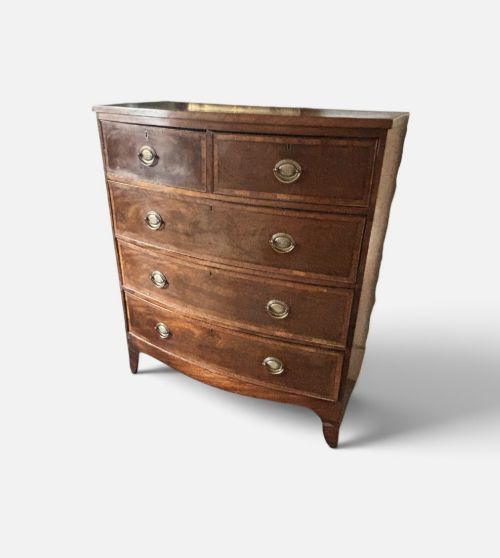


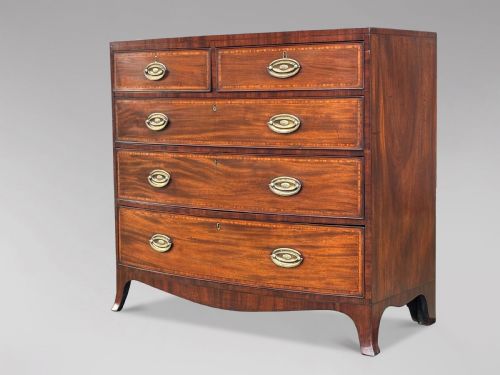


Georgian Satinwood Tallboy
A georgian satinwood tallboy combines fine cabinet timbers with versatile storage, bringing warmth and structured design to a bedroom.
Georgian Satinwood Tallboy
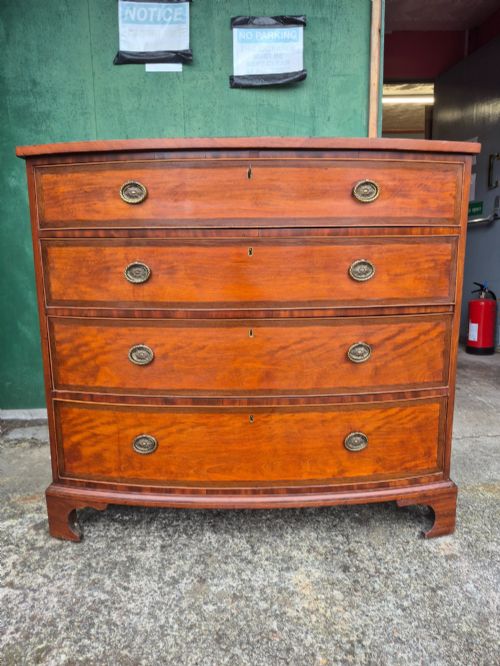
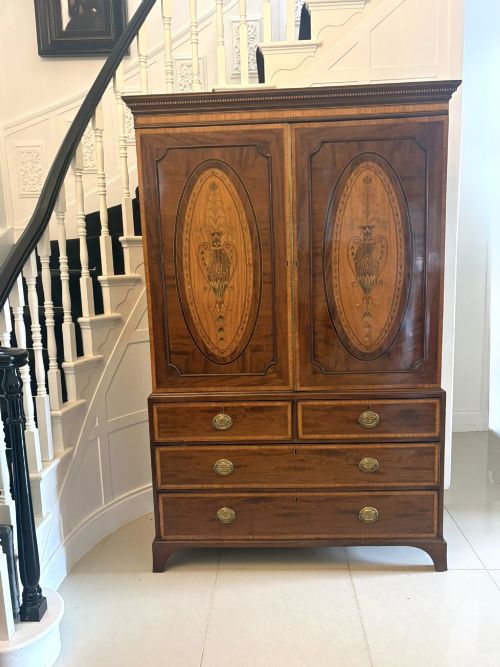
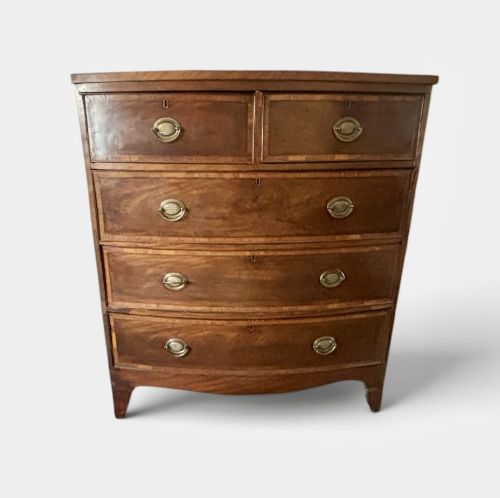
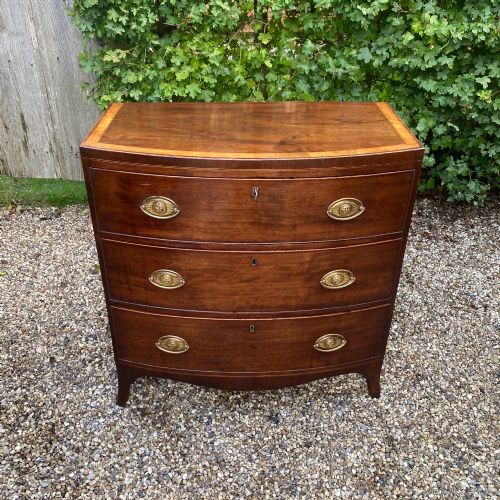
When you search for a georgian satinwood tallboy, you encounter case furniture spanning the eighteenth and nineteenth centuries, alongside later Edwardian interpretations. These pieces primarily manifest as chests of drawers, linen presses, and chests on stand.
The materials and styles recorded in the listings include solid satinwood, mahogany, walnut, and satin birch, often accented with ebony inlay or satinwood banding. Construction origins span the Georgian and Regency eras, extending into the Victorian and Edwardian periods.
Materials and construction
Cabinetmakers utilised rich timber combinations, pairing mahogany or walnut with satinwood veneer or solid satinwood construction. Surfaces frequently incorporate line inlay, crossbanding, and ebony detailing to define drawer edges and cornices.
Internal structures rely on traditional timber framing for the multiple drawers and linen press sections. Details such as caddy tops and swan-neck pediments appear on select pieces from the late eighteenth century.
Listings feature periods spanning the 18th century, Georgian and Regency eras, through to Victorian and Edwardian interpretations.
Assessing quality
Quality rests in the precision of the timber matching and the execution of the inlay work. Finer examples display harmonious grain patterns across drawer fronts and balanced proportions in the overall carcass.
The integration of secondary timbers and the crispness of decorative banding distinguish higher standard pieces from simpler commercial output of the later periods.
The Georgian Satinwood Tallboy Glossary
- Tallboy
- A tall chest of drawers, often built in two sections with multiple drawers stacked vertically. This form provides substantial vertical storage while occupying a compact floor footprint.
- Satinwood
- A lustrous, yellow-toned timber prized for its reflective grain and smooth finish. It serves as both a primary solid wood and a decorative veneer.
- Inlay
- The technique of inserting contrasting strips of wood, such as ebony or mahogany, into recessed portions of the primary surface. This defines panels and architectural lines.
- Crossbanding
- A decorative border veneer applied so that the grain runs at right angles to the surrounding wood. It frames drawer fronts and tabletops on period case furniture.
- Linen Press
- A tall piece of furniture featuring upper doors enclosing sliding trays or shelves, above a base of lower drawers. It originated for storing household textiles.
Georgian Satinwood Tallboy: Frequently Asked Questions
What is a tallboy?
A tallboy is a stacked chest of drawers offering significant vertical storage capacity. It combines multiple drawer tiers within a single case structure.
Historically, these pieces served bedrooms and dressing rooms for storing garments and household linens.
How do I date a satinwood chest?
Dating relies on examining construction methods, timber choices, and decorative styles such as inlay and banding. Pieces range from the eighteenth century through the Edwardian era.
Stylistic markers like swan-neck pediments and caddy tops help align pieces with Georgian or Regency periods.
Where were these pieces used?
These pieces functioned primarily in private bedrooms and dressing chambers for clothing storage. Linen presses additionally served corridors and storage rooms for textiles.
Their substantial storage capacity made them central items in period domestic interiors.
How do I care for satinwood?
Satinwood surfaces require minimal maintenance using soft cloths and protection from direct sunlight. Avoiding excess moisture preserves the decorative veneer and inlay.
Regular dusting maintains the natural lustre of the timber over time.