





Vintage Satinwood Dresser
These vintage satinwood dressers and chests of drawers bring a pale, reflective elegance to a room, valued for their luminous grain.
Vintage Satinwood Dresser
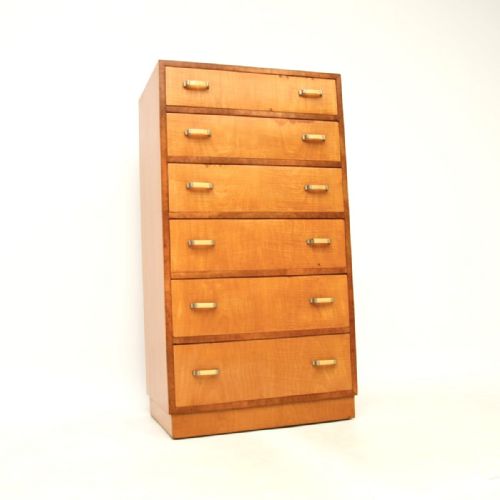
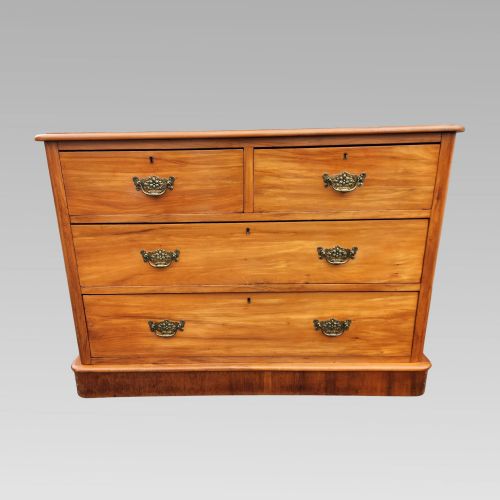
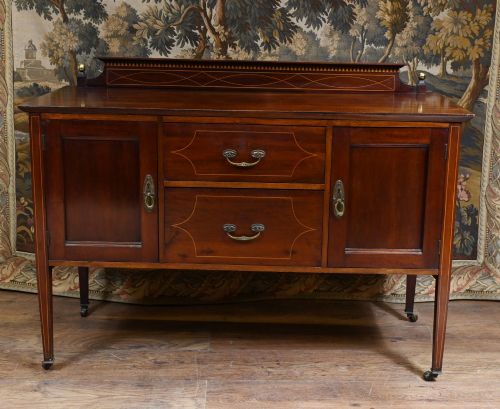
A vintage satinwood dresser typically appears as a chest of drawers or commode, often featuring contrasting timber details from the Victorian and Edwardian eras. Pieces matching this search span several decades from the nineteenth century into the nineteen-thirties, taking the form of tallboys, dressing tables, and sideboards alongside standard drawer configurations.
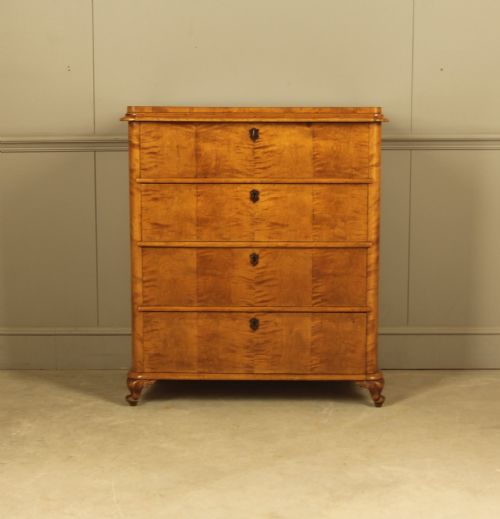
Edwardian interpretations dominate the selection, frequently displaying Sheraton revival influences with light stringing and delicate inlay work. Alongside these formal English designs, nineteenth-century Swedish pieces in birch and flame birch surface with clean architectural lines.
Makers ranged from large firms like Harris Lebus and Heals to regional workshops producing both compact bowfront chests and larger sideboards. The primary material is frequently augmented with mahogany, walnut, or pine carcases, maintaining the pale golden tone central to the style.
Materials and construction methods
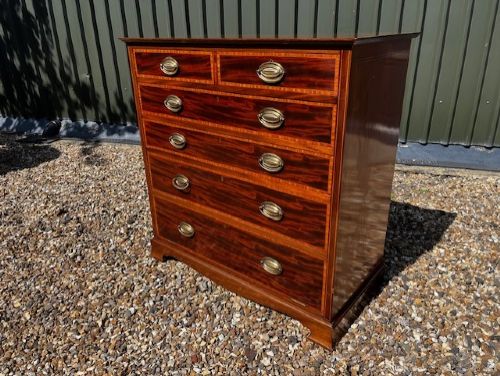
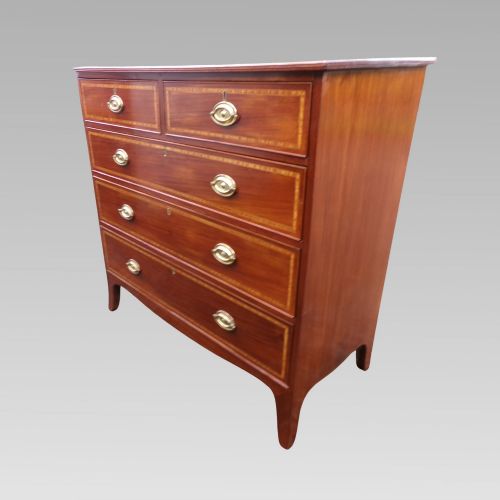
Makers utilised solid timbers and fine veneers applied to secondary woods such as pine and mahogany, securing stability while displaying the shimmering qualities of satinwood and birch. Crossbanding and line inlay in contrasting dark woods delineate the drawer fronts and borders.
Brass handles, drop pulls, and escutcheons punctuate the drawer faces, frequently surviving as original elements from the period of manufacture. Joinery relies on traditional dovetailing for the drawer boxes and pegged joints for the main frames.
Materials extend beyond satinwood to include mahogany, satin birch, satin walnut, and flame birch.
Distinguishing quality across pieces
The sophistication of the timber selection dictates the visual standing of each piece, where highly figured satinwood or flame birch commands attention through its natural chatoyancy. Subtle variations in execution show in the precision of the string inlay and the crispness of the crossbanding.
Proportion and structural integrity define the higher tiers of surviving examples, particularly where secondary woods are chosen with equal care to support the primary veneers. Original hardware matching the era elevates the integrity of the piece.
Harris Lebus·Heals
The Vintage Satinwood Dresser Glossary
- Satinwood
- A dense, lustrous tropical timber known for its golden colour and reflective grain, widely utilised for veneers in high-status cabinetmaking.
- Crossbanding
- A strip of veneer applied across the grain of the main surface to form a contrasting border around drawer fronts or tabletops.
- Tallboy
- A tall chest of drawers, typically constructed in two stacked sections to provide generous storage with a smaller floor footprint.
- Stringing
- Thin lines of contrasting wood inlaid into grooves on the surface to outline panels, drawers, or tabletops in Sheraton revival furniture.
- Commode
- A low cabinet or chest of drawers, frequently French or Swedish in origin, often featuring curved serpentine or bowed fronts.
Vintage Satinwood Dresser: Frequently Asked Questions
How do I date a satinwood chest?
Dating relies on stylistic clues, construction methods, and timber choices typical of the Victorian, Edwardian, or Art Deco periods. Edwardian pieces often favour Sheraton revival inlays, whereas Victorian examples lean towards heavier proportions.
Examine the secondary woods inside the drawers and the style of the brass handles to confirm the period of manufacture.
Are these pieces solid satinwood?
Most items utilise satinwood veneers applied over secondary carcase timbers such as pine or mahogany. This technique prevented warping while displaying the decorative grain.
Solid satinwood was rarely used for entire large carcases due to the timber's weight and scarcity.
How do I care for satinwood furniture?
Keep these items away from direct sunlight and heat sources to prevent the pale veneers from darkening or drying out. Dust regularly with a soft, dry cloth.
Apply a microcrystalline wax periodically to nourish the wood and maintain the natural sheen without building up heavy residues.
What is the difference between a dresser and a chest?
In historical terminology, these listings cover chests of drawers and commodes rather than kitchen dressers with plate racks. The terms often overlap in regional usage.
Check the object types and dimensions to confirm whether the piece is a low chest, a tallboy, or a dressing table.