


Regency Mahogany Dressing Glass
A regency mahogany dressing glass brings architectural proportion and deep timber grain to a chest or table.
Regency Mahogany Dressing Glass
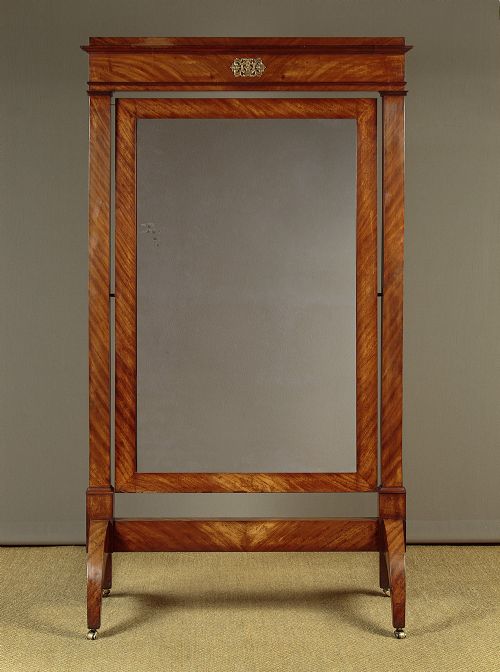
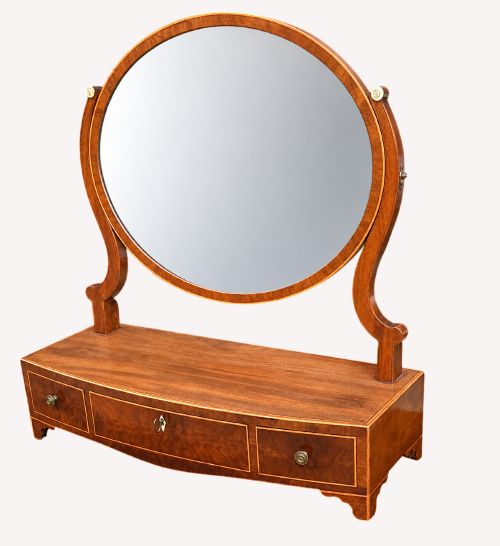
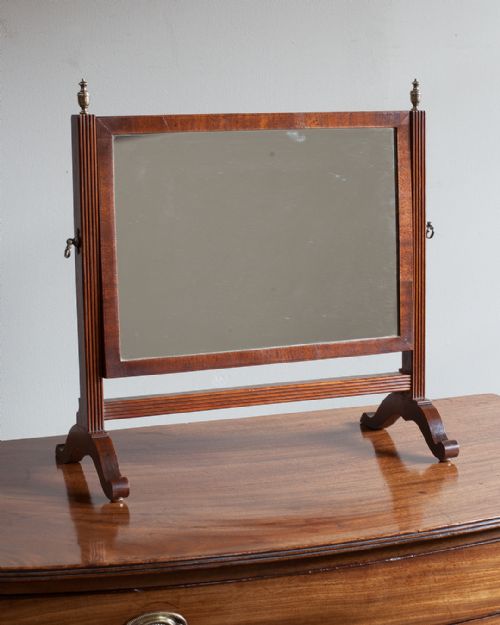
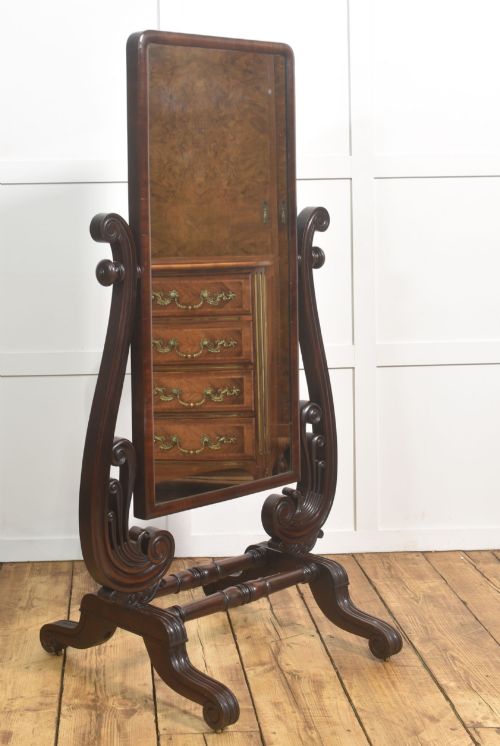
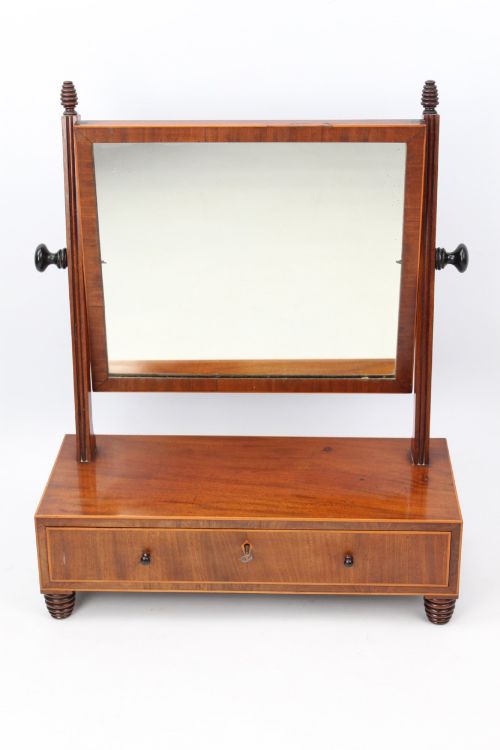
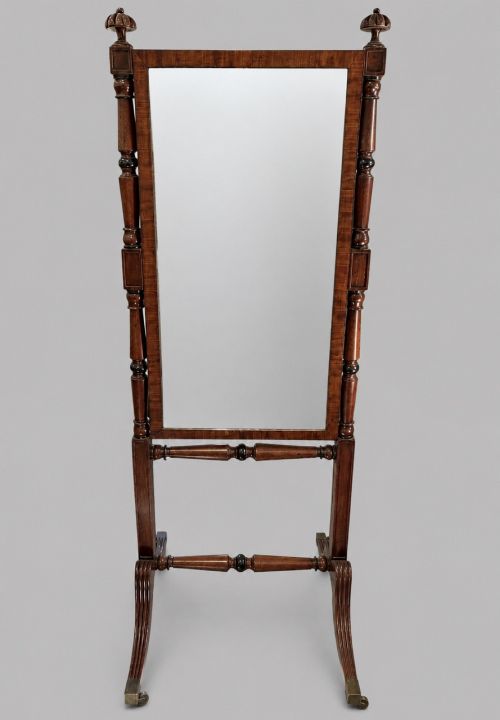
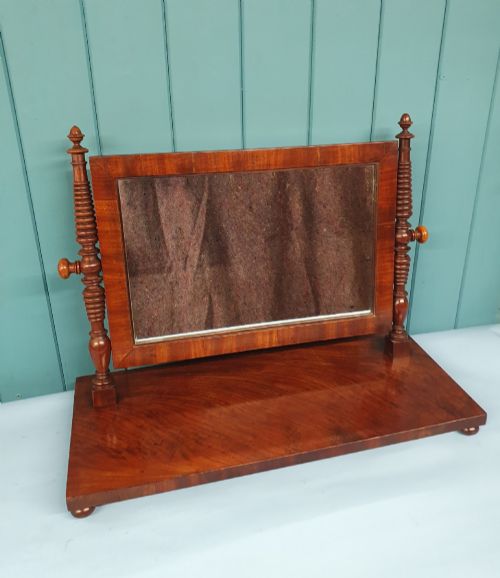
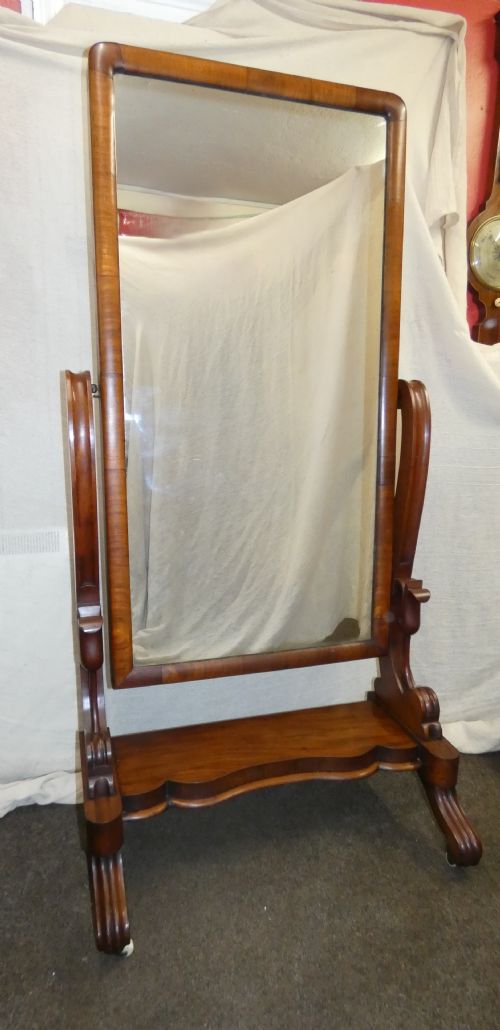
A regency mahogany dressing glass sits upon a table or chest, providing a pivoting mirror plate housed within a freestanding frame. You will frequently encounter compact toilet mirrors alongside larger cheval mirrors designed to stand directly upon the floor.
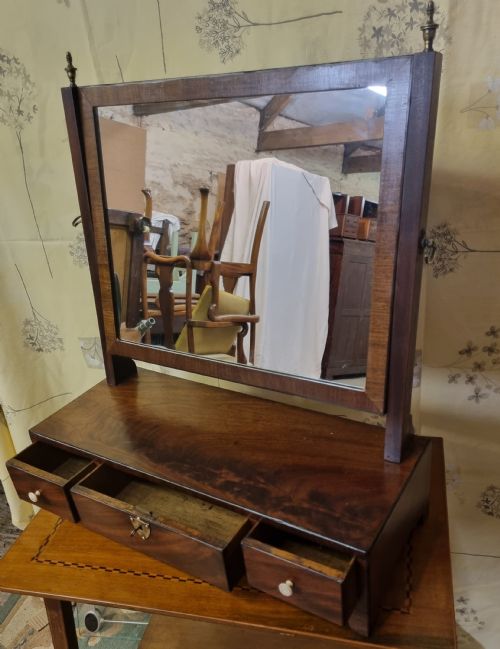
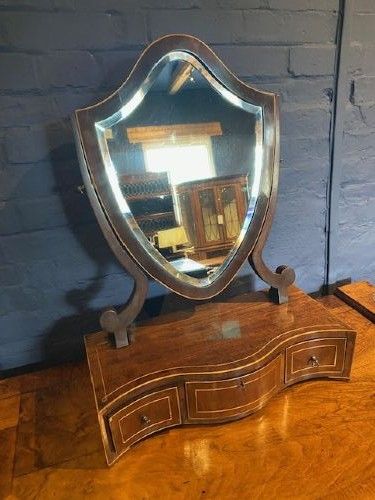
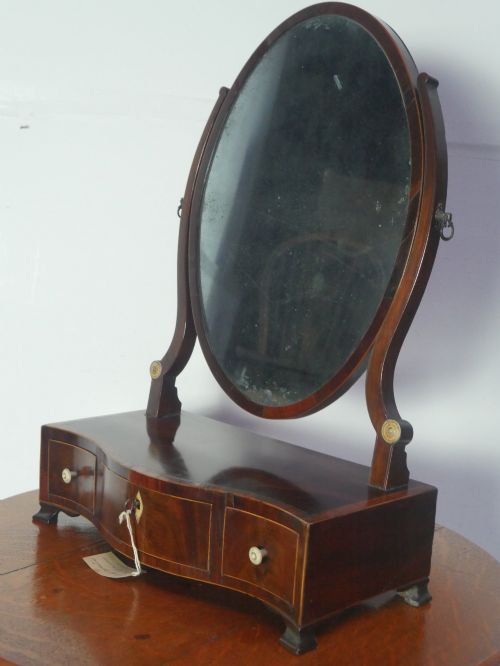
The evidence shows these pieces span the Georgian, Regency, and Victorian eras, with many examples dated across the nineteenth century. Makers constructed both bow-fronted and box-base variants, some incorporating small drawers for trinkets beneath the glass.
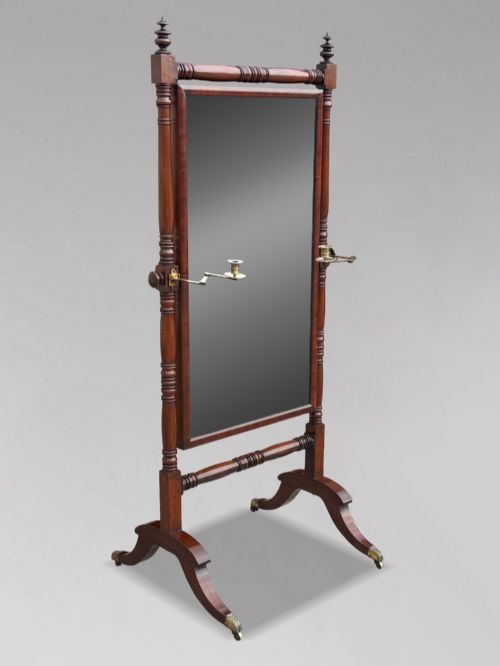
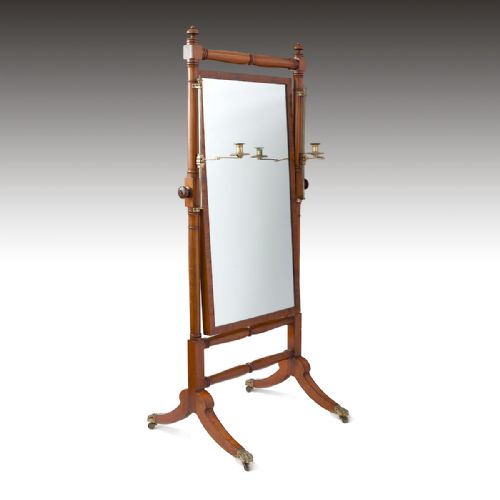
Table mirrors and swing mirrors dominate the smaller domestic forms, while grander country house cheval mirrors offer full-length reflections. These larger pivot frames sometimes feature brass candle arms mounted to the sides.
Materials and construction
Cabinetmakers relied heavily on solid and veneered mahogany, selecting timber prized for its rich reddish-brown tone and figuring. Secondary woods and supporting elements often integrated boxwood, ebony, and satinwood stringing or inlay.
Metal components played a structural and decorative role, with brass used for pivot screws, candle sconces, and decorative mounts. Mirror glass itself was set into rebated frames, frequently accompanied by bone details on drawer pulls or escutcheons.
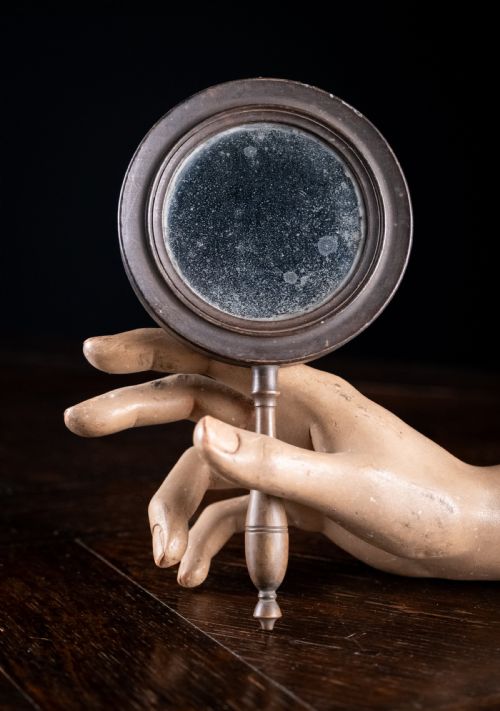
Recorded forms range from double-sided hand mirrors and portable vanity cases to large floor-standing cheval frames and compact table-top swing glasses.
Distinctions in craftsmanship
Finer examples reveal themselves through the crispness of boxwood inlay and the careful selection of figured mahogany veneer across the base drawers. Superior cabinetmaking is evident in the smooth movement of the pivot pins and the solid weight of the brass fittings.
Proportion and scale separate standard domestic toilet mirrors from exhibition-grade cheval glasses attributed to prominent workshops like Gillows. The integration of well-cast brass candle holders and secondary timbers of high grade marks the upper tier of the range.
Gillows
The Regency Mahogany Dressing Glass Glossary
- Cheval mirror
- A large freestanding mirror supported on a frame with vertical posts that allows the glass to swing entirely. This tall format stands on the floor rather than resting upon a table.
- Dressing glass
- A mirror designed for personal grooming, typically mounted on a small box base or side supports. It is also frequently referred to as a toilet mirror.
- Swing mirror
- Any mirror plate hung on horizontal pivots within a fixed frame to tilt forward or backward. The mechanism relies on side screws tightened into the upright posts.
- Bow front
- A convex, curved front contour found on the base drawers of certain dressing mirrors. This shaping adds considerable expense and visual movement to the piece.
- Stringing
- A narrow inlaid line of contrasting wood, such as boxwood or ebony, used to outline panels and drawers. It highlights the geometric lines of the cabinetwork.
Regency Mahogany Dressing Glass: Frequently Asked Questions
What is the difference between a dressing glass and a cheval mirror?
A dressing glass is a compact mirror designed to sit safely on top of a chest of drawers or a dressing table. They generally feature small box bases fitted with tiny storage drawers.
In contrast, a cheval mirror is a much larger freestanding piece that stands independently on the floor. These tall swing mirrors allow a person to view their entire outfit rather than just head and shoulders.
How do I date a mahogany dressing mirror?
Dating relies heavily on observing the joinery, foot style, and secondary woods used within the drawer construction. Earlier Georgian and Regency examples often feature finer proportions, delicate boxwood inlay, and slender horn or brass pivot screws.
Later Victorian interpretations tend to be bulkier in their turnings and frame profiles. Examining the mirror plate itself can also help, as old silvering often shows characteristic oxidation or distortion.
Were candle holders standard on these mirrors?
Brass candle arms were fitted to many finer cheval and dressing mirrors before the widespread adoption of domestic gas and electric lighting. These articulated holders allowed the user to direct additional light onto their reflection during evening hours.
Many surviving frames retain the original sockets on the vertical posts, though the actual arms are sometimes missing on unadjusted examples.
How should I place a dressing mirror in a modern room?
Tabletop dressing glasses look most at home placed securely upon a sturdy chest of drawers, sideboard, or dedicated vanity desk. Ensure the surface is level so the weight does not strain the frame joints.
Freestanding cheval mirrors work well in bedrooms or dressing rooms where their pivoting action can be used freely. Position them near a natural light source to make the most of the reflective glass and polished mahogany.