
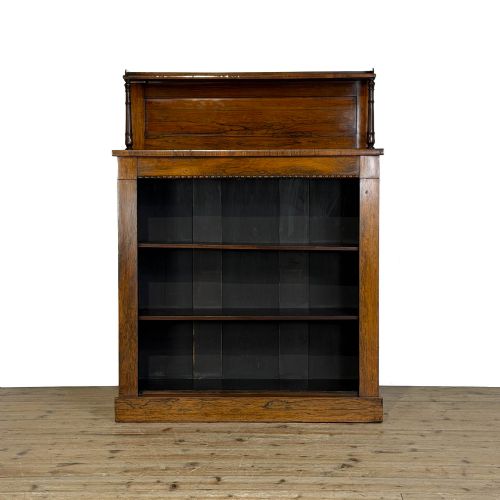
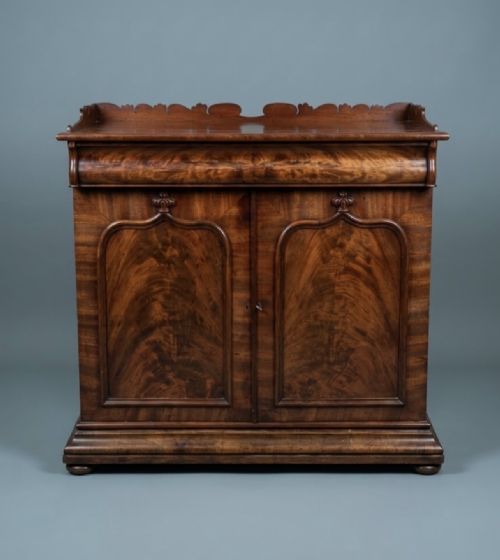
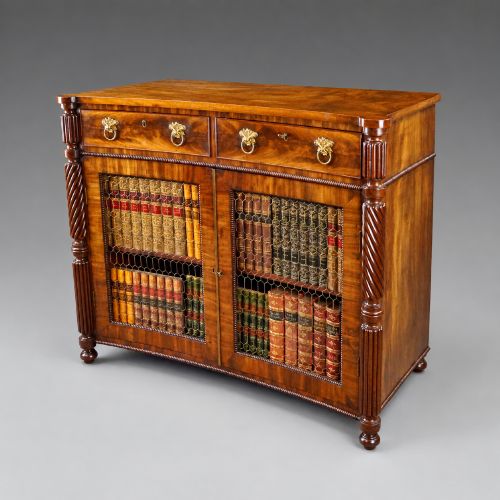
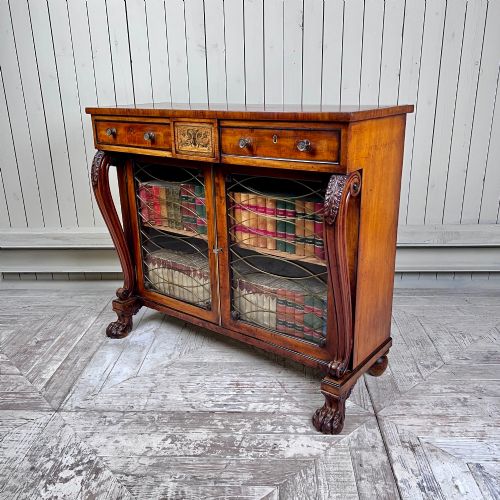
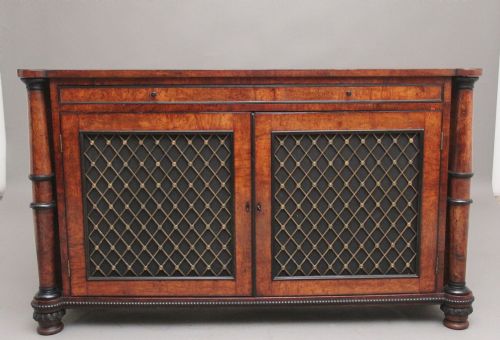
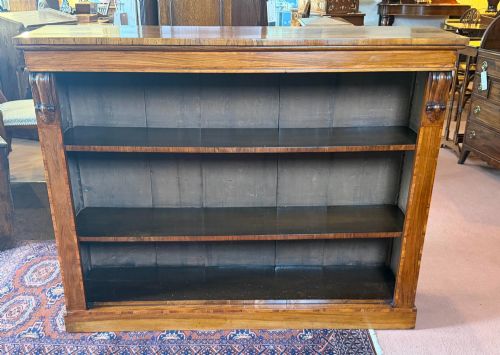
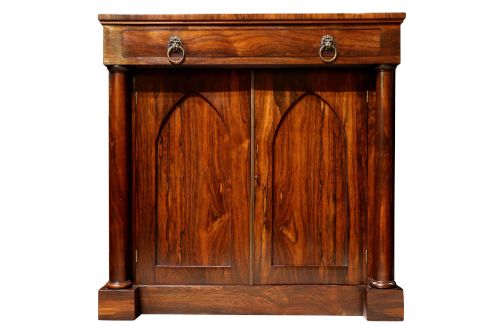
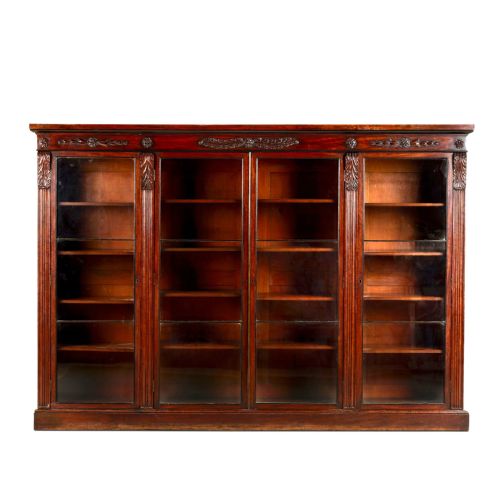
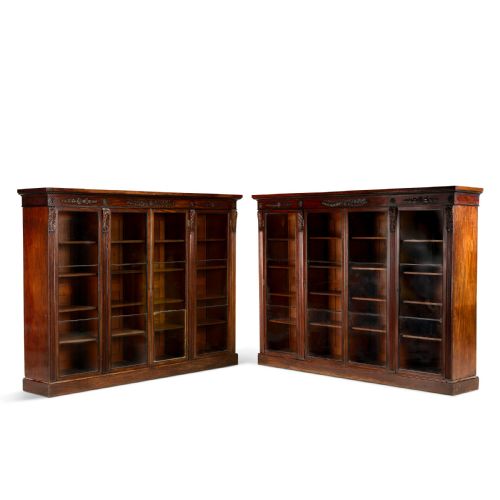
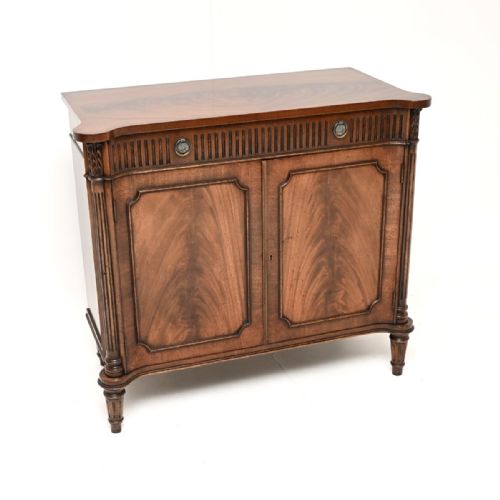
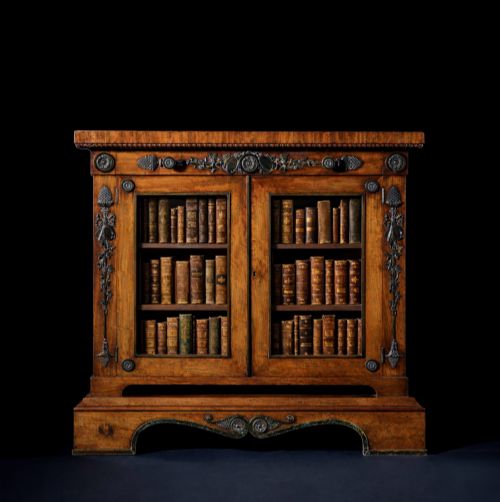
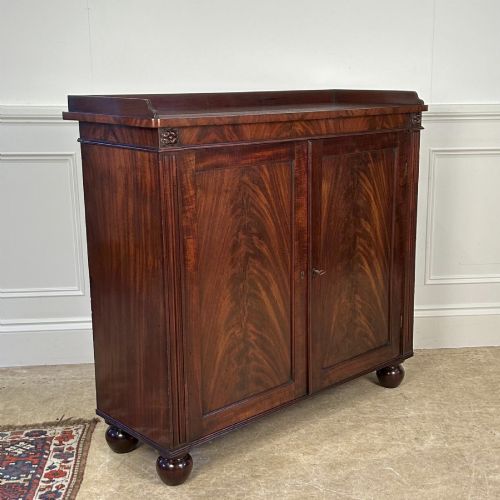
Regency Low Cabinet
A regency low cabinet brings architectural proportion and dense timber grain into a room, offering low-level storage with display space on top.
Regency Low Cabinet
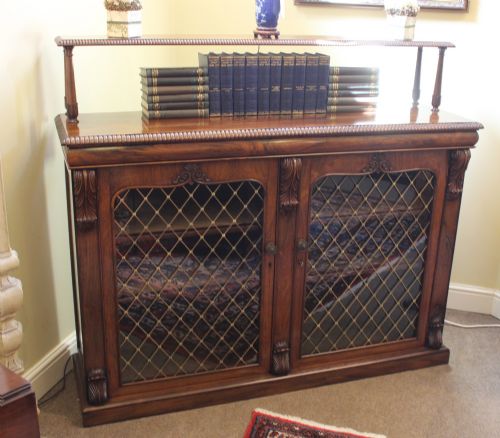
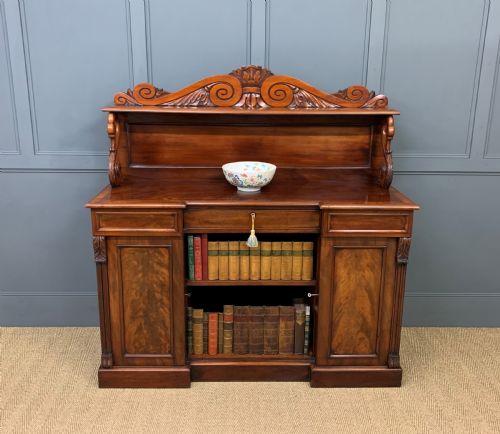
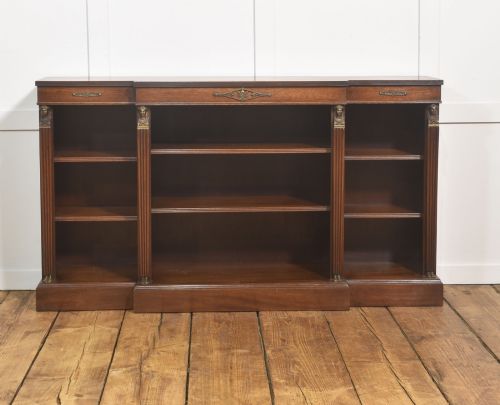
When you search for a regency low cabinet, you encounter low-slung storage furniture originating from the early nineteenth century and later revival periods. These pieces include dwarf bookcases, side cabinets, chiffoniers, and low cupboards designed to sit beneath dado height or window lines.
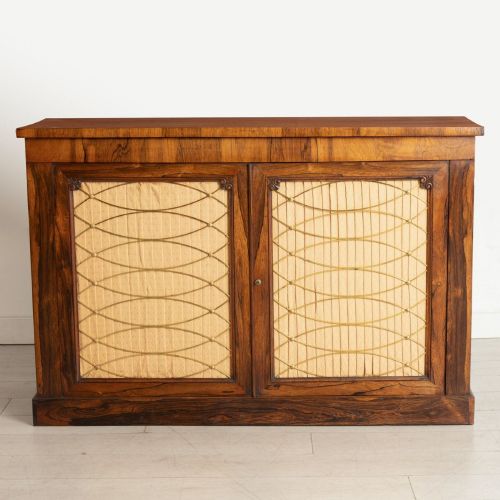
The specimens seen here span the Regency, George III, George IV, William IV, and Victorian periods, alongside later nineteenth and early twentieth century interpretations. Mahogany and rosewood dominate the forms, frequently accompanied by brass grilles, marble tops, and adjustable shelving.
Originating primarily as English country house or parlour furniture, these low cabinets combine utilitarian storage with refined surface display. You meet variations with panelled doors, open shelves, or fabric-backed glass fronts that reflect the domestic requirements of the period.
Materials and construction
Cabinet makers utilised dense tropical hardwoods, notably mahogany and rosewood, often laid as veneers over secondary pine or oak carcases to achieve rich surface figures. Flame mahogany and pollard oak introduce dramatic grain patterns across drawer fronts and door panels.
Decorative embellishments rely on contrasting details such as ebony stringing, brass inlay, ormolu mounts, and bronze furnishings. Grille doors incorporate fine brass wire mesh behind glazed frames, while upper surfaces occasionally integrate inset marble slabs.
Early nineteenth-century dining rooms occasionally required dwarf linen press cupboards to hide away extra napkins between courses.
Distinctions in execution
The caliber of a piece rests upon the selection of timber veneers and the precision of the cabinet work, from tight dovetail joints in the drawers to the crispness of brass inlay. Finer examples display continuous grain matching across multiple doors and drawers.
Proportion and structural restraint separate workshop pieces from standard production. Cabinetry associated with documented makers displays considered scale, solid brass fittings, and secondary timbers of superior weight.
Gillows
The Regency Low Cabinet Glossary
- Chiffonier
- A low sideboard or cabinet, typically featuring enclosed storage below and shelving or a gallery above.
- Dwarf bookcase
- A low open bookshelf designed to fit beneath windows or against parlour walls without dominating the room height.
- Ormolu
- Gilt-bronze mounts applied to furniture for decorative contrast against dark woods such as rosewood and mahogany.
- Goncalo Alves
- A dense exotic hardwood with distinctive dark brown and pale striping, utilised in high-status Regency furniture.
- Breakfront
- A piece of furniture where the central section projects forward from the flanking wings.
Regency Low Cabinet: Frequently Asked Questions
Where were these cabinets placed in a house?
These cabinets typically stood in morning rooms, libraries, or parlours where low furniture kept sightlines open through the room.
Their reduced height allowed upper walls to remain free for paintings or mirrors while providing immediate surface access.
How do I distinguish Regency from Victorian versions?
Regency pieces generally exhibit crisp architectural lines, restrained brass inlay, and lighter proportions reflecting classical influences.
Victorian interpretations tend towards heavier timber sections, darker finishes, and more robust carving details.
What is the function of brass grille doors?
Brass grilles allowed air to circulate inside bookcases and cabinets protecting fragile paper or organic materials from damp.
They also provided visibility of book spines while offering a decorative metallic contrast to the dark timber.
Are the shelves adjustable?
Many of these bookcases and side cabinets incorporate adjustable shelving supported on wooden or metal ratchets.
This adaptability allowed owners to alter shelf spacing for varying sizes of bound volumes or collected objects.