


Regency Library Furniture
Regency library furniture brings together mahogany bookcases, rosewood tables, and caned armchairs designed for nineteenth-century reading spaces.
Regency Library Furniture
Regency library furniture encompasses the desks, bookcases, tables, and seating built during the early nineteenth century for study and reading rooms. These forms serve practical domestic needs through specialised designs like adjustable bookshelves, writing tables, and folio stands.
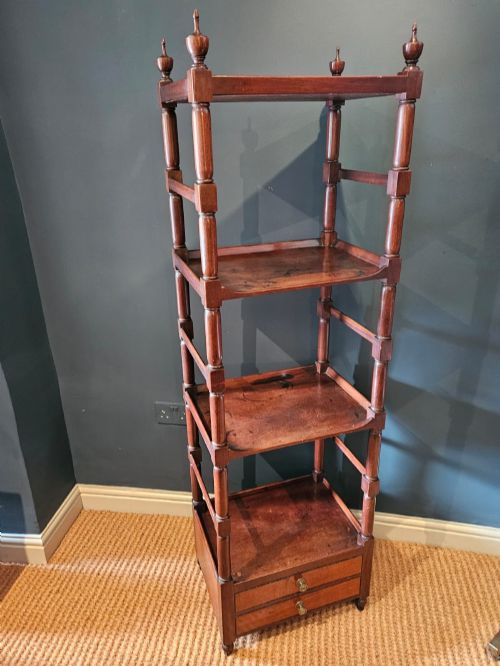
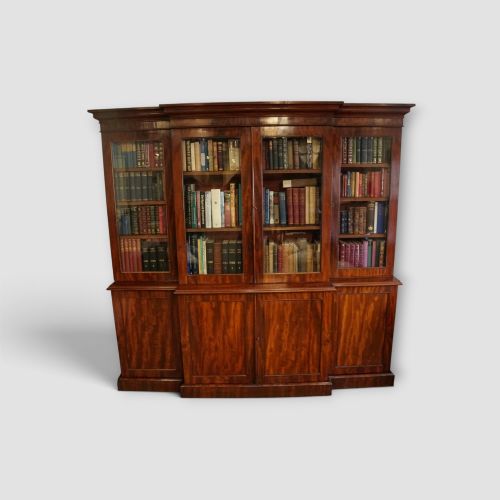
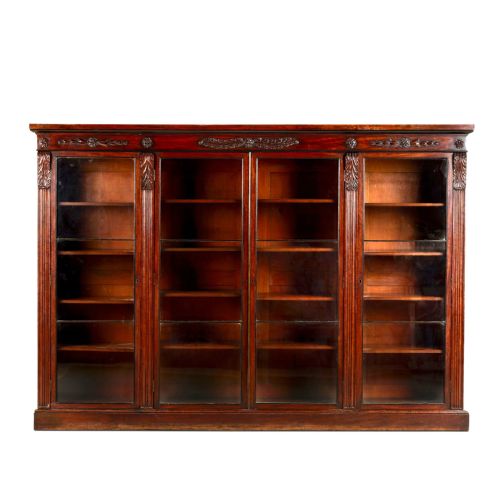
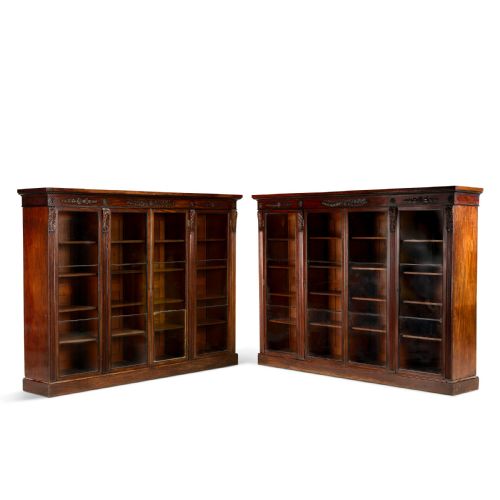
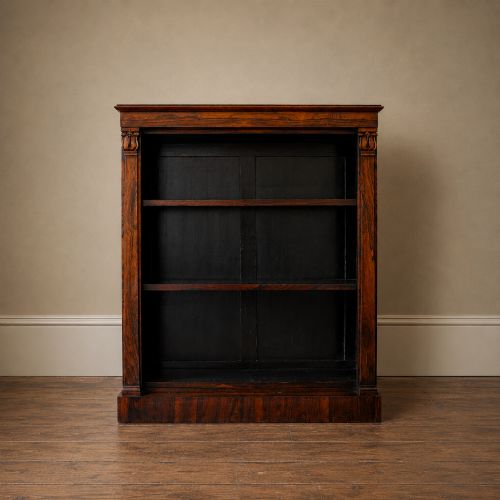
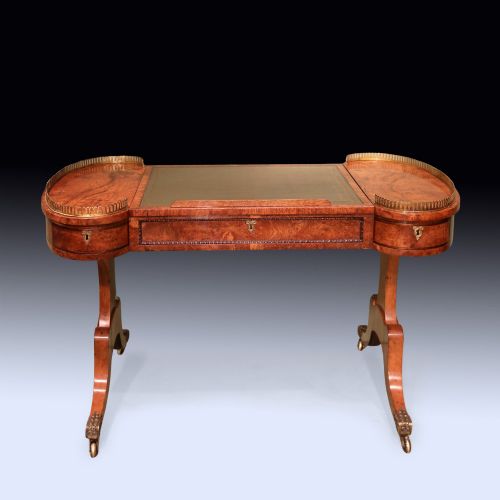
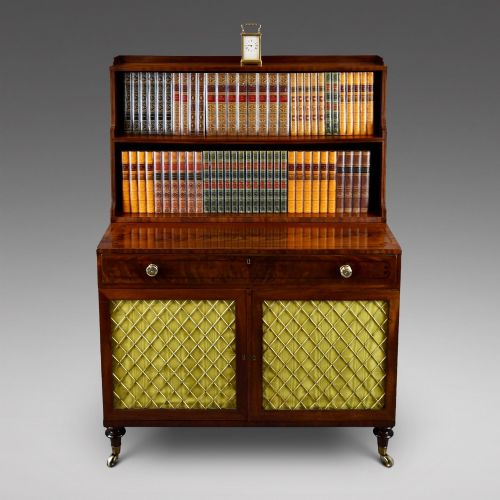
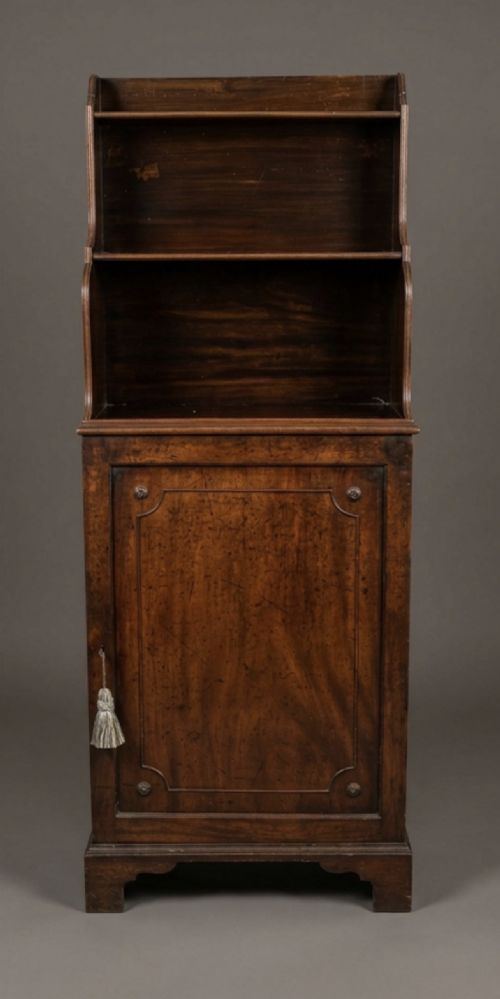
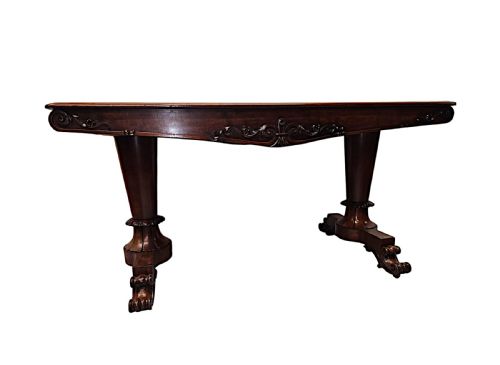
Mahogany and rosewood appear most frequently among the surviving pieces, often shaped into breakfront bookcases, open shelving units, and drum tables. The selection also includes writing tables, armchairs, and what-not bookcases spanning the Regency, George IV, and William IV periods.
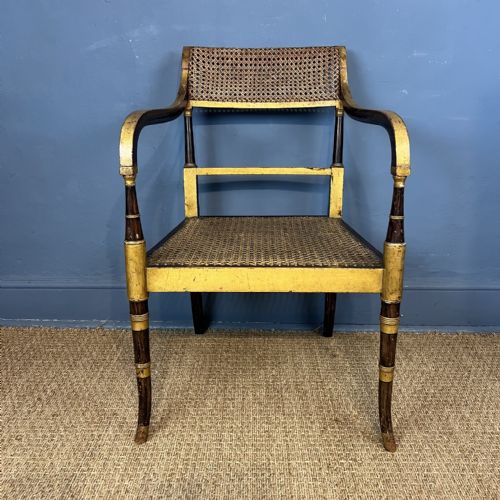
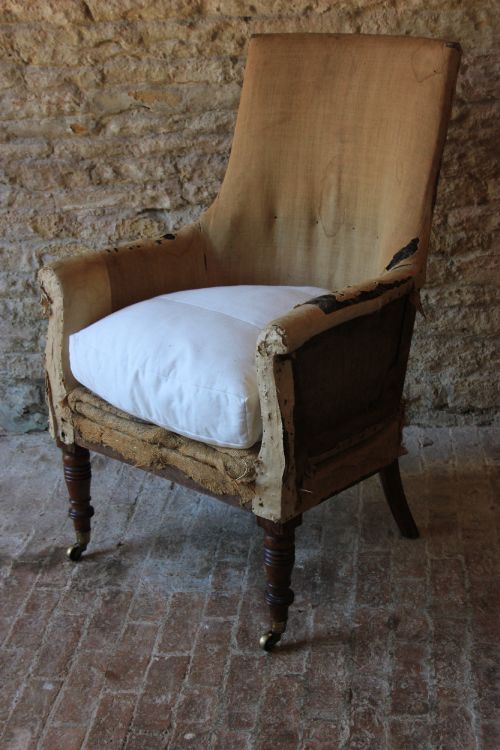
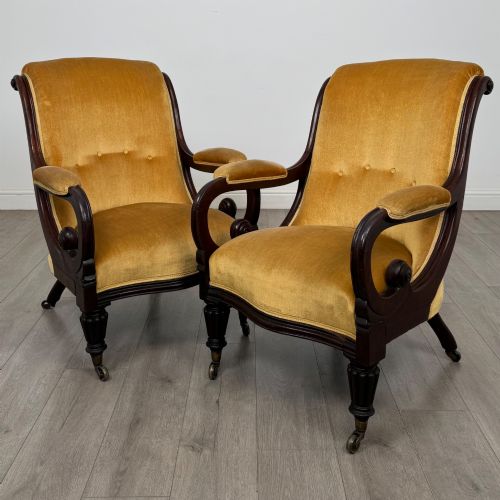
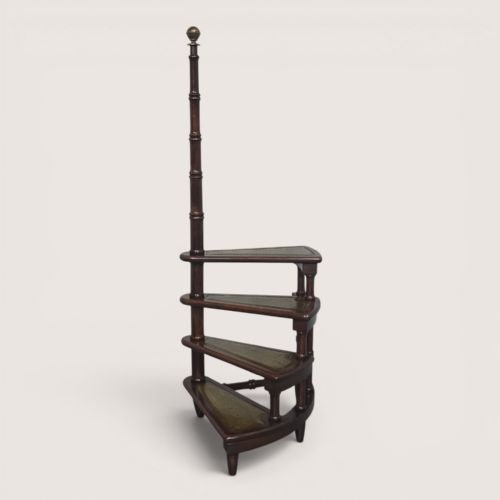
Chairs designed for these rooms frequently take the form of bergères with caned panels or upholstered seats tailored for long hours of reading. Smaller accessory pieces such as library steps, bedsteps, and reading tables complete the typical contents of a period room.
Materials and construction
Cabinet makers relied heavily on dense hardwoods like mahogany and rosewood, occasionally utilising burr oak, pollard oak, or goncalo alves for decorative grain patterns. Secondary timbers provided structural support within large breakfront bookcases and complex writing tables.
Brass inlay, parcel gilding, and ebonised finishes embellished select surfaces, while cane supplied flexible seating panels for bergère armchairs. Leather inserts frequently lined the tops of writing tables and desks to create smooth surfaces for ink and paper.
Joinery methods prioritized durability in heavy pieces, incorporating adjustable shelf mechanisms and stable pedestal bases for drum and library tables.
Object types seen include bookcases, armchairs, writing tables, sofa tables, whatnots, folio stands, and library steps.
Judging quality in the pieces
Quality reveals itself in the selection of timber veneers and the precision of brass inlay work across bookcase cornices and table borders. Superior examples exhibit matched grain patterns and careful attention to secondary woods hidden from view.
The sophistication of turnings on table pedestals and the carving on chair frames distinguish standard workshop production from finer pieces. Structural integrity in mechanical elements, such as adjustable book shelves and reading stands, separates robust utility from more delicate execution.
Williams and Gibton·Marsh and Tatham·Gillows
The Regency Library Furniture Glossary
- Bergere
- An enclosed upholstered armchair with wooden frames, frequently featuring cane sides and a low seat designed for comfort.
- Breakfront
- A cabinet or bookcase whose central section projects forward from the recessed flanking wings.
- Drum table
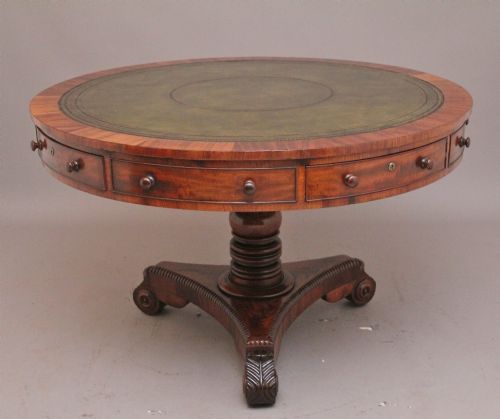
- A round library table supported by a central pillar standing on a plinth base, often fitted with drawers around the perimeter.
- Whatnot
- An open shelving unit with multiple tiers supported by slender uprights, used for displaying books or objects.
- Folio stand
- A hinged stand designed specifically for holding large volumes of prints, maps, or unbound papers.
Regency Library Furniture: Frequently Asked Questions
What defines Regency library furniture?
These items comprise specialised wooden furnishings made during the early nineteenth century for reading and writing rooms. The category spans large breakfront bookcases, writing tables, drum tables, and designated seating.
Craftsmanship focuses on utility combined with classical design motifs, utilising dense hardwoods such as mahogany and rosewood.
How were library tables used?
Library tables provided stable surfaces in private studies for writing, correspondence, and examining large volumes or maps. Many incorporate drawers around the frieze to store papers, inkwells, and writing implements.
Pedestal designs allowed scholars to sit comfortably with adequate knee clearance beneath the central top.
What is a breakfront bookcase?
A breakfront bookcase is a large cabinet featuring a central section that extends forward past the recessed side compartments. This configuration provided substantial storage for extensive book collections.
Makers constructed these from mahogany or rosewood, frequently incorporating adjustable shelving behind glass or wooden doors.