
Georgian Open Shelving
Georgian open shelving comprises timber bookcases, whatnots and wall shelves designed to hold books and display objects without enclosing doors.
Georgian Open Shelving
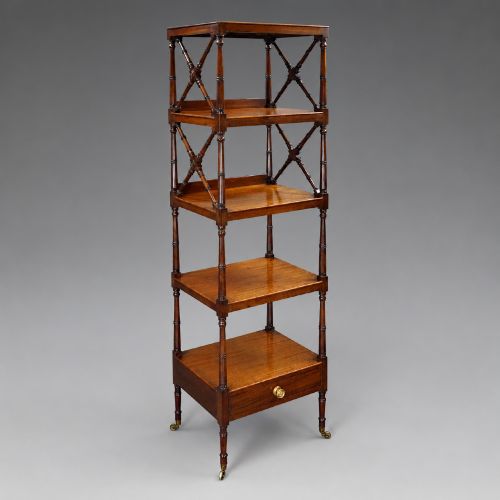
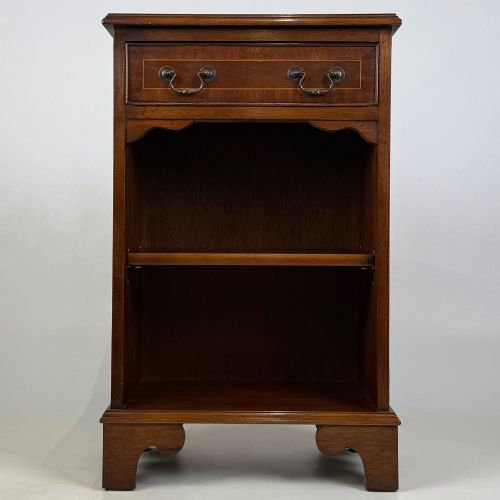
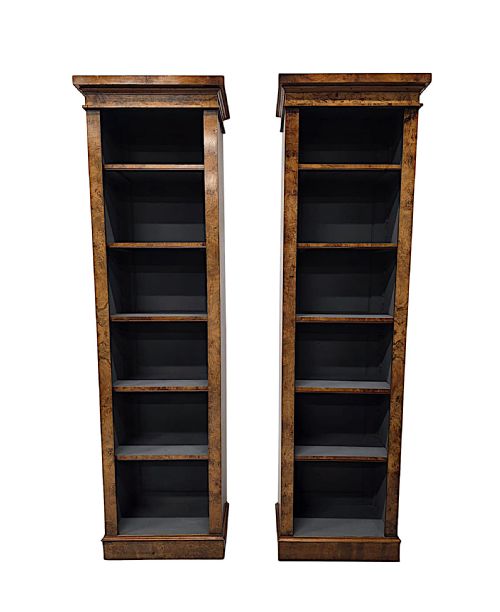
Georgian open shelving includes tall library bookcases, dwarf bookcases, multi-tiered whatnots, and wall-mounted shelves designed for domestic use. The pieces found here span the 18th century, the Regency period, and later revivals, reflecting the forms developed during the Georgian era.
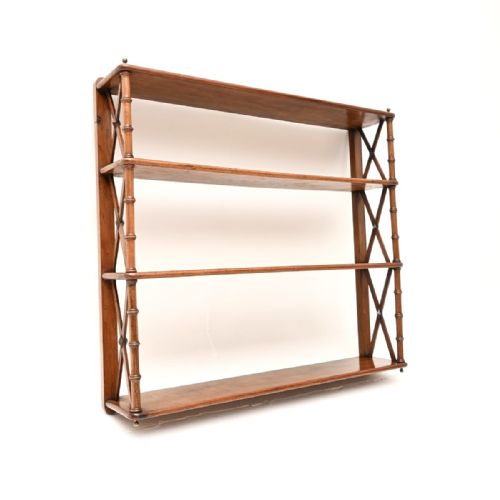
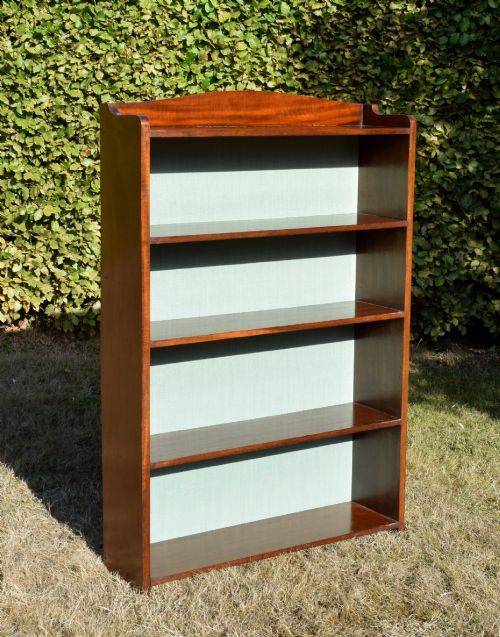
Buyers will encounter freestanding mahogany bookcases alongside satinwood, walnut, and oak examples, often featuring adjustable shelves or graduated tiers. Wall shelves and hanging plate racks also appear among the objects, offering storage without floor space.
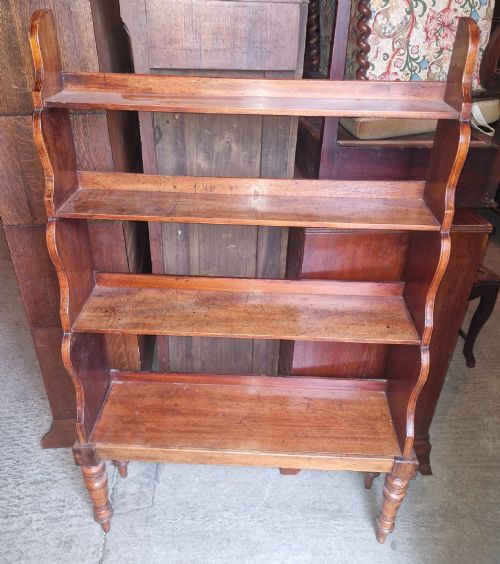
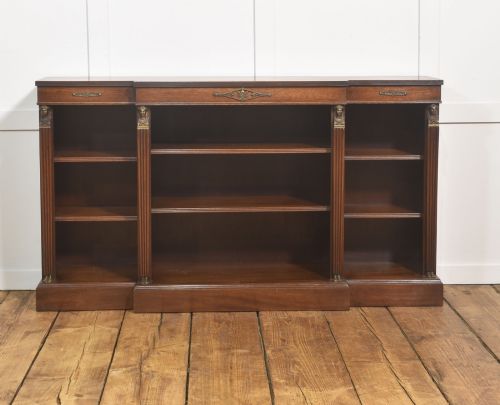
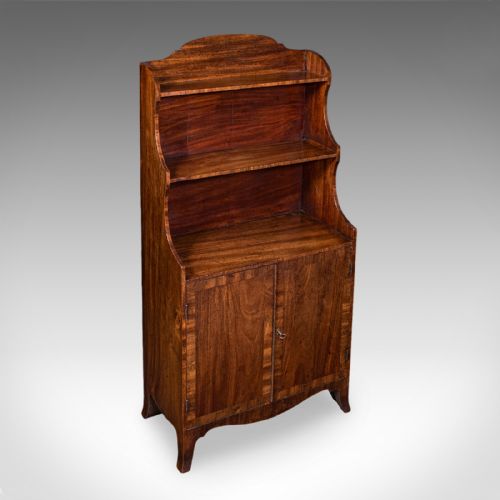
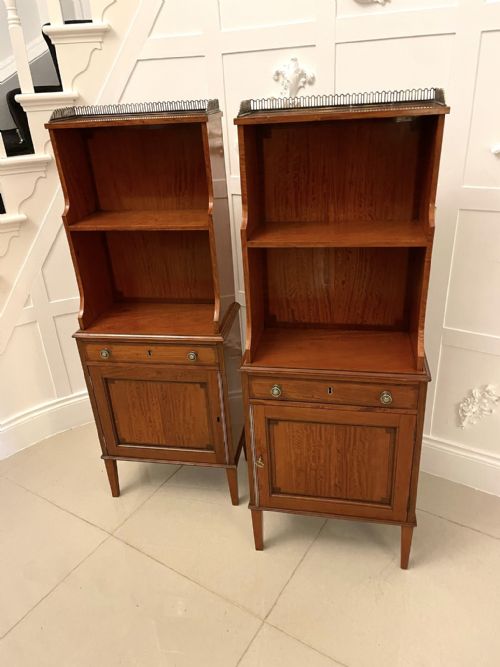
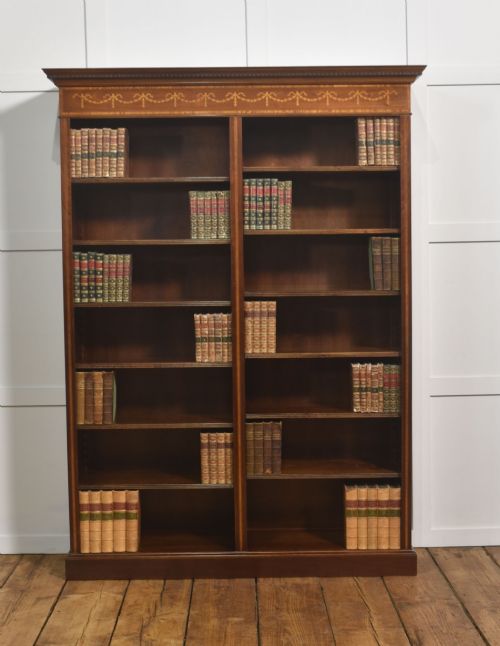
Makers and designers of these periods utilised timber framing to create sturdy shelving units, from narrow waterfall designs to broad breakfront library bookcases. The forms serve to organise books and display ceramics or decorative items in domestic interiors.
What varies in quality
The choice of timber grain dictates much of the visual quality, with figured flame mahogany, burr walnut, and figured satinwood commanding attention for their natural patterning. Lesser pieces utilise plain native hardwoods without decorative veneers or complex grain selection.
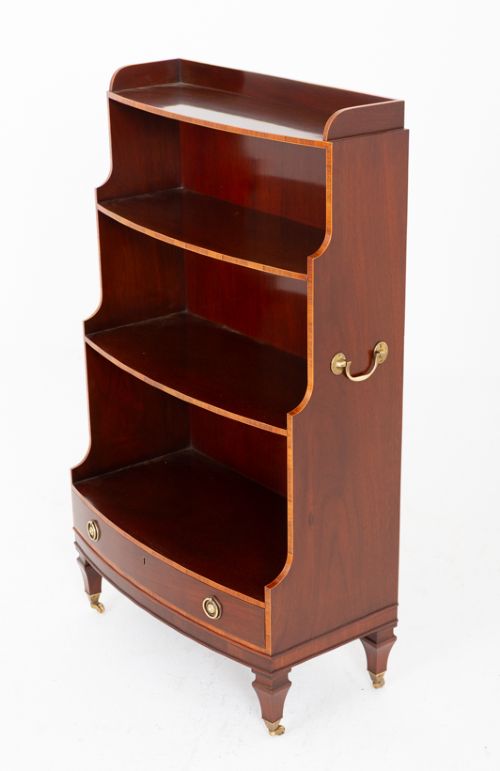
Construction precision separates standard utility items from finer workshop output, evident in the crispness of mouldings, the integration of inlaid banding, and the careful proportioning of graduated tiers in waterfall bookcases.
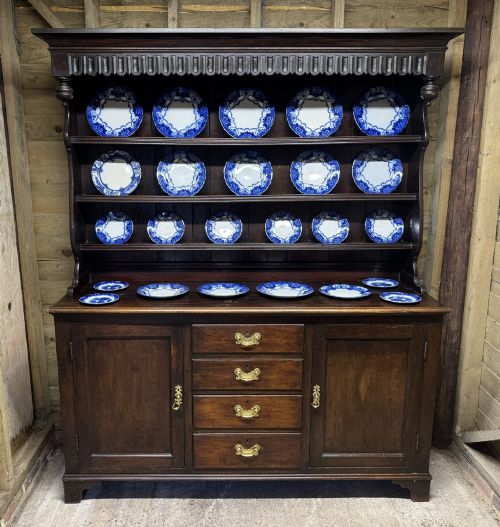
Form variations include breakfront library bookcases, wall-mounted shelves, Welsh dressers, and multi-tiered whatnots.
Gillows·Waring and Gillows
The Georgian Open Shelving Glossary
- Waterfall bookcase
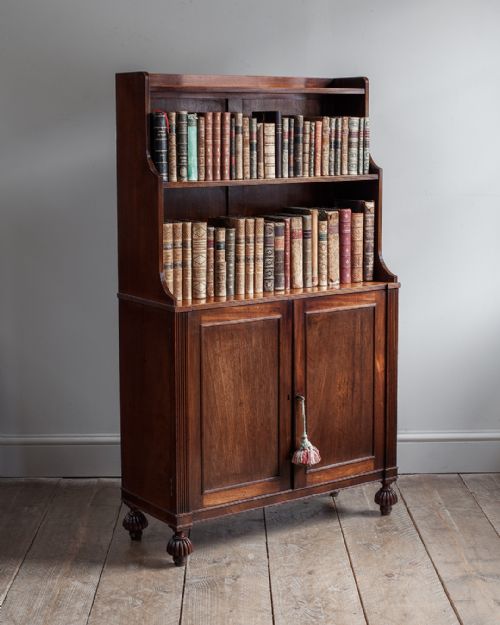
- A shelving unit with graduated tiers decreasing in depth from bottom to top, often featuring shaped side panels. This form became popular during the Regency period and subsequent revivals.
- Whatnot
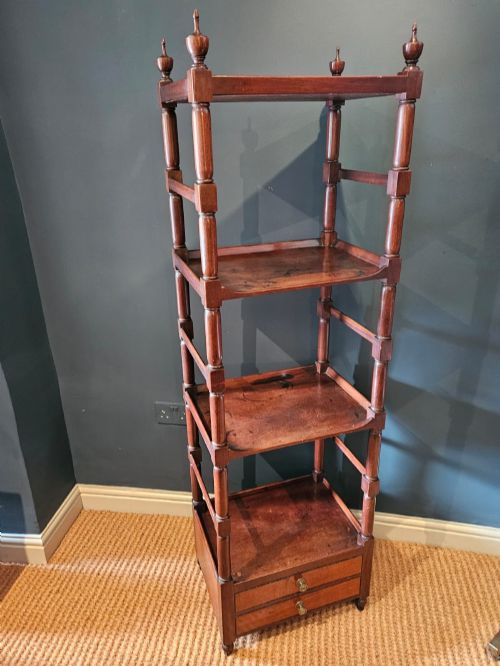
- A piece of furniture consisting of several open shelves for holding books or ornaments, standing on small legs or columns. They appear in multi-tiered formats from the Regency era onwards.
- Breakfront
- A cabinet or bookcase whose central section projects forward from the flanking wings. This architectural arrangement creates depth and visual balance in large library bookcases.
- Dwarf bookcase
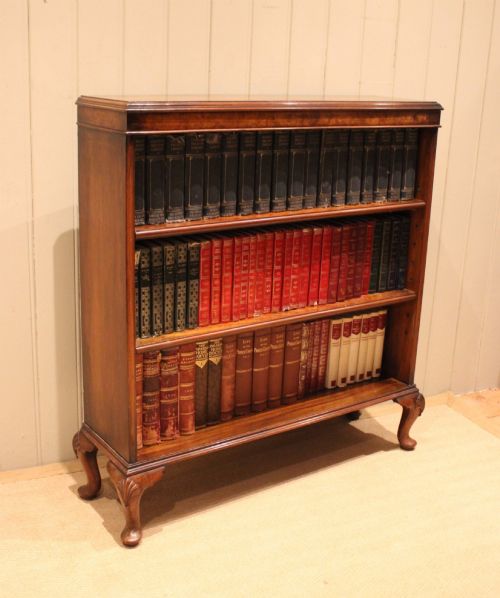
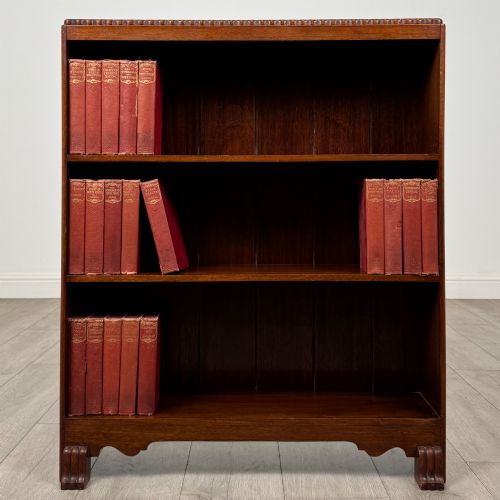
- A low open bookshelf designed to sit beneath dado height or window sills. These compact pieces offer accessible shelving in smaller rooms.
- Satinwood
- A durable hardwood yielding a smooth, lustrous yellow-brown surface used extensively for veneers and inlay work. It appears on Sheraton Revival and late Georgian pieces.
Georgian Open Shelving: Frequently Asked Questions
How do I use a whatnot?
A whatnot is a multi-tiered open stand designed for holding books, papers, or decorative objects within living spaces. Its open construction allows items to be viewed from multiple angles.
Historically placed in parlours or drawing rooms, modern interiors use them as corner display units or bedside shelving.
Are shelves usually adjustable?
Many bookcases from this era feature adjustable shelves supported by wooden pegs, brass rack strips, or movable side notches. This allowed owners to alter shelf heights for varying book sizes.
Fixed shelving is also common, particularly in smaller wall-mounted units and specific whatnots.
What woods were used?
Cabinet makers relied primarily on mahogany, walnut, and oak as the foundational timbers for framing and shelving. Exotic woods like satinwood and rosewood were applied as veneers or decorativebanding.
Secondary timbers such as pine or deal often appear on the unexposed interior backs and drawer linings.