

Regency Leather Top Desk
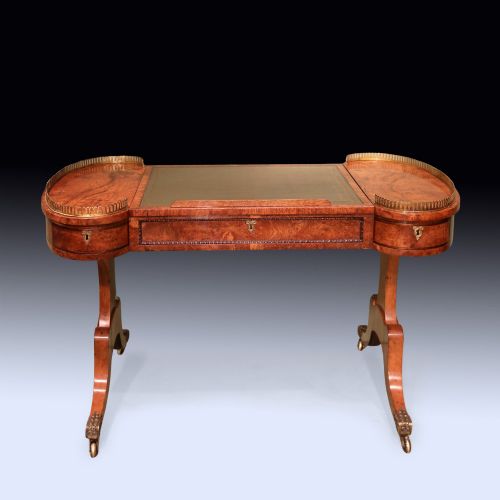
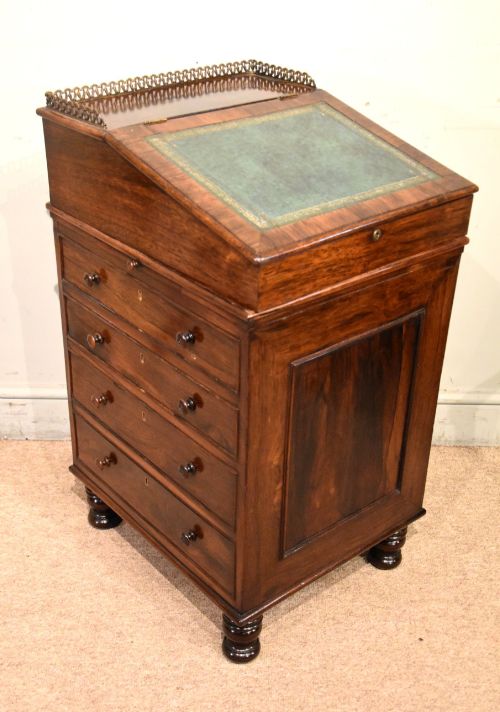
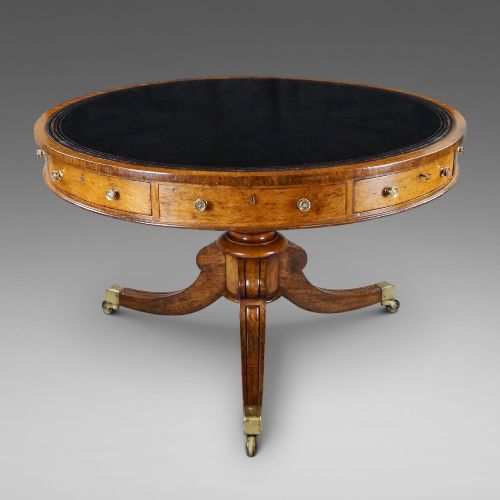
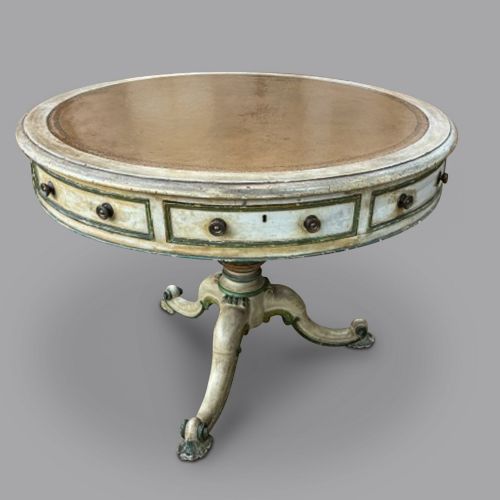
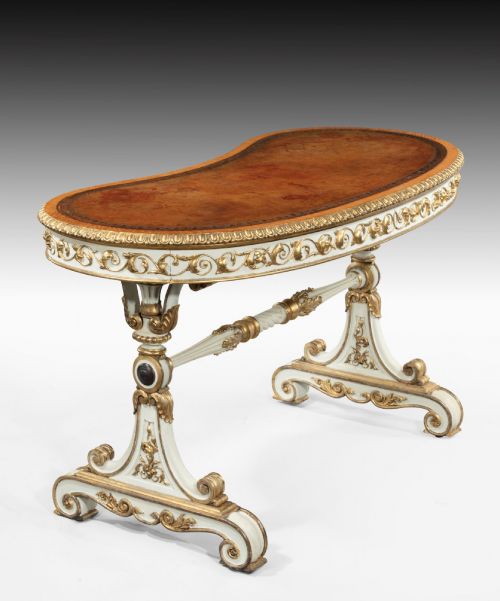
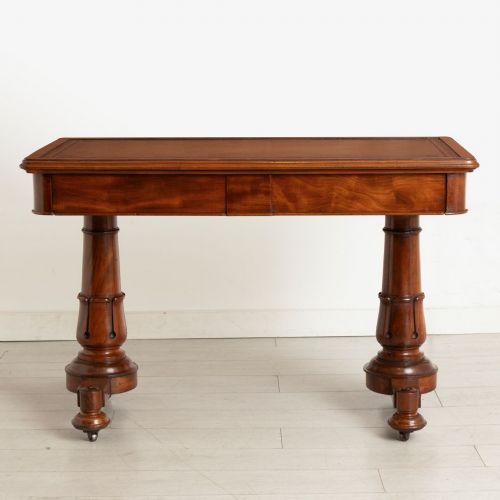
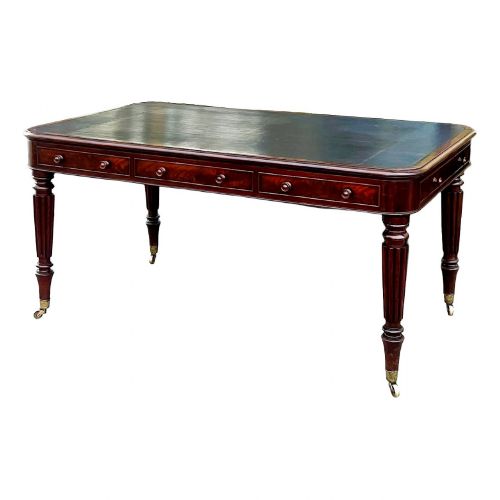
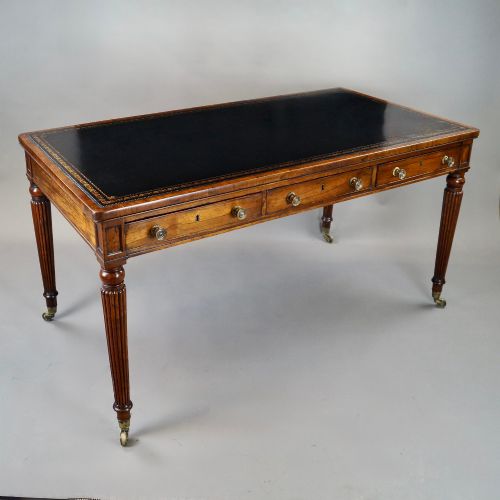
These regency leather top desk pieces offer superb timber surfaces and fitted leather writing areas for the study or library.
Regency Leather Top Desk
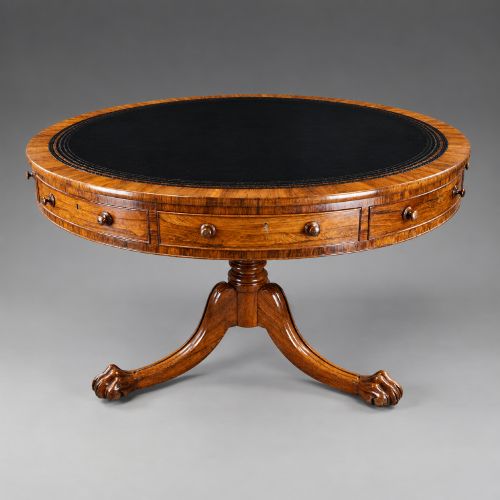
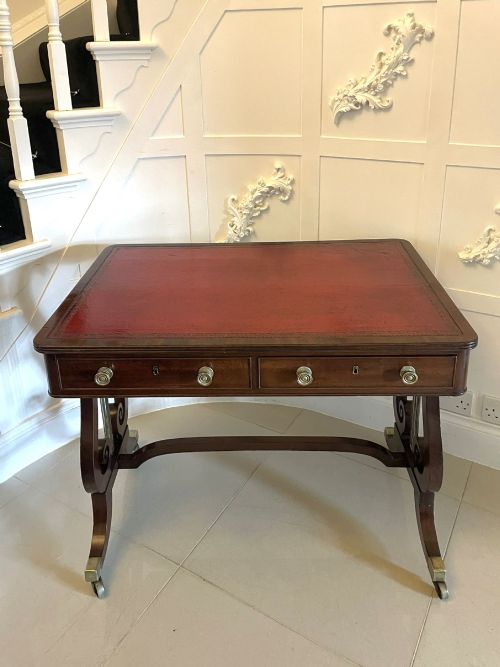
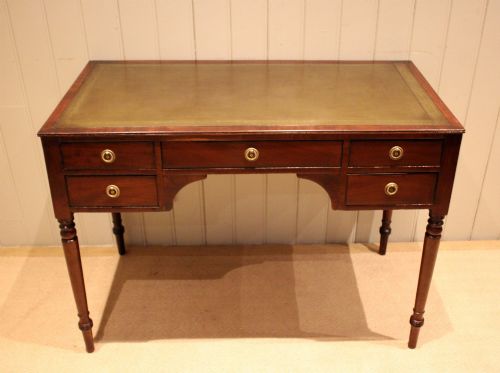
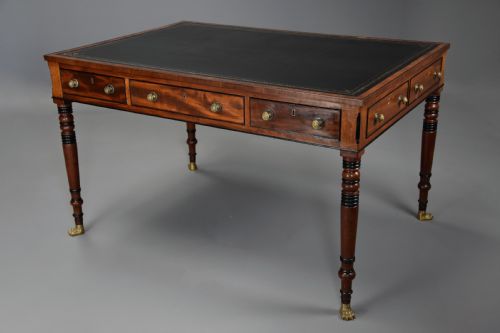
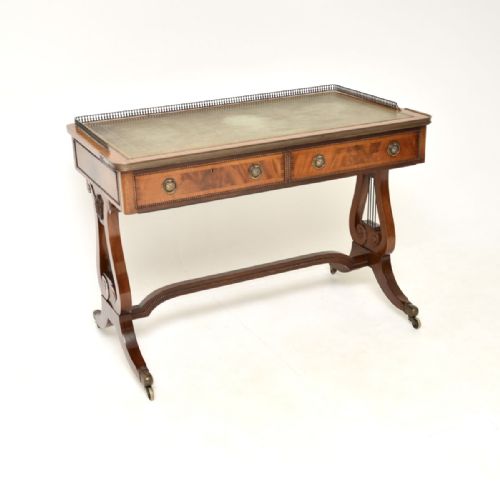
A regency leather top desk combines timber construction with an inset leather writing surface, taking forms such as writing tables, library tables, and freestanding drum tables. Buyers search this phrase to find classic study furniture originating predominantly from the nineteenth century, including Georgian, Regency, and William IV periods.
The version most commonly met on this page is the mahogany writing table or freestanding library table dating from the early nineteenth century. Rosewood, oak, and burr oak examples also appear alongside later revival pieces made in the twentieth century.
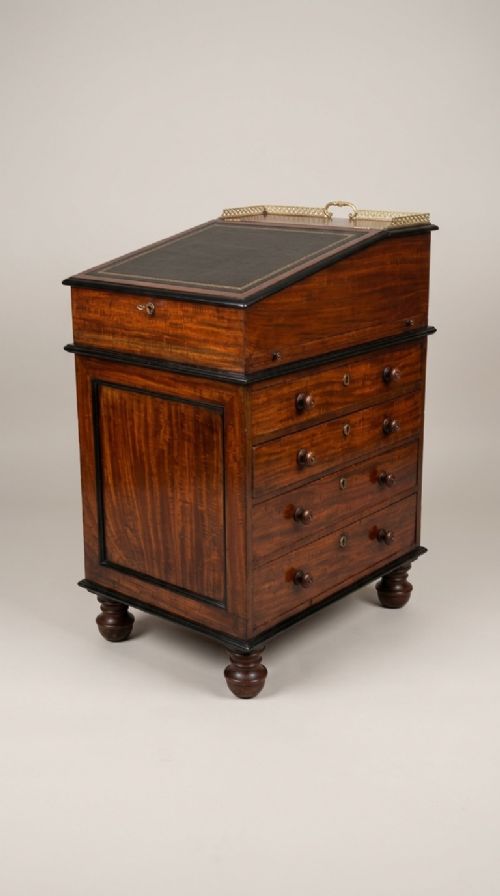
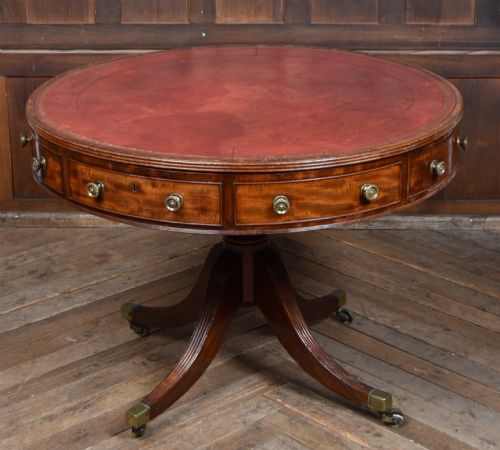
Object variations range from small Davenport desks and console tables to large partners desks and rotating drum tables fitted with drawers. Many examples utilise brass mounts, inlay, and turned feet with castors to complete the period form.
How They Were Made
Cabinet makers utilised dense primary timbers such as mahogany, rosewood, and oak for the structural frames, often selecting figured veneers and satinwood for decorative contrast. Leather inserts were glued to the wooden tops and finished with blind and gilt tooling around the edges.
Construction techniques involved dovetailed drawer boxes, turned legs, pedestal bases, and brass hardware including castors and mounts. Workshops such as Gillows integrated writing slides, hinged lids, and rotating mechanisms into the timber framework.
Several writing tables started life as square pianos before being converted into functional desks with leather tops.
What Varies in Quality
Quality separates through the selection of timber grain, the crispness of carved details like giltwood or foliage, and the harmony of the proportions. Faded patination on mahogany and the careful matching of rosewood veneers indicate superior cabinet work.
The integration of secondary woods, the finish of internal drawer linings, and the originality of brass mounts or leather writing surfaces define the grade of the piece. Master workshops achieved cleaner joints and more refined turning than standard regional makers.
James Mein of Kelso·Gillows of Lancaster
The Regency Leather Top Desk Glossary
- Drum Table
- A circular library table with a deep top containing alternating drawers and dummy drawers, usually supported on a central pedestal with pillar legs.
- Davenport Desk
- A compact pedestal desk featuring a sloping, leather-lined writing lid and a set of drawers opening to the side.
- Partners Desk
- A large double-sided desk designed for two people to work opposite each other, featuring drawers on both faces.
- Patina
- The surface sheen and colour acquired by wood and leather through age, handling, and light exposure over decades.
- Ormolu
- Gilt-bronze mounts applied to furniture for decorative enrichment, frequently seen on high-status Regency pieces.
Regency Leather Top Desk: Frequently Asked Questions
How do I identify a genuine period desk?
Examine the timber construction methods, secondary woods inside the drawers, and the wear patterns on the leather and feet. Period pieces show hand-cut dovetails and natural ageing rather than modern adhesives or uniform machine tooling.
Compare the proportions and decorative details like brass mounts or cockbeading against known examples from the Regency and William IV eras. Regional variations and maker attributions often support the dating of the piece.
What is a partners desk used for?
A partners desk provides workspace on both sides with matching banks of drawers and cupboards beneath the leather top. Originally designed for business partners or banking colleagues to share a single piece of furniture in a shared office.
These large desks work best freestanding in the centre of a spacious room rather than pushed against a wall. They offer substantial storage and grand proportions suitable for large libraries.
How do I care for the leather top?
Keep the leather surface away from direct sunlight and heat sources to prevent the material from drying out and cracking. Dust regularly with a dry cloth and apply specialist leather balms sparingly to maintain suppleness.
Avoid using harsh chemical cleaning products or excess water on the gilt tooling around the edges. Professional restoration is recommended if the leather requires replacement or deep repair.
What is the difference between a writing table and a library table?
Writing tables are typically lighter, freestanding tables designed primarily for correspondence, often featuring a smaller profile with fewer drawers. Library tables are generally larger, heavier pieces built to hold heavy volumes and research materials.
Library tables frequently incorporate spacious drawers or plan drawers within the frieze to accommodate maps and large documents. Both types utilise inset leather tops to provide a smooth writing surface.