
Mahogany Bow Front Table
A mahogany bow front table brings refined curvature and rich timber grain to a room, offering practical surface space with distinct period character.
Mahogany Bow Front Table
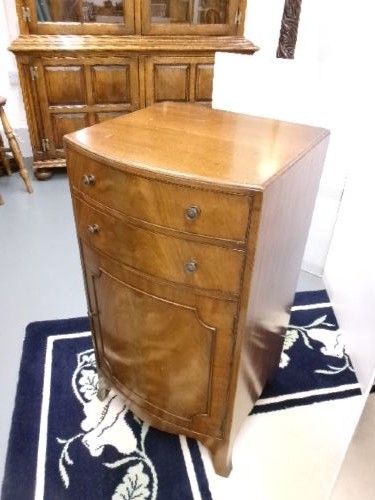
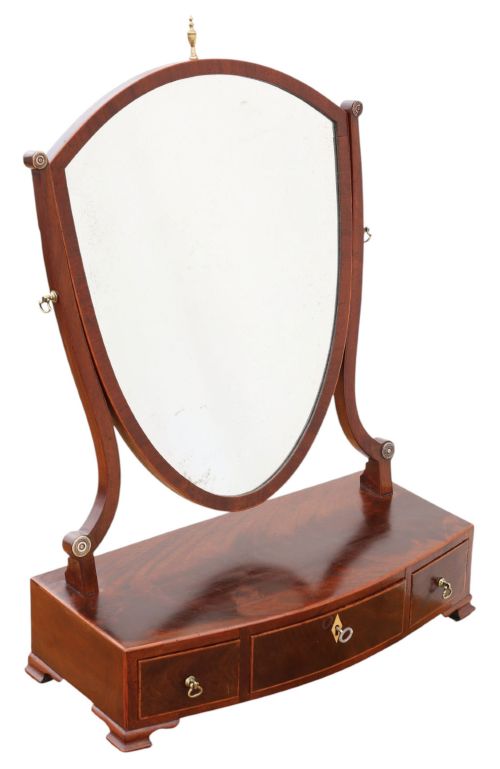
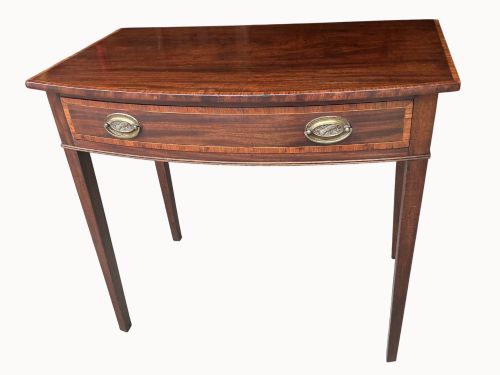
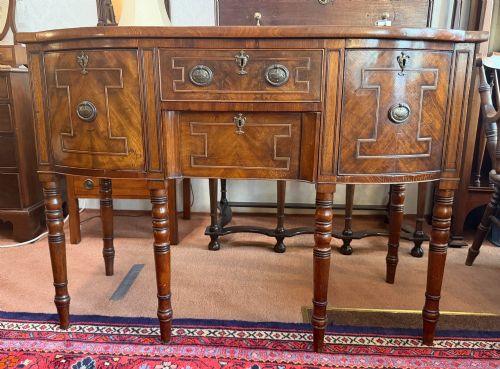
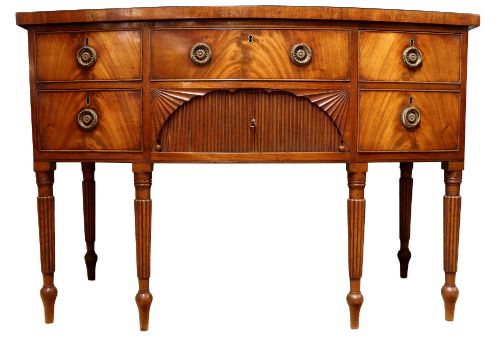
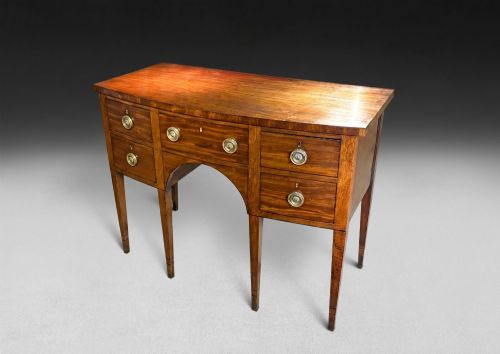
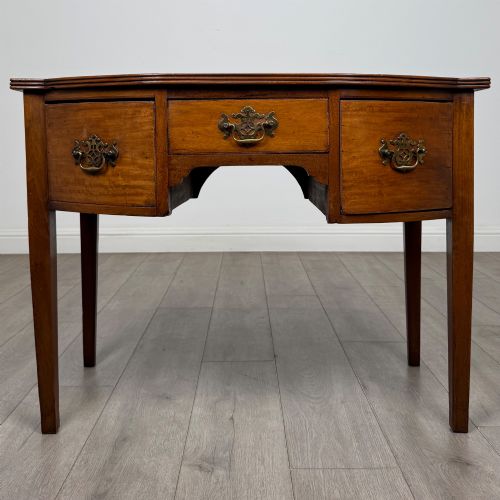
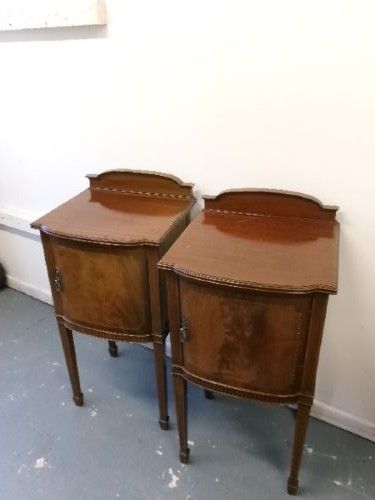
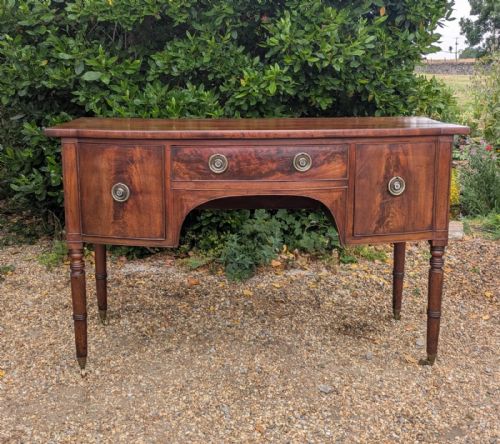
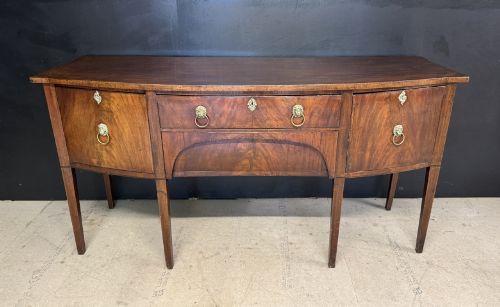
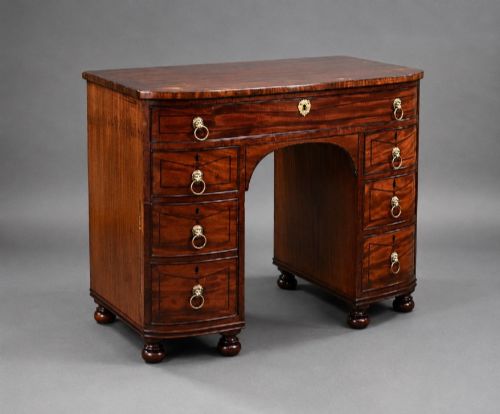
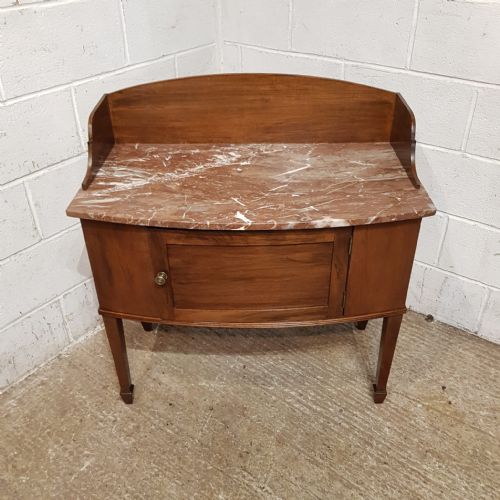
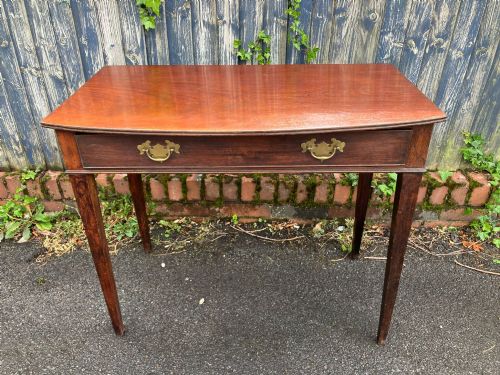
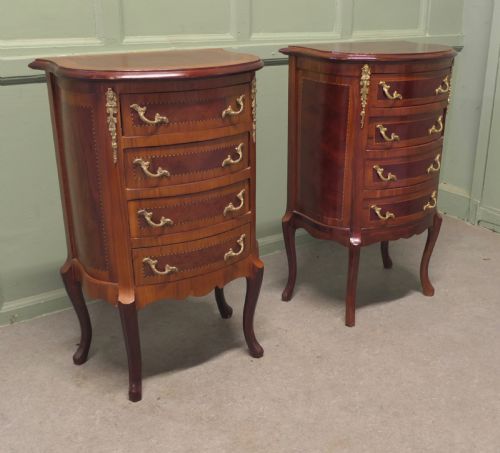
A mahogany bow front table encompasses a variety of antique forms designed to follow a gracefully curved outward front line. Side tables and serving pieces dominate the selection, alongside dressing tables, washstands, and occasional writing desks originating from the Georgian and Regency periods.
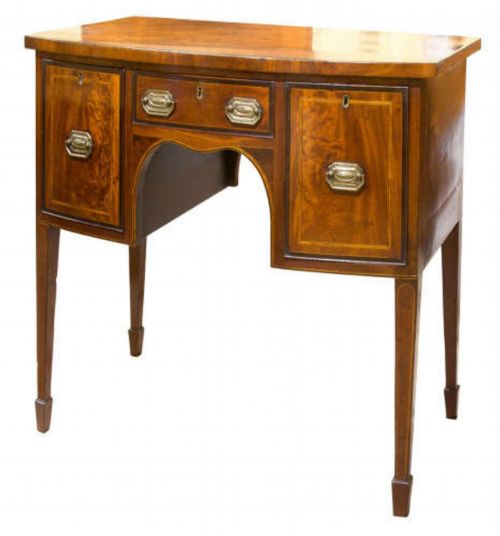
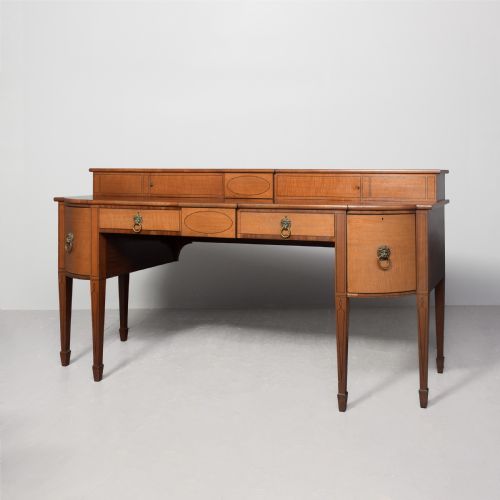
Craftsmen shaped these practical furniture pieces in various scales, from compact single-drawer examples intended for small dressing rooms to substantial sideboards and serving tables made for dining rooms. The curved outline softens the appearance of solid timber furniture while maintaining a disciplined geometric form.
The pieces appearing most frequently bridge the eighteenth and nineteenth centuries, carrying the hallmarks of classic cabinet making. Earlier Georgian examples display restrained proportions and careful timber selection, whereas later nineteenth and early twentieth-century interpretations echo these traditional lines through revival styles.
What varies in quality
The standard of a mahogany bow front table is largely determined by the quality of the timber selection and the precision of the curved drawer construction. Superior examples exhibit carefully matched grain patterns across the sweeping front and tight, hand-cut dovetails on the drawer carcasses.
Proportion and decorative restraint set finer pieces apart from standard utility furniture. Master cabinet makers achieved balance through subtle string inlay, well-proportioned tapered or reeded legs, and original brass fittings that sit harmoniously within the overall design.
Listings feature eighteenth and nineteenth-century examples alongside early twentieth-century revival pieces, demonstrating a continuous appreciation for curved mahogany forms.
George Hepplewhite·Maples
The Mahogany Bow Front Table Glossary
- Bow front
- A convex curved furniture front that swells outwards from the corners. This shape softens the profile of case pieces and side tables while increasing interior depth.
- Flame mahogany
- A highly figured veneer cut from the fork of the mahogany tree where branches join the trunk. It creates a distinctive, feather-like flame pattern across the wood surface.
- Crossbanding
- A narrow strip of veneer applied perpendicularly to the grain of the main surface. It forms a decorative border around table tops and drawer fronts.
- Dovetail
- A traditional interlocking joint used to construct drawer corners. Hand-cut dovetails indicate older, higher quality cabinet work.
- Stringing
- A thin, inlaid line of contrasting light-coloured wood used to outline panels and drawer edges. It adds subtle linear definition to dark mahogany furniture.
Mahogany Bow Front Table: Frequently Asked Questions
What rooms suit a mahogany bow front table?
These versatile tables fit well in hallways, dining rooms, and bedrooms depending on their specific form. Their curved profile allows them to project slightly into a space without sharp corners.
Smaller side tables work effectively as lamp tables or writing desks, while larger sideboard versions anchor a dining room wall.
How do I date a bow front table?
Dating relies on examining construction methods, timber types, and overall design proportions. Georgian pieces often display hand-cut dovetails and subtle crossbanding.
Later Victorian and Edwardian interpretations tend to feature heavier secondary timbers and machine-finished components beneath the polished surface.
Did these tables always have drawers?
Many examples feature one, two, or three drawers integrated into the curved rail beneath the top. However, plain serving tables and some side tables were constructed without drawers to provide an open surface.
The presence of drawers usually indicates a piece intended for storage in a bedroom, hallway, or dining space.
How should I care for polished mahogany?
Maintenance requires keeping the wood away from direct heat sources and strong sunlight to prevent the polish from fading or drying out. Regular dusting with a soft, dry cloth preserves the polished finish.
Occasional application of traditional beeswax helps nourish the timber and maintain its natural lustre over time.