





Regency Lacquered Tray
A regency lacquered tray brings a dark, glossy surface and gilded detail to a room, offering both utility and decorative presence.
Regency Lacquered Tray
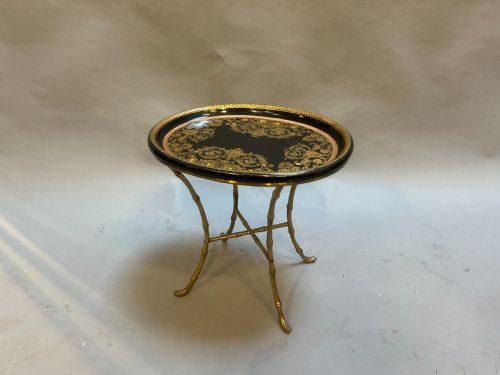
When searching for a regency lacquered tray, you encounter pieces spanning the Regency, Georgian, and Victorian eras, alongside later revivals from the early twentieth century. These objects function as decorative serving trays, game boards, or occasional tables when mounted on custom stands.
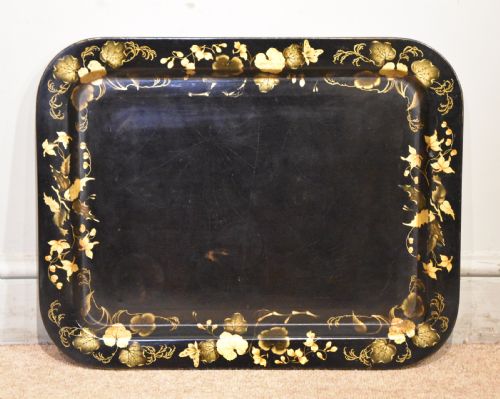
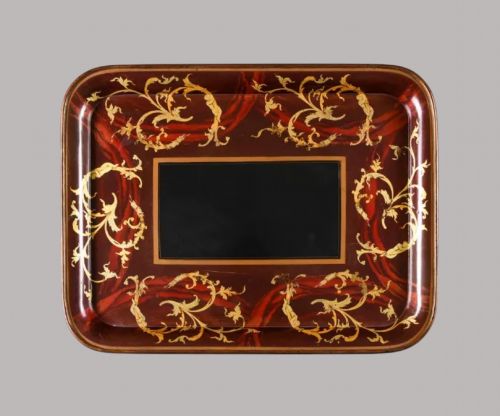
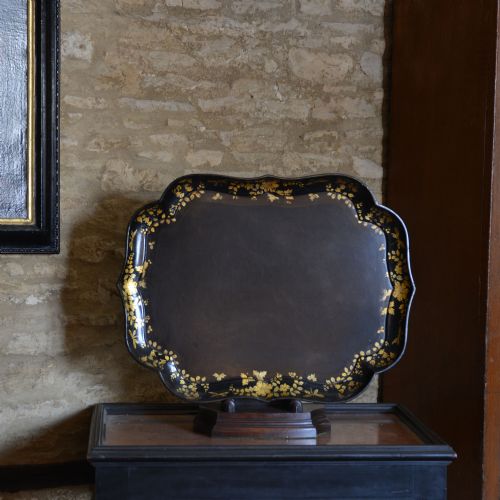
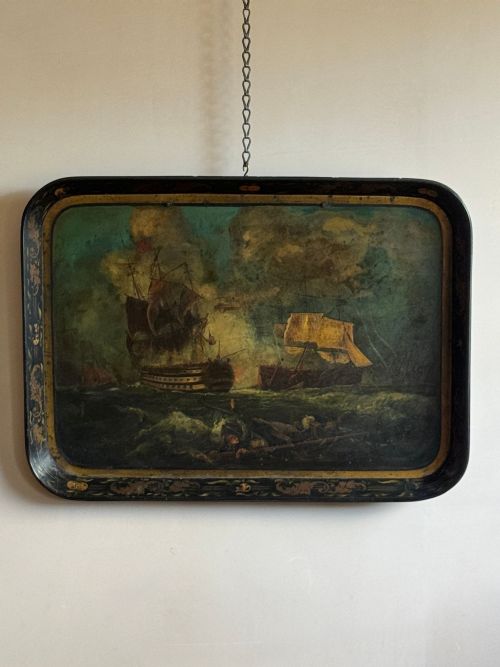
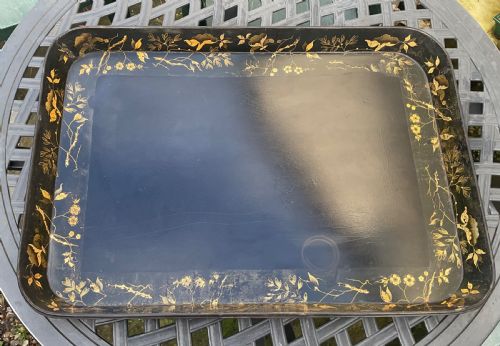
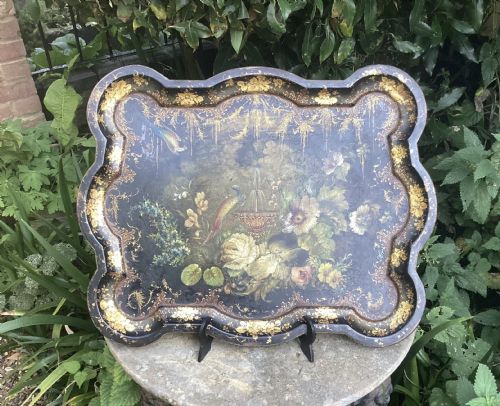
The most frequent examples on this page are formed from papier-mâché or toleware, finished in dark lacquer and enriched with hand painting and gold leaf. Formats range from large rectangular serving trays to oval dishes and specialised game boards.
Originating primarily from early nineteenth-century workshops, these pieces combine structural rigidity with refined surface art. Surviving examples often retain their original decoration, showing landscapes, Chinoiserie motifs, or geometric gilt patterns.
Materials and construction
Makers built the primary body of these trays using compressed layers of paper pulp known as papier-mâché, or shaped sheet metal in the case of toleware. These substrates received multiple coats of dark lacquer to create a hard, smooth ground.
Painters applied intricate designs using oil paints, pigments, and gold leaf, often sealing the artwork with a clear varnish. Metal elements such as brass handles occasionally reinforced the edges of serving trays.
Some trays double as gaming boards for Pope Joan, proving that Regency evenings involved high stakes and fine lacquer.
What separates the best examples
Quality rests on the depth of the lacquer finish and the execution of the hand-painted or gilded decoration. Trays bearing legible signatures from prominent makers command particular attention for their superior draughtsmanship.
The survival of original surface decoration without extensive later overpainting distinguishes superior pieces. Proportions, edge profiles, and the crispness of Chinoiserie landscapes further indicate the level of workshop skill.
Jennens and Bettridge·Clay
The Regency Lacquered Tray Glossary
- Papier-mâché
- A composite material made from paper pulp or layers of paper mixed with glue, compressed and baked to form a rigid board suitable for lacquering. It provides a lightweight yet durable base for decorative serving items.
- Toleware
- Painted or lacquered sheet metal items produced in the Georgian and Regency periods. These metal trays and vessels mirror the decorative schemes found on papier-mâché counterparts.
- Japanned
- European European imitation of East Asian lacquer finishes, typically executed using dark varnishes and raised metallic decoration. The technique creates a glossy, dark surface characteristic of the period.
- Chinoiserie
- European decorative style reflecting Chinese artistic motifs, often featuring imaginary landscapes, pavilions, and figures rendered in gold paint. It appears frequently on Regency lacquerwork.
- Pope Joan
- A traditional eighteenth and nineteenth-century card game played on specialised boards or trays fitted with compartments. The matching trays often feature painted layouts for the stakes.
Regency Lacquered Tray: Frequently Asked Questions
Can I use these trays for serving drinks?
Most of these historic pieces can handle light use, but moisture and heat from hot cups can damage antique lacquer and gilt surfaces.
For practical serving, many owners place a protective glass sheet inside the raised rim or reserve the pieces for display.
How do I mount a tray on a stand?
Trays mounted as occasional tables rest on folding or fixed wooden frames designed to support the base without clamping the edges.
This setup allows the tray to be lifted off the stand easily, preserving its original format as a portable serving piece.
How do I tell an original from a revival piece?
Early nineteenth-century pieces show characteristic wear patterns, craquelure in the lacquer, and hand-mixed pigments beneath the varnish layer.
Twentieth-century revival trays often exhibit different material weights, machine-applied finishes, or synthetic binders underneath.