


Hand Painted Regency Tray
These hand painted regency tray pieces bring decorative painting into daily service, prized for their colourful surface art and historical form.
Hand Painted Regency Tray
When you search for hand painted regency tray, you encounter a varied selection of serving vessels, platters, and occasional tables spanning the Georgian and Regency periods through to later revivals.
The most common examples on this page comprise papier-mâché, lacquer, and toleware surfaces adorned with intricate hand-painted motifs, alongside porcelain serving dishes and occasional table conversions.
Origins stretch from English factories to general nineteenth-century workshops, capturing styles from traditional Chinoiserie landscapes to classical figural scenes.
How they were made
The construction relies on sturdy foundations of papier-mâché, lacquered wood, and metal toleware, shaped into trays, dishes, and bowls before receiving layers of ground colour.
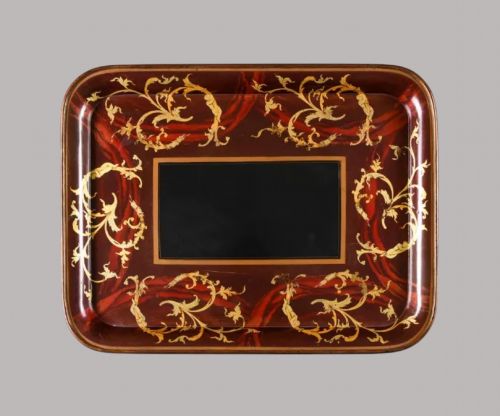
Artisans applied paint by hand, frequently incorporating gold leaf and gilt detailing to highlight the pictorial scenes, floral patterns, and Chinoiserie subjects.
Porcelain equivalents utilised moulded ceramic bodies finished with hand-painted overglaze enamels fired in kilns to secure the pigments.
Listings span multiple materials including porcelain, papier-mâché, lacquer, and toleware, reflecting diverse nineteenth-century manufacturing traditions.
What varies in quality
The sophistication of the hand painting dictates the distinction between standard utilitarian items and superior artistic examples, particularly in the brushwork of figures, landscapes, and floral borders.
The preservation of the original surface finish, including the stability of the lacquer, gold leaf, and ground paint, influences the overall integrity of the piece.
Maker attribution and the presence of documented workshop signatures, such as Jennens and Bettridge, elevate the standing of papier-mâché pieces.
Ridgway·Spode·Duesbury and Kean·Barr Flight and Barr·Mason·Jennens and Bettridge
The Hand Painted Regency Tray Glossary
- Papier-mâché
- A composite material made from paper pulp or layers of paper reinforced with glue, moulded and dried to form strong, lightweight trays. It provided a smooth canvas for detailed japanning and painting.
- Toleware
- Tin-plated steel articles coated with lacquer or paint, often decorated with hand-painted designs. Pontypool was a notable centre for this metalwork production.
- Chinoiserie
- A European artistic style reflecting Chinese motifs and imaginary landscapes, frequently applied to lacquered trays and porcelain serving dishes. It enjoyed immense popularity during the Georgian and Regency eras.
- Japanning
- A European technique imitating East Asian lacquering by applying resinous varnishes and heat-cured paints. Trays finished this way display a dark, glossy surface.
- Comport
- A decorative pedestal dish used for serving fruit or sweetmeats at dessert. Examples appear in porcelain with hand-painted patterns.
Hand Painted Regency Tray: Frequently Asked Questions
How were these trays used historically?
These pieces served practical roles in the dining room and parlour for carrying porcelain tea wares, serving dishes, and sweetmeats during formal gatherings.
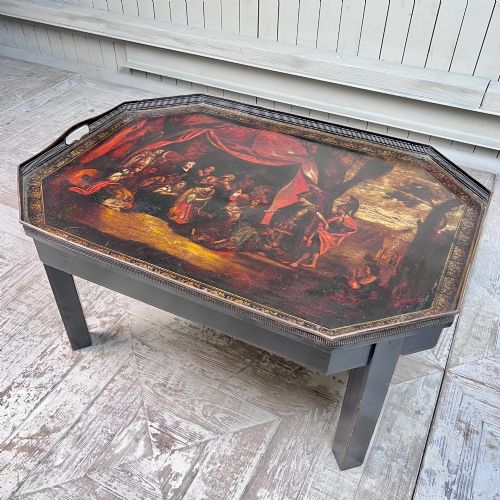
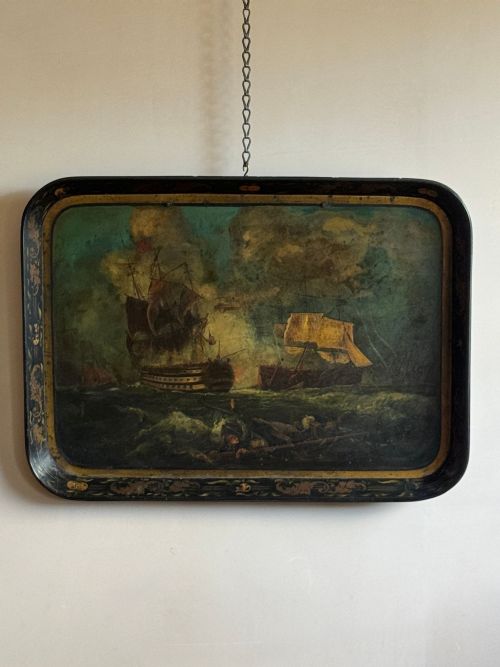
Over time, many of the surviving examples transitioned into decorative wall displays or found new life mounted on stands as occasional tables.
What materials are most common?
The selection is dominated by papier-mâché, toleware, and lacquered wood, all chosen for their ability to hold detailed hand-painted decoration.
Porcelain alternatives from factories like Spode and Worcester also appear frequently among the serving dishes and comports.
How do I care for a painted tray?
Keep these items away from direct sunlight and excessive moisture to protect the delicate hand-painted pigments and gold leaf from fading or lifting.
Dust them gently with a dry, soft cloth rather than using liquid cleaning agents or abrasive polishes on the historic surfaces.
Are these pieces suitable for daily use?
While originally designed for domestic service, the age and delicate nature of the painted surfaces mean modern use should be purely decorative.
Placing hot items or liquids directly onto the antique lacquer or papier-mâché can cause permanent staining or crazing.
What is toleware?
Toleware refers to metal objects, typically sheet iron or tin, coated with painted enamels or lacquers to create durable decorative wares.
Trays and bowls made this way often feature dark backgrounds enlivened with floral motifs or gilt borders.