


Regency Jewellery Box
A regency jewellery box organises small personal treasures inside exotic timbers, brass mounts, and delicate inlays created during the early nineteenth century.
Regency Jewellery Box
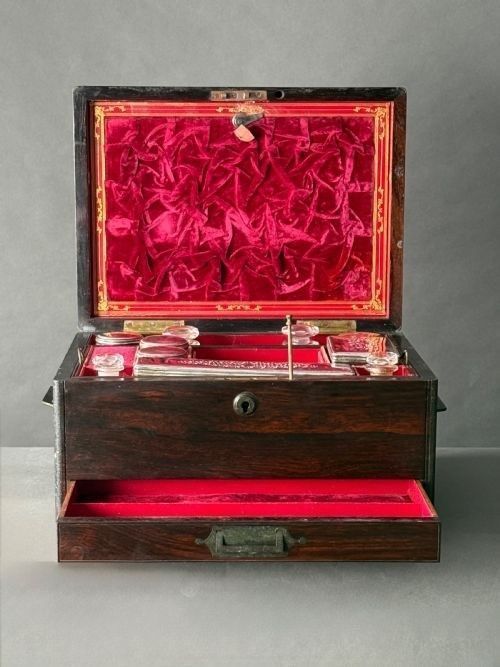
A regency jewellery box serves as a portable container for keepsakes, rings, and trinkets, commonly encountered in rosewood, mahogany, or leather-bound variants from the early nineteenth century.
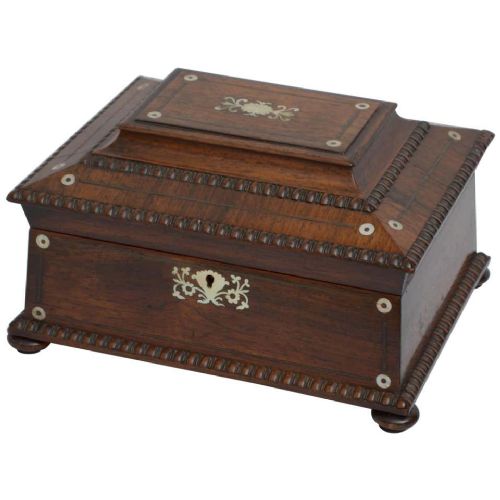
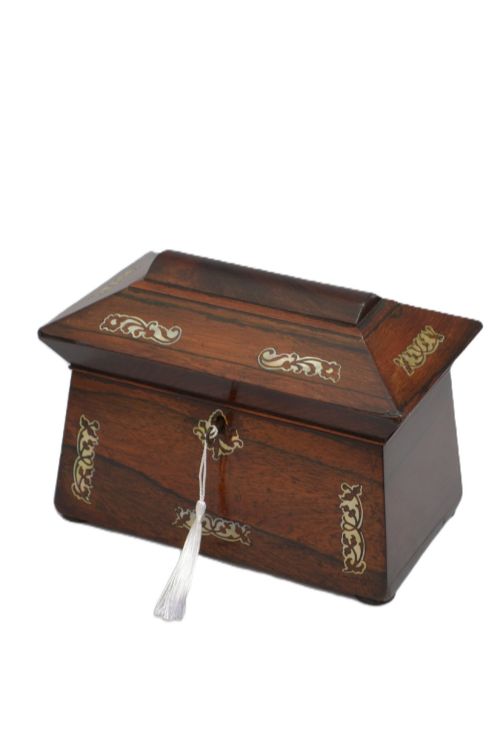
Buyers meet variations ranging from sarcophagus-shaped caskets and table cabinets to miniature chests of drawers and penwork boxes decorated with Chinoiserie motifs.
Many examples double as workboxes or writing slopes, featuring fitted interior compartments designed for sewing implements, documents, and precious items.
Materials and Construction Methods
Cabinetmakers utilised dense exotic hardwoods such as rosewood, kingwood, coromandel, and satinwood, often accentuating the grain with flamed mahogany or burr yew veneers.
Decoration relied on precision craftsmanship, incorporating cut brass inlays, mother-of-pearl plaques, parquetry, and intricate penwork drawings finished with lacquer or leather bindings.
The archive reveals frequent appearances of miniature chests of drawers and sarcophagus forms alongside traditional hinged jewellery caskets.
Judging Quality and Execution
The sophistication of the exterior embellishment largely dictates the tier of the piece, separating plain leather or mahogany caskets from heavily inlaid brass, tortoise shell, or penwork examples.
Internal preservation and complexity also influence value, particularly where original silk linings, fitted compartments, secret drawers, and working brass locks remain intact.
The Regency Jewellery Box Glossary
- Penwork
- A decorative technique utilising fine ink drawing on wood, often depicting Chinoiserie scenes or geometric borders on boxes.
- Sarcophagus
- A box shape featuring a domed or stepped lid rising from a rectangular base, popular during the Regency and William IV periods.
- Tunbridge ware
- Small wooden items decorated with mosaic patterns created by gluing together tiny blocks of various coloured woods.
- Writing slope
- A hinged box that opens to reveal an angled writing surface alongside compartments for ink and pens.
- Campaign box
- A sturdy box constructed for travel, typically fitted with brass corner brackets and recessed carrying handles.
Regency Jewellery Box: Frequently Asked Questions
What is a regency jewellery box?
A regency jewellery box is a portable wooden or leather-covered container made during the early nineteenth century to store valuables, rings, and personal mementos.
These pieces reflect the neoclassical tastes of the Regency and Georgian eras, frequently displaying exotic wood veneers, brass inlays, and fitted velvet or silk interiors.
How do I date a regency jewellery box?
Dating relies on identifying timber choices, construction techniques, and decorative styles characteristic of the period between 1800 and 1830.
Later Victorian pieces often mimic these forms, but genuine Regency examples typically exhibit hand-cut brass work, traditional dovetailing, and period hardware.
Were these boxes only used for jewellery?
Many boxes served multiple purposes, functioning simultaneously as sewing boxes, document cases, or compact writing desks.
Interiors frequently contain removable trays, lidded compartments, and pin cushions designed to hold needlework tools or letters alongside trinkets.
How should I care for antique wood boxes?
Wooden and leather surfaces benefit from stable room temperatures away from direct sunlight to prevent the timber and veneers from drying out or warping.
Gentle dusting with a dry cloth maintains the finish without risking damage to delicate brass inlays or aged penwork decorations.