




Antique Workbox
An antique workbox is a fitted container or small table designed for needlework and small treasures, combining practical storage with fine cabinetmaking.
Antique Workbox
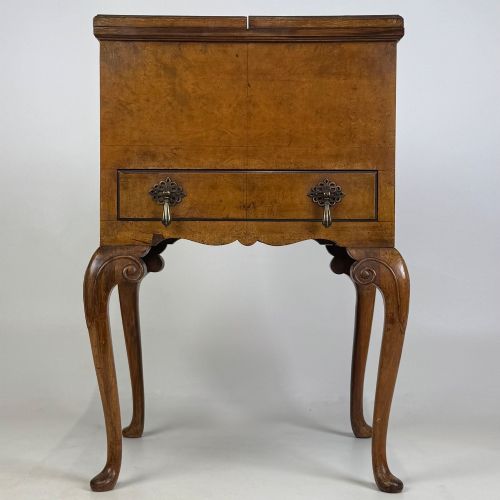
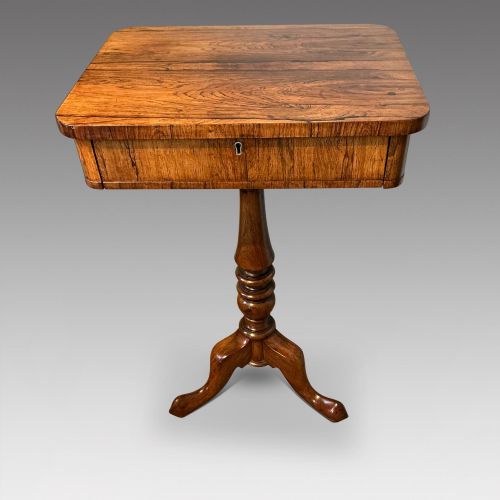
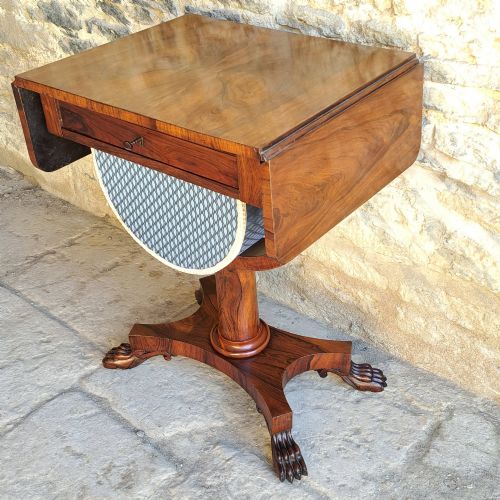
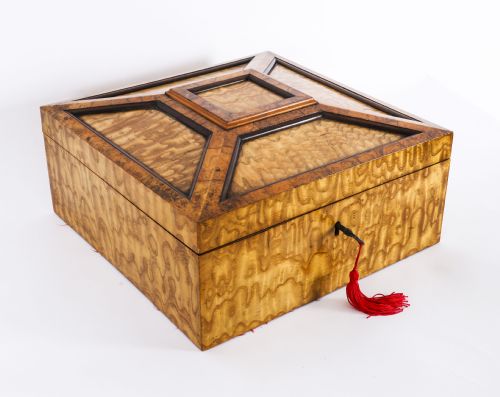
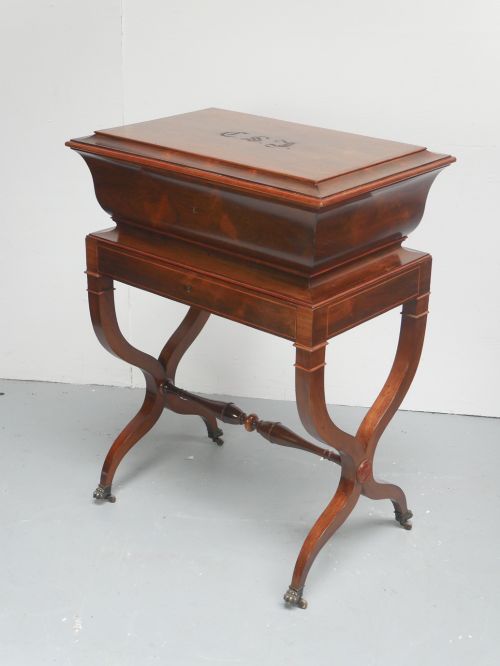
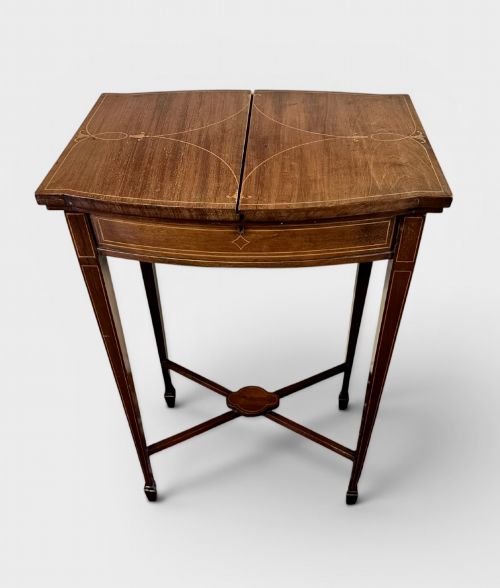
When you search for an antique workbox, you encounter a dual tradition of portable tabletop caskets and substantial freestanding sewing tables. The pieces span the Georgian, Regency, Victorian and Edwardian periods, reflecting changing domestic habits in domestic craft and leisure. Tabletop versions sit on dressing chests or side tables, while pedestal and trumpet forms stand independently in the room.
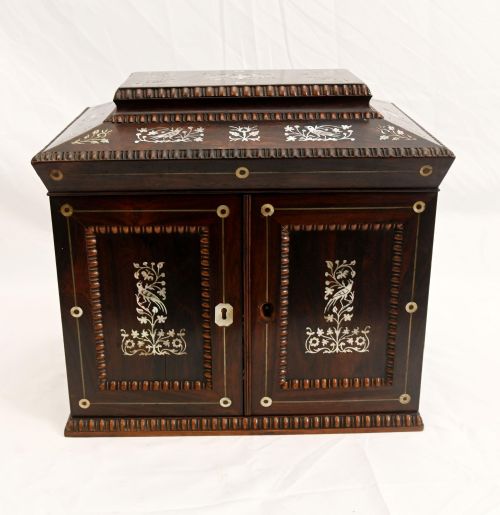
The materials range from dense tropical hardwoods like rosewood and mahogany to figured veneers such as burr walnut and pollard oak. Many examples incorporate specialised compartments, lift lids, and fitted trays for cottons, needles, and small implements. Others combine sewing facilities with games boards, writing slopes, or painting equipment to serve multiple functions in a nineteenth-century parlour.
Assessing Quality and Execution
Quality reveals itself in the choice of veneer figure, the precision of the inlay, and the retention of the original fitted interior. Superior pieces display book-matched burr walnut or meticulously executed penwork rather than plain or uniform surfaces.
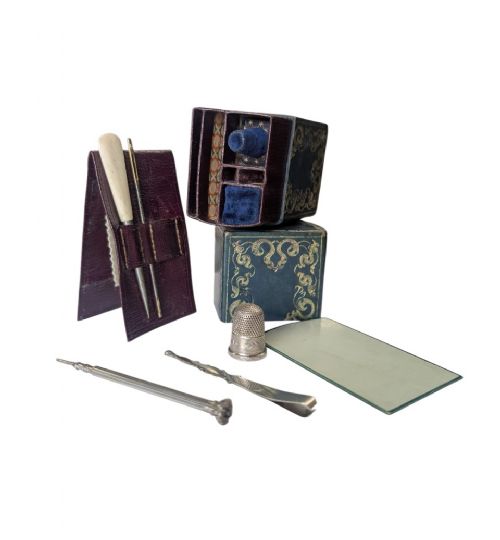
The integrity of the structural joints and the smooth operation of drawers, lids, and pedestals distinguish better workshops. Well-preserved interiors with intact silk linings, velvet pads, and original bone or mother-of-pearl accessories elevate the standing of an individual workbox.
Listings feature workboxes from the Georgian, Regency, Victorian, and Edwardian periods, constructed in rosewood, mahogany, walnut, and oak.
Lesage
The Antique Workbox Glossary
- Tunbridge ware
- A form of mosaic woodwork originating in Kent, created by gluing together thousands of tiny blocks of naturally coloured wood to form geometric or pictorial scenes. It adorns the lids of Victorian boxes.
- Trumpet workbox
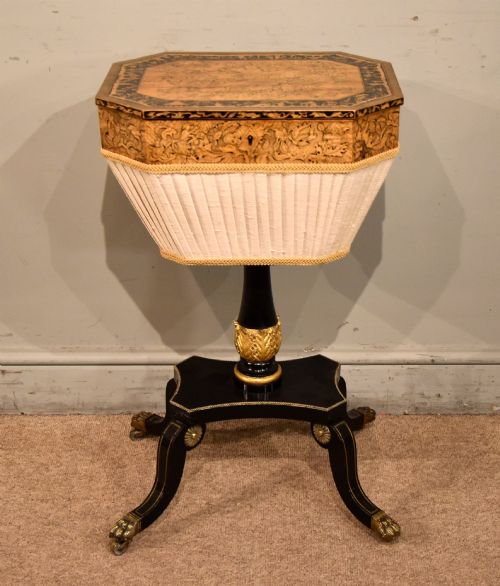
- A Victorian sewing table featuring an octagonal or faceted body that flares outwards from a slender stem towards a circular base, resembling the bell of a musical instrument.
- Penwork
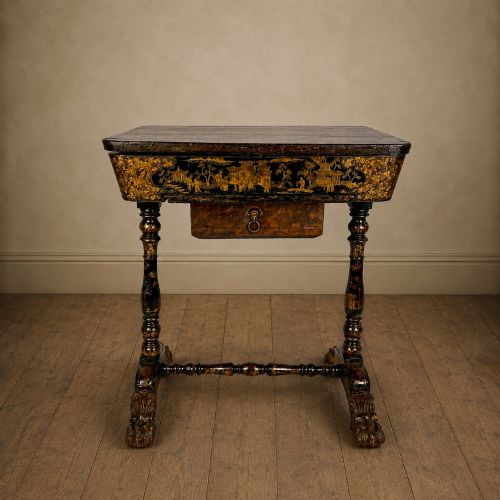
- A decorative technique using fine ink drawing on light-coloured wood, often highlighted with faint colour or varnish, seen frequently on Regency work tables.
- Writing slope
- A portable slant-topped desk containing compartments for paper, ink, and pens, sometimes integrated into the design of a workbox or fitted chest.
- Etui
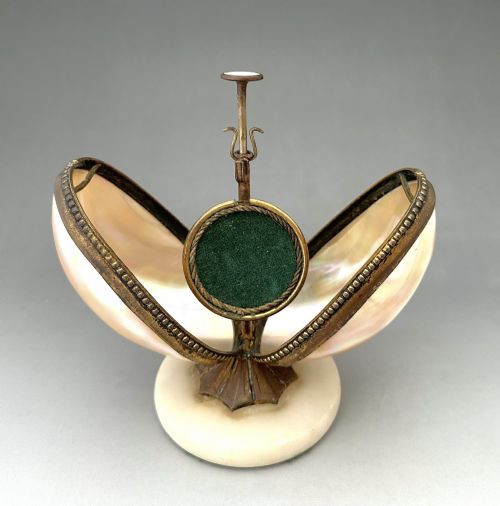
- A small ornamental case designed to hold needles, scissors, tweezers, and other delicate personal implements.
Antique Workbox: Frequently Asked Questions
What is an antique workbox?
An antique workbox is a container or specialised table built to hold sewing materials, threads, and small tools. They were essential furnishings in homes where women practiced needlework and handcrafts.
These pieces range from small portable caskets placed on desks to freestanding pedestal and trumpet tables designed for the parlour. Their interiors usually feature partitioned trays and compartments.
How were workboxes used?
They served as tidy repositories for embroidery silks, pins, bodkins, and ongoing needlework projects. Many incorporated locking mechanisms to secure valuable sewing tools and personal trinkets.
Some variants doubled as writing desks, games boards for chess or draughts, or artist supply boxes. This multifunctional design suited the social and domestic routines of nineteenth-century households.
How do I date a workbox?
Stylistic clues such as Regency brass inlay, Victorian burr walnut veneers, or Edwardian stringing help establish the period. Construction methods, timber choices, and secondary woods also indicate the likely decades of manufacture.
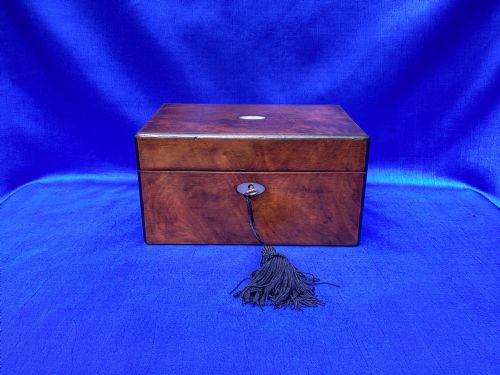
Interior fittings and hardware, including brass hinges, escutcheons, and silk linings, offer further chronological markers. Casket forms evolved from Georgian plain mahogany boxes to elaborate mid-Victorian Tunbridge ware and trumpet tables.
How do I live with one?
Workboxes function well on side tables, chests of drawers, or as freestanding accent pieces in a living room or bedroom. They provide useful enclosed storage for small contemporary items like jewellery or keys.
Maintenance requires keeping wooden surfaces away from direct heat sources and sunlight to protect polished finishes and delicate veneers. Occasional gentle dusting preserves the patination of the wood and any mother-of-pearl or brass inlay.