
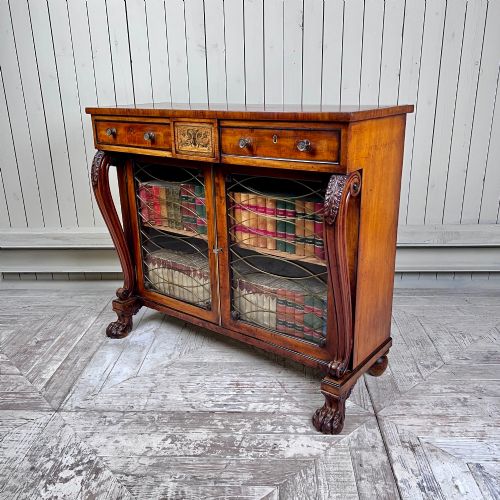
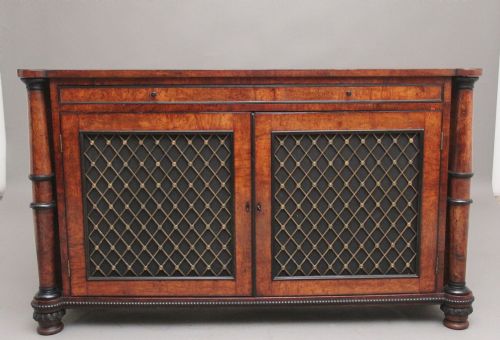
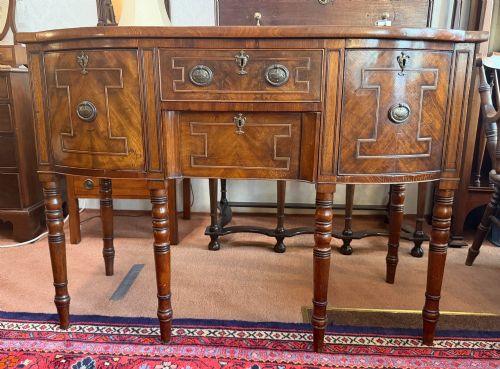
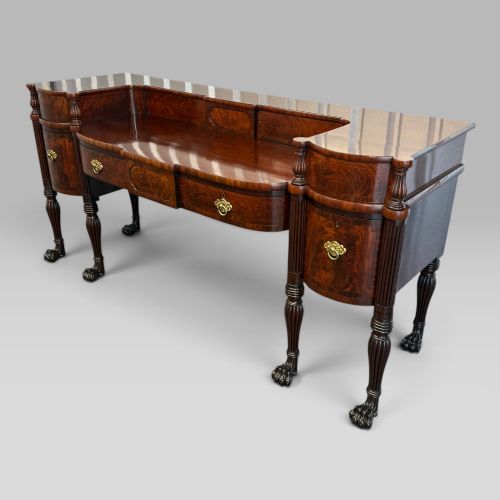
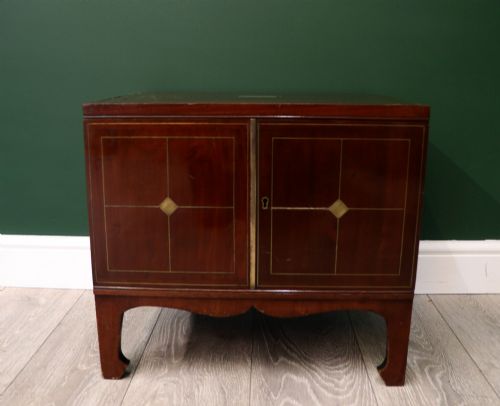
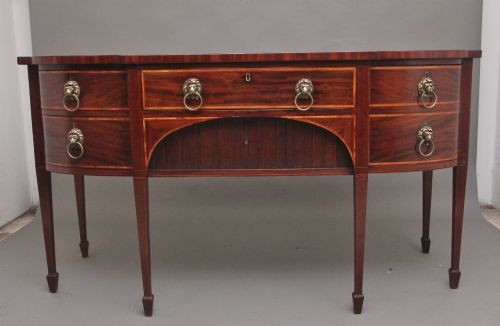
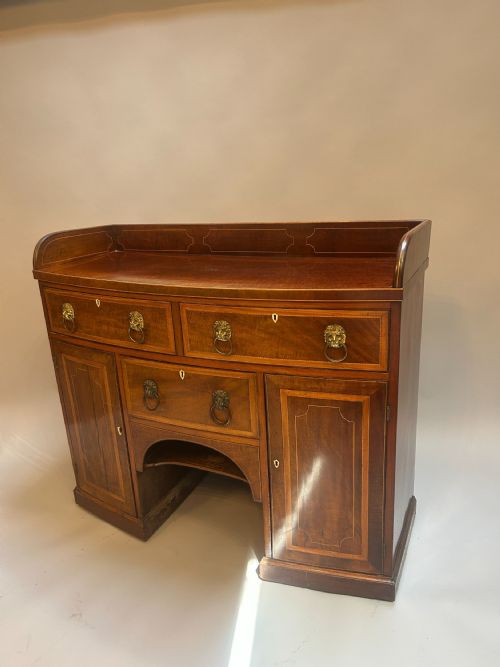
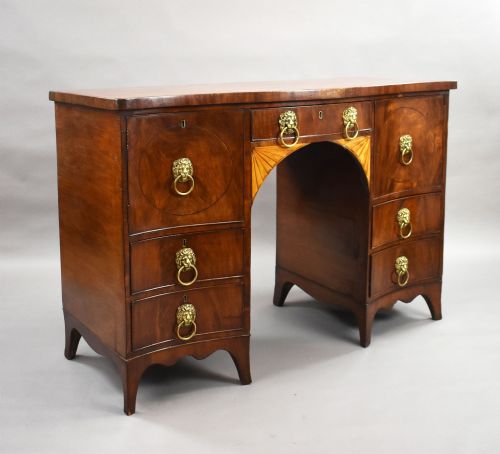


Regency Inlaid Sideboard
A regency inlaid sideboard brings architectural dignity and rich timber grain to a dining space, offering both a commanding surface and discreet storage.
Regency Inlaid Sideboard
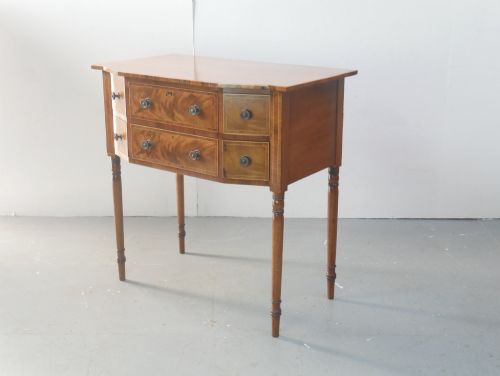
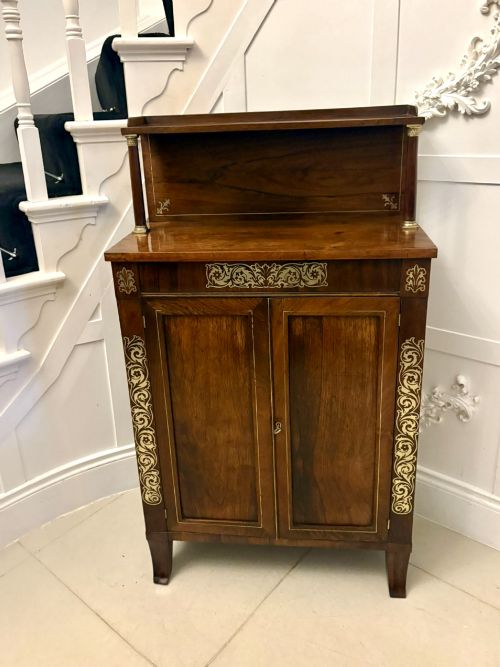
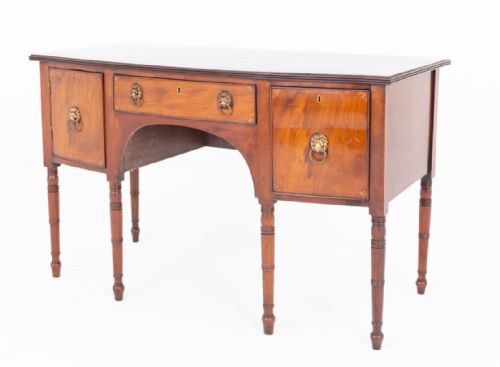
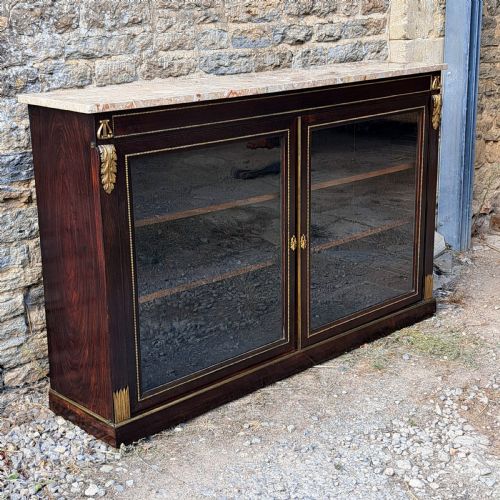
Beyond standard sideboards, buyers searching this phrase regularly encounter related dining room storage forms such as chiffoniers, pedestal sideboards, and low side cabinets. These variants share the characteristic dark woods and precise inlay of the period, though some feature brass grilles or raised shelving on the upper surface. Pieces span from authentic Regency and George IV items to later Regency Revival interpretations from the Victorian era and the early twentieth century.
The architectural lines of these sideboards reflect the classical tastes of the early eighteen hundreds, leaning on Roman and Greek revival motifs that suit traditional and contemporary interiors alike. The combination of figured timber surfaces and linear stringing creates a focal point that grounds a room without overwhelming smaller spaces.
What determines quality
The caliber of a regency inlaid sideboard rests primarily on the selection of the timber veneers and the precision of the cabinetwork. Superior examples display continuous, book-matched flame mahogany or richly figured rosewood across the entire facade, where lesser pieces rely on plain or mismatched timber stocks.
Execution of the decorative inlay separates workshop tiers, with the finest items showing razor-thin, unbroken lines of boxwood and ebony that follow complex curves without gaps or filler. Hardware integration and the weight of the underlying secondary woods further distinguish standard production furniture from masterworks of the era.
Some cabinetmakers carved fierce lion paw feet to support heavy sideboards, ensuring the dining room looked properly guarded.
Gillows·John McClean·George Oakley
The Regency Inlaid Sideboard Glossary
- Stringing
- A narrow, contrasting strip of wood inlaid into the surface of furniture to create linear borders. This technique frequently employs boxwood or ebony against a mahogany background.
- Breakfront
- A piece of furniture having a central section that projects forward from the flanking sections. This configuration adds architectural depth to large sideboards and breakfront cabinets.
- Bow-front
- A convex, curved cabinet front that swells outward in the centre. This curved form softens the severe angles of a dining room.
- Pedestal sideboard
- A form consisting of two separate pedestals joined by a central serving board or table. These substantial pieces often feature substantial lion paw feet.
- Chiffonier
- A compact sideboard or low cabinet typically fitted with enclosed shelving below and sometimes a raised tier on top. They frequently incorporate brass grilles or silk-backed panels.
Regency Inlaid Sideboard: Frequently Asked Questions
How do I style a sideboard in a modern room?
A regency inlaid sideboard works well as a grounding anchor against neutral walls, where its dark timber and fine stringing stand out clearly.
Keep the top surface uncluttered by placing a single large mirror or painting above it, accompanied by modest ceramic or bronze objects rather than crowding the timber top.
Can I use a sideboard as a media console?
Many of these pieces offer ample interior depth within their central cupboards and side drawers for storing electronic equipment and media collections.
Buyers should measure internal cabinet clearances carefully before purchasing, as nineteenth-century interior depths vary significantly across bow-front and breakfront formats.
How do I tell an original Regency piece from a later revival?
Original pieces from the early nineteenth century display hand-cut dovetails, older secondary woods like oak or pine inside drawers, and natural timber oxidation under the finish.
Revival pieces from the Victorian era or twentieth century often reveal machine-sawn components, standardised screws, and timbers finished with heavy modern varnishes.
How should I care for antique mahogany and rosewood surfaces?
Protect the timber by keeping the piece away from direct heat sources, radiators, and strong sunlight that can dry out old veneers and cause fading.
Apply a traditional beeswax polish sparingly and buff with a soft cloth to maintain the natural sheen without building up heavy wax layers.